
The right charger makes RC car batteries easier to manage, whether you need a compact unit for one pack or a dual-channel setup for race-day rotation.
We’ve selected 10 chargers spanning 80W entry-level models, higher-power options, and dual-channel units. Start with your battery chemistry, cell count, and connectors; then compare power and features.
Best 10 Rc Car Chargers Picks for 2026
Best for Battery Variety

- Two independent channels, up to 10A each
- Supports multiple lithium, nickel, and Pb chemistries
- Stores 20 battery-setting profiles
Best For: Mixed-battery RC collections needing two charging channels
Best for High-Power Charging
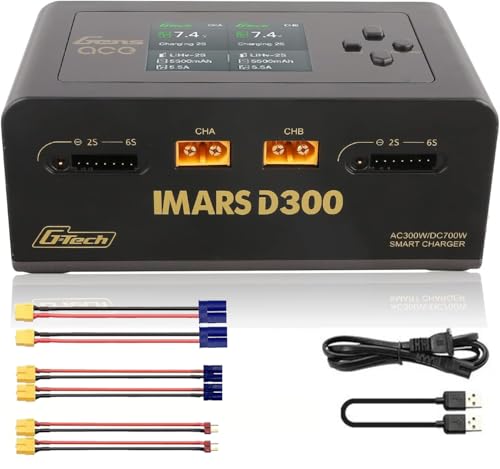
- Two channels rated up to 16A each
- Up to 300W AC or 350W per channel on DC
- Auto-recognizes G-Tech smart batteries
Best For: Higher-power 1S–6S charging, particularly with G-Tech packs
Best Single-Pack Option

- 80W, 6A single-pack charging
- Supports several lithium, nickel, and Pb types
- Includes AC/DC input and multiple adapters
Best For: Charging one non-LiHV RC battery at a time
Best for Included Leads
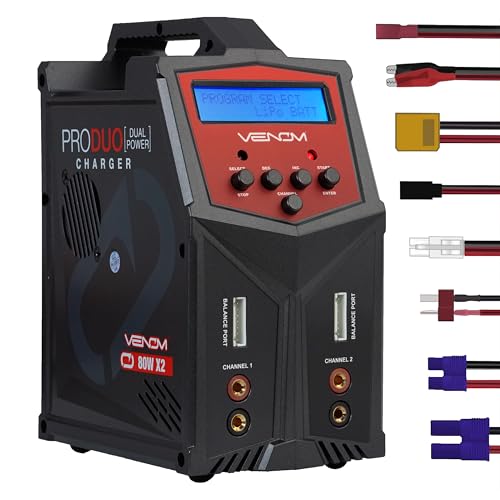
- Two independent 80W charging circuits
- Eight charging leads included
- Supports LiHV and several other chemistries
Best For: Two-pack charging across varied connector types
Versatile Battery Pick

- Supports lithium, nickel, lead-acid, and smart batteries
- Charge, balance, discharge, and storage modes
- Includes adapter, connectors, and protection bag
Best For: Mixed RC battery collections
Higher-Output Pick
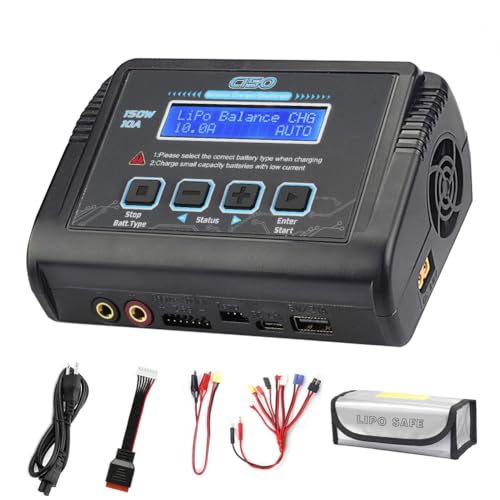
- Up to 150W with adjustable 0.1–10A charging
- AC or DC input and broad battery support
- Single charging port
Best For: Higher-output charging of compatible RC packs
Portable Kit Pick

- Compact design with LCD controls
- Supports lithium, nickel, and lead-acid batteries
- Includes multiple common connector plugs
Best For: Portable charging with varied connectors
Best for Two Batteries
Aorika Dual 10A Balance Charger

- Two independent charging channels
- Up to 10A per channel
- 20 saved battery profiles
Best For: Drivers charging two different packs
Best Accessory Bundle
Haisito B6V2 80W Balance Charger

- 80W, 6A charging
- Wide battery-chemistry support
- Power supply and harness included
Best For: Hobbyists with mixed battery packs
Best Compact Pick

- Compact single-port design
- 80W, 6A rating
- XT60, JST, and T connectors
Best For: Small setups with one pack to charge
Best for Battery Variety – HTRC Dual 10A Balance Charger
Among rc car chargers, this HTRC model is a practical choice if you use several battery chemistries and want to charge two packs independently. Its dual channels each support up to 10A, within a shared 150W AC or 240W DC power limit.
Best For: RC owners who need dual-channel charging for a mix of lithium, nickel, and lead-acid batteries.
Pros:
- Supports 1S–6S LiPo, LiHV, Li-ion, and LiFe, plus NiCd, NiMH, and Pb batteries.
- Offers balance, discharge, and storage modes, with 20 battery-setting memories.
- Includes AC and DC cables, XT60 adapters, an XT60-to-EC5 cable, and balance extensions.
Cons:
- The 150W AC and 240W DC limits are shared across both channels.
- You must select the correct battery type and must not use the AC and DC inputs at the same time.
The broad compatibility and saved settings make it useful for a varied RC collection; check your packs’ connectors and power needs before buying.
Best for High-Power Charging – Gens Ace iMars D300
If charging power and clear monitoring matter most, the Gens Ace iMars D300 stands out among rc car chargers. It offers two channels rated up to 16A each, a 2.4-inch IPS display, and up to 300W on AC or 350W per channel on DC.
Best For: Owners of 1S–6S RC batteries who want high-power dual-channel charging, especially with G-Tech smart packs.
Pros:
- Automatically recognizes G-Tech smart batteries and stops charging when they are full.
- Provides charge, balance, discharge, storage, and synchronized charging modes.
- Displays live voltage, current, and working time, with stated electrical protections.
Cons:
- A DC power supply and parallel charging cables are not included.
- Non-G-Tech batteries require manual parameter setup.
The D300’s higher DC rating is appealing for demanding setups, but plan for the separate DC power supply if you want to use that capability.
Best Single-Pack Option – 80W 6A LiPo Balance Charger
For shoppers comparing rc car chargers for one pack at a time, this 80W, 6A unit covers several common battery types without requiring a dual-channel setup. It accepts AC or DC input and includes charge, balance, discharge, and storage functions.
Best For: RC owners who charge one compatible pack at a time and want AC/DC flexibility.
Pros:
- Supports 1S–6S LiPo, LiFe, and Li-ion; 1S–15S NiMH and NiCd; and 2–20V Pb batteries.
- Includes battery-data storage, a meter, and digital DC power functionality.
- Comes with XT60 adapters, an XT60-to-EC5 cable, and an XT60-to-banana cable.
Cons:
- Does not support LiHV batteries.
- Charges only one battery at a time; AC and DC cords must not be used together.
It is a versatile single-pack charger, provided its 80W ceiling, connector options, and lack of LiHV support fit your batteries.
Best for Included Leads – Venom Power Pro Duo
The Venom Power Pro Duo is worth considering among rc car chargers when your vehicles use different connectors. It combines two independent 80W charging circuits with eight included leads, including Deans, EC3, EC5, JST, Tamiya, and XT60.
Best For: RC owners who want to charge two packs and need a broad selection of included charging leads.
Pros:
- Charges two batteries at once with 160W total rated output.
- Supports LiPo, LiHV, Li-ion, LiFe, NiMH, NiCd, and Pb batteries.
- Offers balance, fast-charge, discharge, cycling, and storage modes, plus five saved profiles.
- Has internal temperature monitoring that stops charging at a set level.
Cons:
- Each independent charging circuit is limited to 80W.
- Stores up to five battery profiles, fewer than the HTRC dual charger in this roundup.
Its connector assortment is the main draw. Check the 80W-per-channel limit against your packs if charging speed is your priority.
Versatile Battery Pick – HTRC 80W 6A Balance Charger
Among rc car chargers, this HTRC 80W model is a practical choice if you use several battery chemistries. It supports 1S–6S LiPo, LiFe, and Li-ion packs, plus NiMH, NiCd, lead-acid, and compatible smart batteries.
Best For: RC hobbyists who want one charger for a varied battery collection.
Pros:
- Charge, discharge, balance, and storage modes cover routine battery care.
- Battery capacity and voltage checks help you inspect packs.
- Includes a 15V 6A adapter, connector splitter, and battery protection bag.
Cons:
- Charging is limited to 80W and 6A.
- AC and DC input cables must not be used at the same time.
Its broad compatibility and included accessories make it a useful all-rounder; check your pack’s chemistry and connector before charging.
Higher-Output Pick – HTRC 150W 10A Balance Charger
If you need more charging headroom from your rc car chargers, this HTRC model offers up to 150W and an adjustable 0.1–10A charge current. It accepts AC or DC input and supports lithium, nickel, lead-acid, and compatible smart batteries.
Best For: Hobbyists with compatible packs who want a higher-output, single-port charger.
Pros:
- Supports 1S–6S lithium packs, including LiHV, and 1S–15S NiMH/NiCd packs.
- Provides balance charging, discharging, battery readings, and internal-resistance checking.
- Built-in cooling fan and 5V 2.1A USB output add convenience.
Cons:
- One charging port handles one pack at a time.
- Adjustable end-voltage settings are intended for experienced users.
- AC and DC power cables cannot be used simultaneously.
This is the stronger-output option in this group, but correct battery-type selection remains essential, and advanced voltage settings deserve care.
Portable Kit Pick – Hilldow B6 80W Mini Charger
For buyers comparing compact rc car chargers, this Hilldow B6 combines an 80W mini charger with an LCD and an assortment of common plugs. It supports 1S–6S lithium packs, 1S–15S NiMH/NiCd packs, and 2–20V lead-acid batteries.
Best For: Hobbyists who want a portable charger with several connector options.
Pros:
- Charge, smart balance, discharge, and storage modes support everyday pack maintenance.
- LCD displays settings; battery checks include voltage, capacity, and lithium internal resistance.
- Accessory kit includes XT60, JST, EC3, T plug, and other common connectors.
Cons:
- Maximum charge current is 6A, with 2A discharge current.
- Correct battery chemistry must be selected before charging.
Its compact design and included plugs suit a portable setup, while the LCD and battery checks provide useful information before and during maintenance.
Best for Two Batteries – Aorika Dual 10A Balance Charger
Among rc car chargers, this Aorika model stands out when you need to charge two batteries at once. Its independent channels support up to 10A each, with a shared 150W limit on AC power or 240W on DC power.
Best For: RC drivers who use different battery packs and want two charging channels in one unit.
Pros:
- Charges two batteries on separate channels simultaneously.
- Supports 1S–6S lithium, 1S–15S NiCd/NiMH, and 2V–20V lead-acid batteries.
- Offers balance, storage, and discharge modes, plus 20 saved battery profiles.
- Includes XT60, Tamiya, and Deans-compatible cables.
Cons:
- The two channels share the total AC or DC power limit.
- AC and DC input cables must not be used at the same time.
Choose this one for flexible two-pack charging, while checking each battery’s chemistry and connector before starting a cycle.
Best Accessory Bundle – Haisito B6V2 80W Balance Charger
If you’re comparing rc car chargers for several battery chemistries, the Haisito B6V2 combines 80W, 6A charging with balance, discharge, and fast-charge functions. Its included power supply and multi-connector harness make it a practical package for a mixed collection of packs.
Best For: Hobbyists who want broad battery compatibility and charging accessories in the box.
Pros:
- Supports 1S–6S lithium packs, 1S–15S NiMH/NiCd packs, and 2V–20V lead-acid batteries.
- Provides balancing, discharge, cycle, and data-storage functions.
- Includes an adapter, AC cable, multi-charging harness, and battery protective bag.
Cons:
- Its listed charging current tops out at 6A.
- Multiple battery types and modes require careful setup before charging.
This is a versatile single-purchase kit for varied packs; verify your battery type and connector against the included harness before use.
Best Compact Pick – Hilldow B6 Mini 80W Charger
For shoppers seeking compact rc car chargers, the Hilldow B6 Mini measures 5.24 by 3.43 by 1.3 inches and includes a power supply. It offers 80W charging, a 6A rating, and an LCD for reviewing settings and charging status.
Best For: RC owners who want a small, single-port charger for supported lithium or NiMH/NiCd packs.
Pros:
- Supports 1S–6S LiPo/Li-ion packs and 1S–15S NiMH/NiCd packs.
- Offers storage charging and charge/discharge cycling.
- Lists short-circuit, overcurrent, overcharge, and overheat protections.
- Comes with XT60, JST, and T connectors.
Cons:
- Only one charging port is listed.
- The notes instruct users to unplug it when charging is complete.
Its compact size and supplied connectors make it worth considering for a straightforward bench setup, provided your pack matches its supported cell count and connector.
How We Picked These Rc Car Chargers
We looked for a useful spread of single- and dual-channel chargers, from 80W units to higher-power models. The shortlist includes options described as supporting common RC battery types such as LiPo, LiHV, Li-ion, LiFe, and NiMH. Product names alone cannot verify every specification or accessory, so check the current listing and manual before buying.
Quick Comparison: Which Type Fits Your Setup?
An 80W, 6A single-channel charger is a sensible starting point if you charge one modest-capacity pack at a time. A 150W, 10A model offers more power headroom for larger packs, provided your power supply and battery allow it. Dual-channel chargers suit drivers who regularly charge two packs, but check whether the advertised wattage and current apply to each channel or are shared.
Mini B6-style chargers may appeal if bench space matters. Compare the included power supply, supported chemistries, and connectors rather than assuming similar-looking models have identical capabilities.
Key Buying Factors for Rc Car Chargers
Battery Compatibility and Balance Charging
Match the charger to your pack’s chemistry and series-cell count. A charger advertised for 1S–6S lithium packs will not necessarily support every battery type in that range; confirm the exact modes. For multi-cell lithium packs, use the correct balance port and follow the battery maker’s charging instructions.
Power, Current, and Input
Watts matter alongside amps: charging power is roughly battery voltage multiplied by charging current. As voltage rises, an 80W charger may deliver less than its maximum rated current. Also check whether the charger runs from AC mains, requires a separate DC supply, or accepts both. A capable charger cannot reach its rated output if its input supply is undersized.
Connectors and Everyday Usability
Verify the main charging lead fits your battery connector and that the appropriate balance connection is available. Look for clear settings, readable status information, and charge-storage-discharge modes you will actually use. Never rely on an adapter with uncertain wiring or set charge parameters from memory.
Who Should Buy Which Rc Car Chargers?
For a first RC car, prioritize a straightforward single-channel charger that explicitly supports your battery and includes the power supply and leads you need. Choose a higher-power single-channel unit if you use larger packs and want suitable charging headroom. Pick a dual-channel model if you maintain multiple batteries and value charging two packs independently. If you run several battery chemistries, compare the supported modes carefully before choosing on wattage alone.
Whatever you buy, charge on a suitable nonflammable surface, stay nearby, and stop using damaged or swollen packs. The best charger is the one whose verified specifications match the batteries on your bench.