
The best resin printers in 2026 make it easier to produce highly detailed miniatures, display pieces, prototypes, and small functional parts at home or in a workshop. The right model depends on more than resolution: build volume, leveling, print speed, cleanup, and material handling all affect the ownership experience.
We compared 10 current options across compact, mid-size, and large-format categories so you can match screen resolution and printer capacity to the projects you actually plan to make.
Best 10 Resin Printers Picks for 2026
Fast Detail Specialist
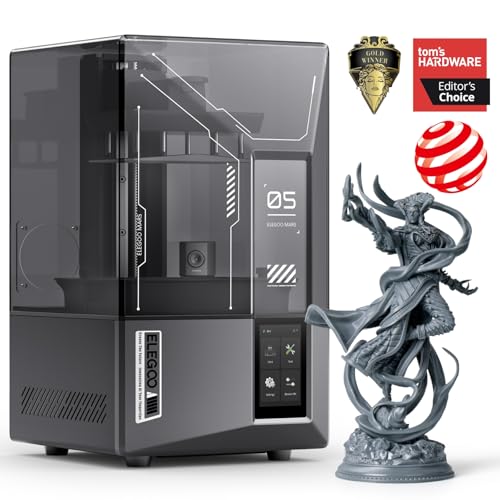
- 9K monochrome LCD with 18 μm XY resolution
- Up to 150 mm/h with tilt-release printing
- AI monitoring and Wi-Fi cluster printing
Best For: Detailed, fast prints and multi-printer workflows
Beginner-Friendly Detail Pick

- 7-inch 10K LCD with 17 μm pixel size
- Generous 153.4 × 87 × 165 mm build volume
- Simple four-point leveling and power resume
Best For: Accessible, detailed hobby printing
Large-Format Flagship

- 16K resolution with 14 × 19 μm XY detail
- Large 8.33 × 4.66 × 8.66-inch build area
- Heated resin tank and 150 mm/h printing
Best For: Large, detailed, repeat-production models
Low-Calibration Pro

- 14K LCD for crisp, fine-detail prints
- Factory-calibrated automatic leveling
- Handles resins up to 8,000 cps
Best For: High-viscosity resin and automated workflows
Best Beginner-Friendly Pick
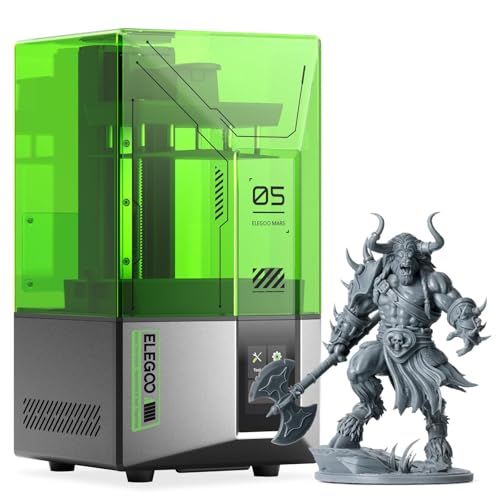
- One-click automatic leveling
- 4K mono LCD for detailed prints
- Built-in alerts and overheat protection
Best For: Beginners and hobbyists prioritizing simple setup
Best Large-Format Workhorse

- 18.3L build volume for large or batch prints
- 14-inch 12K monochrome screen
- Heated 1900ml resin tank
Best For: Workshops and high-volume batch production
Best Fast Mid-Size Option

- Tilt release printing up to 150 mm/h
- One-touch automatic leveling
- AI camera and print-resume features
Best For: Makers seeking faster, more automated printing
High-Speed Precision Pick

- 16K resolution with 14 × 19 μm pixels
- Up to 170 mm/h printing speed
- Fixed plate and automated resin management
Best For: Fast, detailed resin printing with minimal setup
Compact Detail Specialist

- 10K screen with 17 × 17 μm XY pixels
- Print speeds up to 120 mm/h
- Five intelligent inspection functions
Best For: Detailed hobby printing in a compact desktop format
Best Simple Pick

- 302.4 × 161.98 × 300 mm build volume
- 16K resolution with 20 × 26 μm XY detail
- Auto leveling, tank heating, and camera monitoring
Best For: Large objects and high-volume resin printing
Fast Detail Specialist – ELEGOO Mars 5 Ultra
The ELEGOO Mars 5 Ultra is a strong option for resin printers buyers who want fine detail, quick print speeds, and automated oversight. Its 9K monochrome LCD, tilt-release system, and AI camera combine precision with practical failure monitoring.
Best For: Makers who want detailed prints, fast production, and multi-printer workflow control.
Pros:
- 9K LCD provides 18 μm XY resolution for intricate details.
- Up to 150 mm/h printing with tilt-release technology.
- AI camera, residue detection, resin-shortage alerts, and leveling-failure alarms support easier monitoring.
- Wi-Fi cluster printing can control multiple compatible printers from one device.
Cons:
- AI detection results can vary with the environment, models, and resin types.
- Its feature set may be more than casual users need.
The Mars 5 Ultra stands out when speed and detail matter equally. Smart sensors and wireless cluster printing add value for users managing repeat jobs or several machines.
Beginner-Friendly Detail Pick – ANYCUBIC Photon Mono 4
The ANYCUBIC Photon Mono 4 is a practical choice among resin printers for users who want high resolution without a complicated setup. Its 10K screen, uniform light source, generous build volume, and simplified four-point leveling make it approachable for everyday projects.
Best For: Beginners and hobbyists seeking detailed models with a straightforward leveling process.
Pros:
- 7-inch 10K LCD delivers 17 × 17 μm pixel size and detailed models.
- 6.04 × 3.42 × 6.49-inch build volume supports a range of projects.
- LighTurbo matrix lighting helps reduce layer lines and rasterization.
- Laser-engraved platform improves adhesion, while power-resume reduces wasted prints.
Cons:
- The Anycubic app is not supported.
- Four-point leveling still requires an initial setup and screw tightening.
Photon Mono 4 balances strong resolution with beginner-oriented features. It is especially appealing if you want a capable compact printer and do not need app connectivity.
Large-Format Flagship – ELEGOO Saturn 4 Ultra 16K
The ELEGOO Saturn 4 Ultra 16K is built for resin printers users who need a large build area and very fine detail. Automatic resin heating, 16K resolution, high-speed tilted release, and extensive monitoring make it suited to demanding production-oriented work.
Best For: Advanced makers producing large, highly detailed models or managing repeated print jobs.
Pros:
- 16K LCD provides 14 × 19 μm XY resolution.
- 8.33 × 4.66 × 8.66-inch build volume accommodates large models.
- Automatic heating activates below 25°C to help maintain resin conditions.
- AI camera, automatic leveling, power resume, Wi-Fi transfer, and cluster printing support reliable workflows.
Cons:
- The printer is relatively large and heavy at 35.4 pounds.
- Its advanced capabilities may exceed the needs of occasional hobbyists.
Saturn 4 Ultra 16K is the most production-focused option here. Its large platform and temperature-management features are particularly useful when print size, consistency, and throughput are priorities.
Low-Calibration Pro – ANYCUBIC Photon P1
The ANYCUBIC Photon P1 is a compelling resin printers option for creators who want automated setup, stable motion, and compatibility with high-viscosity materials. Its 14K screen, factory-calibrated leveling, Wave Release Technology, and AI checks are designed to reduce routine intervention.
Best For: Advanced creators using industrial or high-viscosity resins who want automated calibration and monitoring.
Pros:
- 14K 10.1-inch LCD supports 16.8 × 24.8 μm pixel size and fine detail.
- Factory-calibrated Smart Leveling 3.0 performs automatic checks before printing.
- Wave Release Technology reduces release force by 60% for easier model removal.
- Supports resins up to 8,000 cps, with AI inspection, resin-level monitoring, and residue detection.
Cons:
- Its 16.93 × 24.41 × 16.54-inch footprint requires substantial workspace.
- Advanced high-viscosity resin capability may be unnecessary for basic projects.
Photon P1 is aimed at users who value repeatability and material flexibility over a minimalist setup. It combines crisp resolution with automation that can simplify demanding resin workflows.
Best Beginner-Friendly Pick – ELEGOO Mars 5
The ELEGOO Mars 5 is a practical choice for shoppers seeking resin printers with a simple setup and detailed output. One-click automatic leveling, self-checks, and a 4K mono LCD reduce common setup and print-quality concerns.
Best For: Beginners and hobbyists who want straightforward operation with reliable detail.
Pros:
- One-click automatic leveling simplifies setup.
- 4K mono LCD and COB lighting support detailed prints.
- Residue detection, resin alerts, and self-checks help reduce avoidable failures.
- Overheat protection automatically pauses printing if LED temperature exceeds 80°C.
Cons:
- Its build area and 4K resolution are less substantial than the larger, higher-resolution models in this roundup.
- Automatic features do not eliminate the need for routine resin-printer maintenance.
Choose the Mars 5 if ease of use matters more than maximum capacity. Its combination of automatic setup aids, safety monitoring, and detailed 4K output makes it an approachable resin printer for everyday projects.
Best Large-Format Workhorse – ANYCUBIC Photon P1 Max
The ANYCUBIC Photon P1 Max stands out among resin printers for its 18.3-liter build volume and production-focused design. Its large 14-inch 12K screen, heated resin tank, and automated leveling support oversized prototypes and dense batch printing.
Best For: High-volume users, workshops, and creators printing large models or multiple parts at once.
Pros:
- 285.5 × 214 × 300mm build volume accommodates large or multiple prints.
- 14-inch 12K monochrome screen supports smooth, highly detailed surfaces.
- 1900ml heated resin tank maintains temperatures up to 35°C for more consistent resin flow.
- Auto-Leveling 3.0 and C7-grade motion components support easier setup and precise positioning.
Cons:
- Its 68.9-pound weight and large dimensions require substantial workspace.
- The large format may be excessive for users primarily making small hobby prints.
The Photon P1 Max is the strongest fit when throughput and print volume are the priorities. It demands more room than compact resin printers, but its capacity and temperature-controlled vat are suited to demanding production work.
Best Fast Mid-Size Option – ELEGOO Saturn 4 Ultra
The ELEGOO Saturn 4 Ultra is a compelling option for shoppers comparing resin printers that combine speed, automation, and monitoring features. Tilt release technology enables print speeds up to 150 mm/h, while automatic leveling and AI-assisted detection help streamline operation.
Best For: Makers who want faster printing with automated setup, failure monitoring, and power-outage recovery.
Pros:
- Tilt release technology supports speeds up to 150 mm/h.
- One-touch automatic leveling reduces calibration work.
- AI camera monitors prints, detects potential failures, and supports time-lapse videos.
- Resume printing, resin alerts, foreign-object detection, and startup self-checks add convenience and protection.
Cons:
- AI detection results can vary with the environment, model, and resin type.
- Its feature set may be more than needed for users seeking a basic resin printer.
The Saturn 4 Ultra is a strong middle ground for users who value speed without moving to the much larger Photon P1 Max. Its automated safeguards and monitoring tools are useful for longer or more unattended print jobs.
High-Speed Precision Pick – Creality Halot-X1 Combo
The Creality Halot-X1 Combo is a feature-rich choice for resin printers when high resolution, speed, and reduced setup work matter. Its 16K display, fixed build plate, and automated resin-management features are aimed at efficient, repeatable printing.
Best For: Experienced makers and professionals who want fast, highly detailed prints with automated resin handling.
Pros:
- 16K mono LCD with 14 × 19 μm pixel size for detailed prints.
- Print speeds up to 170 mm/h and a 211.68 × 118.37 × 200 mm build volume.
- Fixed build plate eliminates leveling, while resin heating and RFID parameter recognition streamline operation.
- Dual linear rails and lead screws provide 0.01 mm Z-axis positioning precision.
Cons:
- At 38 pounds, it is relatively heavy for a desktop resin printer.
- Its advanced automation may be more than beginners need.
The Halot-X1 Combo stands out when throughput and automation are priorities. Its large footprint and feature-rich design make it better suited to a dedicated workspace than casual, occasional printing.
Compact Detail Specialist – Anycubic Photon Mono 4 Ultra
The Anycubic Photon Mono 4 Ultra is a practical option among resin printers for detailed models in a relatively compact package. Its 10K screen, improved release film, and inspection features are designed to balance print quality with easier operation.
Best For: Hobbyists who want high-detail prints, intelligent monitoring, and a lightweight desktop machine.
Pros:
- 7-inch 10K screen delivers 17 × 17 μm XY pixel size.
- ACF film and an Intelligent Release Algorithm support speeds up to 120 mm/h.
- COB lighting and Fresnel lenses provide a light angle within 3° and at least 90% uniformity.
- Five intelligent inspections help monitor resin, failed prints, and printer condition.
Cons:
- Its 7-inch screen and unspecified build volume may be less suitable for large models.
- The feature set may require some learning compared with a simpler resin printer.
With a listed weight of just 8.8 pounds, the Photon Mono 4 Ultra is easy to fit into a hobby workspace. It is a strong choice for users who value fine detail and automated checks without moving to a larger machine.
Best Simple Pick – ELEGOO Jupiter 2
The ELEGOO Jupiter 2 is built for large resin prints and high-volume jobs. Its expansive build area, 16K resolution, heated resin system, and monitoring features make it a capable choice for users who need more capacity from their resin printers.
Best For: Professionals, studios, and serious hobbyists printing large objects or multiple models at once.
Pros:
- 302.4 × 161.98 × 300 mm build volume supports large or multi-model prints.
- 16K resolution and 20 × 26 μm XY resolution target detailed results.
- Multi-point auto leveling and smart tank heating maintain a controlled setup.
- Built-in camera supports real-time monitoring and time-lapse photography.
Cons:
- Its 63.8-pound weight and large dimensions require substantial workspace.
- The large format may be excessive for small, occasional projects.
- Operating features such as Wi-Fi cluster management and automated resin handling add complexity.
The Jupiter 2 is the clear capacity pick of this group. It makes the most sense when its oversized build volume will be used regularly and the printer can stay in a dedicated, well-equipped workspace.
How We Picked the Best Resin Printers
We evaluated these Resin Printers by looking at the features that most directly affect print quality, reliability, and value. Key considerations included LCD resolution, pixel size, build volume, leveling system, exposure and curing consistency, operating convenience, and the printer’s fit for different types of users. We also separated compact machines suited to miniatures from larger models designed for batch printing, oversized pieces, or production-style workflows.
Specifications can vary by firmware, resin, and print settings, so advertised resolution is only one part of the decision. A well-calibrated printer with dependable leveling and effective exposure control can deliver better results than a higher-resolution model used with unsuitable settings.
Quick Comparison
| Best For | What to Prioritize |
|---|---|
| Miniatures and detail work | 10K or higher resolution, small pixel size, dependable exposure control |
| First-time users | Auto-leveling, guided setup, straightforward vat and build-plate access |
| Batch printing | Larger build area, fast curing, and reliable repeatability |
| Large models | High build volume, rigid construction, and stable Z-axis movement |
| Value-focused printing | Useful resolution and capacity without paying for unnecessary premium features |
Key Buying Factors for Resin Printers
Resolution and Print Detail
Higher LCD resolution and smaller pixel size can produce sharper edges and finer surface detail, particularly on miniatures, jewelry patterns, and textured parts. However, resin quality, orientation, supports, and exposure settings remain equally important.
Build Volume
Compact printers are efficient for small models and use less resin per project, while larger machines let you print multiple parts at once or create bigger objects without splitting them. Choose capacity based on your normal workload rather than occasional oversized projects.
Leveling and Ease of Use
Auto-leveling or simplified leveling systems reduce setup time and can make consistent first layers easier to achieve. Also consider the software workflow, touchscreen controls, removable build plate, resin vat design, and access to replacement parts.
Safety and Cleanup
Resin printing requires ventilation, gloves, eye protection, washing, and UV curing. Budget for cleaning supplies and a curing solution, and make sure you have a stable, protected workspace before buying a printer.
Who Should Buy Which Resin Printers?
Choose a compact Mars or Photon Mono model if you mainly print tabletop miniatures, small figurines, prototypes, or detailed decorative parts. These machines are easier to place and typically make sense for beginners and hobbyists.
A Saturn, Photon P1, or Halot-X1 model is a better fit if you want more build area, higher throughput, or the ability to print several smaller parts in one job. Look for auto-leveling when convenience and repeatability matter more than manual control.
For oversized models, production batches, or ambitious workshop projects, consider the Photon P1 Max or Jupiter 2. Their larger capacity can save time, but they also require more resin, a stronger workspace setup, and greater attention to handling and cleanup. Whichever model you choose, prioritize dependable workflow features over headline resolution alone.