
Robotic gripper kits range from simple STEM toys to serious robot-arm components for Arduino, Raspberry Pi, and AI prototyping. The right choice depends on your skill level, grip strength needs, and whether you want a classroom project or a buildable robotics platform.
Below, we focus on the most useful options for beginners, hobbyists, and advanced makers so you can quickly narrow down the kit that fits your goals.
Best 10 Robotic Gripper Kits Picks for 2026
Open-Source AI Robotic Arm
reBot B601-DM Assembled Robotic Arm Kit with Gripper

- Fully assembled 6+1 DoF arm with gripper
- Open-source hardware and software resources
- Compatible with Python SDK and ROS1/ROS2
Best For: Developers and researchers building AI robotics projects
Hydraulic Wearable Hand Kit
Thames & Kosmos Mega Cyborg Hand

- Powered by air pressure and water, no motors needed
- Hydraulic pistons create gripping motion
- Adjustable right-hand, left-hand, or claw setup
Best For: Kids and STEM learners exploring hydraulic gripping
DIY Metal Claw Gripper
LewanSoul Mechanical Robot Arm Claw

- Compact metal claw for DIY builds
- Wave-shaped edge improves gripping stability
- Multiple mounting holes support extensions
Best For: Makers needing a claw component for custom robot arms
Hands-On STEM Robotic Hand

- Buildable hand with realistic gripping motion
- Teaches tendons, muscles, and joints
- All-in-one manual STEM project for kids
Best For: Kids 8+ learning basic hand mechanics and robotics
Hands-On Learning Gripper
Premium Metal Robot Mechanical Claw
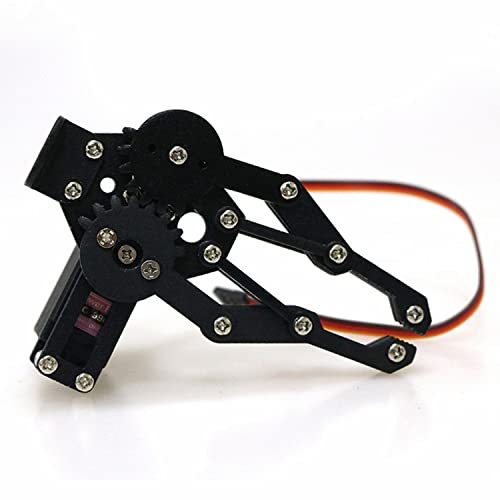
- Includes MG996R servo
- Metal unassembled learning kit
- Works with Arduino, Raspberry Pi, Microbit
Best For: Adult learners and DIY robotics practice
Flexible 6DOF Arm Platform
diymore ROT3U Aluminum Robot Arm Kit
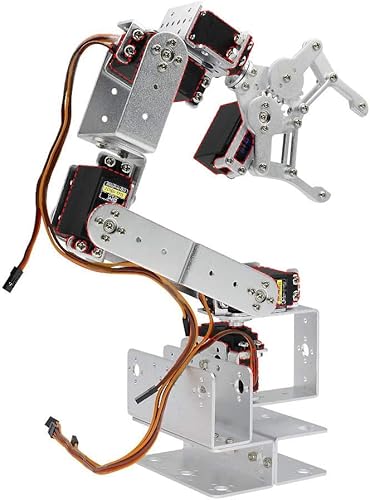
- 6DOF aluminum arm design
- No soldering required
- Sold without servos
Best For: Builders sourcing their own servos
Wide-Range Metal Claw
Full Metal Wave Edge Robot Hand Gripper

- Hard aluminum alloy build
- 230mm maximum opening distance
- 1 lb max grab weight
Best For: DIY builders needing a durable gripper body
Starter Bluetooth Claw
Bluetooth Robot Claw for Arduino and Micro:bit

- Works with Arduino, Raspberry Pi, and Micro:bit
- Bluetooth-enabled for wireless control
- Metal servo build for STEM learning
Best For: Beginners and students building an entry-level robotic gripper
Metal Learning Gripper Kit
Unassembled Metal Gripper Kit with Servo
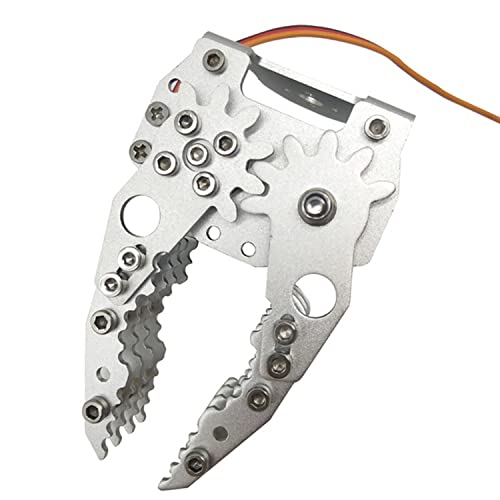
- Includes an MG996R servo and hardware
- Supports Arduino, Raspberry Pi, and Micro:bit
- Unassembled design suits learning and practice
Best For: Adult learners and makers focused on robotics and coding practice
High-Torque G6 Gripper Kit
G6 Metal Gripper with 20KG Servo

- Pre-installed 20KG servo for easier integration
- Aluminum alloy jaws target stronger gripping
- Works with Arduino, Raspberry Pi, and Micro:bit
Best For: Makers and STEM projects needing a stronger, ready-to-use gripper
Open-Source AI Robotic Arm – reBot B601-DM Assembled Robotic Arm Kit with Gripper
If you’re comparing robotic gripper kits for AI projects, the reBot B601-DM stands out as a fully assembled open-source arm with a gripper, so you can spend less time on setup and more time on control, teleoperation, and experimentation. It supports Python SDK, ROS1/ROS2, LeRobot, Pinocchio, and Isaac Sim related workflows, making it a strong fit for modern robotics development.
Best For: Developers, researchers, and STEM teams who want an assembled, open-source robotic gripper platform for AI robotics work.
Pros:
- Fully assembled 6+1 DoF arm with gripper reduces setup effort.
- Open-source hardware and software resources support learning and modification.
- Works with Python SDK, ROS1/ROS2, LeRobot, and Isaac Sim related development.
- High reach, 1.5kg payload, and 0.2mm repeatability suit lab and prototyping use.
Cons:
- Best suited to users comfortable with robotics software and development tools.
- Not intended as a simple toy-style build for casual play.
Overall, this is a capable platform if you want a serious robotic gripper kit for manipulation tasks, embodied AI, and research-focused workflows. The pre-assembled design makes it easier to get started while still leaving plenty of room for customization.
Hydraulic Wearable Hand Kit – Thames & Kosmos Mega Cyborg Hand
For shoppers who want robotic gripper kits that are more educational than technical, the Mega Cyborg Hand is a wearable mechanical hand powered by air pressure and water, with no motors or batteries required. It teaches how pneumatic and hydraulic systems work while letting you build a hand that can grip objects with real force.
Best For: Kids and STEM learners who want a hands-on hydraulic hand kit with adjustable gripping configurations.
Pros:
- No motors or batteries needed; powered by air pressure, water, and your own hands.
- Hydraulic pistons help the fingers open, close, and grip objects.
- Adjustable joints and three configurations: right hand, left hand, and claw-like.
- Teaches pneumatic and hydraulic systems used in industrial robots.
Cons:
- More of a STEM experiment than a practical robotic gripper for automation.
- Requires assembly and manual operation.
This kit is a strong pick if your priority is learning and play rather than robotics control. It offers an engaging way to explore gripping mechanics and robot-inspired motion without needing electronics.
DIY Metal Claw Gripper – LewanSoul Mechanical Robot Arm Claw
LewanSoul Mechanical Robot Arm Claw/Gripper Robot Gripper (Black Mechanical Claw Without servo)
Check Price On AmazonIf you need a simple claw component within robotic gripper kits, this LewanSoul mechanical claw is a compact metal gripper designed for DIY extension projects. It uses a symmetric gripping layout and wave-shaped inner edge to improve stability when handling objects, and it can be paired with a strong-torque servo for loads up to 500g.
Best For: Makers who need a small mechanical claw for DIY robot arm or gripper builds.
Pros:
- Wave-shaped inner edge helps improve clamping stability.
- Symmetric gripping makes object positioning easier.
- Multiple M2 and M3 holes support DIY extensions.
- Can grab items weighing up to 500g when paired with a suitable servo.
Cons:
- Sold without servo, so it is not a complete functional gripper by itself.
- Manual/parts-based product, not a ready-to-run robotics kit.
This is best viewed as a gripper component for builders who already have servo and control hardware. For compact DIY robotics, it offers a practical metal claw base with useful mounting flexibility.
Hands-On STEM Robotic Hand – 4M KidzLabs Robotic Hand Kit
Among robotic gripper kits for younger builders, the 4M KidzLabs Robotic Hand focuses on manual construction and realistic finger motion rather than electronics. It demonstrates tendon and muscle movement through a buildable hand that can grip and move items, making it a practical science toy for STEM learning.
Best For: Kids 8+ who want a simple, educational robotic hand project with gripping movement.
Pros:
- Builds a robotic hand with realistic gripping and manipulation motions.
- Teaches how tendons, muscles, joints, and human hand movement work.
- All-in-one kit includes the materials and instructions needed for assembly.
- Manual operation keeps the project simple and classroom-friendly.
Cons:
- Cardboard-based construction is less durable than metal or electronics kits.
- Manual design is not intended for advanced robotic control.
For families, classrooms, or first-time builders, this kit offers an approachable introduction to gripping mechanics. It is more of a hands-on learning model than a robotics platform, but that is exactly what makes it accessible.
Hands-On Learning Gripper – Premium Metal Robot Mechanical Claw
If you want a hands-on option in robotic gripper kits for learning control, this metal mechanical claw is built around practical experimentation. It ships unassembled and includes an MG996R servo, so it’s aimed at users who want to learn gripper motion, servo control, and basic robot structure rather than plug-and-play precision.
Best For: Adult learners, college students, and DIY robotics projects focused on Arduino, Raspberry Pi, or Microbit control.
Pros:
- Includes a high-torque MG996R servo for gripper control.
- Supports learning robotics, programming, and electronics with common boards.
- Metal construction makes it feel solid once assembled.
- Useful for clip-and-carry demonstrations, experiments, and repeat practice.
Cons:
- Ships unassembled, so you’ll need patience during setup.
- Precision is described as not high, so this is more educational than exacting.
- Assembly instructions may require checking provided documents or contacting the seller.
Overall, this is a strong pick if your main goal is to learn how a robotic claw works and how to drive it with code. It’s less about polished performance and more about understanding the mechanics and control side of a gripper kit.
Flexible 6DOF Arm Platform – diymore ROT3U Aluminum Robot Arm Kit
This aluminum option stands out among robotic gripper kits if you want a larger arm platform rather than just a standalone claw. The kit is unassembled and comes without servos, but it offers a 6DOF structure with clearly listed size and reach specs for users planning a more ambitious build.
Best For: Builders who want a 6DOF aluminum robot arm platform and plan to source their own servos.
Pros:
- 6DOF design gives more movement flexibility than a basic claw.
- Aluminum construction suits a sturdier mechanical build.
- No soldering required, which simplifies assembly work.
- Seller recommends MG996R or MG995 servos for different load points.
Cons:
- Does not include servos, so it is not a complete ready-to-run kit.
- Unassembled parts mean setup time is still required.
- Manual may not be included, so you may need to contact the seller for help.
For makers who already have servo parts or want to choose their own, this is a flexible starting point. It makes the most sense as a build-it-your-way arm kit rather than an all-in-one beginner package.
Wide-Range Metal Claw – Full Metal Wave Edge Robot Hand Gripper
If you need a compact entry in robotic gripper kits with a stronger mechanical feel, this full metal wave-edge claw is designed for practical grabbing tasks. It comes without a servo, so it works best for users who already have a compatible motor and want a durable aluminum-alloy gripper body.
Best For: DIY builders who want a metal gripper body with a wide opening range and plan to add their own servo.
Pros:
- Hard aluminum alloy construction for a sturdy build.
- Up to 230mm opening distance for larger object handling.
- Rated for a 1 lb max grab weight.
- Compact 119g weight makes it relatively lightweight for a metal claw.
Cons:
- Does not include a servo, so you’ll need to supply one separately.
- More of a mechanical claw body than a complete kit.
- Best suited to DIY integration rather than out-of-box use.
This is a practical choice if your project already has a control setup and you just need a durable gripper mechanism. The wide opening range and metal build make it appealing for hands-on robot arm experiments.
Starter Bluetooth Claw – Bluetooth Robot Claw for Arduino and Micro:bit
If you’re comparing robotic gripper kits for a first build, this Robot Claw is aimed at hands-on STEM projects with common platforms like Arduino, Raspberry Pi, and Micro:bit. The Bluetooth connectivity and metal servo make it a simple way to explore basic gripper control, class demos, and entry-level robotic arm experiments.
Best For: Teens, students, and beginners who want a Bluetooth-capable robotic gripper kit for introductory STEM builds.
Pros:
- Compatible with Arduino, Raspberry Pi, and Micro:bit.
- Metal servo construction is suited to DIY robot arm learning.
- Bluetooth support adds a convenient wireless control option.
Cons:
- The listing focuses on basic project use rather than advanced performance specs.
- Details about assembly and included accessories are limited in the supplied notes.
This is a practical choice if your priority is learning gripper mechanics and platform integration rather than getting a highly specialized industrial setup.
Metal Learning Gripper Kit – Unassembled Metal Gripper Kit with Servo
Among robotic gripper kits, this metal claw stands out as a learning-focused unassembled kit for Arduino, Raspberry Pi, and Micro:bit projects. It is designed for coding practice, robot structure study, and simple gripping tasks, with the included MG996R servo and assembly manual aimed at maker-style experimentation.
Best For: Adult learners, college students, and makers who want an unassembled metal gripper kit for coding and robotics practice.
Pros:
- Metal construction gives it a solid, educational build.
- Includes an MG996R servo and screw bag for assembly.
- Works with Arduino, Raspberry Pi, and Micro:bit coding projects.
- Useful for learning gripper control and basic object handling.
Cons:
- It ships unassembled, so setup takes time and patience.
- The notes say precision may not be high.
- Primarily positioned as a research and learning kit.
This is a strong pick if you want a hands-on metal gripper kit for learning servo control and robot programming, and you do not mind assembly work.
High-Torque G6 Gripper Kit – G6 Metal Gripper with 20KG Servo
If you want a more heavy-duty option in robotic gripper kits, the G6 kit is built around an aluminum alloy claw and a pre-installed DS3120MG 20KG servo. The supplied notes emphasize grip force, plug-and-play wiring, and compatibility with Arduino, Raspberry Pi, and Micro:bit for STEM projects, robot arms, and FPV drone grabbers.
Best For: Makers and STEM teams who want a ready-to-integrate gripper kit with stronger torque and wider object handling.
Pros:
- Pre-installed DS3120MG 20KG servo simplifies setup.
- Aluminum alloy jaws are designed for a strong grip.
- Compatible with Arduino, Raspberry Pi, and Micro:bit.
- Suitable for robot arms, STEM labs, and FPV drone use.
Cons:
- Heavier and more specialized than a basic starter claw.
- Best suited to projects that can use its larger 20-100mm grip range.
This kit makes sense if your project needs a sturdier, more plug-and-play gripper with higher torque and broader application support.
How We Picked These Robotic Gripper Kits
We prioritized build quality, compatibility, and practical use rather than marketing claims. Strong candidates offered clear specs, useful mounting options, and a sensible balance of grip strength, assembly complexity, and learning value. We also looked for kits that fit common ecosystems like Arduino, Raspberry Pi, micro:bit, Python, and ROS when relevant.
Quick Comparison
The main split is between educational hand models, basic claw-style grippers, and higher-torque metal assemblies. Educational kits are best for younger learners and first-time builders. Claw grippers and servo-driven metal units suit automation projects, robot arms, and prototyping where repeatable grabbing matters more than novelty.
Key Buying Factors for Robotic Gripper Kits
Compatibility and Control
Check whether the kit is built for direct servo control, external controllers, or software stacks like Python and ROS. If you are integrating with a larger robot arm or smart project, compatibility can matter more than raw grip force.
Material and Construction
Plastic kits are usually lighter and friendlier for beginners, while metal Robotic Gripper Kits tend to be sturdier and better suited to repeated use. Metal construction often improves durability, but it can also add weight and demand a stronger servo.
Grip Strength and Range
Look at maximum opening width, load capacity, and servo torque. If you plan to pick up small parts, a precise claw is more useful than a large hand. For heavier objects, choose a gripper with a high-torque servo and a proven clamp design.
Assembly Difficulty
Some kits arrive assembled or nearly assembled, while others are full DIY builds. If you want fast results, choose a simpler kit. If you want a learning project, an unassembled design can teach mechanics, motion, and control concepts.
Who Should Buy Which Robotic Gripper Kits?
Beginners and STEM shoppers should lean toward educational hand kits that make mechanics easy to visualize. Makers building Arduino or Raspberry Pi robots should look at servo-based claws and metal clamp assemblies with straightforward mounting. Advanced users working on automation, AI, or ROS projects are usually better served by more capable Robotic Gripper Kits with stronger actuation, better software support, and a design that can handle repeated testing.
If you are unsure, start with the simplest kit that still meets your project goals. The best choice is the one that matches your platform, payload needs, and build time—not just the biggest or most expensive option.