
The best science experiment sets for elementary students turn abstract STEM concepts into hands-on discovery. The kits in this roundup cover chemistry, physics, observation, and classic lab activities for different ages and experience levels.
Before choosing, consider whether your child prefers guided experiments, open-ended exploration, or a larger project set they can revisit over time. The buying guide below highlights the features that matter most.
Best 10 Science Experiment Sets for Elementary Students Picks for 2026
Most Variety
National Geographic Science Magic Kit

- 100-plus experiments and magic tricks
- 20 experiments include the required materials
- Bonus booklet adds 85-plus activities
Best For: Older elementary students who enjoy magic-themed STEM activities
Best for Younger Learners
Learning Resources Primary Science Lab Set
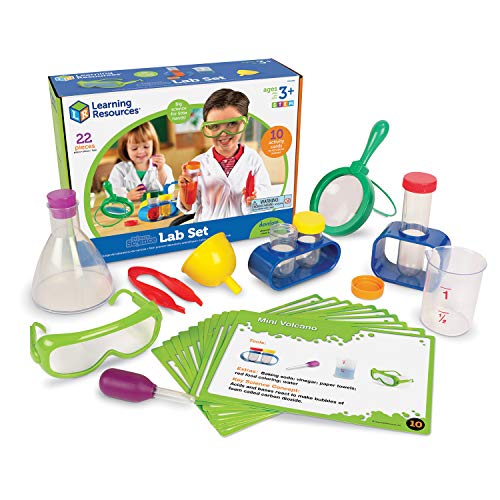
- 22 child-sized lab tools and accessories
- 10 double-sided activity cards included
- Durable plastic suits home or classroom play
Best For: Young beginners exploring simple science and pretend lab activities
Best Guided Chemistry Set
National Geographic Junior Chemistry Set

- 50 hands-on chemistry experiments
- 20-plus child-safe lab tools included
- Illustrated step-by-step instructions
Best For: Young children starting guided chemistry activities
Best for STEM Project Variety
Smartivity My First Science Experiment Kit

- More than 50 science experiment ideas
- 26 parts and instruction manual included
- Focuses on STEM and problem-solving skills
Best For: Ages 8 to 14 seeking varied hands-on STEM projects
Best Chemistry-Focused Pick
National Geographic Amazing Chemistry Set

- 100+ chemistry experiment ideas
- Materials for 15 featured activities
- Includes real lab-style tools
Best For: Kids ages 8 and up who want hands-on chemistry activities
Best Variety Lab Set
80 Science Lab Experiments Kit

- Includes instructions for 80 experiments
- Comes with goggles, gloves, and lab tools
- Covers colorful demonstrations and reactions
Best For: Children over 6 who enjoy varied science activities and scientist role play
Best for Comfort
Melican 60+ Science Experiment Kit

- Designed for ages 4 and up
- Includes 60+ hands-on experiments
- Comes with goggles and an illustrated manual
Best For: Younger children exploring introductory STEM with a parent
Most Experiments
UNGLINGA 150-Experiment Science Kit

- Offers 150 hands-on experiments
- Covers chemistry, physics, and earth science
- Includes illustrated instructions and lab-style tools
Best For: Learners who want maximum project variety
Best for Extended Learning
Doctor Jupiter Ultimate Science Kit

- Provides 135+ combined experiments
- Includes bonus household-item projects
- Uses illustrated, step-by-step instructions
Best For: Families planning repeated STEM activities
Best Balanced Starter Set
UNGLINGA 70-Experiment Lab Kit

- Includes 70 varied experiments
- Covers volcanoes, crystals, circuits, and reactions
- Uses illustrated instructions with science explanations
Best For: Beginners wanting a manageable STEM activity set
Most Variety – National Geographic Science Magic Kit
For families seeking science experiment sets for elementary students, this National Geographic kit combines STEM activities with magic-themed demonstrations. It includes materials for 20 experiments and a bonus booklet with more than 85 additional magic experiments, making it a substantial option for children ages 8 and up.
Best For: Elementary students who enjoy magic, chemistry-themed activities, and a large selection of experiments.
Pros:
- Offers 100-plus combined science experiments and magic tricks.
- Includes everything needed for 20 magic experiments.
- Comes with a bonus booklet containing 85-plus additional experiments.
- Requires no batteries and supports STEM learning.
Cons:
- Recommended for ages 8 and up, so it may not suit younger elementary students.
- The magic-focused theme may be less appealing to children seeking broader science topics.
Choose this set when variety is the priority. Its large experiment count and magic presentation can help keep older elementary learners engaged, though younger children may need adult guidance.
Best for Younger Learners – Learning Resources Primary Science Lab Set
Among science experiment sets for elementary students, this lab set stands out for its child-sized tools and simple activity format. Designed for young children, it includes 22 pieces such as test tubes, a beaker, goggles, and activity cards for guided or imaginative experiments using common household ingredients.
Best For: Preschool and early elementary children who are beginning to explore observation, testing, and pretend laboratory play.
Pros:
- Includes 22 pieces, including goggles, test tubes, a flask, and an eyedropper.
- Comes with 10 double-sided activity cards for structured play.
- Sturdy plastic construction is designed to withstand drops and spills.
- Supports hypothesis formation, critical thinking, and observation skills.
Cons:
- The activities are intended for younger beginners rather than advanced experiments.
- Household ingredients are needed for many activities.
- The listed details show different age descriptions, so parents should verify suitability for their child.
This is a practical starter set for hands-on discovery. Its durable tools and activity cards make it especially useful for home or classroom play with adult supervision.
Best Guided Chemistry Set – National Geographic Junior Chemistry Set
This National Geographic junior kit is one of the more approachable science experiment sets for elementary students, with 50 hands-on chemistry activities and illustrated instructions. It includes more than 20 child-safe lab tools and uses familiar household items such as baking soda and vinegar for many experiments.
Best For: Children ages 4 and up who benefit from illustrated, step-by-step chemistry activities.
Pros:
- Provides 50 interactive experiments.
- Includes more than 20 lab tools, including test tubes and goggles.
- Illustrated instructions are designed to be easy to follow.
- Uses common household ingredients for some activities.
Cons:
- Some experiments require additional household ingredients.
- Younger children may still need adult help despite the guided instructions.
For families wanting a clearly structured introduction to chemistry, this set offers a strong balance of tools and activity ideas. The broad experiment count also gives children plenty of opportunities to repeat and compare activities.
Best for STEM Project Variety – Smartivity My First Science Experiment Kit
For shoppers comparing science experiment sets for elementary students, the Smartivity kit offers a broad STEM-oriented activity mix for children in the listed 8-to-14 age range. It includes 26 parts, an instruction manual, and more than 50 experiment ideas focused on hands-on learning and problem solving.
Best For: Elementary and middle-school learners who want a larger project set that extends beyond basic introductory activities.
Pros:
- Offers more than 50 science experiment ideas.
- Includes 26 parts and an instruction manual.
- Targets STEM and problem-solving skills.
- Requires no batteries.
Cons:
- The manufacturer-recommended age is 8 to 14, limiting its fit for younger elementary children.
- The supplied details do not specify every experiment or the full contents of the manual.
- Some projects may require adult assistance depending on the child and activity.
This kit is a sensible choice for children ready for more varied STEM projects. Its large activity count can support repeated use, while the included manual provides a starting point for guided exploration.
Best Chemistry-Focused Pick – National Geographic Amazing Chemistry Set
For elementary students ready to explore chemistry, this National Geographic set combines hands-on tools with more than 100 experiment ideas. It includes materials for 15 featured activities, while the bonus guide adds 85 experiments using common household items.
Best For: Kids ages 8 and up who enjoy chemistry, reactions, crystal growing, and using real lab-style tools.
Pros:
- Offers more than 100 total experiment ideas.
- Includes test tubes, beakers, pipettes, and materials for 15 experiments.
- Features engaging activities such as color-changing solutions, glowing experiments, bouncy-ball making, and crystal growing.
- Uses common household items for the 85 bonus experiments.
Cons:
- The manufacturer recommends it for ages 8 and up, so it may not suit younger elementary students.
- The bonus activities require additional household materials.
This is a strong choice among science experiment sets for elementary students when chemistry is the main interest. Its dedicated materials and broad bonus guide offer plenty of repeat-use potential, especially with adult support for younger users.
Best Variety Lab Set – 80 Science Lab Experiments Kit
This 80-experiment kit gives elementary learners a broad introduction to science through activities such as rainbow rain, volcanoes, fountains, and bottle-blowing balloons. Its guidance cards outline the steps and scientific principles, helping children progress from simpler activities to more challenging ones.
Best For: Children over 6 who enjoy scientist role play, colorful demonstrations, and a large assortment of lab-style accessories.
Pros:
- Provides instructions and scientific explanations for 80 experiments.
- Includes goggles, gloves, test tubes, petri dishes, droppers, measuring cups, balloons, and other accessories.
- Offers a wide range of visual activities, including rainbow effects and volcano experiments.
- Materials are stored in separate bottles with tightly closed lids for continued use.
Cons:
- The listing gives conflicting age information, mentioning children over 6 while also stating a manufacturer range of 36 months to 12 years.
- The very broad activity count may require adult guidance to organize materials and follow the steps.
Among science experiment sets for elementary students, this kit stands out for variety and role-play appeal. The included tools and experiment cards make it a flexible choice for children who like trying many different types of activities rather than focusing on one science topic.
Best for Comfort – Melican 60+ Science Experiment Kit
Designed for children ages 4 and up, this Melican kit offers more than 60 straightforward experiments with an emphasis on colorful, memorable activities. The set includes experimental materials, tools, safety goggles, and an illustrated manual for guided exploration with a parent.
Best For: Younger elementary students and preschool-age children who need accessible, visually engaging STEM activities with adult assistance.
Pros:
- Recommended for children ages 4 and up.
- Includes more than 60 activities, including volcanoes, dinosaur-egg digging, milk animation, and lava lamps.
- Provides materials, tools, safety goggles, and an illustrated instruction manual.
- Encourages observation, questions, investigation, and critical thinking.
Cons:
- The instructions are intended to be used with parent assistance.
- The activities focus primarily on introductory chemistry and visual reactions.
This is a practical option for families seeking science experiment sets for elementary students at the younger end of the age range. Its accessible activities and included safety gear make it approachable, while the variety can support supervised weekend, school-break, or birthday learning.
Most Experiments – UNGLINGA 150-Experiment Science Kit
For families comparing science experiment sets for elementary students, the UNGLINGA 150-Experiment Science Kit stands out for its unusually large project count. It covers topics including earth science, surface tension, chemistry, and physics, with a step-by-step illustrated manual and several lab-style tools included.
Best For: Elementary-age learners who want a broad variety of hands-on experiments and families looking for an at-home science activity set.
Pros:
- Includes 150 experiments across multiple science topics.
- Illustrated, step-by-step instructions support independent or guided use.
- Includes kid-friendly materials and tools such as goggles.
- Some projects can use common household items.
Cons:
- The manufacturer recommends the kit for ages 8 and up.
- Not every project relies solely on the included materials.
Choose this set when variety is your priority. Its broad experiment range and included scientist-style accessories make it a flexible option for school breaks, weekends, or recurring family science time.
Best for Extended Learning – Doctor Jupiter Ultimate Science Kit
The Doctor Jupiter Ultimate Science Kit is a strong contender among science experiment sets for elementary students ages 8 and up. It combines more than 135 experiments with a bonus booklet containing additional projects using everyday household items, while clear illustrations help children and parents follow each activity.
Best For: Families seeking a STEM-focused kit with many activities, repeat-use materials, and opportunities for parent-child participation.
Pros:
- Includes more than 135 combined experiments and bonus activities.
- Projects include color changes, glowing water, underwater volcanoes, and more.
- Step-by-step illustrated instructions are designed for kids and parents.
- Chemical materials come in separate leak-proof bottles.
Cons:
- Recommended for children ages 8 and above.
- More than 90 bonus experiments use everyday household items, so they may require supplies beyond the kit.
This kit is especially appealing when you want a long-running activity rather than a one-afternoon project. Its combination of included components, bonus experiments, and STEM-oriented activities supports repeated learning and shared experimentation.
Best Balanced Starter Set – UNGLINGA 70-Experiment Lab Kit
For shoppers who want approachable science experiment sets for elementary students without the largest project count, the UNGLINGA 70-Experiment Lab Kit offers a balanced selection. Children can explore volcanoes, crystals, balloon rockets, fruit circuits, and chemical reactions while learning basic chemistry and the scientific process.
Best For: Beginners who want varied STEM activities with clear instructions and a manageable 70-project format.
Pros:
- Includes 70 experiments spanning chemistry, physics, and simple circuits.
- Features engaging activities such as volcanoes, crystal growing, and balloon rockets.
- Manual includes illustrated steps and explanations of the reactions involved.
- Designed to encourage critical thinking, problem-solving, and science skills.
Cons:
- The manufacturer recommends the kit for ages 8 and up.
- The supplied details do not list included components, so some activities may require checking the manual or household supplies.
This is a practical middle ground for children who are new to hands-on science. It offers enough variety to maintain interest while keeping the total experiment count more approachable than larger kits.
How We Picked These Science Experiment Sets for Elementary Students
We selected kits across a range of ages, experiment counts, formats, and budgets. The lineup includes introductory lab sets for younger children, chemistry-focused kits for older elementary students, and larger collections designed for repeated play. We considered the clarity of instructions, variety of activities, opportunities to practice STEM skills, storage and organization, and whether adult supervision is likely to be needed.
Experiment counts can be useful, but they are not the only measure of value. A smaller kit with clear directions and engaging demonstrations may be a better choice than a large set filled with repetitive activities.
Quick Comparison
| Best For | Look For | Typical Strength |
|---|---|---|
| First-time young scientists | Simple tools and short activities | Easy introduction to observation and cause-and-effect |
| Chemistry enthusiasts | Ingredient-based reactions and lab accessories | More focused practice with mixtures, reactions, and measurement |
| Independent learners | Detailed, illustrated instructions | Encourages self-directed exploration with occasional help |
| Families seeking value | Many varied experiments and reusable equipment | More opportunities for repeat play |
Key Buying Factors
Age and Supervision
Match the kit to the child’s reading ability, fine-motor skills, and patience—not just the age printed on the box. Younger children generally benefit from demonstrations that use familiar materials, while older elementary students may be ready for multi-step procedures. Check the label for required adult supervision, protective equipment, and activities involving heat, sharp tools, or household chemicals.
Experiment Variety and Educational Value
Look for a useful mix of topics rather than a high number of nearly identical activities. Strong Science Experiment Sets for Elementary Students explain what to do, what to observe, and why the result happens. Kits that encourage recording predictions and results provide more learning value than those focused only on visual effects.
Included Materials and Replenishment
Review the contents list before buying. Some kits include specialized tools but require common household supplies; others provide more of the consumables needed to begin immediately. Reusable beakers, droppers, measuring tools, and protective gear can extend the kit’s usefulness. Also check whether replacement ingredients are easy to obtain.
Storage, Instructions, and Safety
A compartmented case or organized tray helps prevent lost pieces. Instructions should use clear language, illustrations, safety reminders, and cleanup guidance. Avoid kits that make broad claims about the number of experiments without explaining what materials or preparation each activity requires.
Who Should Buy Which Science Experiment Sets for Elementary Students?
Choose a basic primary lab set for a younger child who is just beginning to explore science. A junior chemistry kit suits children who enjoy mixing, measuring, and visible reactions but still need closely guided activities. Larger 70-, 100-, or 150-experiment collections are better for families wanting a broad activity library or siblings who can share a kit.
For children who prefer imaginative play, a scientist role-play kit can make procedures feel more engaging. Older elementary students who want more challenge should look for chemistry sets with detailed explanations and varied experiments rather than choosing solely by the largest experiment number. In every case, plan to participate at least during the first few activities, then adjust supervision as your child demonstrates safe, careful handling.