
The best science experiment sets turn curiosity into hands-on learning, helping children explore chemistry, physics, biology, and everyday STEM concepts through guided activities.
We compared 10 popular kits by experiment variety, age range, educational value, included materials, and ease of use so you can choose a set that matches your child’s interests and experience level.
Best 10 Science Experiment Sets Picks for 2026
Best for Science Magic
National Geographic Mega Science Kit

- 20 included magic experiments
- 85+ bonus activities in a booklet
- For ages 8 and up; no batteries needed
Best For: Kids who enjoy science with a magic-trick theme
Best for Younger Experimenters
Melican 60+ Science Experiment Kit

- 60+ beginner-friendly experiments
- Includes tools, materials, manual, and goggles
- Designed for ages 4 and up
Best For: Young children beginning hands-on STEM exploration
Best Chemistry-Focused Set
National Geographic Amazing Chemistry Set

- 100+ experiment ideas
- 15 experiments include supplied materials
- Features test tubes, beakers, and pipettes
Best For: Ages 8+ exploring hands-on chemistry
Best for Variety
80-Experiment Scientist Role-Play Kit

- Guidance for 80 different experiments
- Includes goggles, gloves, tools, and materials
- Activities range from volcanoes to rainbow effects
Best For: Kids who enjoy varied experiments and scientist role-play
Best Starter Chemistry Kit

- 50 hands-on chemistry experiments
- 20+ child-safe lab tools included
- Illustrated directions for ages 4+
Best For: Young beginners exploring introductory chemistry
Best for Experiment Variety
Ultimate Science Experiments Kit

- 135+ activities across two guides
- Kid-friendly tools and materials included
- Designed for ages 8+ and family use
Best For: Older children wanting a wide range of STEM projects
Best Three-in-One Set
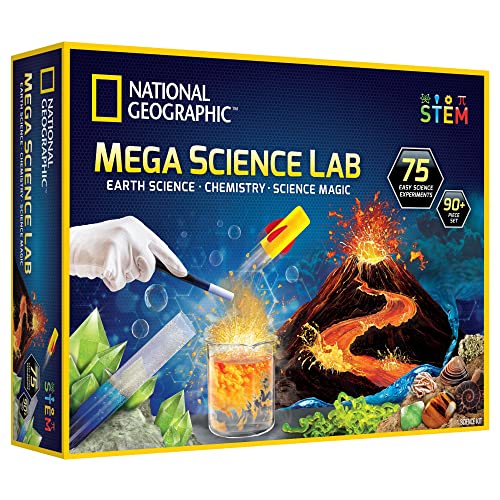
- Earth science, chemistry, and science magic
- 75 experiments with bonus activities
- Includes rock, mineral, and crystal specimens
Best For: Ages 8+ seeking varied science activities
Best for Young Explorers
Girls' First Science Experiments Kit

- 100+ hands-on experiments
- Illustrated step-by-step guide
- Includes goggles and lab tools
Best For: Children ages 4–8 and parent-child STEM play
Best Heavy-Duty Pick
UNGLINGA 150-Experiment Science Kit

- 150 experiments across STEM topics
- Includes tools and kid-friendly materials
- Illustrated scientific manual
Best For: Kids 8+ who want varied home science projects
Best for Gross Science
National Geographic Gross Science Kit

- 45 gross-themed experiments
- Explores polymers, pH, and reactions
- Includes 30 household-item activities
Best For: Kids ages 8–12 who enjoy entertaining chemistry projects
Best for Science Magic – National Geographic Mega Science Kit
If you want science experiment sets with an entertaining magic theme, this National Geographic kit combines 20 included experiments with a bonus booklet containing more than 85 additional activities. It is designed for children ages 8 and up and requires no batteries.
Best For: Kids who enjoy magic tricks alongside hands-on STEM activities.
Pros:
- Includes materials for 20 magic experiments.
- Adds 85-plus bonus experiments through the included booklet.
- Supports STEM learning with a fun science-magic theme.
- Requires no batteries and includes manufacturer support.
Cons:
- Recommended for ages 8 and up, so it may not suit younger children.
- The bonus activities may require common household materials.
This is a strong choice for children who might be more excited by surprising demonstrations than traditional chemistry exercises. Its mix of included experiments and booklet-based activities also gives it good staying power.
Best for Younger Experimenters – Melican 60+ Science Experiment Kit
Among science experiment sets for younger children, this Melican kit stands out with more than 60 activities aimed at ages 4 and up. The experiments include volcanoes, dinosaur eggs, milk animation, lava lamps, and other introductory chemical reactions.
Best For: Preschool and early-elementary children exploring basic STEM concepts with adult assistance.
Pros:
- Offers more than 60 hands-on experiments.
- Includes materials, tools, a manual, and safety goggles.
- Illustrated instructions are designed to support guided activities.
- Suitable for ages 4 and up according to the supplied details.
Cons:
- Younger children will need parent assistance.
- The plastic components may feel less substantial than advanced lab-style kits.
With accessible activities and a broad age range, this is a practical starter set for families seeking simple, colorful experiments. It emphasizes curiosity and logical thinking without requiring advanced equipment.
Best Chemistry-Focused Set – National Geographic Amazing Chemistry Set
For children specifically interested in chemistry, this National Geographic kit is one of the more focused science experiment sets in the group. It includes materials for 15 experiments, plus a guide to 85 additional activities using common household items.
Best For: Kids ages 8 and up who want chemistry-themed reactions and real lab-style tools.
Pros:
- Provides more than 100 total experiment ideas.
- Includes materials for 15 featured chemistry experiments.
- Uses tools such as test tubes, beakers, and pipettes.
- Covers activities including crystal growing, color changes, and glowing projects.
Cons:
- Recommended for ages 8 and up.
- Many bonus experiments rely on household items not included in the kit.
This set is a good match for children who want a more traditional chemistry experience rather than general science play. The combination of prepared materials and household-item extensions helps balance convenience with repeat use.
Best for Variety – 80-Experiment Scientist Role-Play Kit
This scientist role-play set offers 80 experiments, making it a versatile option among science experiment sets for children over 6. Activities include rainbow rain, volcanoes, fountains, and bottle-blowing balloons, with guidance cards that explain steps and scientific principles.
Best For: Children who enjoy varied experiments and pretending to work in a science lab.
Pros:
- Includes guidance for 80 experiments, from simple to more challenging.
- Provides a broad collection of tools, containers, measuring items, and materials.
- Includes goggles and gloves for role-play and activity setup.
- Sealed bottles are intended to help preserve reusable chemical materials.
Cons:
- The supplied age information spans a broad range, so adult guidance may be useful.
- The kit contains many small components that require organized storage.
- Some experiments may require careful supervision and setup.
The large assortment makes this a compelling choice for families that want many different activities in one package. Its step-by-step cards can also help children build confidence as they progress from simpler demonstrations to more involved experiments.
Best Starter Chemistry Kit – Junior Chemistry Set
For younger children beginning with science experiment sets, the National Geographic Junior Chemistry Set offers 50 hands-on activities using the included tools and familiar household items such as baking soda and vinegar. Illustrated, step-by-step directions make it approachable for early learners.
Best For: Children ages 4 and up who are ready for introductory chemistry activities and supervised STEM play.
Pros:
- Includes 50 interactive experiments.
- Provides more than 20 child-safe lab tools, including test tubes and goggles.
- Illustrated instructions support independent participation.
- Requires no batteries and can incorporate common household items.
Cons:
- The chemistry focus and early-learning design may be less engaging for older children.
- Some activities require additional household ingredients.
Its age-appropriate format and substantial tool selection make this a practical first chemistry set, especially for families seeking simple, guided experiments rather than an advanced laboratory experience.
Best for Experiment Variety – Ultimate Science Experiments Kit
Among science experiment sets for older children, the Doctor Jupiter Ultimate Science Kit stands out for its breadth: the kit and bonus booklet combine more than 135 activities, from color changes and glowing water to underwater volcanoes and potions. Clear instructions and separately packaged materials help keep projects manageable.
Best For: Children ages 8 and up who want a large selection of repeatable STEM activities and families looking for a parent-child project.
Pros:
- Offers more than 135 experiments across the kit and bonus booklet.
- Includes tools such as a measuring cylinder, conical flask, funnel, tray, and test-tube stand.
- Step-by-step illustrated instructions are designed for parents and children to use together.
- Leak-proof bottles and household-item bonus experiments add flexibility.
Cons:
- Recommended for ages 8 and up, so it is not aimed at preschool learners.
- The large activity count may require adult help with setup and supervision.
This is a strong choice when variety matters most. Its extensive experiment library can provide substantial hands-on learning, while the included materials cover a broad range of colorful and creative projects.
Best Three-in-One Set – Mega Science Lab
The National Geographic Mega Science Lab combines Earth science, chemistry, and science magic in one of the more versatile science experiment sets for ages 8 to 12. It includes 45 featured activities plus 30 bonus experiments using household items, along with rocks, minerals, crystals, and other project materials.
Best For: Children ages 8 and up who want to sample multiple branches of science instead of focusing on one subject.
Pros:
- Combines three themed kits in one package.
- Includes 75 total experiments, including household-item bonus activities.
- Covers volcanoes, crystals, water tornadoes, fossils, chemistry reactions, and science magic.
- Provides real rock, mineral, and crystal specimens for collecting and observation.
Cons:
- The broad mix may offer less depth in any single science subject.
- Some bonus experiments depend on common household items.
- Its larger 5.7-pound package may require more storage space.
Choose this set for variety and presentation value. The combination of experiments, specimens, and science-magic activities gives children several ways to explore observation, critical thinking, and STEM concepts.
Best for Young Explorers – Girls' First Science Experiments Kit
For families seeking science experiment sets for younger children, the Doctor Jupiter Girls’ First Science Experiments Kit offers more than 100 activities designed for ages 4 and up. Its illustrated instructions, child-friendly tools, and mix of water, color, and volcano science make it a practical option for guided hands-on play.
Best For: Girls ages 4–8 and parent-child STEM activities.
Pros:
- Includes more than 100 experiments and bonus activities.
- Step-by-step, illustrated instructions support children and adults.
- Includes tools such as beakers, a flask, goggles, a funnel, and color supplies.
- Designed to encourage problem solving through screen-free play.
Cons:
- Several activities use household or included consumable materials that may need replenishing.
- The large experiment count may require adult help for younger children.
With its broad activity range and beginner-focused presentation, this kit is a strong choice when you want an approachable introduction to science experiment sets for preschool and early elementary learners.
Best Heavy-Duty Pick – UNGLINGA 150-Experiment Science Kit
The UNGLINGA 150 Experiments Science Kit is a high-volume option among science experiment sets, covering earth science, surface tension, chemistry, physics, crystals, volcanoes, and more. The illustrated manual and included tools make it suitable for families looking for recurring project ideas at home.
Best For: Kids ages 8 and up who want a wide variety of STEM projects.
Pros:
- Offers 150 experiments across multiple science topics.
- Includes science tools and kid-friendly materials.
- Illustrated, step-by-step instructions make projects easier to follow.
- Many activities can be supplemented with common household items.
Cons:
- Not every required material is included for every project.
- The kit is recommended for children ages 8 and up, so younger children may need close supervision.
This set stands out for sheer variety. It is a sensible pick for children who enjoy trying different experiments rather than repeating activities in a narrower subject area.
Best for Gross Science – National Geographic Gross Science Kit
For kids drawn to unusual demonstrations, the National Geographic Gross Science Kit is one of the most memorable science experiment sets for ages 8–12. It includes materials for 15 gross-themed experiments and a bonus guide with 30 additional activities using common household products.
Best For: Children ages 8–12 who enjoy chemistry, slime, and gross-out STEM activities.
Pros:
- Includes 45 experiments in total: 15 kit-based and 30 household-item activities.
- Uses entertaining themes such as glowing worms, slime, and test-tube reactions.
- Introduces polymers, chemical reactions, and pH science.
- Illustrated instructions explain both the steps and the science behind them.
Cons:
- The gross-science theme may not appeal to every child.
- Thirty bonus experiments require household products.
This is a focused, engaging choice for children motivated by dramatic or silly demonstrations. Its mix of included activities and household experiments adds educational value beyond the initial kit.
How We Picked the Best Science Experiment Sets
We evaluated these Science Experiment Sets based on the number and variety of activities, recommended age, clarity of instructions, educational scope, and the amount of setup required. We also considered whether a kit supports independent play or works better with adult supervision. Experiment count matters, but it is not the only measure of value: a smaller kit with well-explained, repeatable activities can be more useful than a large set filled with one-time demonstrations.
Because these kits cover different skill levels, the selection includes beginner-friendly options for preschool and early elementary children, chemistry-focused sets for older kids, and broad STEM collections that combine multiple scientific disciplines.
Quick Comparison of These Science Experiment Sets
For the widest activity selection, look at the kits advertising 100 or more experiments, such as the National Geographic Science Magic Kit, Amazing Chemistry Set, and UNGLINGA set. Families seeking a focused introduction to chemistry may prefer the National Geographic Junior Chemistry Set or Mega Science Lab. Younger children may be better matched with the Melican kit or Doctor Jupiter Girls’ First Science Experiments Kit, while older children interested in unusual demonstrations may enjoy the Gross Science Kit.
Key Buying Factors
Age and Skill Level
Start with the child’s actual ability rather than choosing solely by the highest listed age. Kits for ages 4 and up generally emphasize simple observation and guided play, while sets for ages 8 to 12 may involve more detailed procedures, measurements, and chemical concepts.
Experiment Variety
Check whether the activities cover chemistry only or include physics, biology, geology, and environmental science. A broader kit can hold attention longer, while a chemistry set may be preferable for a child with a specific interest.
Materials and Supervision
Review what is included and what must be supplied at home. Goggles, measuring tools, containers, and clear instructions improve usability. Adult supervision is recommended for activities involving chemicals, heat, sharp tools, spills, or small parts.
Repeatability and Learning Value
Prioritize kits that explain why an experiment works and allow children to repeat or modify activities. Reusable tools and household-material experiments can provide better long-term value than demonstrations that can only be completed once.
Who Should Buy Which Science Experiment Sets?
Choose a beginner kit for a preschooler or first-time experimenter, a chemistry-focused set for a child fascinated by reactions and laboratory work, and a large multi-topic kit for families wanting the greatest range of activities. Role-play-oriented sets can make science more approachable, while kits with higher experiment counts suit children who enjoy structured projects and want a new activity each time. Whichever set you choose, read the safety guidance first and plan to participate when the instructions call for adult help.