
Servo robot arms are one of the most versatile ways to learn robotics, coding, and motion control. From beginner STEM kits to high-torque open-source builds, the right model can make projects easier, safer, and more fun.
This roundup focuses on practical options for home labs, classrooms, and makers who want reliable movement, good documentation, and upgrade-friendly hardware in 2026.
Best 10 Servo Robot Arms Picks for 2026
Open-Source Learning Pick

- Python and Arduino support
- Inverse kinematics for 3-axis movement
- WiFi, Bluetooth, and sensor expansion
Best For: Learning robotics, programming, and open-source experimentation
High-Torque Bracket Servo

- Up to 25kg·cm stall torque
- 180° or 270° servo options
- Includes U bracket and metal gears
Best For: DIY builders needing a durable servo for custom arms
Dual-Control STEM Kit
SIYEENOVE 4DOF ESP32 Robot Arm
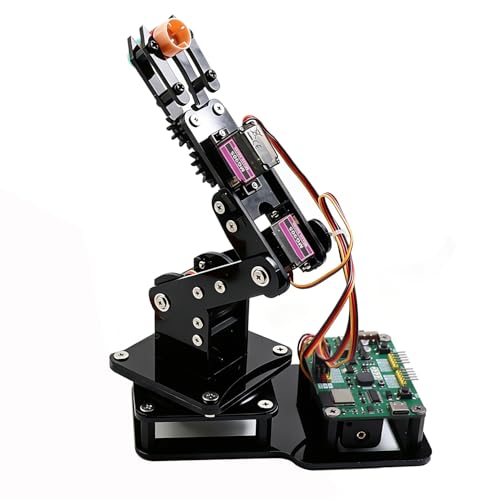
- Four MG90S servos with 4DOF motion
- Joystick and web app control
- Arduino and MicroPython support
Best For: Beginner robotics, classroom demos, and coding practice
AI Robotics Builder
Seeed Studio SO-ARM101 Pro Servo Kit

- 6-DOF open-source arm kit
- LeRobot and Hugging Face compatible
- Jetson-compatible for AI workflows
Best For: AI robotics development, training, and research projects
Desktop STEM Robotic Arm
Hiwonder xArm1S 6DOF Educational Kit
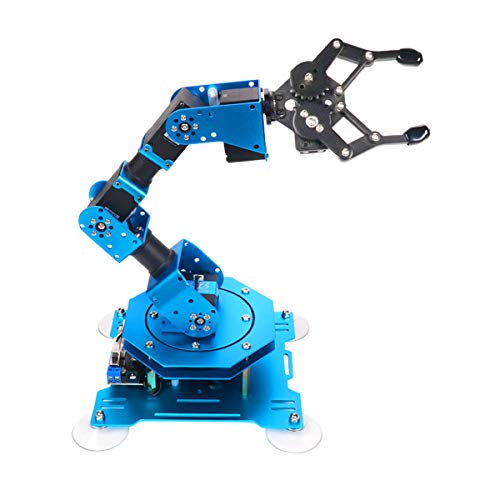
- 6 intelligent bus servos with feedback
- Multiple control methods: PC, app, mouse, controller
- Aluminum alloy build with stable base
Best For: STEM learning, coding practice, and desktop robotics projects
High-Torque Servo Upgrade

- 29.5kg-cm to 34.5kg-cm torque range
- Full metal gear, waterproof construction
- Dual-shaft U mount with 180-degree movement
Best For: DIY robotic arm joints and high-load servo builds
Open-Source AI Arm Kit

- Arduino-compatible open-source platform
- High-precision digital servos plus knob controller
- Sensor expansion and offline action editing
Best For: Open-source robotics learning and expandable DIY projects
Desktop Learning Pick
LeArm 6DOF Programming Robot Arm Kit
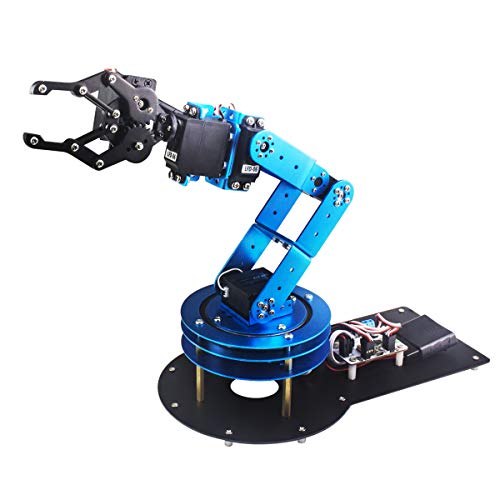
- 6DOF desktop arm with 6 digital servos
- Metal build with anti-stall protection
- PC, app, mouse, and handle control
Best For: Hands-on robotics learning, STEM projects, and beginner programming
AI Research Platform
Hiwonder SO-ARM101 AI Robotic Arm Kit
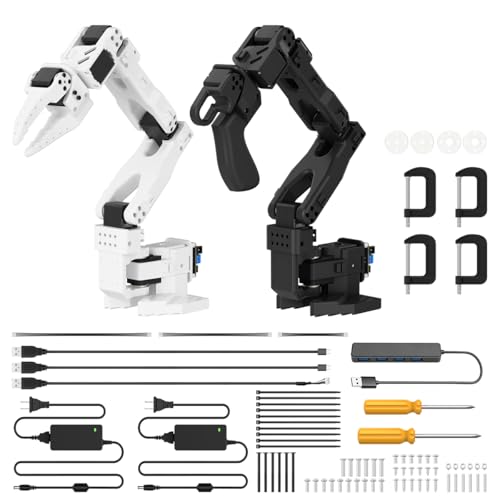
- Open-source arm compatible with LeRobot
- Dual-camera vision for imitation learning
- 12 bus servos with feedback and debugging tools
Best For: AI research, imitation learning, and robotics development
Expandable STEM Kit
LeArm Open Source Arduino Robot Arm
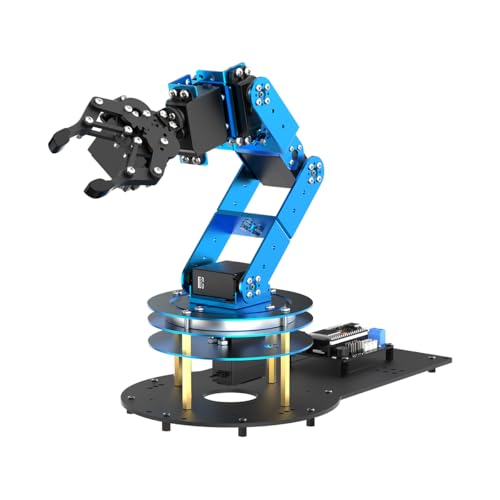
- ESP32-based arm with Arduino support
- 6 smart PWM servos and inverse kinematics
- 200+ tutorials plus sensor expansion
Best For: STEM learners and makers who want an expandable open-source robot arm
Open-Source Learning Pick – LewanSoul MaxArm Starter Kit
If you’re shopping for servo robot arms for coding practice and hands-on STEM learning, the LewanSoul MaxArm leans into flexibility. It combines a link mechanism with inverse kinematics, supports Python and Arduino, and adds WiFi, Bluetooth, app, PC, and controller-based operation for a broad set of beginner and intermediate projects.
Best For: Students, hobbyists, and makers who want an open-source robotic arm for programming practice and wireless experimentation.
Pros:
- Supports Python and Arduino programming
- Uses inverse kinematics for x, y, and z movement planning
- Works with apps, PC, wireless controllers, and mouse control
- Includes sensor ports and expansion interfaces for secondary development
Cons:
- Sold as a starter kit, so it’s geared more toward learning than turnkey automation
- Designed around educational use rather than heavy industrial workloads
The MaxArm stands out if you want a servo robot arm that can grow with your skills. Its ESP32-based open platform and smart bus servos make it a solid choice for robotics learning, code-based control, and small AI-style experiments.
High-Torque Bracket Servo – RDS3218 20KG Waterproof Servo
For builders looking at servo robot arms from the component side, this RDS3218 unit is a practical high-torque option. It offers 180° or 270° versions, comes with a U-shaped mounting bracket, and uses a full metal gear design with double bearings and waterproof construction for DIY robot and RC applications.
Best For: DIY robot arm builders who need a single high-torque servo with a mounting bracket.
Pros:
- High stall torque rated up to 25kg·cm at 6.8V
- Available in 180° and 270° versions
- Includes U mounting bracket for robot arm use
- Full metal gears, double bearings, and waterproof design
Cons:
- Only one servo is included
- Best suited to integration into a larger build, not a complete arm kit
This is a straightforward pick if your priority is torque and durability rather than a full robotics learning platform. It’s best treated as a strong building block for custom servo robot arms and RC-style DIY projects.
Dual-Control STEM Kit – SIYEENOVE 4DOF ESP32 Robot Arm
If you want servo robot arms that are easy to build and easy to demo, this SIYEENOVE 4DOF kit is aimed squarely at learning and tinkering. It uses four MG90S servos, an ESP32-C3 board, and a mix of joystick and web app control, so you can start moving it right away and then expand into Arduino or MicroPython projects.
Best For: Beginners, teens, and classroom makers who want a programmable 4DOF robot arm with simple controls.
Pros:
- 4DOF design with four MG90S servos
- Joystick and web app control modes
- Motion record and loop playback features
- Supports Arduino and MicroPython programming
Cons:
- Batteries are not included
- Built for lightweight objects rather than heavy payloads
This kit is a good fit if you want a practical teaching arm with multiple control methods and room to code. Its open-source, expandable approach makes it especially useful for STEM education and beginner robotics labs.
AI Robotics Builder – Seeed Studio SO-ARM101 Pro Servo Kit
For advanced buyers comparing servo robot arms for AI work, the SO-ARM101 Pro is built around open-source development rather than simple motion demos. It is designed for LeRobot and Hugging Face projects, supports imitation and reinforcement learning, and is compatible with Nvidia Jetson edge devices for training and deployment workflows.
Best For: AI robotics developers and researchers who want an open-source 6-DOF arm kit for learning and training workflows.
Pros:
- Compatible with LeRobot and Hugging Face frameworks
- Supports imitation learning and reinforcement learning
- 6-DOF open-source design for AI robotics projects
- Includes improved wiring and optimized motor gearing for smoother operation
Cons:
- 3D-printed parts are not included
- More suitable for developers than casual hobby assembly
This kit makes sense if your goal is AI-focused robot arm development rather than a basic servo toy. The included documentation, calibration resources, and Jetson compatibility make it a serious platform for experimentation and research.
Desktop STEM Robotic Arm – Hiwonder xArm1S 6DOF Educational Kit
If you’re shopping for servo robot arms for coding, classroom demos, or desktop experiments, the Hiwonder xArm1S is built to be a hands-on learning platform. Its 6-axis design, intelligent serial bus servos, and multiple control methods make it a practical choice for experimenting with grasping, object transport, and custom motion routines.
Best For: Students, hobbyists, and makers who want a feature-rich educational robot arm with programming and manual control options.
Pros:
- 6 high-precision intelligent serial bus servos with position, voltage, and temperature feedback
- Strong enough to grasp objects up to 500g
- Supports PC, app, mouse, and wireless controller control
- Aluminum alloy structure with high-torque servos and industrial-grade bearings for stability
Cons:
- Designed primarily as a learning and project platform rather than a compact consumer toy
- May be more than casual users need if they only want simple servo motion
Overall, the xArm1S stands out as a flexible servo robot arm for STEM learning because it combines sturdy hardware with broad control and editing options. If your goal is to learn robotics and build custom actions, it offers a strong balance of capability and accessibility.
High-Torque Servo Upgrade – RDS3225 25KG Dual-Shaft Servo
If you need servo robot arms parts with serious torque, the RDS3225 is a straightforward high-power servo motor for DIY robots and arm mechanisms. It’s positioned as a durable, full-metal, waterproof servo with a dual-shaft U mount, making it a useful building block for projects that need reliable movement and strong holding power.
Best For: DIY robot builders who need a high-torque servo for robotic arm joints and similar mechanisms.
Pros:
- High torque rated at 29.5kg-cm on 5V and 34.5kg-cm on 6.8V
- Full metal gear construction for durability
- Waterproof design adds extra protection for demanding builds
- Dual-shaft U mount and 180-degree operation support flexible installation
Cons:
- It’s a servo component, not a complete robotic arm kit
- Best suited to builders who already know how to integrate servos into a project
This is the kind of servo you choose when torque and durability matter more than bundled extras. For custom robotic arms or other motion-heavy DIY builds, it offers the strength and build quality to support more demanding applications.
Open-Source AI Arm Kit – miniArm Arduino Robotics Set
For shoppers comparing servo robot arms for Arduino learning and secondary development, the miniArm focuses on open-source experimentation. It’s based on the Atmega328 platform and adds app control, knob potentiometer control, offline action editing, and sensor expansion support for users who want a flexible starter system.
Best For: Advanced beginners, students, and makers who want an open-source robotics kit with expansion potential.
Pros:
- Arduino-compatible and open-source with tutorials and secondary development examples
- Includes high-precision digital servos and a 6-channel knob controller
- Supports app control, real-time knob control, and offline action editing
- Expansion ports support sensors and modules such as ESP32 Cam and ultrasonic sensing
Cons:
- Standard and starter kit contents differ, so buyers need to check included components carefully
- It is aimed at older users and more serious learning projects
The miniArm is a strong pick if you want a servo robot arm kit that goes beyond basic movement and into open-ended development. Its mix of open-source support, hardware controls, and sensor expansion makes it especially useful for robotics projects that may grow over time.
Desktop Learning Pick – LeArm 6DOF Programming Robot Arm Kit
If you want a servo robot arm for hands-on learning, the LewanSoul LeArm is built as a practical desktop 6DOF kit. It combines digital servos, a metal structure, and multiple control methods, making it a solid pick for students and hobbyists who want to explore grasping, transport, and basic graphical programming.
Best For: Students, educators, and hobbyists who want a metal 6DOF desktop robot arm for robotics practice and creative projects.
Pros:
- 6DOF design with 6 high-quality digital servos for desktop robotics tasks
- Anti-stall protection and gear clutches on the end servos to help extend servo life
- Metal bracket construction with high-torque base servos and industrial-grade bearings for stability
- Supports PC, app, mouse, and wireless handle control, plus included tutorials
Cons:
- Requires assembly and hands-on setup
- Powered by AC adapter, so it is not a battery-operated portable arm
Overall, this LeArm kit is geared toward learning and showcasing robot arm fundamentals rather than advanced research. Its mix of control options, sturdy build, and beginner-friendly tutorials makes it especially useful for classroom and maker-space use.
AI Research Platform – Hiwonder SO-ARM101 AI Robotic Arm Kit
For servo robot arms aimed at AI experimentation, the Hiwonder SO-ARM101 stands out as an open-source embodied learning platform. It pairs a 6-axis arm with dual-camera vision, 12 high-torque bus servos, and LeRobot compatibility, making it a strong fit for developers exploring imitation learning and robotic perception.
Best For: Developers, researchers, and advanced hobbyists working on open-source AI and imitation-learning projects.
Pros:
- Compatible with the LeRobot open-source framework for embodied learning workflows
- Dual-camera system supports both gripper-view and external environmental awareness
- 12 high-torque bus servos with magnetic feedback for smooth, stable motion
- Includes BusLinker V3.0 debugging board with servo scanning, monitoring, and trajectory control
Cons:
- More specialized than a basic beginner kit
- Built for development and debugging, so setup is likely more involved
This kit is less about casual play and more about experimentation with modern AI robotics. If your goal is to study vision-guided manipulation and open-source control, it offers a very capable platform.
Expandable STEM Kit – LeArm Open Source Arduino Robot Arm
This LeArm open-source servo robot arm is aimed at users who want a flexible Arduino-friendly kit with plenty of room to expand. With smart PWM servos, inverse kinematics, and broad sensor support, it is a good choice for STEM learning, programming practice, and creative robotics builds.
Best For: Students, makers, and engineers who want an expandable open-source arm with strong learning resources.
Pros:
- ESP32 controller with Arduino compatibility and built-in Bluetooth
- 6 smart PWM servos plus inverse kinematics for smoother motion planning
- Supports sensor expansion for AI vision, voice, ultrasonic, and acceleration add-ons
- Includes 200+ tutorials, sample experiments, open-source code, and schematics
Cons:
- Open-source expansion features may be more than a casual user needs
- Designed as a kit, so assembly and programming setup are part of the experience
Compared with simpler servo robot arms, this model is built for experimentation and secondary development. Its combination of tutorials, expansion options, and Arduino support makes it especially appealing for users who want to keep building after the first project.
How We Picked These Servo Robot Arms
We looked for kits and arms that balance build quality, motion range, control options, and learning value. The strongest picks offer clear documentation, accessible programming support, and parts that are easy to source or replace. We also favored models with useful extras such as bus servos, grippers, suction tools, app or PC control, and open-source compatibility.
Quick Comparison
Some Servo Robot Arms are better suited to education and first-time builders, while others are designed for higher payloads, more precise control, or advanced AI and vision workflows. Compact 4DOF kits are usually easier to assemble and learn, while 6DOF systems give you more realistic arm movement and broader project flexibility. High-torque servo models are best when load handling matters more than beginner-friendly setup.
Key Buying Factors for Servo Robot Arms
Degrees of Freedom
More axes generally mean more natural movement and better reach. A 4DOF arm can handle basic demos and simple automation, while 5DOF and 6DOF arms are better for pick-and-place tasks, experimentation, and programming practice.
Servo Type and Torque
Torque determines how much weight an arm can move without stalling. Lightweight educational kits can use smaller servos, but if you plan to move tools, larger grippers, or heavier objects, look for metal gears, waterproof housings, and higher kg-cm ratings.
Control and Software Support
Check whether the arm works with Arduino, Python, ESP32, MicroPython, or dedicated app/software control. Servo Robot Arms with open documentation are usually easier to modify, automate, and integrate into custom projects.
Build Materials and Expandability
Full-metal or reinforced frames tend to be more durable, especially for repeated use. Also consider whether the kit includes a camera, suction nozzle, joystick, bus servos, or vision support if you want to grow into more advanced projects later.
Who Should Buy Which Servo Robot Arms?
Beginners and students should prioritize simple assembly, clear tutorials, and app or joystick control. Makers who want real coding practice should choose Arduino- or Python-friendly arms with open-source support. If your focus is payload, repeatability, or more advanced robotics work, look at higher-torque 6DOF options and bus-servo systems. For AI and embodied learning projects, choose a kit built for vision, data collection, and software integration.
In short, the best Servo Robot Arms depend on whether you value ease of use, movement flexibility, or raw lifting ability. Matching the arm to your project now will save time, frustration, and upgrade costs later.