
The best solar system models for homeschool turn astronomy lessons into hands-on learning. Children can build planets, explore orbital motion, practice scale concepts, and create a display they will remember.
This roundup compares 10 classroom-friendly kits, including guided projects, interactive models, projector-based lessons, and open-ended craft sets for different ages, budgets, and teaching styles.
Best 10 Solar System Models for Homeschool Picks for 2026
Best Interactive Pick
Talking Solar System Projector

- Projects planets and 24 colorful space images
- Provides talking facts in English and Spanish
- Includes night-light and flashlight functions
Best For: Interactive, bilingual astronomy learning
Best for Orbit Demonstrations
GeoSafari Orbiting Solar System

- Eight planets move on orbiting arms
- Includes 32 images, including NASA photos
- Combines a model with a Sun-shaped projector
Best For: Hands-on lessons about planetary orbits
Best DIY Project
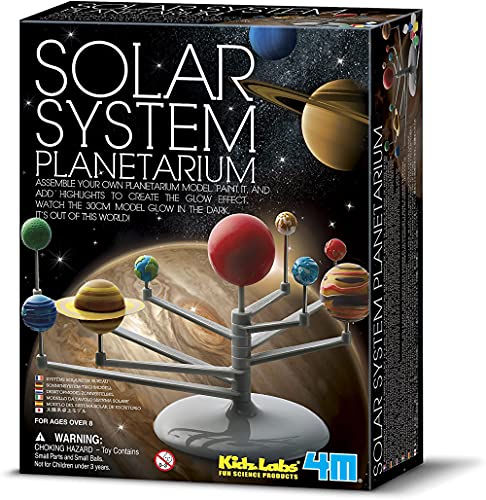
- Assemble and paint the included planets
- Adds glow-in-the-dark astronomy details
- Includes a fact chart and quiz questions
Best For: Creative science projects for ages 8 and up
Best Craft-Based Kit
64-Piece Foam Solar System Project

- Includes foam pieces, paints, brushes, and tools
- Combines astronomy with art and fine-motor practice
- Suitable for home or classroom projects
Best For: Creative solar system projects for ages 6 to 12
Best Glow-and-Display Pick
National Geographic Moving Solar System

- Includes paints, glow paint, decals, brush, palette, and fact poster
- Movable arms allow planet-position adjustments
- Recommended for ages 8 and up
Best For: Hands-on astronomy and glow-in-the-dark room displays
Best Budget DIY Pick
Foam Ball Solar System Project Kit
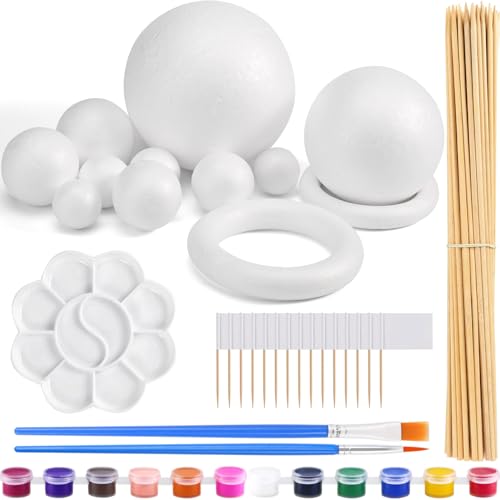
- Includes 10 sphere sizes for visual size comparisons
- Comes with 12 pigments, brushes, sticks, rings, and flags
- No glue required for assembly
Best For: Craft-based lessons and customizable school projects
Best Interactive STEM Pick
Smartivity Gear-Driven Planet Model

- Builds a rotating solar system model
- Introduces planets, orbits, day, and night
- Designed for ages 8–14 with eco-friendly materials
Best For: STEM lessons focused on movement and construction
Best Space-Saving Pick

- 63-piece foam-and-felt project kit
- Includes paints, brushes, labels, and hooks
- Teaches orbital positions through guided assembly
Best For: Homeschool learners ages 8+ with limited display space
Best for Extra Creative Accessories
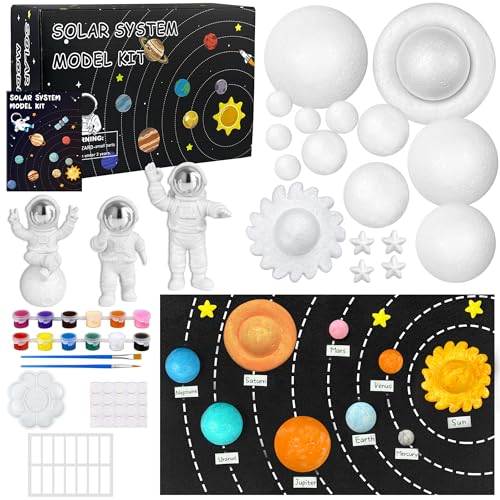
- 35-piece foam model-making set
- Includes three astronaut ornaments
- Wall-display supplies and painting materials included
Best For: Art-focused homeschool astronomy activities for ages 8–10
Best for Fact-Based Learning

- Includes wood model, puzzle, and fact cards
- Paints and brushes support hands-on assembly
- Designed for an approximately 1–2 hour project
Best For: Structured homeschool science lessons for ages 8–12
Best Interactive Pick – Talking Solar System Projector
For homeschoolers seeking solar system models for homeschool lessons with an interactive twist, this kit combines an eight-planet model with a projector, talking planet facts, and bilingual English/Spanish settings. It is designed for children ages 3 to 12, though the educational features may be especially useful for younger learners.
Best For: Interactive astronomy lessons, bilingual learning, and space-themed bedtime exploration.
Pros:
- Projects planets and 24 space images onto a wall or ceiling.
- Offers educational facts in both English and Spanish.
- Functions as a night light or flashlight.
- Includes eight planets and a snap-and-lock assembly.
Cons:
- Requires three AA batteries, which are not included.
- Plastic construction may offer less hands-on modeling than craft-based kits.
This is a strong choice when you want a solar system activity that supports visual learning and repeated exploration rather than a one-time assembly project.
Best for Orbit Demonstrations – GeoSafari Orbiting Solar System
This GeoSafari model is a practical option for solar system models for homeschool instruction when you want children to observe planets moving around the Sun. It pairs eight orbiting planets with a Sun-shaped projector and 32 images, including NASA photos.
Best For: Demonstrating planetary orbits and adding projected astronomy visuals to lessons for ages 5 and up.
Pros:
- Features eight planets on moving, orbiting arms.
- Includes 32 images covering planets, constellations, asteroids, and more.
- Comes with a guide containing space facts.
- Supports hands-on and projected exploration.
Cons:
- Requires three AA batteries, not included.
- The manual operation provides fewer automated features.
Choose this model if showing orbital motion is central to your homeschool lesson plan and you also want a built-in projector for visual reinforcement.
Best DIY Project – 4M Solar System Planetarium
For older students who learn best by making, this 4M kit is one of the more traditional solar system models for homeschool projects. Children assemble and paint the planets, add glow-in-the-dark details, and use the included chart and quiz questions to extend the astronomy lesson.
Best For: DIY science projects, art-and-science activities, and learners ages 8 and up.
Pros:
- Includes planets, stencils, rods, string, and glow paint.
- Provides a fact-filled wall chart and 10 sets of quiz questions.
- Requires no batteries.
- Combines model building, painting, and astronomy learning.
Cons:
- Pluto is not included.
- Assembly and painting require more time and adult guidance than ready-to-use models.
This is a good fit for homeschool families that want a project students can build, customize, and use as a visible science display after the lesson is complete.
Best Craft-Based Kit – 64-Piece Foam Solar System Project
This foam-based kit works well for solar system models for homeschool activities that combine science, painting, and fine-motor practice. It supplies foam pieces, paints, brushes, sticks, flags, and instructions so children can create a customized solar system display at home or for a school project.
Best For: Hands-on craft lessons, family projects, and children ages 6 to 12.
Pros:
- Includes 64 pieces with foam balls, stars, sticks, paints, and brushes.
- Provides materials for coloring and building a personalized model.
- Supports hand-eye coordination, focus, and artistic skills.
- Can be used for classroom themes or family activities.
Cons:
- The foam construction may be less durable than a hard plastic model.
- Painting and assembly require hands-on setup and supervision.
- The listed age recommendation is 6 to 12, despite some marketing references to younger children.
Consider this kit when the learning goal includes both planet identification and creative construction, especially for a portfolio-worthy homeschool project.
Best Glow-and-Display Pick – National Geographic Moving Solar System
For homeschoolers seeking solar system models for homeschool lessons that can double as room decor, this National Geographic kit combines planet painting, movable parts, and glow-in-the-dark details. It is designed for children ages 8 and up and includes the main supplies needed to build and customize an eight-planet model.
Best For: Hands-on astronomy activities, creative learners, and a movable display model for ages 8 and up.
Pros:
- Includes planets, sun, paints, glow paint, brush, palette, decals, and a fact poster.
- Movable arms let children adjust and rearrange the planets.
- Supports construction, creativity, hand-eye coordination, and problem-solving skills.
- Glow-in-the-dark elements make the finished model engaging as bedroom decor.
Cons:
- Recommended for ages 8 and up, so it may not suit younger homeschool students.
- The compact model is intended primarily for display rather than demonstrating large-scale distances.
This is a polished option when you want a guided build with included materials and an attractive finished display. Choose it for visual engagement and customization rather than a highly detailed scale model.
Best Budget DIY Pick – Foam Ball Solar System Project Kit
This foam-ball set is a flexible choice for families comparing solar system models for homeschool projects. With multiple sphere sizes, paint colors, sticks, rings, and label flags, it gives children the materials to create a hands-on model while discussing planetary size and arrangement.
Best For: Craft-based science lessons, younger children, classroom projects, and customizable planet displays.
Pros:
- Includes foam balls in 10 sizes to illustrate relative size differences.
- Provides 12 paint colors, brushes, a palette, bamboo sticks, rings, and toothpick flags.
- No glue is required; the pieces can be assembled with the included sticks.
- Useful for handmade crafts, school science projects, and DIY decoration.
Cons:
- Children must paint, label, and assemble the planets themselves, so adult preparation or supervision may be helpful.
- The foam-and-stick construction may be less durable than a finished plastic or MDF model.
- The listed recommended age range is 0–8 years, which is less specific than the other kits.
This kit works well when the learning goal is active construction and visual comparison rather than a ready-to-display mechanism. Its varied sizes and broad paint selection leave room to adapt the project to different homeschool lesson plans.
Best Interactive STEM Pick – Smartivity Gear-Driven Planet Model
For homeschool families who want solar system models for homeschool instruction to demonstrate movement, the Smartivity kit offers a gear-driven, rotating build. Designed for ages 8–14, it connects construction with basic astronomy concepts such as planets, orbits, day, and night.
Best For: STEM-focused homeschoolers who want an interactive rotating model for ages 8–14.
Pros:
- Creates a rotating solar system model that illustrates planetary movement.
- Combines construction, creativity, and introductory astronomy concepts.
- Designed specifically for children ages 8–14.
- Uses eco-friendly, child-safe materials and comes in gift-ready packaging.
Cons:
- The supplied components list identifies the box but does not detail included paints or other decorating supplies.
- Its gear-driven construction may require more patience than a simple foam-ball project.
- The model focuses on interactive movement rather than explicitly providing a planet-size comparison set.
This is the strongest fit for lessons centered on mechanisms, orbits, and learning through doing. Pick it when an interactive rotating model is more valuable to your homeschool than extensive painting supplies.
Best Space-Saving Pick – Wall-Hanging Solar System Kit
For homeschoolers seeking solar system models for homeschool lessons, this foam-and-felt kit combines a hands-on painting activity with a displayable finished project. Its instructions introduce planetary orbital positions, while the wall-mounted format works well in classrooms or compact learning spaces.
Best For: Homeschool students ages 8 and up who want a creative, space-saving astronomy project.
Pros:
- Includes foam hemispheres, stars, paints, brushes, palette, labels, hooks, and instructions.
- Teaches planet names and orbital positions through guided assembly.
- Finished model can be hung on a wall without using extra display space.
- Supports hands-on skills such as coordination and color recognition.
Cons:
- Recommended for children over age 8, so it may not suit younger learners.
- Foam and felt construction may be less durable than a rigid wood model.
This is a practical choice when you want an accessible craft-based astronomy lesson and a finished display that does not occupy a desk or shelf.
Best for Extra Creative Accessories – Astronaut Solar System Kit
This solar system model for homeschool use adds astronaut ornaments to a foam-ball painting project. The included instructions, paints, brushes, labels, and hanging supplies support a flexible astronomy activity that can become a compact wall display.
Best For: Homeschool families looking for an art-focused solar system project with extra space-themed decorations.
Pros:
- Includes 14 foam balls, four stars, three astronaut ornaments, paints, brushes, and a palette.
- Instructions cover planetary orbital positions and provide a basis for astronomy discussion.
- Hooks and a felt background plate allow the completed project to be displayed on a wall.
- Offers practice with hands-on construction, coordination, and color recognition.
Cons:
- The manufacturer recommends it for ages 8 to 10, limiting its fit for some learners.
- Its foam construction may not provide the sturdiness of a wood-based model.
Choose this version if your homeschool lessons benefit from painting, decorating, and imaginative space play alongside basic planetary learning.
Best for Fact-Based Learning – Nine Planets Wood Model
Among solar system models for homeschool, this kit stands out for combining a wood model, puzzle, and fact cards. Children can paint and assemble the major nine planets, making it useful for a structured lesson, science fair project, or classroom display.
Best For: Homeschool students ages 8 to 12 who want a build-and-learn project with reference cards.
Pros:
- Combines a wood model, puzzle, paint, brushes, and planetary fact cards.
- Introduces the Sun and eight named planets through hands-on construction.
- Designed to be completed in approximately one to two hours.
- Suitable for science fairs, bedrooms, or classroom displays.
Cons:
- It is a focused nine-planet project rather than a larger accessory-rich kit.
- The listed manufacturer warranty is 30 days.
This is a strong option for homeschoolers who prefer a more structured science activity with factual reference material and a wood-based finished model.
How We Picked These Solar System Models for Homeschool
We selected kits that support meaningful astronomy activities rather than simple decoration. Our comparison considers age suitability, educational value, construction requirements, included materials, display quality, interactivity, and how easily each model fits into a homeschool lesson.
The options span ready-to-use demonstrations, build-and-paint projects, glow-in-the-dark planetariums, foam-ball craft kits, and mechanical models. Because children have different ages and abilities, we also looked for a range of project lengths and supervision needs.
Quick Comparison
| Best For | Look For |
|---|---|
| Interactive demonstrations | Orbiting parts, projectors, or talking features |
| Creative science projects | Paints, brushes, spheres, sticks, and instructions |
| Independent older learners | Detailed assembly and fact-based activities |
| Visual displays | Glow-in-the-dark planets or sturdy finished models |
| Budget-friendly group work | Multi-piece kits with shared craft supplies |
Key Buying Factors for Solar System Models for Homeschool
Age and Supervision
Check the manufacturer’s recommended age before buying. Younger children generally benefit from larger pieces, simple painting, and adult-led explanations. Older students may prefer gears, multi-step construction, research prompts, or a more detailed scale discussion. Small parts, sharp sticks, paints, and adhesives can require supervision.
Learning Goals
Choose a model that matches the lesson. A rotating or orbiting model can demonstrate movement, while a projector supports visual presentations. Build-your-own kits are useful for labeling planets, discussing order and color, and connecting craft work with research. Remember that many affordable kits are not to scale, so use them to teach relative arrangement and concepts rather than precise distances.
Materials and Completeness
Compare what is included: planet pieces, paints, brushes, supports, fact cards, lights, batteries, and instructions. Foam-ball kits may offer creative flexibility but can require extra glue, newspaper, drying space, or replacement supplies. A complete kit is often worth paying more for when you need a project that can begin immediately.
Storage and Display
Consider the finished size and whether planets remain attached to a base. Suspended or freestanding models can be engaging but harder to store. Glow features work best in a dark room, while larger tabletop displays may be better for daily lessons.
Who Should Buy Which Solar System Models for Homeschool?
Choose an interactive orbiting or projector model if your priority is demonstrating planetary motion with minimal crafting. Select a gear-driven model for children who enjoy mechanisms and structured STEM challenges. Glow-in-the-dark options suit learners who respond to visual effects and want a display after the lesson.
For art-led homeschool projects, a foam-ball kit with paints and accessories provides flexibility and works well for siblings or group activities. Choose a more complete model-and-puzzle set when you want a guided activity with built-in facts. Before ordering, match the kit’s complexity to the child’s age, confirm the included supplies, and decide whether you need a reusable teaching aid or a one-time project.