
The best solar system models turn abstract astronomy lessons into something children can build, observe, and explain. This roundup compares hands-on kits, glow-in-the-dark displays, interactive sets, and gear-driven designs for different ages and learning styles.
Whether you need a classroom project, an educational gift, or a creative weekend activity, the right model depends on accuracy, assembly, durability, included materials, and how much independent play it supports.
Best 10 Solar System Models Picks for 2026
Hands-On Starter Kit

- 64-piece craft kit with foam planets and supplies
- Includes 12 acrylic paints, brushes, flags, and instructions
- Good for school projects and family learning
Best For: Creative solar system projects for children ages 6–12
Interactive Orbital Build
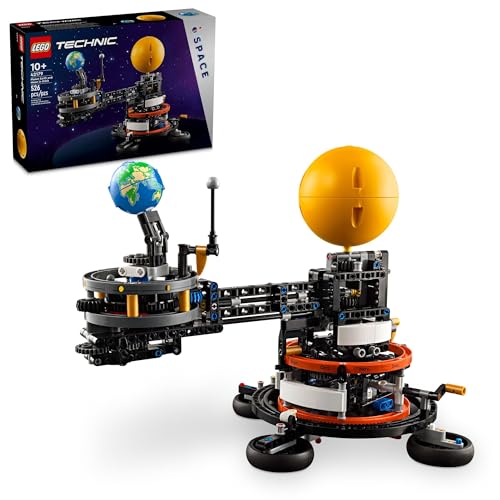
- 526-piece LEGO Technic construction set
- Crank moves Earth and Moon around the Sun
- Shows months and moon phases
Best For: Ages 10+ seeking an interactive STEM building experience
Glow-in-the-Dark Display
National Geographic Solar System Kit

- Builds and paints eight planets plus the Sun
- Glow-in-the-dark accent paint creates a nighttime display
- Movable arms allow planet-position adjustments
Best For: Ages 8+ wanting an astronomy craft and room decoration
Scale-Learning Craft Kit
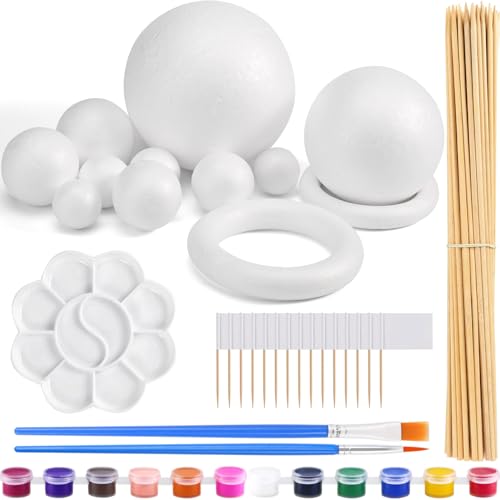
- Uses 10 ball sizes to show planetary scale
- Includes paints, brushes, sticks, rings, and flags
- Assembly is described as glue-free
Best For: Hands-on school science projects and creative planet displays
Best Glow-in-the-Dark Pick
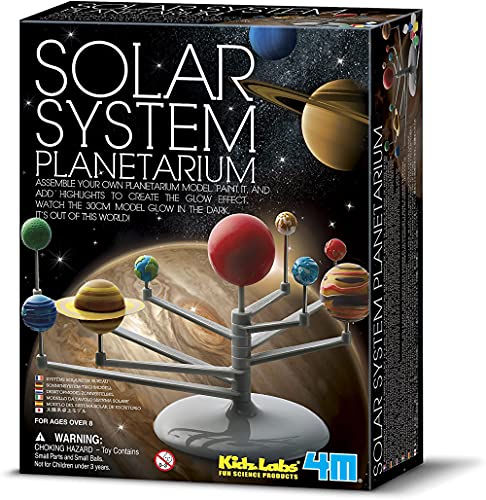
- Build, paint, and learn with included planet components
- Glow paint creates an interactive display
- Includes wall chart and astronomy quiz questions
Best For: Creative STEM learning for kids ages 8 and up
Best Wall Display Project
Pllieay Solar System Model Kit

- Creates a compact, wall-mounted solar system display
- Includes 63 pieces with paints and mounting supplies
- Supports planet-name and orbital-position learning
Best For: School projects and space-themed wall decorations
Best Rotating Build
Smartivity DIY Solar System Kit

- Builds a gear-driven, rotating planet model
- Explores planets, orbits, day, and night
- Designed for hands-on STEM play ages 8–14
Best For: Young builders who prefer interactive science projects
Best DIY Display Kit
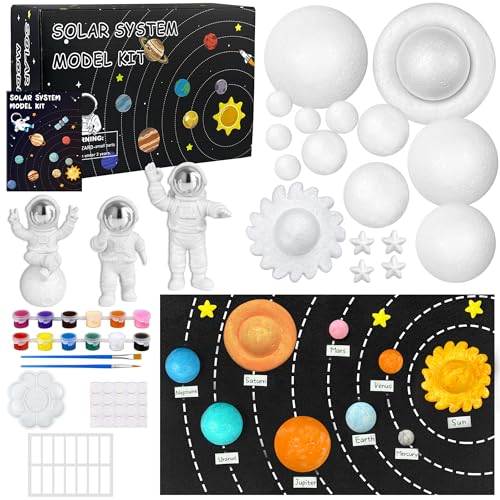
- 35-piece foam, paint, and display kit
- Includes instructions and astronomy-focused activity
- Finished model can hang on a wall
Best For: Hands-on learners and compact educational displays
Best Interactive Option
Talking Solar System Projector

- Projects planets and space scenes on walls
- Offers talking facts in English and Spanish
- Doubles as a night light or flashlight
Best For: Young children seeking interactive STEM play
Best Science Project Kit

- Includes wood model, puzzle, and fact cards
- Comes with paint and brushes for customization
- Designed for ages 8–12 and science fairs
Best For: Structured school projects and hands-on science learning
Hands-On Starter Kit – Foam Solar System Project Set
For kids who learn best by making, this 64-piece kit is a practical choice among solar system models. It combines foam balls, paints, brushes, bamboo sticks, flags, and an instruction guide so children can create and label a planetary display at home or for a school project.
Best For: Children ages 6–12 working on a creative classroom assignment or family astronomy activity.
Pros:
- Includes 12 foam balls, paint, brushes, palette, sticks, flags, and instructions.
- Smooth polystyrene foam is designed for easy coloring.
- Combines science learning with painting, assembly, and hand-eye coordination.
Cons:
- Foam construction may be less substantial than a plastic building set.
- The manufacturer recommends ages 6–12, despite a product highlight mentioning younger children.
This is a well-equipped option when the project process matters as much as the finished model. Choose it for an open-ended craft activity rather than a mechanically moving display.
Interactive Orbital Build – LEGO Earth and Moon in Orbit
This LEGO Technic set stands out among solar system models because the finished display has moving parts. Children can turn the crank to observe the Earth and Moon orbit the Sun, while printed month and moon-phase details connect the build to seasons and lunar cycles.
Best For: Builders ages 10 and up who want an interactive STEM toy with a substantial construction challenge.
Pros:
- 526-piece build offers an engaging construction activity.
- Hand-cranked mechanism demonstrates orbital movement.
- Includes month and moon-phase markings for added learning context.
- LEGO Builder app provides 3D viewing, progress tracking, and guided instructions.
Cons:
- Represents the Earth, Sun, and Moon rather than all eight planets.
- Its recommended age of 10 and up may be advanced for younger children.
Pick this set when interactivity and building depth are priorities. Its moving mechanism makes it especially suitable for children who may engage more readily with a working model than a static craft.
Glow-in-the-Dark Display – National Geographic Solar System Kit
For a model that doubles as room decor, this National Geographic kit lets children build and paint all eight planets and the Sun, then view the display after dark. Among solar system models, its movable arms add flexibility for arranging the planets and creating a personalized presentation.
Best For: Kids ages 8 and up who enjoy art projects, astronomy activities, and glow-in-the-dark bedroom displays.
Pros:
- Includes eight planets and the Sun for a complete planetary display.
- Glow-in-the-dark accent paint adds nighttime appeal.
- Movable arms allow the planet positions to be adjusted.
- Includes paints, brush, palette, decals, poster, and kid-friendly instructions.
Cons:
- Requires painting and assembly before it can be displayed.
- Glow effects depend on the included glow-in-the-dark paint and viewing conditions.
This is a strong middle-ground choice for children who want both a hands-on astronomy project and a finished decoration. The adjustable arms make the display more flexible than a fixed model.
Scale-Learning Craft Kit – 48-Piece Foam Planet Set
This foam ball kit is designed for hands-on school and science projects. Its 10 ball sizes help children compare the relative scale of the Sun, planets, and Pluto, while bamboo sticks, toothpick flags, paints, and brushes support assembly, labeling, and customization.
Best For: Young children and students creating a budget-friendly, paint-and-assemble solar system display.
Pros:
- Includes 12 foam balls in 10 different sizes for visual scale comparisons.
- Comes with 12 paint colors, two brushes, a palette, sticks, rings, and flags.
- No glue is required for the described assembly method.
- Useful for handmade decorations, school projects, and science activities.
Cons:
- Foam balls and bamboo components require hands-on assembly and painting.
- The listing gives inconsistent counts, describing both 48 pieces and 47 items.
- Toothpick flags and small components require age-appropriate supervision.
Choose this kit when visual size comparisons and creative labeling are more important than mechanical movement. The broad paint selection and varied foam sizes give children plenty of room to personalize a project.
Best Glow-in-the-Dark Pick – 4M Solar System Planetarium
For hands-on solar system models, the 4M Solar System Planetarium combines assembly, painting, and astronomy learning in one activity. Kids can build the included planets, add glow paint, and use the wall chart and quiz questions to reinforce what they learn.
Best For: Kids ages 8 and up who enjoy creative STEM projects and glow-in-the-dark displays.
Pros:
- Includes planets, stencils, rods, string, glow paint, and assembly instructions.
- Includes a fact-filled wall chart and 10 sets of Kidz Quiz questions.
- Requires no batteries and supports hands-on STEM learning.
Cons:
- Painting and assembly require time and attention.
- Pluto is not included.
This is a strong choice for children who learn best by making and decorating. Its glow feature adds display appeal, while the chart and quizzes give the project educational value beyond the build.
Best Wall Display Project – Pllieay Solar System Model Kit
The Pllieay Solar System Model Kit is a practical option for solar system models designed as school projects or space-themed decorations. Its felt backdrop, foam pieces, paints, labels, and hooks let children create a compact display while reviewing planetary positions and names.
Best For: Classroom assignments, back-to-school science projects, and wall-mounted room decorations for children over 8.
Pros:
- Wall-hanging format saves display space in classrooms or bedrooms.
- Includes 9 foam hemispheres, stars, paints, brushes, palette, labels, and mounting supplies.
- Instructions support learning planet names and orbital positions.
- Encourages hands-on coordination and color discrimination skills.
Cons:
- The model uses foam and felt rather than a rigid planetary framework.
- Painting and assembly are required before display.
Choose this kit when the finished project needs to hang on a wall rather than sit on a desk. The 63-piece supply set makes it well suited to guided craft sessions and science-fair preparation.
Best Rotating Build – Smartivity DIY Solar System Kit
The Smartivity DIY Solar System Kit stands out among solar system models for its gear-driven rotating design. Children ages 8 to 14 assemble the MDF model and explore how planets move around the sun while connecting construction play with basic astronomy.
Best For: Young builders who want an interactive, rotating STEM activity rather than a static display.
Pros:
- Gear-driven design lets children build and rotate the solar system.
- Introduces planets, orbits, day, night, and solar system structure.
- Combines construction, creativity, and hands-on science learning.
- Uses eco-friendly, child-safe materials and comes in gift-ready packaging.
Cons:
- Assembly is required and may need adult guidance for some children.
- The MDF construction may appeal less to shoppers seeking painted planet models.
This kit is a compelling pick for children who enjoy mechanisms and active exploration. Its rotating feature provides a clear reason to interact with the model after construction is complete.
Best DIY Display Kit – Hands-On Solar System Model
This 35-piece solar system model kit is a practical choice for older children, adults, classrooms, or anyone who wants a hands-on astronomy project. It includes foam spheres, paints, brushes, a felt background, adhesive supplies, instructions, and astronaut ornaments, with a finished display designed to hang on a wall.
Best For: DIY learners, classroom projects, creative decorations, and compact wall displays.
Pros:
- Includes 35 pieces for building, painting, and decorating the model.
- Instructions support learning about planetary positions and astronomy.
- Wall-hanging design saves space in smaller rooms or classrooms.
- Encourages hands-on coordination and color-discrimination skills.
Cons:
- The foam components require painting and assembly before display.
- The recommended age range begins at 8 years, so it may not suit younger children.
- The kit is a stationary display rather than an electronic or moving model.
Choose this solar system model if the making process matters as much as the finished result. Its broad set of craft supplies makes it flexible for science projects, art activities, and educational wall decoration.
Best Interactive Option – Talking Solar System Projector
This interactive solar system model combines an eight-planet display with a projector, talking planet facts, and a night-light function. It offers English and Spanish modes, three slide disks with 24 images, and a setup intended for children from about age 3 and up.
Best For: Young children who enjoy interactive STEM toys, bedtime lighting, and bilingual astronomy content.
Pros:
- Projects the eight planets and space images onto walls or ceilings.
- Provides educational planet facts in English and Spanish.
- Includes 24 images across three exploration slide disks.
- Can function as a night light or flashlight.
Cons:
- Requires three AA batteries, which are not included.
- Its educational features depend on electronic projection and sound rather than a craft activity.
- The projection setup requires adjusting the top knob for a clear image.
This is a strong pick when a solar system model needs to do more than sit on a shelf. The projector, bilingual facts, and night-light feature give it added appeal for younger children, while the included slides extend the play-and-learn experience.
Best Science Project Kit – Nine Planets DIY Model
This nine-planets solar system model kit is built around a wood model, puzzle, paint supplies, and fact cards. Designed for children ages 8 to 12, it supports a roughly one- to two-hour building activity and can be displayed in a bedroom, classroom, or science-fair setting.
Best For: Elementary-age students, science fairs, classroom activities, and structured build-and-learn projects.
Pros:
- Combines a wood model, puzzle, and planetary fact cards.
- Includes the Sun and the eight named planets in the kit’s nine-planet activity.
- Paint and brushes support a creative, hands-on building process.
- Designed for ages 8 to 12 and can be completed in approximately 1–2 hours.
Cons:
- Assembly and painting are required before the model is ready to display.
- The included materials are primarily paper, wood, and Styrofoam components.
- The activity is aimed at older children rather than preschool learners.
Consider this solar system model when you want a focused science activity with a clear beginning and end. The puzzle and fact cards add learning beyond the construction itself, making it suitable for school projects and science-fair preparation.
How We Picked These Solar System Models
We selected these Solar System Models to cover a range of practical needs rather than focusing on one type of kit. The lineup includes build-your-own foam-ball sets, structured school-project kits, interactive astronomy toys, glow-in-the-dark displays, and models with moving planetary mechanisms. We considered the stated age range, number of included components, assembly requirements, educational value, and suitability for solo or family activities.
Because model details and included accessories can vary, check the current product listing before buying. Pay particular attention to whether paints, brushes, stands, batteries, instructions, or display hardware are included.
Quick Comparison
| Best For | Look For | Recommended Type |
|---|---|---|
| Young learners | Simple assembly and clear instructions | Basic guided kits or talking models |
| Creative projects | Paints, brushes, spheres, and backdrop pieces | Foam-ball construction kits |
| Older children | More detailed building and moving parts | LEGO or gear-driven models |
| Bedroom display | Glow effects and a stable stand | Glow-in-the-dark planetariums |
| Classroom use | Durability, facts, and repeatable demonstrations | Educational kits with reference materials |
Key Buying Factors for Solar System Models
Age and Assembly Difficulty
Choose a kit that matches the child’s patience, dexterity, and ability to follow directions. Younger children usually benefit from larger pieces and adult assistance, while older learners may prefer detailed construction, painting, or mechanical movement.
Educational Content
A decorative model can make space more engaging, but factual labels, planet information, spoken explanations, and orbit demonstrations add learning value. For schoolwork, prioritize models that help explain order, relative movement, and major features rather than appearance alone.
Materials and Included Supplies
Check the contents for planet pieces, rods, paint, brushes, stands, backgrounds, batteries, and instructions. Foam kits are flexible for art projects, while wood, plastic, and interlocking construction pieces may offer a sturdier finished display.
Scale and Accuracy
Most children’s models are not true scale representations because the planets and distances would be impractical. Still, look for clearly labeled planets and an arrangement that supports basic understanding. A moving Earth-and-Moon mechanism can be especially useful for demonstrating orbital relationships.
Display and Durability
If the finished model will remain on a shelf, choose a stable base and solid connections. Glow features suit bedrooms, while compact kits are easier to store after a class assignment. Also consider small parts if younger children will be nearby.
Who Should Buy Which Solar System Models?
For a first astronomy activity: Choose a guided kit with straightforward instructions, recognizable planet pieces, and a manageable number of parts.
For creative kids: Foam-ball sets with paints and brushes provide the most freedom to decorate planets and create a personalized display.
For builders and LEGO fans: A construction-based or gear-driven model offers a more involved project and may remain interesting after the initial assembly.
For classroom science: Select a durable kit with educational facts, visible planet labels, and features that support demonstrations or presentations.
For a gift or bedroom display: Glow-in-the-dark models or polished finished designs combine astronomy learning with visual appeal. Before checkout, confirm the recommended age, required tools, assembly time, and what supplies are included.