
The best sound level meters for measurement make it easier to check noise in homes, classrooms, workplaces, studios, and outdoor environments. The right model depends on whether you need quick readings, repeatable testing, data logging, or standards-based accuracy.
We selected 10 options across multiple budgets and use cases, including compact meters with backlit displays, A/C weighting, maximum and minimum recording, and professional-oriented Class 2 instruments.
Best 10 Sound Level Meters for Measurement Picks for 2026
Best Portable Pick

- 30–130 dB range with ±1.5 dB accuracy
- Backlit 2.25-inch LCD
- MAX/MIN and data hold functions
Best For: Portable home, office, and workshop noise checks
Best Accuracy Value
Extech SL510 Class 2 Sound Level Meter

- ±1 dB accuracy with Class 2 standards
- 35–130 dB measurement range
- Fast/slow response and MIN/MAX
Best For: Routine measurements where accuracy and Class 2 compliance matter
Best Budget Feature Set
Tadeto SL720 Sound Level Meter
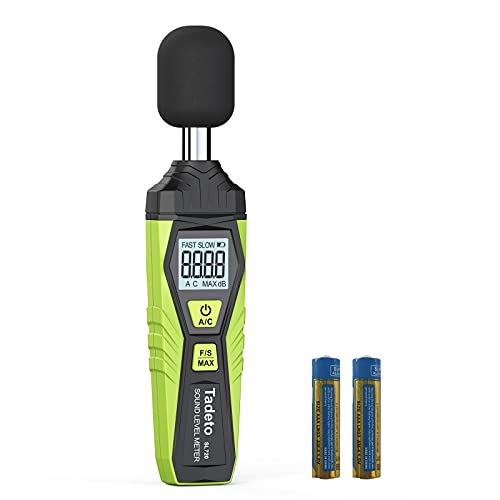
- 30–130 dB range with 0.1 dB resolution
- A/C weighting and fast/slow response
- Backlit LCD with low-battery indicator
Best For: General-purpose home, office, and factory monitoring
Best Professional Range
CRYSOUND CRY2831 Class 2 Meter

- IEC 61672-1:2013 Class 2 compliance
- 29–138 dB range and 12.5 kHz response
- A/C/Z and fast/slow weighting options
Best For: Industrial, workplace, environmental, and facility inspections
Portable Value Pick
VLIKE LCD Digital Sound Level Meter
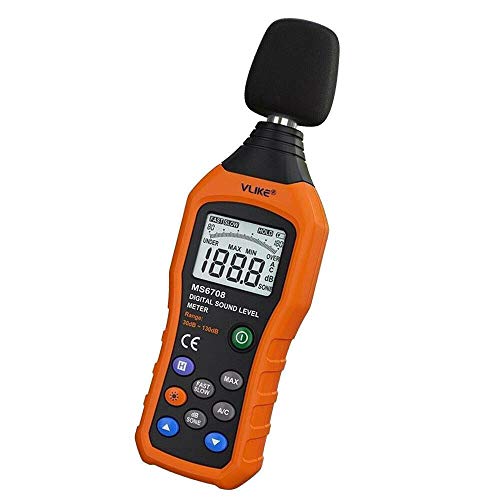
- 30–130 dB range with A/C modes
- Backlit display and maximum lock
- Compact design; batteries not included
Best For: Everyday handheld noise checks
Feature-Rich Classic
Extech 407730 Digital Sound Level Meter

- 40–130 dB range with 0.1 dB resolution
- Analog bar graph plus Max/Min tracking
- Includes windscreen and four AAA batteries
Best For: General measurements with peak tracking
Versatile Modern Pick

- 30–130 dB range with ±1.5 dB stated accuracy
- A/C weighting plus dB and SONE units
- FAST/SLOW response and MAX/MIN tracking
Best For: Flexible home, workplace, and audio checks
Best Everyday Pick
RISEPRO HT-80A Sound Level Meter

- 30–130 dB range with +/-1.5 dB stated accuracy
- FAST, Type A weighting, and MAX/MIN readings
- Backlight, hold, auto-off, and carrying pouch
Best For: General-purpose noise checks and routine monitoring
Best for Data Logging
DANOPLUS DP-441 Sound Level Meter

- Records up to 43,000 readings for PC review
- A/C weighting plus FAST/SLOW response modes
- Three-color alarm and rechargeable USB design
Best For: Extended monitoring and exportable measurement records
Best Simple Classroom Meter
S8607 Digital Sound Level Meter

- 30–130 dB range with 0.1 dB resolution
- A-weighted readings with FAST/SLOW selection
- HOLD, MAX/MIN, backlight, and auto-shutdown
Best For: Classrooms and straightforward everyday noise checks
Best Portable Pick – TopTes TS-501B Decibel Meter
If you need sound level meters for measurement around the home, office, workshop, or factory, the TopTes TS-501B offers a practical combination of readability and everyday features. Its 30–130 dB range, A/C weighting, backlit display, and factory calibration make it useful for checking general noise levels.
Best For: Home noise checks, noisy-neighbor monitoring, offices, schools, workshops, and general portable use.
Pros:
- Large 2.25-inch backlit LCD is easier to read in dim conditions.
- A/C weighting and a 30–130 dB range support varied sound measurements.
- MAX/MIN, data hold, low-battery indicator, and automatic shutoff add convenience.
- Includes three AAA batteries, a case, and a user manual.
Cons:
- Its stated accuracy is ±1.5 dB, so it is not the tightest-accuracy option in this roundup.
- Frequency response is limited to 30–8,000 Hz.
The TS-501B is a well-rounded choice when you want a simple, handheld meter with a clear screen and useful peak-reading functions without moving into more specialized equipment.
Best Accuracy Value – Extech SL510 Class 2 Sound Level Meter
For shoppers comparing sound level meters for measurement with a stated professional standard, the Extech SL510 is a compelling option. It measures 35–130 dB with ±1 dB accuracy and meets Class 2 standards, while still including practical features for routine field readings.
Best For: Users who prioritize Class 2 compliance, stated accuracy, and straightforward environmental sound measurements.
Pros:
- ±1 dB accuracy meets Class 2 standards.
- A and C weighting accommodate different noise-measurement needs.
- Fast/slow response, data hold, and MIN/MAX functions support changing sound levels.
- Backlit LCD, windscreen, wrist strap, and three AAA batteries are included.
Cons:
- Its 35–130 dB range does not reach as low as meters starting at 29 or 30 dB.
- The supplied notes do not specify a carry case.
The SL510 stands out for buyers who want a compact meter backed by a clearly stated ±1 dB accuracy and Class 2 designation, rather than simply a basic consumer decibel display.
Best Budget Feature Set – Tadeto SL720 Sound Level Meter
The Tadeto SL720 is a practical pick among sound level meters for measurement when you want a broad everyday range and adjustable response behavior. It covers 30–130 dB, offers A/C weighting, and uses fast or slow measurement modes for general environmental and equipment checks.
Best For: Home, factory, transportation, classroom, office, baby-room, and audio-system monitoring.
Pros:
- Measures from 30–130 dB with a 0.1 dB display resolution.
- A-weighting suits ambient noise, while C-weighting supports higher-intensity sound analysis.
- Fast and slow response modes help with changing or relatively steady noise.
- Backlit LCD, low-battery indicator, and lightweight portable design improve usability.
Cons:
- Stated accuracy is ±2.0 dB, lower than the other listed meters.
- The notes do not list included batteries or accessories.
Choose the SL720 if versatile weighting and response controls are more important than the narrowest accuracy specification. It is designed for broad, everyday noise monitoring across home and work environments.
Best Professional Range – CRYSOUND CRY2831 Class 2 Meter
For professional sound level meters for measurement in industrial, workplace, or outdoor settings, the CRYSOUND CRY2831 offers the broadest stated capabilities here. It combines IEC 61672-1:2013 Class 2 compliance with a 29–138 dB range, extended frequency response, multiple weighting modes, and field-oriented protection.
Best For: Technicians, EHS teams, facility managers, inspectors, and industrial or environmental spot checks.
Pros:
- IEC 61672-1:2013 Class 2 meter with ±1.5 dB accuracy.
- Wide 29–138 dB range and 20 Hz–12.5 kHz frequency response.
- A, C, and Z frequency weighting plus fast and slow time weighting.
- IP54 enclosure, AC/DC power, and operation from −20°C to 60°C support field use.
Cons:
- Its professional feature set may be more than casual home users need.
- The supplied notes do not mention a carry case or included batteries.
The CRY2831 is the strongest fit when measurement range, weighting flexibility, environmental durability, and a recognized Class 2 standard matter more than having the simplest possible interface.
Portable Value Pick – VLIKE LCD Digital Sound Level Meter
For straightforward sound level meters for measurement, the VLIKE LCD meter offers a portable way to check noise in homes, offices, schools, roads, workshops, and other environments. It measures from 30 to 130 dB and includes A/C modes, a backlight, and maximum-value locking.
Best For: Everyday noise checks, basic monitoring, and users who want a compact handheld meter.
Pros:
- 30–130 dB measuring range with A/C weighting modes
- Backlit display supports readings in darker conditions
- Portable casing includes an anti-drop structure and power-saving design
- Auto gear level and maximum locking functions simplify measurements
Cons:
- Batteries are not included and require four AAA batteries
- Cannot store or generate a report directly from the device
The VLIKE is a practical choice when you need immediate readings rather than built-in reporting. Its broad range and compact design suit general-purpose checks, while the lack of onboard reporting makes it less suitable for documentation-heavy work.
Feature-Rich Classic – Extech 407730 Digital Sound Level Meter
The Extech 407730 is a dependable option among sound level meters for measurement, combining a 40 to 130 dB range with 0.1 dB resolution and stated 2 dB accuracy. Its analog bar graph, Max/Min recording, and Max Hold function help make changing or peak sound levels easier to interpret.
Best For: Users who want detailed display feedback and basic peak or minimum tracking for general sound measurements.
Pros:
- Measures 40–130 dB with 0.1 dB resolution
- Includes A/C weighting and a fast-responding analog bar graph
- Records Max/Min values and offers a Max Hold function
- Includes a microphone windscreen and four AAA batteries
Cons:
- Its stated accuracy is 2 dB, which may not suit precision-critical work
- It does not list direct report generation or data export
With useful visual feedback and peak-value functions, the Extech is more versatile than a basic readout meter. It remains focused on handheld measurement, so buyers needing digital logging or formal reports should look elsewhere.
Versatile Modern Pick – Goldeep SL750A Decibel Meter
For flexible sound level meters for measurement, the Goldeep SL750A covers 30 to 130 dB with ±1.5 dB stated accuracy and supports both A and C weighting. FAST/SLOW response settings, MAX/MIN tracking, and selectable dB or SONE units make it suitable for varied environmental, workplace, and audio checks.
Best For: Home, office, classroom, construction, machinery, and music-related noise checks requiring flexible readout options.
Pros:
- 30–130 dB range with ±1.5 dB stated accuracy
- A/C weighting and dB/SONE units support different sound assessments
- FAST and SLOW response settings accommodate changing or steady noise
- Includes data hold, MAX/MIN tracking, windbreak ball, and two AAA batteries
Cons:
- Does not list direct report generation or data export
- Its stated frequency response is limited to 31.5 Hz–8 kHz
The Goldeep stands out for combining broad measurement coverage with response and loudness options. It is a strong all-around choice for practical indoor and outdoor checks, although it is still a handheld meter rather than a dedicated data-logging system.
Best Everyday Pick – RISEPRO HT-80A Sound Level Meter
If you need sound level meters for measurement around the home, workplace, or other environments, the RISEPRO HT-80A offers a straightforward set of practical controls. It measures from 30 to 130 dB with stated accuracy of +/-1.5 dB and includes both quick readings and helpful tracking features.
Best For: General-purpose noise checks, personal use, workplaces, and basic environmental monitoring.
Pros:
- 30–130 dB measuring range with stated +/-1.5 dB accuracy.
- Includes FAST time weighting and Type A frequency weighting.
- Data hold, MAX/MIN readings, backlight, and automatic power-off support convenient use.
- Includes a black carrying pouch and gift box.
Cons:
- Frequency range is listed as 31.5 Hz to 4 kHz.
- It does not list onboard data logging or PC export.
The HT-80A is a sensible choice when you want a compact meter for spot checks rather than a data-logging system. Its hold, peak/minimum, and backlight functions make routine readings easier to capture.
Best for Data Logging – DANOPLUS DP-441 Sound Level Meter
For sound level meters for measurement that need more than a single live reading, the DANOPLUS DP-441 adds recording and computer connectivity. It measures 30–130 dB with stated +/-1.5 dB accuracy, displays changes visually, and can store up to 43,000 readings for later review or export.
Best For: Extended monitoring, exporting measurement records, and users who want PC-based review.
Pros:
- Stores up to 43,000 data records and supports Excel export through a PC.
- Switchable A/C frequency weighting and adjustable FAST/SLOW response.
- Three-color alarm indicators with manually adjustable thresholds.
- Rechargeable 1,000 mAh battery, USB charging, and DC output.
Cons:
- PC connectivity is specified for Windows 7, 10, and 11.
- Its larger feature set may be more than needed for occasional spot checks.
The DP-441 stands out when documentation and trend review matter. Its large recording capacity, export support, alarm lights, and real-time display make it the most capable option here for ongoing measurement work.
Best Simple Classroom Meter – S8607 Digital Sound Level Meter
The S8607 is a practical option for sound level meters for measurement in classrooms, homes, offices, and outdoor areas. Its 30–130 dB range, 0.1 dB resolution, A-weighted measurement, and selectable FAST/SLOW response cover common noise-checking tasks without adding data-logging complexity.
Best For: Classrooms, homes, offices, roads, and straightforward noise-level checks.
Pros:
- 30–130 dB range with stated +/-1.5 dB accuracy and 0.1 dB resolution.
- FAST/SLOW response selection helps adapt to different measurement situations.
- MAX/MIN tracking and HOLD preserve useful readings.
- Backlight, low-power indicator, and automatic shutdown support everyday use.
Cons:
- It uses A-weighted measurement rather than switchable A/C weighting.
- It does not list data logging, PC export, or rechargeable operation.
The S8607 is a good fit for users who want familiar controls and clear readings for routine noise checks. Its hold and MAX/MIN functions add useful flexibility while keeping the device focused on basic measurement.
How We Picked the Best Sound Level Meters for Measurement
We compared these meters by measuring range, weighting options, display readability, measurement features, portability, calibration information, and suitability for different testing environments. Models offering A-weighting are useful for readings that approximate human hearing, while C-weighting can help assess louder or low-frequency-heavy sound.
We also considered practical features such as data hold, maximum and minimum capture, automatic power-off, backlighting, rechargeable batteries, and data export. A stated IEC 61672-1 Class 2 designation or factory calibration can be especially important when results need greater consistency or documentation.
Quick Comparison
- Best for general home checks: A basic 30–130 dB meter with a clear display and A/C weighting.
- Best for professional field use: A Class 2 meter with documented standards compliance and dependable controls.
- Best for extended monitoring: A data-logging model with substantial storage and computer export.
- Best for portability: A compact meter with a backlit screen, data hold, and automatic shutoff.
Key Buying Factors for Sound Level Meters for Measurement
Measurement Range and Resolution
Most everyday noise checks fall within a broad 30–130 dB range, but the lower limit matters for quiet rooms and the upper limit matters near machinery or amplified audio. Check whether the meter displays readings in fine increments and whether its stated accuracy is appropriate for your work.
Weighting and Response Settings
A-weighting is the usual choice for general environmental and workplace noise comparisons. C-weighting provides more insight into low-frequency sound and louder sources. Fast response is useful for changing noise, while slower response can make fluctuating readings easier to interpret.
Calibration and Standards
For informal troubleshooting, an affordable consumer meter may be sufficient. If readings support workplace assessments, compliance documentation, or technical reports, prioritize a factory-calibrated or IEC 61672-1 Class 2 instrument and consider using an external acoustic calibrator.
Display and Recording Features
A backlit display helps in dark rooms and equipment areas. Data hold, maximum/minimum capture, and a clear status indicator improve usability. Choose onboard logging and export when you need to review trends rather than record isolated readings.
Who Should Buy Which Sound Level Meters for Measurement?
Homeowners and renters should choose a simple, portable meter for checking neighbors, appliances, HVAC systems, or room acoustics. Teachers, students, and hobbyists will benefit from an affordable backlit model with hold and A/C weighting. Technicians and workplace users should favor better-documented Class 2 options with reliable controls and calibration details. Researchers and facility managers should choose a data logger when continuous monitoring, stored records, or exportable results are essential.
Before buying, match the meter’s accuracy claims and features to the decision you need to make. A basic meter is convenient for comparisons, but professional measurements require appropriate calibration, testing technique, and environmental controls.