
Standalone USB duplicators can copy or erase multiple flash drives without a computer, making them useful for IT teams, educators, installers, media producers, and businesses handling repeatable USB workflows.
This roundup compares 10 options across target count, transfer speed, drive compatibility, controls, and data-sanitizing features so you can choose the right duplicator for your workload.
Best 10 Standalone USB Duplicators Picks for 2026
Compact IT Workhorse

- Copies to two USB targets without a computer
- Supports sector copying and multi-pass erasing
- LCD monitoring with Copy & Compare verification
Best For: Technicians handling smaller duplication and sanitizing jobs
Seven-Port Production Station

- Duplicates one source to seven targets
- Offers synchronous and asynchronous copy modes
- Rated for up to 2 GB per minute copying
Best For: Higher-volume desktop duplication workflows
Fast Compact Batch Copier

- Copies to seven USB drives simultaneously
- Rated for up to 2.5 GB per minute
- Supports asynchronous drive replacement
Best For: Compact, flexible batch copying of USB flash drives
Maximum-Capacity Duplicator
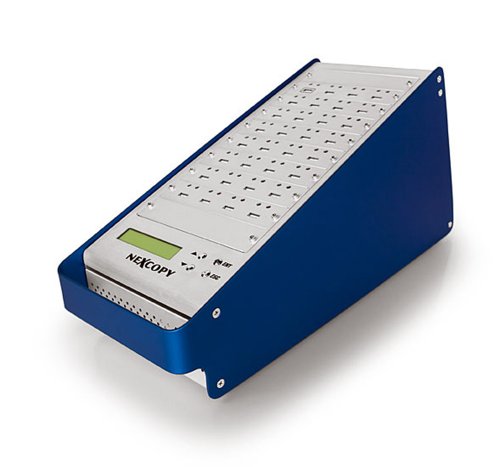
- Copies one master to 31 target drives
- Lists over 1800 MB per minute per port
- Provides LCD status and performance feedback
Best For: Large-scale USB duplication runs
High-Capacity Workhorse
EZ Dupe USB Cyclone 1-to-15 Duplicator

- Duplicates up to 15 USB devices at once
- Supports flash drives, HDDs, and SSDs
- Includes multi-mode copying and DoD erasing
Best For: High-volume professional duplication and drive erasure
Compact Starter Pick
BestDuplicator UB300 1-to-2 USB Duplicator

- Copies one drive to two targets
- Provides quick and bit-for-bit modes
- Portable LCD-controlled standalone design
Best For: Small-batch USB duplication and field use
Easy Touchscreen Control
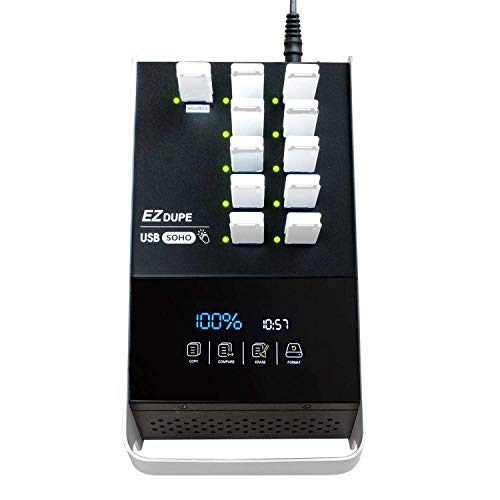
- Duplicates up to 10 USB flash drives
- Uses a touchscreen for key operations
- Supports USB 2.0, 3.0, and 3.1 media
Best For: User-friendly recurring flash-drive duplication
Best High-Speed 7-Target Pick
USBShark Standalone Duplicator
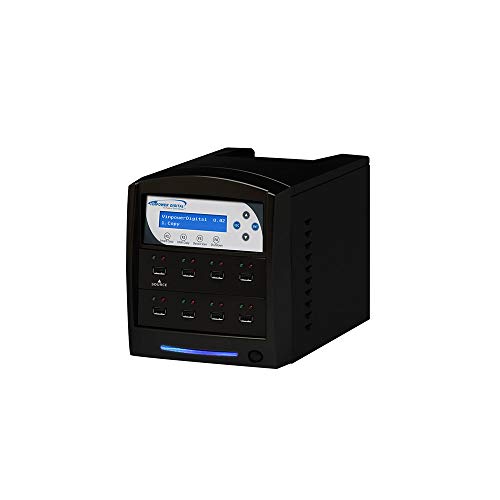
- Copies to seven USB targets
- Smart Copy and bit-by-bit modes
- Standalone operation with Secure Erase
Best For: Small production runs and IT workflows
Best Large-Batch Value

- Duplicates to up to 23 targets
- Simple three-step LCD operation
- Supports flash drives, HDDs, and SSDs
Best For: High-volume USB duplication jobs
Best Flexible Media Support

- Copies to 15 targets asynchronously
- Smart Copy and Raw Mode
- Optional support for SD, microSD, and CF
Best For: Mixed-media duplication and secure erasure
Compact IT Workhorse – StarTech 1:2 USB Duplicator
This compact choice among standalone USB duplicators handles two target drives at a time without a computer. It supports system-and-file or sector-by-sector copying, plus quick and multi-pass erasing, making it useful for routine drive distribution and sanitizing.
Best For: Technicians and IT professionals who need a small 1-to-2 duplicator with copying, verification, and erasure modes.
Pros:
- Supports USB 3.0 and USB 2.0 flash media and external USB storage.
- Offers sector-by-sector copying, quick erase, and single- or three-pass overwrite modes.
- LCD, activity/error LEDs, bad-sector scanning, and Copy & Compare aid monitoring.
- Asynchronous copying can use 64 MB of internal memory.
Cons:
- Only two target ports are available.
- Asynchronous copying is limited to source content under 64 MB.
- Some external USB devices require their own power source.
With its LCD controls and broad erase options, the StarTech is a practical fit for smaller-volume jobs where drive verification and sanitization matter as much as duplication.
Seven-Port Production Station – Systor 1:7 USB Duplicator
For higher-volume work, this standalone USB duplicator can copy one source to seven USB targets without a computer or software. Its bit-by-bit copy mode and synchronous or asynchronous operation suit repeatable business and personal duplication tasks.
Best For: Users who need seven simultaneous target drives and a desktop unit designed for repeated copying.
Pros:
- Supports one-to-seven USB duplication without a computer.
- Copies at speeds up to 2 GB per minute, according to the supplied specifications.
- Maintains the stated copy speed as the number of loaded targets increases.
- Includes synchronous and asynchronous copy modes, hot swapping, and long-term technical support.
Cons:
- The unit weighs 10 pounds, so it is less portable than compact models.
- Its listed hard-disk interface is USB 1.1.
- Optional external hard drives are supported, but the supplied notes do not specify included drive power.
The Systor emphasizes capacity and consistent throughput rather than portability, making it a sensible choice when seven copies per batch justify a larger desktop footprint.
Fast Compact Batch Copier – EZ Dupe 1:7 Mini USB Plus
This updated EZ Dupe is one of the more flexible standalone USB duplicators for compact batch work. It copies to up to seven USB flash drives simultaneously, supports USB 1.0 through 3.0 media and external USB storage, and can begin another asynchronous copy as finished drives are removed.
Best For: Users wanting a portable-feeling seven-target duplicator with faster rated throughput and broad USB flash-drive compatibility.
Pros:
- Copies to up to seven USB flash drives at the same time.
- Rated at up to 2.5 GB per minute or 45 MB per second.
- Supports USB 1.0, 2.0, and 3.0 flash drives plus external USB storage.
- Asynchronous operation lets users replace completed drives without waiting for a full batch.
Cons:
- Actual speed depends on the read/write performance of the connected drives.
- External USB devices need their own power source.
- The manufacturer warranty is one year.
The Mini USB Plus MK III combines seven-port capacity with a compact 12-ounce design, making it particularly appealing when workflow flexibility and easy drive swapping are priorities.
Maximum-Capacity Duplicator – USB131SA 1:31 Duplicator
When the priority is sheer batch size, this standalone USB duplicator provides one master and 31 target ports without requiring a PC or software. It also includes asynchronous duplication for masters up to 256 MB and real-time LCD performance and status feedback.
Best For: Organizations that need to produce very large batches of USB copies from a single master.
Pros:
- Supports one master and 31 target drives in a single configuration.
- Lists copy speeds over 1800 MB per minute to each port.
- Asynchronous duplication supports masters up to 256 MB.
- LCD feedback provides real-time performance and status information.
Cons:
- The 18-pound weight makes it a substantial desktop unit.
- The supplied notes do not specify supported USB versions or erase functions.
- Its large capacity may be excessive for small duplication batches.
The USB131SA is built for scale: its 31-target layout can reduce the number of repeated batches for large production runs, provided you have the workspace for its heavier desktop form.
High-Capacity Workhorse – EZ Dupe USB Cyclone 1-to-15 Duplicator
For teams that need to process many devices at once, this standalone USB duplicator supports up to 15 USB flash drives or external HDDs and SSDs without a computer or software. It offers up to 45MB/s per USB slot, independent bandwidth design, and broad drive-capacity support.
Best For: Businesses, technicians, and media workflows requiring high-volume USB duplication and drive erasure.
Pros:
- Duplicates up to 15 USB devices simultaneously.
- Supports USB 1.0 through USB 3.1 flash media plus external HDDs and SSDs.
- Includes four copy modes and four erase modes, including DoD 3-pass and 7-pass options.
- Standalone operation requires no computer or software.
Cons:
- At 7 pounds, it is less portable than compact duplicators.
- Actual speed depends on the connected USB media.
The Cyclone is the most capacity-focused option here. Its multiple ports, drive alerts, and erasure choices make it a strong fit for repetitive professional workflows, though its larger footprint may be unnecessary for occasional two-drive jobs.
Compact Starter Pick – BestDuplicator UB300 1-to-2 USB Duplicator
This compact standalone USB duplicator copies one USB flash drive to two targets simultaneously, without Windows, Mac, or other computer software. Its LCD interface, port indicators, and quick or whole-media copy modes keep basic duplication tasks straightforward.
Best For: Technicians, schools, small offices, and field users who need simple two-target USB copying.
Pros:
- Copies one source drive to two target drives at the same time.
- Offers Quick Copy and bit-for-bit Whole Media Copy modes.
- Includes capacity checks, device information, speed tests, and erase functions.
- Lightweight, portable design with LCD controls and individual LED indicators.
Cons:
- Limited to two target USB drives.
- Designed for USB 1.1 and USB 2.0 media rather than newer USB standards.
- Additional memory-card duplication requires a compatible USB card reader sold separately.
The UB300 is a practical entry-level choice among standalone USB duplicators. It trades throughput and scale for portability and clear controls, making it better suited to smaller batches than production-volume duplication.
Easy Touchscreen Control – EZ Dupe SOHO Touch 1-to-10
The SOHO Touch combines 10-port USB duplication with a touchscreen interface for copying, comparing, formatting, and erasing. As a standalone USB duplicator, it is designed for recurring work and supports USB 2.0, 3.0, and 3.1 flash media at speeds up to 35MB/s.
Best For: Users who want multi-drive duplication with a simpler touchscreen workflow.
Pros:
- Duplicates up to 10 USB flash drives simultaneously.
- Touchscreen menu simplifies copy, compare, format, and erase functions.
- Supports all file formats, file sizes, and drive capacities on USB flash media.
- Built for daily operation with a lightweight, heavy-duty construction.
Cons:
- Its stated speed of up to 35MB/s is lower than the Cyclone’s 45MB/s rating.
- The supplied notes specify USB flash-media use rather than external HDD or SSD support.
The SOHO Touch is a balanced option for users who value ease of operation alongside moderate batch capacity. Its touchscreen and one-touch maintenance tools make routine jobs approachable, while the 10-port layout supports more than small-office duplication.
Best High-Speed 7-Target Pick – USBShark Standalone Duplicator
Vinpower Digital USBShark Standalone USB Flash Drive Duplicator - 7 Targets (High Speed)
Check Price On AmazonFor buyers comparing standalone USB duplicators, the Vinpower Digital USBShark is a practical 7-target option with no PC required. It supports USB 3.0, 2.0, and 1.0 devices, while Smart Copy, bit-by-bit duplication, and USB Prescan provide useful flexibility for different copying tasks.
Best For: Small production runs, IT departments, and users who need a standalone duplicator with secure erase and error scanning.
Pros:
- Copies to up to seven target USB devices.
- Smart Copy handles accessible content, while bit-by-bit duplication supports all data formats.
- USB Prescan checks the source for physical reading errors.
- Secure Erase is designed to prevent data recovery.
Cons:
- Seven targets may be limiting for larger-volume duplication.
- The supplied specifications do not include a warranty.
The USBShark is a capable choice when standalone operation and source checking matter more than maximum target capacity. Its mix of copying modes and secure erasure makes it suitable for repeatable, hands-off USB workflows.
Best Large-Batch Value – DupliM 1:23 USB Duplicator
DupliM 1:23 USB Flash Drive Duplicator Stand-Alone Burner Cloner Copier (1 to 23)
Check Price On AmazonAmong standalone USB duplicators, the DupliM 1:23 stands out for its high target count and simple LCD-guided workflow. Insert the source, load the target drives, and select Copy without connecting a computer. It also supports USB flash drives and external 2.5-inch hard drives or SSDs.
Best For: Large duplication jobs that require up to 23 target drives and support for several common file systems.
Pros:
- Supports one source to as many as 23 target drives.
- Three-step operation is straightforward and PC-free.
- Supports USB 2.0 and 3.0 flash drives plus external 2.5-inch hard drives and SSDs.
- Supports FAT, FAT32, NTFS, HFS, Ext2, Ext3, and Ext4 file systems.
Cons:
- The maximum listed hard-drive capacity is under 2TB.
- Its 1:23 capacity may be more than needed for occasional personal use.
- The listed media speed is lower than the stated maximum data-transfer rate, so real-world performance may vary.
The DupliM is the strongest fit here for volume: its 23-target design can reduce the number of duplication cycles for larger batches. Broad file-system support and compatibility with external storage add flexibility beyond standard flash-drive copying.
Best Flexible Media Support – USBDBL 15-Target Duplicator
The Vinpower USBDBL is a versatile option for shoppers evaluating standalone USB duplicators. It duplicates to 15 target drives without a PC and uses asynchronous duplication, allowing targets to copy independently. Smart Copy and Raw Mode cover both accessible-content copying and bit-by-bit duplication.
Best For: Workflows that need 15 USB targets, independent copying, secure erasure, or optional support for SD, microSD, and CompactFlash media.
Pros:
- Standalone design requires no PC.
- Asynchronous duplication lets targets copy independently without sacrificing stated speed or quality.
- Smart Copy and Raw Mode provide flexible duplication methods.
- Supports optional interface adaptor modules for SD, microSD, CompactFlash, and other flash media.
Cons:
- Alternative flash-media support requires a corresponding adaptor module add-on.
- Fifteen targets are fewer than the DupliM 1:23.
- The unit weighs 11 pounds, making it less convenient to move frequently.
The USBDBL is a well-rounded pick for mixed-media environments where independent target processing and secure erasure are valuable. Choose it over a simpler USB-only model when adaptor-based media expansion is part of the plan.
How We Picked the Best Standalone USB Duplicators
We focused on the features that most affect real-world deployment: the number of target ports, advertised copy speed, USB-generation compatibility, standalone operation, display or menu controls, and support for erasing or sanitizing drives. We also considered whether each unit is better suited to occasional two-drive jobs, recurring small-batch production, or high-volume duplication.
Product names and specifications can vary by configuration, so verify the seller’s current details before purchase. In particular, check whether the stated speed applies to synchronous copying, asynchronous copying, or a specific type of flash media.
Quick Comparison
| Best For | What to Prioritize |
|---|---|
| Occasional copying | Low target count, simple controls, compact design |
| Small business batches | Four to 10 target ports, broad USB compatibility, clear status feedback |
| Large production runs | 15 or more targets, high sustained throughput, reliable error handling |
| Secure reuse | Verified erase or sanitize modes and clear completion reporting |
Key Buying Factors for Standalone USB Duplicators
Target-Port Count
Port count determines how many destination drives you can process in one cycle. A 1:2 model is economical for occasional work, while seven-, 10-, 15-, or 23-target systems make more sense when batches are frequent. Very high-capacity units can reduce labor, but they require more desk space and a larger supply of matching drives.
Speed and Workflow
Compare advertised transfer rates carefully. Source-drive performance, destination-drive quality, file size, small-file density, and USB version all influence actual results. A high port count is not useful if the duplicator’s source or controller cannot sustain the workload.
USB Compatibility
Check support for USB 2.0, USB 3.0, USB 3.1, and the specific flash-drive formats you use. Backward compatibility is common, but older media can limit the entire batch. If you plan to clone external hard drives or SSDs, confirm that the unit explicitly supports those devices.
Controls, Verification, and Sanitizing
LCD or touchscreen menus can simplify selecting copy, compare, or erase functions. Verification helps confirm that target drives match the source, while sanitize modes are valuable when drives will be reassigned or recycled. Look for clear error reporting rather than relying only on a completion light.
Who Should Buy Which Standalone USB Duplicators?
Choose a compact two-target duplicator for occasional office, classroom, or repair-shop use. A seven- or 10-target unit is a practical middle ground for installers, small businesses, and IT departments producing regular batches. For software distribution, event media, or manufacturing workflows, 15-, 23-, or 31-target systems can save substantial time when used frequently. If secure reuse is central to your process, prioritize a model with dedicated erasing or sanitizing functions and verification controls.