
Choosing the right tracker can make a dramatic difference in night-sky photography, letting your DSLR capture cleaner stars, smoother Milky Way detail, and longer exposures with less star trailing.
This roundup focuses on portable, beginner-friendly, and advanced star trackers for dslr cameras, with an eye on alignment, payload capacity, travel convenience, and overall value.
Best 10 Star Trackers for Dslr Cameras Picks for 2026
Portable Wide-Field Tracker
Sky-Watcher Star Adventurer 2i Pro Pack
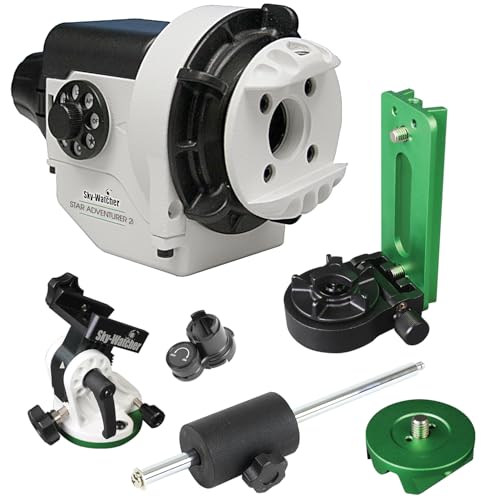
- Motorized portable platform for nightscape tracking
- Modular design works with existing photographic tripods
- Wi-Fi control via the SAM Console app
Best For: DSLR shooters needing a portable wide-field astrophotography tracker
Stable High-Capacity Tracker
iOptron SkyGuider Pro Full Package

- All-metal build helps minimize vibration
- Supports up to 11 lbs when balanced
- Illuminated polar scope simplifies alignment
Best For: Photographers wanting a stable, higher-capacity DSLR tracker
Travel-Friendly Timelapse Tracker

- Small, lightweight design for travel
- Five tracking speeds plus RA-only autoguiding
- Smartphone-controlled shutter release for timelapse
Best For: Travel shooters needing a compact DSLR tracker for sky images and timelapse
Compact Entry Tracker

- Compact 3.3-pound tracker with padded bag
- Multiple modes: sidereal, solar, lunar, and more
- Compatible with cameras and cellphones
Best For: DSLR and cellphone users wanting a compact multi-mode tracker
Portable Nightscape Tracking Platform
Sky-Watcher Star Adventurer 2i Astro Pack

- 11 lb payload for most DSLR setups
- Illuminated polar scope for alignment
- 2.4 lb body with AA or USB power
Best For: Travel-friendly DSLR nightscapes and panoramas
Ultra-Light Travel Tracker
Xiaoran Wild Star Portable Equatorial Mount
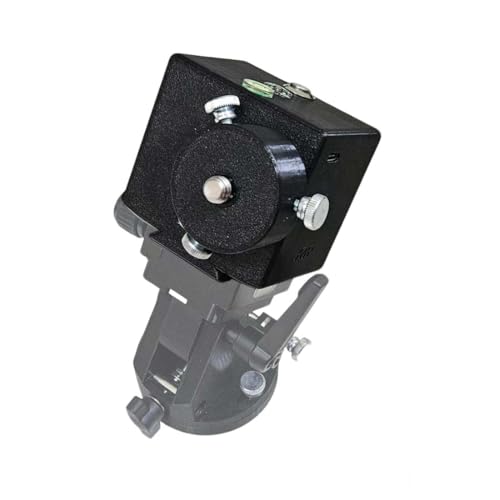
- About 350 g total weight
- Built-in level, compass, and quick-release plate
- Up to 4.2 kg load with 5V power-bank support
Best For: Backpack astrophotography with lightweight cameras
WiFi-Enabled Mini Tracker
Sky-Watcher Star Adventurer Mini Pro Pack

- WiFi control with SynScan app
- Includes equatorial base, polar scope, and DEC bracket
- 1.5 lb tracker with 6.6 lb payload
Best For: Compact DSLR and mirrorless setups with app control
Portable All-Metal Tracker
Xiaoxin Star Tracking Equatorial Mount

- All-metal construction with stainless-steel frame
- Supports up to 5 kg, with balance gear included
- Bluetooth/app control plus preset tracking rates
Best For: Beginners who want a sturdy portable tracker
GoTo Portable EQ
Sky Watcher Star Adventurer GTI Mount Kit

- Full GoTo tracking in a compact mount head
- Built-in Wi-Fi and illuminated polar scope
- Includes counterweight bar and 5 lb counterweight
Best For: Travelers who want automated setup aids
Lightweight Smart Tracker
OGST Single-Axis Automatic Tracking Mount

- Only 1.4 kg with a 4 kg load rating
- Stepper drive with ±10″ period error
- nWiFi browser control and three alignment methods
Best For: Travel shooters who need lightweight flexibility
Portable Wide-Field Tracker – Sky-Watcher Star Adventurer 2i Pro Pack
If you want star trackers for DSLR cameras that can handle wide-field nightscape work, the Sky-Watcher Star Adventurer 2i Pro Pack is built for portable tracking and flexible setup. Its modular design works with existing photographic tripods, and the upgraded Wi-Fi control makes it easier to manage shoots with the SAM Console app.
Best For: DSLR shooters who want a portable tracker for Milky Way, eclipse, and wide-field astrophotography.
Pros:
- Motorized portable tracking platform designed for nightscape and astronomical imaging
- Modular design integrates with existing photographic tripods
- Includes Wi-Fi for smartphone control via the free SAM Console app
- Deluxe equatorial base helps with polar alignment
Cons:
- At 7 pounds, it is not the lightest option in this group
- Geared more toward wide-field use than heavier camera rigs
Overall, this is a strong pick if you want a travel-friendly tracker that emphasizes flexibility and smartphone control. It stands out for users who value setup options and broad nightscape capability over ultra-compact size.
Stable High-Capacity Tracker – iOptron SkyGuider Pro Full Package
Among star trackers for DSLR cameras, the iOptron SkyGuider Pro Full Package is aimed at photographers who want a stable mount with more load capacity. Its all-metal body, precise machining, and illuminated polar scope are geared toward sharper long-exposure results and easier alignment in the field.
Best For: DSLR users who want a compact tracker with strong stability and a higher balanced weight limit.
Pros:
- All-metal construction and precise machining help reduce vibration
- Supports up to 11 lbs when balanced
- AccuAlign dark field illuminated polar scope simplifies polar alignment
- Internal rechargeable battery can run up to 20 hours at 20°C
Cons:
- Still a more specialized setup than a basic tripod head
- Best performance depends on careful balancing
This is a practical choice if you need a tracker that feels solid and can handle a variety of camera and lens combinations. It favors stability and alignment convenience, which matters when you are chasing cleaner long exposures.
Travel-Friendly Timelapse Tracker – Vixen POLARIE U Star Tracker
If you are comparing star trackers for DSLR cameras and want something compact, the Vixen POLARIE U is designed for small, lightweight travel use. It offers five tracking speeds, ST4 autoguiding support on the RA axis, and smartphone-controlled shutter release for timelapse work.
Best For: Travel shooters who want a lightweight tracker for sky images and timelapse shots.
Pros:
- Small and lightweight for travel-friendly setups
- Five tracking speeds provide useful flexibility
- Includes ST4 autoguiding port for RA-only guiding
- Smartphone-controlled shutter release supports timelapse shooting
Cons:
- Uses AA batteries or USB-C external power, so power planning still matters
- Best suited to lighter, more portable setups
The POLARIE U is a smart pick when portability and timelapse features matter as much as tracking itself. It is especially appealing for photographers who want a compact unit they can bring on trips without much hassle.
Compact Entry Tracker – iOptron SkyTracker Pro Mount
For buyers looking at star trackers for DSLR cameras, the iOptron SkyTracker Pro focuses on simplicity and portability. It supports a 6.6 lb payload, offers multiple tracking modes including sidereal, sky and landscape, solar, and lunar, and comes with a padded bag for easier transport.
Best For: DSLR and cellphone shooters who want a compact tracker with multiple tracking modes.
Pros:
- Supports 1X celestial, 1/2X, solar, lunar, and north/south tracking modes
- Compact 3.3-pound design with padded bag for portability
- Micro USB charging with up to 80% charge in 5 hours
- Compatible with camera and cellphone use
Cons:
- 6.6 lb payload is lower than some other trackers here
- Best for lighter rigs rather than heavier DSLR and lens combinations
This model makes sense if you want a manageable, flexible tracker without stepping into a larger system. It is a straightforward option for lighter astrophotography setups and mixed shooting modes.
Portable Nightscape Tracking Platform – Sky-Watcher Star Adventurer 2i Astro Pack
If you’re comparing star trackers for DSLR cameras, the Sky-Watcher Star Adventurer 2i Astro Pack is built for portable wide-field astrophotography, time-lapses, and panorama work. Its motorized tracking platform is designed to help you capture cleaner Milky Way and eclipse shots while still fitting into a travel-friendly setup.
Best For: DSLR shooters who want a lightweight, modular tracker for nightscapes and travel astrophotography.
Pros:
- 11 lb payload capacity supports most DSLR camera setups.
- Built-in illuminated polar finderscope helps with alignment to Polaris.
- Lightweight 2.4 lb design makes it easy to pack for field use.
- AA battery compartment and 5V mini-USB input support mobile power options.
Cons:
- Counterweight use and setup details are not spelled out in the supplied notes.
- Designed around portable shooting, so it may not suit heavier imaging rigs.
This is a practical pick if you want a compact tracker that stays focused on DSLR nightscape work. The modular design and included polar alignment aid make it easy to build into an existing tripod-based kit.
Ultra-Light Travel Tracker – Xiaoran Wild Star Portable Equatorial Mount
For shoppers looking at star trackers for DSLR cameras, the Xiaoran Wild Star Portable Equatorial Mount stands out for its ultra-light build and simple field setup. It combines single-axis automatic tracking with built-in alignment tools, making it aimed at portable astrophotography sessions where quick setup matters.
Best For: Backpackers and travel shooters who want a very compact, lightweight tracking mount.
Pros:
- Extremely light at about 350 g for easy carry.
- Built-in quick-release plate, level, and compass speed up setup.
- Coaxial polar-alignment pointer is designed for intuitive alignment.
- Supports up to 4.2 kg and can run from a 5V power bank.
Cons:
- Single-axis tracking is more limited than full equatorial systems.
- Included notes do not mention counterweight support.
This model makes the most sense if portability is your top priority and you want a simple tracker for DSLR or mirrorless field work. The tradeoff is that it is geared toward lightweight setups rather than more elaborate rigs.
WiFi-Enabled Mini Tracker – Sky-Watcher Star Adventurer Mini Pro Pack
If you want star trackers for DSLR cameras with app-based convenience, the Sky-Watcher Star Adventurer Mini Pro Pack is built around portable tracking and smartphone control. It supports wide-field astrophotography, time-lapse video, and telescopic use, while the included equatorial base and polar scope help with setup.
Best For: DSLR and mirrorless users who want a compact tracker with smartphone control.
Pros:
- WiFi-enabled and compatible with the free SynScan smartphone app.
- Includes an equatorial base, polar scope, and DEC bracket.
- Weighs just 1.5 lb, making it easy to travel with.
- Supports most DSLR and mirrorless cameras up to a 6.6 lb payload.
Cons:
- AA batteries and mini-USB power source are not included.
- 6.6 lb payload is lower than larger tracker options.
This is a strong option if you value convenience features like WiFi control and a compact footprint. It keeps the setup portable while still giving you the alignment tools needed for field astrophotography.
Portable All-Metal Tracker – Xiaoxin Star Tracking Equatorial Mount
If you want star trackers for dslr cameras that feel rugged and beginner-friendly, this Xiaoxin single-axis mount is built around a heavy-duty all-metal design and straightforward control options. It supports DSLR and mirrorless setups, offers Bluetooth/app-based speed control, and includes tracking modes for the north or south hemisphere, plus preset stellar, solar, and lunar rates.
Best For: Beginners who want a sturdy, portable tracker with app control and a complete kit.
Pros:
- Precision-milled 2 mm aluminum housing with stainless-steel frame and output shaft
- Rated for cameras and lenses up to 5 kg, with included balance wheel and counterweight for heavier setups
- Real-world long-exposure tracking guidance covers common focal lengths from 14 mm to 300 mm
- Bluetooth, shutter control, and custom speed options add flexibility in the field
Cons:
- Best performance depends on careful setup and polar alignment, especially at longer focal lengths
- iOS users rely on infrared remote for speed changes rather than the Android app
This is a practical pick if you value a full accessory kit and a durable build over ultra-light minimalism. It looks especially appealing for travelers who want a single-axis tracker that can handle a wide range of focal lengths without feeling fragile.
GoTo Portable EQ – Sky Watcher Star Adventurer GTI Mount Kit
Among star trackers for dslr cameras, this Sky-Watcher kit stands out if you want full GoTo functionality in a compact portable package. It includes a built-in polar scope with illuminator, built-in Wi-Fi, and a counterweight bar, while the dovetail is ready for a DSLR or mirrorless camera setup (camera not included).
Best For: Travelers who want a compact GoTo mount head with built-in alignment tools.
Pros:
- Full GoTo performance in a compact mount head
- Built-in Wi-Fi for wireless control
- Built-in polar scope with illuminator helps with setup
- Includes counterweight bar and 5 lb counterweight
Cons:
- DSLR or mirrorless camera is not included
- Heavier than ultra-light travel trackers at 6.9 kg
This kit is a strong fit for users who want more automation than a basic tracker and appreciate built-in alignment aids. Its compact GoTo design makes it a compelling step up for portable astrophotography rigs.
Lightweight Smart Tracker – OGST Single-Axis Automatic Tracking Mount
If you’re comparing star trackers for dslr cameras and want something light enough for travel, this OGST single-axis mount is built around a carbon-composite body and smart control features. It supports DSLR, mirrorless cameras, and small telescope systems, and it gives you multiple polar alignment options through a polar scope, smartphone, or pointer method.
Best For: Travel shooters who want a lightweight tracker with flexible alignment methods.
Pros:
- Very light 1.4 kg body with a 4 kg load rating
- Precision stepper drive with ±10″ period error and 1:101.25 gearing
- nWiFi-enabled browser control supports upgrades and custom functions
- Three alignment options make field setup more adaptable
Cons:
- Lower load capacity than heavier-duty mounts
- Single-axis design may not suit users wanting full GoTo automation
This model is aimed at portability first, with enough control features to stay useful for serious field work. It is a smart choice if you prioritize weight savings, open-source control, and quick alignment on the go.
How We Picked the Best Star Trackers for Dslr Cameras
We prioritized portability, tracking accuracy, build quality, polar-alignment ease, and how well each option suits real-world DSLR astrophotography. We also looked for practical features such as counterweight support, app or remote control, and package completeness so buyers can avoid hidden add-on costs.
Quick Comparison
In general, compact single-axis trackers are the easiest way to start with Star Trackers for Dslr Cameras, especially for wide-field Milky Way shots and travel use. More capable kits with counterweights or GoTo functionality offer better expandability, but they are usually larger, heavier, and more expensive.
Key Buying Factors for Star Trackers for Dslr Cameras
Payload and Lens Choice
Check the effective load capacity, not just the headline rating. A tracker that handles a lightweight DSLR and wide-angle lens may struggle once you add a heavier zoom lens, intervalometer, or ball head.
Polar Alignment
Accurate polar alignment is the biggest factor in sharp long exposures. Built-in polar scopes, alignment aids, and stable adjustment controls can save time in the field and improve results.
Tracking Type
Single-axis trackers are ideal for standard nightscape work and are usually lighter to carry. GoTo or multi-feature mounts are better if you want more precise target acquisition or plan to expand into deeper astrophotography workflows.
Portability and Setup Speed
If you travel often, compact size and fast setup matter as much as raw performance. The best travel-friendly units balance stability with simple assembly so you spend more time shooting and less time configuring gear.
Power and Control
Battery life, charging options, and remote or app control can make a real difference during long sessions. Consider whether the tracker includes the controls you need or requires extra accessories.
Who Should Buy Which Star Trackers for Dslr Cameras?
Beginners usually do best with a straightforward, lightweight tracker that includes alignment help and a complete package. Landscape and Milky Way photographers should favor portability and ease of use, while more advanced users may want a tracker with higher capacity, finer control, or GoTo capability for future growth.
If you want the simplest path to better astrophotography with a DSLR, start with a reliable single-axis model. If you already know you need more flexibility, choose one of the stronger kits that can support heavier setups and future upgrades.