
Choosing the right tracker can make the difference between soft, streaked stars and clean, detailed night-sky images. The best models help you shoot longer exposures, lower ISO, and capture more detail with less noise.
This roundup of star trackers for night photography focuses on portability, payload, alignment ease, battery life, and tracking accuracy so you can find a setup that fits your camera, lens, and workflow.
Best 10 Star Trackers for Night Photography Picks for 2026
Portable Nightscape Tracker
Sky-Watcher Star Adventurer 2i Pro Pack
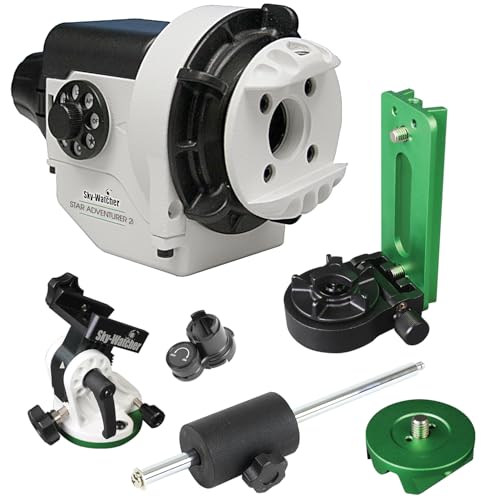
- Motorized portable tracking platform
- Works with existing photo tripods
- Wi‑Fi app control and deluxe equatorial base
Best For: traveling nightscape shooters who want a modular, portable tracker
All-In-One RA Tracker
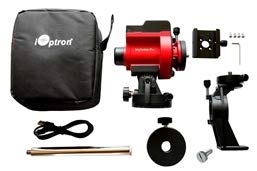
- Full package with padded bag, DEC and CW kit
- Fast RA slew up to 144X sidereal speed
- Tracks solar, lunar, and sidereal rates
Best For: buyers who want a complete tracker kit with flexible speed settings
Travel-Light Star Tracker

- Small, lightweight tracking unit
- Five tracking speeds and ST4 RA guiding
- Smartphone shutter release for timelapse
Best For: travel photographers and timelapse shooters
Compact GoTo Astro Mount
Sky-Watcher Star Adventurer GTi Kit

- Full GoTo performance in a compact package
- Built-in Wi‑Fi and illuminated polar scope
- Includes counterweight bar and 5 lb counterweight
Best For: photographers who want automated tracking in a portable mount head
Backcountry Pick
SLIK ECH-630 Compact Star Tracker
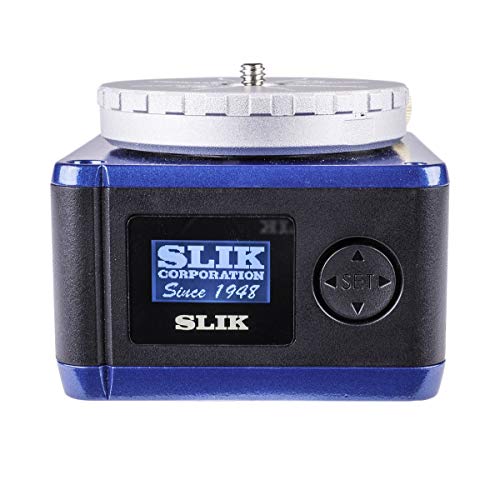
- Multi-speed tracking for starscape, lunar, solar, and sidereal use
- Lightweight at about 22.4 oz. for backpacking
- Up to 20 hours on 4 AA batteries
Best For: Backpacking photographers who need a lightweight tracker with long battery life.
App-Control Pick
Kenko SKYMEMO T Portable Tracking Platform

- Controlled through a smartphone app
- Five tracking modes plus built-in interval timer
- Compact 650 g design for portable shooting
Best For: Mobile shooters who want app-based control and multiple tracking modes.
DIY-Style Pick
TeSeek Equatorial Mount Star Tracker

- Custom speed control with stellar, moon, and custom modes
- Switches between northern and southern hemispheres
- USB-C powered and ready to use without an app
Best For: Tinker-minded photographers who want customizable tracking without app dependence.
Best with Extra Features
Sky-Watcher Star Adventurer 2i

- 2.4 lb portable tracking platform
- Illuminated polar finderscope
- Runs up to 72 hours on AA power
Best For: Travel-ready DSLR nightscapes and Milky Way shots
Low-Latitude Alignment Base
FANAUE SkyGuider Pro Base Mount

- Designed for low-latitude polar alignment
- CNC-machined aluminum for rigidity
- Built for SkyGuider Pro compatibility
Best For: SkyGuider Pro owners shooting near the equator or in southern regions
Feature-Rich Beginner Tracker
Xiaoxin Single-Axis Equatorial Mount

- All-metal build with 5 kg capacity
- Bluetooth app and shutter controls
- Includes counterweight and mounting accessories
Best For: Beginners wanting an app-controlled portable tracker
Portable Nightscape Tracker – Sky-Watcher Star Adventurer 2i Pro Pack
If you’re shopping for star trackers for night photography, the Sky-Watcher Star Adventurer 2i Pro Pack is built around portable wide-field tracking. Its modular design works with existing photo tripods, and the deluxe equatorial base helps with polar alignment for Milky Way shots, eclipses, and time-lapse work.
Best For: Travelers and nightscape photographers who want a compact, modular tracker with Wi‑Fi control.
Pros:
- Motorized portable tracking platform for nightscapes and other astronomical objects
- Modular design integrates with existing photographic tripods
- Wi‑Fi support with smartphone control via the free SAM Console app
- Deluxe equatorial base helps position the tracker for polar alignment
Cons:
- Requires careful polar alignment for best results
- Included batteries are lithium metal and must be managed like any powered accessory
Overall, this is a strong all-around option if you want a portable tracking solution that keeps the setup flexible. It covers the core needs of wide-field astrophotography without getting bulky.
All-In-One RA Tracker – iOptron SkyGuider Pro
For star trackers for night photography, the iOptron SkyGuider Pro stands out as a full-package RA tracking mount with the accessories many first-time buyers want included. It adds a padded bag, DEC and CW kit, and USB cable, plus tracking speeds for siderial, solar, lunar, and fast slewing.
Best For: Photographers who want a ready-to-use tracker package with multiple tracking speeds and both-hemisphere support.
Pros:
- Full package includes padded bag, DEC and CW kit, and USB cable
- Fast RA slew up to 144X sidereal speed
- Offers 1X, 1/2X, solar, and lunar tracking speeds
- Supports both northern and southern hemispheres
Cons:
- Designed for camera use, so it is not an all-in-one telescope mount solution
- Still requires setup and alignment for accurate tracking
This is a practical choice if you want a compact star tracker package without needing to hunt down extra accessories. The extra speed options make it flexible for different night-sky subjects.
Travel-Light Star Tracker – Vixen POLARIE U
Among star trackers for night photography, the Vixen POLARIE U is aimed at photographers who value a small, lightweight setup. It offers five tracking speeds, ST4 autoguiding support on the RA axis, and smartphone-controlled shutter release for timelapse-style shooting.
Best For: Travel photographers and timelapse shooters who need a compact tracker with smartphone control.
Pros:
- Small and lightweight for travel-friendly use
- Five tracking speeds for different shooting needs
- ST4 autoguiding port for RA-only guiding
- Smartphone-controlled shutter release supports timelapse work
Cons:
- Runs on AA batteries or external USB-C power, so power planning matters
- RA-only autoguiding is more limited than a full guiding setup
If portability matters more than a heavier feature set, this tracker is easy to justify. It keeps the package simple while still giving you useful control for sharp night-sky images.
Compact GoTo Astro Mount – Sky-Watcher Star Adventurer GTi Kit
If you want star trackers for night photography with more automation, the Sky-Watcher Star Adventurer GTi adds full GoTo performance in a compact package. It includes a built-in polar scope with illuminator, built-in Wi‑Fi, and a counterweight bar, while the camera or mirrorless body is sold separately.
Best For: Photographers who want a lightweight GoTo tracking mount with built-in Wi‑Fi and polar-scope aids.
Pros:
- Full GoTo performance in a compact package
- Built-in Wi‑Fi for wireless control
- Built-in polar scope with illuminator helps alignment
- Includes counterweight bar and 5 lb counterweight
Cons:
- Camera or mirrorless camera is not included
- More of a mount head kit than a complete imaging bundle
This is the most automation-focused option in the group, which can make setup easier for mobile astrophotography. It suits users who want GoTo convenience without moving to a large, permanent rig.
Backcountry Pick – SLIK ECH-630 Compact Star Tracker
If you want star trackers for night photography that travel easily, the SLIK ECH-630 is built around portability and straightforward celestial shooting. It offers multiple speeds for starscape, lunar, solar, and sidereal work, plus an LCD menu that keeps setup simple in the field.
Best For: Backpacking photographers who need a lightweight tracker with long battery life.
Pros:
- Compact design at about 22.4 oz. makes it easy to pack.
- Supports multi-speed operation for celestial, lunar, and time-lapse work.
- Runs up to 20 hours on 4 AA batteries.
- Optional SMH-250 micro adjustment head can help with polar alignment.
Cons:
- Maximum weight recommendation is relatively limited compared with heavier-duty setups.
- Polar alignment aid is optional, not built in.
Overall, the ECH-630 is a practical choice when low weight and long run time matter more than advanced app control. It suits photographers who want a simple tracker for backcountry sessions and mixed night-sky shooting.
App-Control Pick – Kenko SKYMEMO T Portable Tracking Platform
For star trackers for night photography with a more connected workflow, the Kenko SKYMEMO T stands out as a compact tracking platform controlled through a smartphone app. It includes five tracking modes, built-in interval timer shooting, and a telescope for polar-axis use, making it a flexible option for portable astronomical shooting.
Best For: Mobile shooters who want app-based control and multiple tracking modes.
Pros:
- Operations via the SKYMEMO T app for smartphone-based control.
- Five tracking modes for different shooting needs.
- Built-in interval timer shooting function.
- Compact 650 g design for portable use.
Cons:
- Battery average life is listed at about 5 hours, which is shorter than some rivals.
- App-based operation may not suit users who prefer fully manual controls.
In practice, this is a good fit if you value convenience features and want one tracker to handle a range of astrophotography setups. Its app control and timing tools make it especially appealing for photographers who like a guided workflow.
DIY-Style Pick – TeSeek Equatorial Mount Star Tracker
If you prefer star trackers for night photography with a more modular, DIY feel, this TeSeek equatorial mount leans into flexible operation. It supports stellar, moon, and custom rotation speeds, can switch between hemispheres, and also works as a gimbal head for time-lapse photography.
Best For: Tinker-minded photographers who want customizable tracking without app dependence.
Pros:
- Supports stellar speed, moon speed, and custom rotation speed.
- Switches between northern and southern hemispheres.
- No app required; powers on and gets ready to use.
- Can be powered by a power bank through USB Type-C.
Cons:
- Requires a separate ball head for camera connection.
- Some users may need extra adapters, such as a 1/4 to 3/8 sleeve.
- Powered by cable only, since it has no built-in battery.
This tracker is best if you want flexibility and are comfortable assembling a system around it. It offers useful control options for astrophotography and time-lapse, but it expects a bit more setup than an all-in-one solution.
Best with Extra Features – Sky-Watcher Star Adventurer 2i
If you want a portable option for star trackers for night photography, the Sky-Watcher Star Adventurer 2i is built around wide-field astrophotography, nightscapes, time-lapse work, and even telescopic use. Its modular design makes it easy to pair with an existing photographic tripod, while the illuminated polar finderscope helps with accurate alignment to Polaris.
Best For: DSLR shooters who want a lightweight, travel-friendly tracker for Milky Way and nightscape work.
Pros:
- Lightweight at 2.4 lbs, so it is easy to pack in a camera bag or backpack.
- Built-in illuminated polar finderscope supports easier polar alignment.
- 11 lb payload capacity works with most DSLR camera setups.
- Built-in AA battery compartment can run for up to 72 hours, with mini-USB external power support.
Cons:
- Single-axis tracking is best suited to wide-field and nightscape shooting rather than a full mount setup.
- Polar alignment is important, so it still takes some setup time in the field.
The Star Adventurer 2i stands out if portability and simple night sky tracking matter most. It combines practical power options, a compact build, and broad DSLR compatibility in one travel-ready package.
Low-Latitude Alignment Base – FANAUE SkyGuider Pro Base Mount
For astrophotographers using a SkyGuider Pro in low-latitude locations, this base mount is designed to improve the adjustment range for polar alignment. In practical terms, it gives star trackers for night photography a more stable foundation when you need precise setup closer to the equator or in southern regions.
Best For: SkyGuider Pro users who need a low-latitude polar alignment base with rigid CNC aluminum construction.
Pros:
- Specifically engineered for low-latitude star tracking and polar alignment.
- CNC-machined aluminum construction is built for rigidity and outdoor use.
- Designed for secure, wobble-free mounting with SkyGuider Pro systems.
- Vibration reduction helps support steadier long-exposure sessions.
Cons:
- It is a base mount, not a complete star tracker.
- Compatibility is focused on iOptron SkyGuider Pro systems.
This is a specialized accessory rather than an all-in-one solution, but it fills an important role for low-latitude users. If your priority is a more suitable alignment range and a solid mounting platform, it is a targeted upgrade.
Feature-Rich Beginner Tracker – Xiaoxin Single-Axis Equatorial Mount
If you are comparing star trackers for night photography and want a beginner-friendly model with a lot of control, the Xiaoxin single-axis equatorial mount is worth a look. It supports DSLR and mirrorless cameras, includes Bluetooth and shutter control features, and is built for long-exposure tracking with multiple focal lengths.
Best For: Beginners who want a portable, all-metal tracker with app-based control and strong exposure limits.
Pros:
- Heavy-duty all-metal build with stainless-steel frame and 5 kg load capacity.
- Built-in Bluetooth plus app control for speed, shutter, and exposure settings.
- Supports north/south hemisphere tracking and preset stellar, solar, and lunar rates.
- Includes balance wheel, counterweight, and multiple mounting options in the kit.
Cons:
- Single-axis design is still more focused on camera tracking than full mount functionality.
- Setup and feature depth may be more than a casual user needs.
This model offers a strong mix of portability, load support, and smart control features. For a first tracker, it looks especially appealing if you want more than the basics without moving to a larger rig.
How We Picked These Star Trackers for Night Photography
We focused on practical buying criteria for real-world astrophotography: tracking accuracy, setup simplicity, load capacity, portability, power options, and compatibility with DSLR and mirrorless rigs. We also prioritized products that suit common shooting styles like wide-field Milky Way work, tracked panoramas, and longer telephoto exposures.
Quick Comparison: What Matters Most
Some star trackers are built for minimal travel weight and fast deployment, while others offer stronger payload support or more advanced GoTo features. If you mainly shoot with a lightweight camera and wide lens, a compact single-axis tracker may be enough. If you want added flexibility for framing, longer focal lengths, or repeated targets, a more capable equatorial mount or GoTo model may be the better fit.
Key Buying Factors for Star Trackers for Night Photography
Payload and Rig Weight
Match the tracker to your camera, lens, ball head, intervalometer, and any counterweights. Staying well within the rated load usually improves tracking stability and makes polar alignment less frustrating.
Alignment and Setup Time
Fast polar alignment tools, adjustable bases, and clear polar scopes matter a lot when you are working in the dark. If you travel often, ease of setup can matter as much as raw tracking precision.
Tracking Modes and Speed Options
Look for sidereal tracking for stars, and check whether the unit also supports lunar, solar, or time-lapse modes. Those extras can be useful if you want more than a basic night-sky tracker.
Power, Runtime, and Controls
Battery life, charging method, and control layout affect how dependable the tracker is in the field. Longer runtime is especially valuable for all-night sessions or cold-weather shooting.
Portability and Build Quality
For travel and hiking, compact size and low weight are major advantages. At the same time, a sturdy drive system and solid base help reduce flex and improve consistency during longer exposures.
Who Should Buy Which Star Trackers for Night Photography?
Beginners often do best with a simple, lightweight tracker that is easy to align and forgiving to use. Travelers and landscape shooters may prefer the most compact option with strong battery life. More experienced astrophotographers, or anyone using heavier lenses and wanting more automation, may benefit from a higher-capacity or GoTo-style mount.
If you are comparing Star Trackers for Night Photography, the best choice is usually the one that matches your camera weight, focal length goals, and how much time you want to spend setting up before each session.