
If you need crisp depth, comfortable working distance, and reliable magnification, the right stereo microscope can make gemstone inspection far easier.
Below, we focus on practical picks for jewelry tasks, from grading and setting checks to routine bench work, with options for different budgets and feature needs.
Best 10 Stereo Microscopes for Gemstones Picks for 2026
Bench-Top Stereo Pick
AmScope SE306R-PZ Forward Binocular Stereo Microscope

- 20X/40X/80X viewing steps
- Top and bottom built-in lights
- Sturdy all-metal pillar stand
Best For: Routine gemstone inspection on a stable bench
Jeweler’s Zoom Setup
7X-45X Jewelers Microscope with LED Ring Light

- 7X-45X continuous zoom
- 0.5X Barlow adds working space
- 56-LED ring light with dimming
Best For: Jewelry bench work with tools and close inspection
Repair-Centered Trinocular Choice
Kaisi Professional Stereo Microscope

- 7X-50X continuous zoom
- WF10x23 wide-field eyepieces
- LED ring light plus solder fan
Best For: Wide-view bench inspection with extra workstation accessories
Digital Inspect-and-Weigh Pick
TOMLOV DM4W Microscope with Weighing Scale

- 10X-200X zoom on a 4.3-inch screen
- Built-in scale for g/oz/ct readings
- USB output and built-in battery
Best For: Inspecting gemstones and weighing them in one device
Gemology Zoom Performer
SWIFT S7 7X-45X Trinocular Stereo Microscope
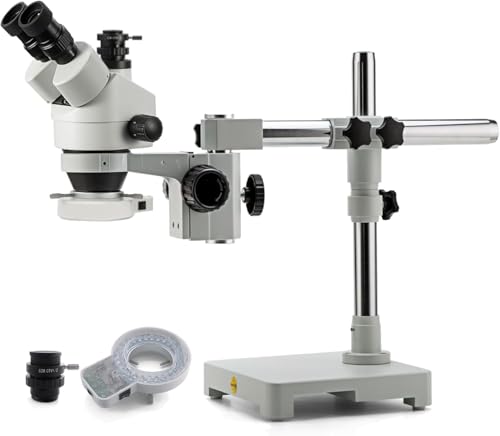
- 7X-45X zoom for flexible gemstone inspection
- Trinocular head supports camera use
- 56-bulb LED ring light reduces shadows
Best For: Gemology bench work with imaging and larger specimen handling
Portable Dual-Light Pick
ESSLNB Binocular Stereo Microscope with Dual LED Lighting

- 30X magnification for basic gemstone checks
- Dual lighting supports clearer viewing
- Binocular head helps reduce eye strain
Best For: Hobbyists who want simple binocular viewing for stones and jewelry
Digital Display Option
Andonstar AD246S-M 3-Lens HDMI Digital Microscope

- HDMI output for larger-screen viewing
- Multiple lenses cover stones and other tasks
- Measurement software supports documentation
Best For: Screen-based gemstone inspection, recording, and measurement
Starter Binocular Pick

- 20X and 50X stereo magnification
- Binocular viewing with adjustable IPD
- Battery-powered LED lighting
Best For: Beginners and students inspecting rocks, minerals, and jewelry
Pro Zoom Workstation

- 3.5X-90X range with auxiliary lenses
- Trinocular port for camera connection
- Heavy steel base and LED ring light
Best For: Advanced gemstone inspection and imaging
Cordless Everyday Choice

- 20X and 40X stereo magnification
- Top and bottom LED illumination
- Battery-powered cordless design
Best For: Hobbyists and classroom use for stones and jewelry
Bench-Top Stereo Pick – AmScope SE306R-PZ Forward Binocular Stereo Microscope
For gemstone inspection, this stereo microscope for gemstones gives you a straightforward bench setup with 20X, 40X, and 80X viewing options, plus both top and bottom illumination. The forward binocular head and widefield optics make it easier to inspect facets, mounts, and surface details without a complicated setup.
Best For: Jewelers or hobbyists who want a simple, sturdy stereo microscope with built-in lighting for close gemstone work.
Pros:
- 20X, 40X, and 80X magnification settings cover common close-up inspection tasks.
- Built-in incident and transmitted lights help light stones and related materials from different angles.
- Forward binocular head and widefield glass lenses support comfortable viewing.
- All-metal pillar stand adds stability on the bench.
Cons:
- Magnification is fixed to the listed steps rather than continuous zoom.
- Halogen lighting may be less convenient than newer LED-only designs.
Overall, this is a practical pick if you want a durable stereo microscope for gemstones with easy bench placement and enough lighting for routine inspection.
Jeweler’s Zoom Setup – 7X-45X Jewelers Microscope with LED Ring Light
This stereo microscope for gemstones is built for bench work where you need flexible magnification and room to maneuver tools. The continuous 7X-45X zoom, 0.5X Barlow lens, and dimmable LED ring light are a strong match for stone setting, engraving, repairs, and close surface checks.
Best For: Bench jewelers who want more working distance and adjustable lighting for detailed gemstone tasks.
Pros:
- Continuous 7X-45X zoom makes it easy to fine-tune magnification.
- 0.5X Barlow lens helps create more working space for tools and hands.
- 56-LED ring light with 0-100% dimming supports shadow control.
- Spring stand and handle controls help with steadier positioning.
Cons:
- Large 26-pound setup is not ideal if you need frequent portability.
- Designed around jewelry bench work, so it may be more than casual users need.
If gemstone work happens at a jeweler’s bench, this model stands out for its adjustable zoom, improved working space, and lighting control.
Repair-Centered Trinocular Choice – Kaisi Professional Stereo Microscope
While aimed at electronics repair, this stereo microscope for gemstones can still fit inspection-heavy bench work where a wide field of view and steady lighting matter. The 7X-50X zoom range, WF10x23 eyepieces, LED ring light, and solder fan make it a feature-rich workstation microscope.
Best For: Users who want a trinocular stereo microscope with a wide view and accessory support for detailed bench inspection.
Pros:
- 7X-50X zoom range offers flexible inspection power.
- WF10x23 eyepieces provide a wider field of view than standard WF10x20 designs.
- LED ring light and included solder fan help keep the work area visible and usable.
- Large work floor with silicone mat and trays adds organization.
Cons:
- Built primarily for soldering and electronics repair rather than jewelry-specific use.
- Accessory-heavy setup may be more than needed for simple gemstone viewing.
For buyers who want a workstation-style microscope with a broad viewing area, this Kaisi model brings more than basic magnification to the table.
Digital Inspect-and-Weigh Pick – TOMLOV DM4W Microscope with Weighing Scale
If you want a stereo microscope for gemstones that also handles weighing, the TOMLOV DM4W takes a different approach with a built-in precision scale. Its 10X-200X zoom, 4.3-inch IPS display, LED lighting, and USB output make it useful for checking detail and recording what you see.
Best For: Collectors, jewelers, and students who want to inspect gemstones and weigh them in one compact device.
Pros:
- Built-in scale measures in g, oz, and ct with 0.1g resolution.
- 10X-200X zoom supports close inspection of fine details.
- 4.3-inch IPS screen gives a bright, easy-to-view display.
- USB output and built-in battery add flexibility for sharing and portable use.
Cons:
- It is a digital microscope, so it works differently from a traditional binocular stereo setup.
- The integrated scale adds focus, but may be unnecessary if you only need viewing.
This is the most multifunctional option here, especially if gemstone inspection and weighing need to happen in the same workflow.
Gemology Zoom Performer – SWIFT S7 7X-45X Trinocular Stereo Microscope
If you want stereo microscopes for gemstones that can handle inspection, imaging, and hands-on work, the SWIFT S7 is built for a wide range of surface-detail tasks. Its 7X-45X continuous zoom, trinocular head, and bright ring light make it practical for examining gem surfaces, inclusions, and other small objects without harsh shadows.
Best For: Gemology work, surface inspection, and users who want a trinocular boom-stand microscope with camera support.
Pros:
- 7X-45X continuous zoom gives flexible magnification for different gemstone inspection needs.
- Trinocular head includes a third port for a camera or extra eyepiece.
- 56-bulb LED ring light provides bright, shadow-free illumination.
- Single-arm boom stand supports larger objects and working clearance.
Cons:
- Bulky metal construction may be less convenient for portable use.
- The highest magnification tops out at 45X, so it is more for surface viewing than extreme detail.
- It is a corded setup, so it needs a fixed workspace.
Overall, this SWIFT model is a strong fit if you need a stable stereo microscope with good lighting and camera-ready flexibility for gemstone work. It leans toward practical bench use rather than ultra-high magnification, which is often exactly what gem inspection requires.
Portable Dual-Light Pick – ESSLNB Binocular Stereo Microscope with Dual LED Lighting
For buyers comparing stereo microscopes for gemstones, the ESSLNB binocular model offers a simple, lower-power setup focused on comfortable viewing. Its 30X maximum magnification, dual LED lighting, and binocular head make it useful for checking stones, rocks, and jewelry items when you want a straightforward inspection tool.
Best For: Casual gemstone inspection, hobby use, and users who prefer a binocular microscope with dual lighting.
Pros:
- 30X maximum magnification is well suited to general surface viewing.
- Dual illumination helps light objects from above or below.
- Binocular viewing with 45-degree angle can reduce fatigue during longer sessions.
- Listed for rocks, jewelry, and large specimens that need handling or manipulation.
Cons:
- Lower magnification than zoom-heavy models, so it is less suited to finer detail work.
- No trinocular camera port is mentioned.
- Less versatile than higher-end research-style boom-stand microscopes.
This is a practical choice if you want an easier, more compact stereo microscope for gemstones and related hobby tasks. It prioritizes comfortable binocular viewing and dual lighting over advanced imaging features.
Digital Display Option – Andonstar AD246S-M 3-Lens HDMI Digital Microscope
If your workflow involves stereo microscopes for gemstones, but you also want screen-based viewing and documentation, the Andonstar AD246S-M takes a different approach. It is a digital microscope with multiple lenses, HDMI output, and measurement software, making it useful for viewing stones, coins, and other small subjects on a monitor instead of through eyepieces.
Best For: Users who want digital viewing, recording, and measurement features for gemstone and mixed-use inspection.
Pros:
- Multiple lenses let you switch between different observation tasks, including stones.
- HDMI output supports viewing on a larger screen.
- Includes measurement software for Windows PCs.
- LED lighting, remote control, and SD-card recording add convenience.
Cons:
- It is a digital microscope, not a traditional stereo microscope with eyepieces.
- Highest magnification depends heavily on the lens and digital zoom setup.
- Less directly suited to hands-on stereo viewing than boom-stand optics.
This is best viewed as a digital inspection and documentation tool rather than a classic stereo gem microscope. If you want to show, record, or measure what you see, it offers much more screen-oriented flexibility than a standard binocular setup.
Starter Binocular Pick – 20X/50X with Specimens
If you’re comparing stereo microscopes for gemstones on a budget, this Aomekie model is a practical starter option for checking surface detail, rock specimens, and jewelry at home or in class. Its 20X and 50X settings, binocular viewing, and built-in LED lighting make it easier to inspect small objects without a complicated setup.
Best For: Beginners, students, and hobbyists who want a simple binocular stereo microscope for rocks, mineral specimens, and casual jewelry inspection.
Pros:
- 20X and 50X magnification covers basic gemstone and specimen inspection.
- Binocular head with adjustable interpupillary distance supports comfortable two-eye viewing.
- LED light is battery powered, so it can be used without a cord.
- Includes insect specimens, slides, and 12 mineral specimens for practice.
Cons:
- Only offers two magnification settings rather than a continuous zoom range.
- Battery power means AA batteries are required and not included.
- More of an elementary microscope than a heavy-duty gem lab instrument.
Overall, this is the most approachable option in the group if you need a portable stereo microscope for simple gemstone and mineral viewing rather than advanced analysis.
Pro Zoom Workstation – 3.5X-90X Trinocular Zoom
For shoppers looking at stereo microscopes for gemstones with more flexibility, this trinocular zoom model stands out for its wide 3.5X-90X range and camera-ready head. The 0.7X-4.5X zoom objective, paired with the included auxiliary lenses, gives you a broader inspection range for larger specimens and closer detail work.
Best For: Advanced users who want a trinocular stereo zoom microscope for gemstone inspection, imaging, and shared observation.
Pros:
- Continuous 0.7X-4.5X zoom with 0.5X and 2X auxiliary lenses expands to 3.5X-90X.
- Trinocular head supports connecting a digital camera or HD touch screen.
- Heavy steel base and boom stand provide a stable, flexible setup.
- 56S LED ring light includes a dimmer for adjustable, shadow-free illumination.
Cons:
- Large boom-stand design takes more space than compact bench microscopes.
- More complex than a basic beginner stereo microscope.
- Designed for professional-style use rather than simple portable viewing.
This is the strongest all-around pick if you need zoom flexibility, camera compatibility, and a more serious workstation for gemstone viewing.
Cordless Everyday Choice – 20X/40X Cordless LED
If you want a straightforward stereo microscope for gemstones with cordless convenience, the AmScope SE306R-P-LED is a clean, workbench-friendly choice. Its 20X and 40X magnification, widefield optics, and dual LED illumination make it useful for examining reflective surfaces and small specimens without fuss.
Best For: Hobbyists and classroom users who want a simple cordless stereo microscope for stones, jewelry, and everyday specimen viewing.
Pros:
- 20X/40X stereo magnification is easy to use for basic inspection.
- Top and bottom LED lights help with incident and transmitted viewing.
- Cordless, battery-powered design improves portability.
- Widefield binocular head and all-metal pillar stand add practical stability.
Cons:
- Magnification range is limited compared with zoom models.
- Less flexible than a trinocular boom-stand microscope.
- Requires batteries for cordless operation.
For simple gemstone viewing, this model keeps the setup compact and functional while offering the useful advantage of two-light illumination.
How We Picked These Stereo Microscopes for Gemstones
For Stereo Microscopes for Gemstones, we prioritized optical clarity, useful zoom ranges, stable stands, and working distance that leaves room for tools and hands. We also looked for features that matter in real jewelry workflows, such as LED illumination, trinocular heads for imaging, and durable construction.
Because gemstone work often involves comparing facets, inclusions, and settings, we favored models that balance magnification with a wide enough field of view to stay oriented on the stone.
Quick Comparison: What Matters Most
The best choice depends on how you work. Entry-level fixed-power microscopes are often enough for basic inspection and sorting. Zoom stereo microscopes are better for appraisals, setting checks, and bench work because they let you move smoothly from overview to detail.
Digital or HDMI models are useful if you want to display images, teach, or document findings, but they are not always the best first choice if your priority is pure optical quality.
Key Buying Factors for Stereo Microscopes for Gemstones
Magnification and Zoom Range
Look for a range that supports both inspection and hands-on work. Lower magnification gives better depth and field of view, while higher magnification helps with inclusions, facet edges, and surface defects. For many buyers, a practical zoom stereo microscope is more useful than a fixed high-power unit.
Working Distance and Stand Type
Gemstone work needs space. A comfortable working distance lets you use tweezers, probes, and lighting without constant repositioning. Boom stands are especially helpful on jewelry benches, while portable bases suit lighter-duty inspection.
Lighting
Good illumination is essential for color, clarity, and surface detail. LED ring lights are common and convenient, but adjustable lighting is better when you need to reduce glare from polished stones.
Optics and Eyepieces
Wide-field eyepieces and quality objective lenses improve comfort during long sessions. If you plan to document stones or share images, consider a trinocular head or a digital output option.
Who Should Buy Which Stereo Microscopes for Gemstones?
If you are a jeweler or bench technician, choose a zoom stereo microscope with a strong stand and enough working distance for setting and repair work. If you are a hobbyist or coin-and-gem collector, a simpler model with built-in lighting may be the most cost-effective choice.
If you need documentation, training content, or client presentations, a trinocular or HDMI model is the most flexible. For occasional inspection, a compact and affordable stereo microscope can still deliver the detail you need without taking up much bench space.