
Choosing the right stereo microscope can make hands-on science far more engaging for students. The best models offer clear 3D views, simple controls, and enough durability for classrooms, labs, and home learning.
In this roundup, we focus on student-friendly options that balance image quality, ease of use, and value so you can choose a microscope that fits the learner and the lesson.
Best 10 Stereo Microscopes for Students Picks for 2026
Student-Friendly Stereo Zoom

- 20X, 40X, and 80X stereo settings
- Top and bottom built-in illumination
- All-metal pillar stand for stability
Best For: students who need a sturdy stereo microscope for basic lab and specimen viewing
High-Power Student Compound

- 40X-2500X magnification range
- Dual LED lighting for different specimen types
- Includes phone holder and slide accessories
Best For: students and beginners who want a high-power compound microscope with extras
Advanced Trinocular Lab Zoom

- 3.5X-90X zoom range for detailed inspection
- Trinocular head supports camera connection
- Steel base and boom stand improve stability
Best For: advanced students, school labs, and shared stations needing zoom and camera support
Beginner STEM Starter
Emarth 40X-1000X Microscope Kit
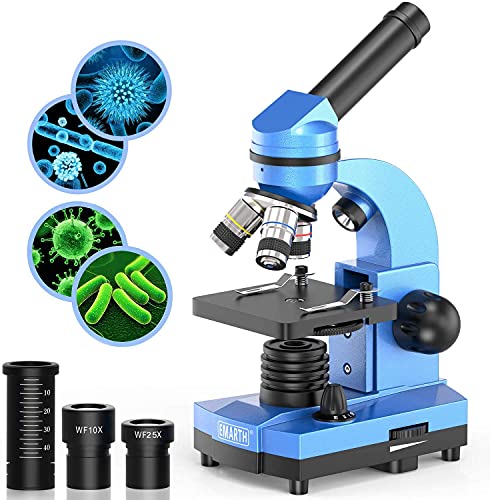
- 40X-1000X magnification for student use
- 52-piece educational accessory kit
- Top and bottom LED illumination
Best For: kids, students, and beginners who want a complete science starter kit
Portable Classroom Starter
AmScope SE100-LED 20X Stereo Microscope

- 20X maximum magnification for broad viewing
- Binocular head with 10x widefield eyepieces
- LED top light and reversible stage plate
Best For: Elementary students and beginner classroom use
Multi-Power Lab Pick
AmScope SE304R-PZ 20X-80X Stereo Microscope

- 20X, 40X, and 80X magnification levels
- Compact design for limited desk space
- Pillar stand and halogen top-light
Best For: Students who want multiple magnification levels in a compact setup
Dual-Light Observation Choice
ESSLNB 30X Binocular Stereo Microscope

- 30X magnification with WF10X eyepieces
- Dual LED lighting for top and lower illumination
- Binocular head with 45-degree viewing angle
Best For: Students and home labs needing flexible lighting and comfortable viewing
Compact Cordless Pick
AmScope SE306R-P-LED 20x-40x Stereo Microscope

- 20x and 40x stereo magnification
- Cordless battery-powered design
- LED top and bottom illumination
Best For: Students who need a portable classroom stereo microscope
Specimen Starter Kit
Aomekie 20x/50x Stereo Microscope Kit

- Includes slides, insect specimens, and minerals
- 20x and 50x magnification
- Battery-powered LED lighting
Best For: Beginners who want a ready-made student microscope kit
Flexible Lab Viewer
Swift S306S-20-2L 20x/40x/80x Stereo Microscope

- 20x, 40x, and 80x magnification
- 360-degree rotatable binocular head
- Dimmable upper and lower LED lights
Best For: Students who need a versatile microscope for lab work and dissection
Student-Friendly Stereo Zoom – AmScope SE306R-PZ
If you’re comparing stereo microscopes for students, the AmScope SE306R-PZ is a practical pick for hands-on viewing of larger specimens. Its 20X, 40X, and 80X settings, forward binocular head, and both top and bottom illumination make it flexible for classroom work and home science projects.
Best For: students who need a sturdy stereo microscope for basic lab observation, dissection, and specimen viewing.
Pros:
- 20X, 40X, and 80X stereo magnification options for versatile student use
- Widefield binocular head with widefield optical glass lenses
- Top and bottom built-in lights for opaque and translucent specimens
- All-metal pillar stand adds stability for classroom or lab benches
Cons:
- Lower maximum magnification than compound microscopes for very small details
- Halogen lighting may be less modern than LED-based options
This model fits well when students need a durable stereo setup rather than high-power biology magnification. It focuses on clear, practical viewing with a straightforward build that should hold up to regular use.
High-Power Student Compound – JECONE 40X-2500X Microscope
Although this is a compound microscope rather than one of the stereo microscopes for students, it’s a strong option if your buyer list includes classroom biology and higher-magnification work. It combines WF25X/10X eyepieces, 4X/10X/100X objectives, dual LED illumination, and a phone holder for a very complete student setup.
Best For: students and beginners who want a high-power compound microscope with accessories for slides and image capture.
Pros:
- Very wide 40X-2500X magnification range
- Dual LED lighting supports both opaque and translucent specimens
- Coarse and fine focus controls help with precise adjustment
- Includes phone holder and starter accessories for student use
Cons:
- Not a stereo microscope, so it’s better for slide viewing than 3D specimen work
- Battery-powered design may be less convenient for frequent lab use
For students who need more than basic stereo viewing, this model offers a lot of magnification and a useful accessory bundle. It’s best when the goal is traditional biology observation rather than larger-object inspection.
Advanced Trinocular Lab Zoom – ZTEEERS RM Stereo Microscope
For students who need a more advanced stereo setup, this trinocular zoom microscope offers a wide 3.5X-90X range and a flexible boom stand. It’s a strong choice for detailed inspection work, especially when a camera or display connection is useful in a lab or teaching environment.
Best For: advanced students, school labs, and shared learning stations that need zoom flexibility and camera support.
Pros:
- 3.5X-90X magnification range with zoom objective and auxiliary lenses
- Trinocular head allows connection to a digital camera or touch screen
- 56S LED ring light provides focused, shadow-free illumination
- Heavy steel base and boom stand add stability and reach
Cons:
- Bulkier setup than compact student microscopes
- May be more microscope than a beginner needs
This model makes sense when a classroom wants a more capable stereo microscope for students with room to grow. The trinocular design and boom stand give it a more professional feel than entry-level models.
Beginner STEM Starter – Emarth 40X-1000X Microscope Kit
This is another compound microscope rather than a stereo model, but it can still fit student buying guides when the priority is a complete beginner science kit. With LED illumination, 40X-1000X magnification, and 52 included pieces, it’s built for hands-on home or school exploration.
Best For: kids, students, and beginner science users who want a ready-to-use microscope kit with educational extras.
Pros:
- 40X-1000X magnification covers common student microscopy needs
- 52-piece kit includes prepared slides, blank slides, and tools
- Top and bottom LED illumination helps with different sample types
- Durable metal frame and rotatable head support comfortable viewing
Cons:
- Battery-powered setup may require extra planning for regular use
- Not a stereo microscope, so it’s less suited to larger 3D specimens
For a student who wants a full starter bundle, this kit is easy to recommend. It emphasizes accessibility and learning support, making it a practical entry point for early science work.
Portable Classroom Starter – AmScope SE100-LED 20X Stereo Microscope
AmScope SE100-LED Portable Binocular Stereo Microscope, 20X Magnification | LED Ring Light
Check Price On AmazonIf you’re comparing stereo microscopes for students, this AmScope model is a simple, low-power option for classroom projects and home use. Its 20X setup is geared toward inspecting rocks, stamps, jewelry, and other larger specimens that need room for handling.
Best For: Elementary students, hobbyists, and beginner classroom use where portability and easy viewing matter.
Pros:
- 20X maximum magnification keeps the view broad and beginner-friendly.
- Binocular head with 10x widefield eyepieces and adjustable interpupillary distance helps younger users view more comfortably.
- Reflected top LED illumination is useful for opaque specimens.
- Reversible black-and-white stage plate adds contrast for different specimen colors.
Cons:
- Fixed vertical inclination limits positioning flexibility.
- Single 2X objective means it offers fewer magnification steps than multi-level models.
Overall, this is a straightforward stereo microscope for students who need an easy entry point and a portable design. It is best when low magnification and simple setup are more important than advanced adjustment options.
Multi-Power Lab Pick – AmScope SE304R-PZ 20X-80X Stereo Microscope
For shoppers looking at stereo microscopes for students, this AmScope model stands out for its three magnification levels and compact footprint. The 20X to 80X range gives more flexibility for classroom observations, while the forward-facing stereo design and pillar stand make positioning more adaptable.
Best For: Students and hobbyists who want multiple magnification steps in a compact classroom microscope.
Pros:
- Three magnification levels: 20X, 40X, and 80X.
- Compact design works well when space is limited.
- Pillar stand allows more flexible head height adjustment.
- Halogen top-light provides incident illumination for opaque objects.
Cons:
- Corded electric power makes it less portable than battery-powered models.
- Halogen/tungsten lighting may be less convenient than LED-based setups.
This is a strong choice if you want a student microscope that can cover more than one level of detail without moving to a more advanced lab unit. It balances classroom flexibility with a compact form factor.
Dual-Light Observation Choice – ESSLNB 30X Binocular Stereo Microscope
If you’re shopping for stereo microscopes for students who need clearer viewing of different specimen types, this ESSLNB model adds dual lighting and a 30X setup. The binocular head with 45-degree viewing and adjustable interpupillary distance is designed to make longer observation sessions more comfortable.
Best For: Students, home labs, and hobby users who want dual lighting and a comfortable binocular view.
Pros:
- 30X magnification with WF10X eyepieces and a 3X objective.
- Dual LED lighting helps when switching between top and lower illumination.
- Binocular viewing head with 45-degree angle supports more comfortable use.
- Suitable for biological specimens as well as rocks, stamps, and jewelry.
Cons:
- At 10 kg, it is heavier than portable student models.
- Less compact than smaller classroom microscopes.
With dual illumination and a more powerful 30X view, this microscope is well suited to students who need flexibility across different specimen types. It leans more toward a stable home or lab setup than a lightweight carry-around option.
Compact Cordless Pick – AmScope SE306R-P-LED 20x-40x Stereo Microscope
If you want stereo microscopes for students that are simple to move around a lab or classroom, this AmScope model keeps the basics focused. It offers 20x and 40x stereo magnification, widefield binocular viewing, and both incident and transmitted LED lighting for viewing solid specimens and translucent samples.
Best For: Students who need a cordless stereo microscope for general classroom observation and hands-on sample work.
Pros:
- 20x and 40x magnification options cover basic student viewing needs.
- Cordless battery-powered design makes it easier to carry and set up.
- Top and bottom LED lights support different specimen types.
- All-metal framework and pillar stand add stability for routine use.
Cons:
- Lower maximum magnification than some classroom alternatives.
- Battery-powered setup may be less convenient for long sessions.
Overall, this is a straightforward student-friendly stereo microscope when portability and dual lighting matter more than higher magnification. It stays practical for classroom demos, introductory biology work, and basic specimen inspection.
Specimen Starter Kit – Aomekie 20x/50x Stereo Microscope Kit
For students who want stereo microscopes for students plus extra practice materials, this Aomekie package stands out for its bundled slides, insect specimens, and mineral specimens. It delivers 20x and 50x magnification, binocular viewing, and battery-powered LED lighting, making it a convenient starter option for home or classroom use.
Best For: Young learners and beginners who want a starter microscope kit with included specimens and slides.
Pros:
- Includes 10 slides, insect specimens, and 12 mineral specimens for immediate use.
- 20x and 50x magnification suits common beginner inspection tasks.
- Binocular viewing and adjustable interpupillary distance improve comfort for different users.
- Battery-powered LED lighting makes it easy to move and carry.
Cons:
- Maximum magnification is still modest for users wanting deeper detail.
- Batteries are not included.
- Not as focused on heavy-duty classroom construction as some lab models.
This is a practical pick if you want a ready-to-go kit rather than a bare microscope. The included samples make it especially useful for sparking interest and helping students start observing right away.
Flexible Lab Viewer – Swift S306S-20-2L 20x/40x/80x Stereo Microscope
If you are comparing stereo microscopes for students and want a model with more range, this Swift unit offers 20x, 40x, and 80x viewing plus a 360-degree rotatable head. The wide-field eyepieces, adjustable illumination, and reversible stage plate make it well suited for detailed observation of solid specimens, repairs, and dissection work.
Best For: Students who need a more versatile stereo microscope for labs, dissection, and detailed close-up viewing.
Pros:
- 20x, 40x, and 80x magnification provide more flexibility than basic student models.
- 360-degree rotatable head supports shared viewing and different observation habits.
- Upper and lower dimmable LED lights help with incident and transmitted viewing.
- Reversible black/white stage plate adds contrast options for specimens.
Cons:
- Corded electric power is less portable than battery-powered models.
- Higher magnification may be more than casual beginners need.
For students who need a more capable classroom microscope, this SWIFT model offers the most flexibility of the three. Its higher magnification range and lighting setup make it a strong choice for structured lab work and detailed observation.
How We Picked the Best Stereo Microscopes for Students
We looked for Stereo Microscopes for Students that are easy to focus, comfortable to use, and practical for real-world schoolwork. Priority went to models with useful working distance, solid build quality, simple magnification ranges, and lighting that supports specimens without making setup complicated.
We also favored options that fit common student use cases, including biology labs, insect observation, dissection, geology, coin collecting, and general STEM exploration. Portability, value, and accessory support mattered too.
Quick Comparison: What Matters Most
For younger learners and beginners, simplicity usually matters more than extreme magnification. For older students and lab work, a stereo microscope with adjustable zoom, better ergonomics, and stronger illumination can be more useful. If the goal is 3D observation of larger specimens, a stereo design is often a better fit than a compound microscope.
Key Buying Factors for Stereo Microscopes for Students
Magnification Range
Most student work is well served by moderate magnification. Lower ranges often provide a wider field of view and easier specimen handling, while higher ranges are best for detailed inspection rather than general scanning.
Working Distance
A generous working distance makes it easier to manipulate specimens, dissect, or examine objects without constantly refocusing. This is one of the most important features to check for classroom use.
Illumination
LED lighting is ideal for students because it is bright, efficient, and low maintenance. Top and bottom lighting, or adjustable lighting, improves visibility across different specimen types.
Ease of Use
Simple focusing knobs, stable stands, and comfortable eyepieces reduce frustration for beginners. If multiple students will share the microscope, smooth adjustability and durable controls become especially important.
Build and Portability
Classroom equipment needs to survive frequent handling. A compact body and sturdy construction help, especially for home-school or lab carts where the microscope may be moved often.
Who Should Buy Which Stereo Microscopes for Students?
Beginners and younger students usually do best with straightforward, fixed-magnification models that are easy to set up and hard to misuse. Middle and high school students often benefit from zoom or multi-step magnification systems that offer more flexibility for lab projects.
If the microscope will be used for insects, plants, circuit boards, minerals, or dissection, Stereo Microscopes for Students are often the smartest choice because they provide a natural 3D view and more usable working space. For the most versatile setup, look for a model with good lighting, comfortable viewing, and enough magnification to match the curriculum.