
Choosing the right stereo microscope comes down to more than magnification. The best models balance working distance, zoom control, lighting, and comfort so you can see fine detail without losing room to work.
Below, we’ve narrowed the field to 10 strong options for electronics, hobby work, inspection, and lab use, with a focus on practical features that matter in real-world use.
Best 10 Stereo Microscopes Picks for 2026
Professional Zoom Boom

- 0.7x-4.5x zoom with 3.5X-90X total range
- Trinocular head with 10x eyepieces
- Four-zone 144-LED ring light and boom stand
Best For: Professional inspection and manipulation of large items
Sturdy Binocular Pick

- 20X, 40X, and 80X magnification settings
- Forward binocular head with widefield optics
- Top and bottom lights on a metal pillar stand
Best For: Stable bench viewing with simple magnification steps
Portable Starter Kit

- 20X and 50X viewing with WF eyepieces
- Battery-powered LED for cordless use
- Includes slides, insects, and mineral specimens
Best For: Beginners and students needing a portable starter kit
Simple Forward Viewer

- 20X and 40X forward binocular magnification
- Widefield optical glass lenses for sharp images
- All-metal frame with top light
Best For: General inspection and everyday specimen viewing
Professional Trinocular Zoom
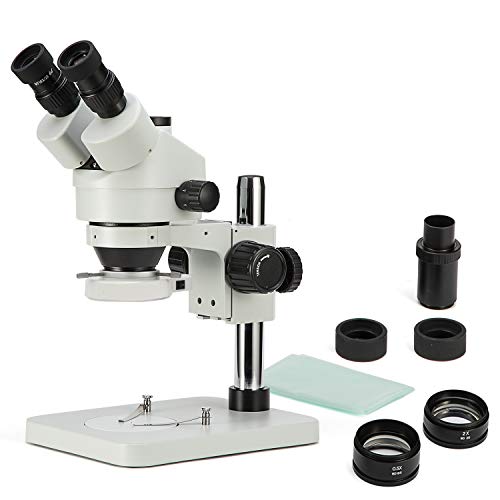
- 3.5X-90X zoom range with 0.5X and 2.0X objectives
- Trinocular head with vertical photo port
- 56-bulb LED ring light for shadow-free viewing
Best For: Researchers, gemology, and electronics inspection
Heavy-Duty Inspection Zoom

- 3.5X-45X zoom with crisp sharp images
- 8-inch working distance and widefield optics
- 64-LED ring light with dimmer
Best For: Inspection, dissecting, and bench work
Electronics Repair Trinocular

- 7X-50X continuous zoom for repair work
- WF10x23 eyepieces and trinocular viewing
- LED ring light plus soldering exhaust fan
Best For: Soldering and electronics repair
Cordless Dual-Light Entry Stereo

- 20x and 40x stereo magnification
- LED incident and transmitted lights
- Sturdy metal pillar stand
Best For: Hobbyists and students needing simple dual-light inspection
Zoom Boom Rig Pro
Trinocular Stereo Zoom 3.5X-90X

- 3.5x-90x zoom range with auxiliary lenses
- Trinocular port for camera support
- Heavy boom stand with dimmable ring light
Best For: Inspection and imaging users who want a flexible boom-mounted zoom scope
Dual-Power Bench Stereo

- 10x-80x binocular magnification
- Upper and lower LED illumination
- Reversible stage plates for contrast
Best For: Students and hobbyists needing versatile top/bottom lighting
Professional Zoom Boom – AmScope trinocular 3.5X-90X
If you need stereo microscopes for larger workpieces, this AmScope model is built around a long working-distance boom stand and continuous zoom control. The trinocular head, wide 0.7x-4.5x zoom range, and four-zone LED ring light make it a flexible choice for inspection and hands-on work on circuit boards, dental appliances, and other oversized items.
Best For: Users who need a professional boom stereo microscope for inspecting and manipulating large objects.
Pros:
- 0.7x-4.5x zoom objective with 3.5X-90X total magnification for flexible inspection
- Trinocular head with 10x super-widefield eyepieces and 45-degree viewing angle
- Double-arm boom stand supports positioning across X, Y, and Z axes
- 144-bulb LED ring light has four zones for independent lighting control
Cons:
- Requires a larger setup than compact bench-top stereo microscopes
- Corded 110V-240V power means it is not fully portable
This is a strong pick if adjustability and working clearance matter more than portability. The zoom range, lighting control, and boom stand make it well suited to detailed repair and specimen work.
Sturdy Binocular Pick – AmScope SE306R-PZ 20X-80X
This AmScope option is a practical choice if you want stereo microscopes with straightforward magnification steps and a sturdy stand. The forward binocular head, metal framework, and built-in top and bottom lighting make it useful for viewing specimens, small parts, and classroom samples with good flexibility.
Best For: Buyers who want a sturdy binocular stereo microscope with simple 20X-40X-80X settings.
Pros:
- Three magnification settings: 20X, 40X, and 80X
- Forward widefield binocular head for comfortable viewing
- Built-in incident and transmitted lights for different specimen types
- All-metal pillar stand adds stability
Cons:
- Halogen lighting is less modern than LED on some alternatives
- Less adjustable than boom-style stereo microscopes for larger objects
Overall, this model is best when stability and simple operation matter more than advanced flexibility. It offers a solid viewing setup for everyday stereo microscope tasks.
Portable Starter Kit – AOMEKIE 20X/50X stereo kit
If you want stereo microscopes for home, class, or beginner specimen viewing, this AOMEKIE kit is geared toward simple use and portability. It includes prepared slides, insect specimens, and mineral specimens, plus battery-powered LED lighting and a working range that helps with larger objects like rocks, stamps, jewelry, and circuits.
Best For: Beginners, students, and gift buyers who want a portable starter stereo microscope kit.
Pros:
- 20X and 50X magnification with WF10X and WF25X eyepieces
- 65mm-102mm working range for larger specimens
- Battery-powered LED light keeps it cordless and portable
- Includes slides, insect specimens, and mineral specimens
Cons:
- Maximum magnification is lower than professional zoom models
- Battery power means AA batteries are required and not included
This is a friendly entry-level option with enough accessories to make it useful right away. It makes the most sense if you value portability, simplicity, and educational use.
Simple Forward Viewer – AmScope SE304R-P 20X-40X
This AmScope stereo microscope is a compact, straightforward pick for everyday viewing of small objects and surface detail. With 20X and 40X forward binocular magnification, widefield optical glass lenses, and a top light, it is a practical fit for insects, plants, coins, fabrics, circuit boards, and similar samples.
Best For: Users who want a simple forward-facing stereo microscope for general inspection work.
Pros:
- Two magnification levels: 20X and 40X
- Widefield optical glass lenses for sharp images
- Sturdy all-metal framework for added durability
- Good depth and broad field of view for general inspection
Cons:
- Limited magnification compared with zoom or higher-range models
- Uses halogen lighting rather than LED
This model is a sensible choice when you want a no-fuss stereo microscope for basic observation tasks. It keeps the design simple while still offering solid image quality and stable construction.
Professional Trinocular Zoom – SWIFT 3.5X-90X Stereo
If you need stereo microscopes for detailed bench work, the SWIFT trinocular zoom model is built around flexibility and comfort. Its zoom range, long working distance, and LED ring light make it a practical fit for labs, gem work, engraving, and electronics tasks where clear, shadow-free viewing matters.
Best For: Researchers, gemologists, engravers, collectors, and electronics or semiconductor work that benefits from trinocular imaging.
Pros:
- Wide 3.5X-90X magnification range with included 0.5X and 2.0X additional objectives.
- Trinocular head with a vertical photo port for camera attachment and documentation.
- 56-bulb LED ring light provides bright, cool, shadow-free illumination.
- 45-degree tilted head and 360-degree rotation help reduce neck and eye strain.
Cons:
- Higher-end feature set may be more than casual hobby users need.
- At 4.2 kg, it is a fairly substantial bench setup.
Overall, this SWIFT model stands out when you want a versatile stereo microscope that can handle viewing and imaging without sacrificing working comfort. The combination of trinocular output, broad zoom coverage, and strong LED lighting makes it especially well suited to precision inspection workflows.
Heavy-Duty Inspection Zoom – AmScope 3.5X-45X
Among stereo microscopes for shop and inspection use, this AmScope zoom model focuses on practical working distance and strong illumination. The 3.5X-45X range, widefield optics, and all-metal pillar stand make it a solid choice for dissecting, inspection, and hands-on bench tasks.
Best For: Users who need a durable stereo microscope for inspection, dissecting, and general workbench viewing.
Pros:
- 3.5X-45X zoom magnification with crisp sharp images.
- 2-1/2 inch wide field of view and 8 inch working distance.
- 64-LED ring light includes a dimmer for adjustable brightness.
- All-metal pillar stand adds stability for bench use.
Cons:
- Maximum magnification is lower than some higher-zoom stereo microscopes.
- Pillar stand design is functional but less specialized than trinocular lab setups.
This AmScope is a straightforward pick if you want a durable inspection microscope with a generous working distance and bright, adjustable light. It is especially appealing for users who prioritize stability and clear viewing over advanced imaging features.
Electronics Repair Trinocular – Kaisi TX350E Repair Scope
If you are shopping for stereo microscopes for soldering and electronics repair, the Kaisi TX350E is clearly aimed at that workflow. It combines a continuous zoom range, wide-field eyepieces, a large work floor, and built-in smoke control to support detailed repair tasks.
Best For: Soldering, electronics repair, and users who need trinocular viewing with camera-friendly operation.
Pros:
- 7X-50X magnification from a 0.7X-5X zoom objective.
- WF10x23 eyepieces offer a wider field of view and adjustable eye distance.
- Includes an LED ring light and soldering exhaust fan for clearer work.
- Large 14.7 x 9.6 inch work floor gives room for larger repair projects.
Cons:
- Primary working distance is stated as 10 cm, which may not suit every bench preference.
- Designed heavily around repair use, so it may be less general-purpose than other stereo microscopes.
The TX350E is well matched to repair technicians who want a microscope that supports both viewing and practical bench work. Its camera-friendly trinocular design, smoke handling, and larger work surface make it especially useful in electronics environments.
Cordless Dual-Light Entry Stereo – AmScope SE306R-P-LED 20x-40x
If you’re comparing stereo microscopes for basic bench work, this AmScope model keeps things straightforward with 20x and 40x stereo magnification, a binocular head, and both incident and transmitted LED lighting. It is a practical pick for users who want flexible illumination in a cordless, battery-powered setup.
Best For: Hobbyists and students who need a simple stereo microscope with top and bottom lighting for general inspection.
Pros:
- 20x and 40x stereo magnification for close inspection
- LED incident and transmitted lights support different specimen types
- Forward widefield binocular head for comfortable viewing
- All-metal framework and pillar stand add stability
Cons:
- Maximum magnification is limited to 40x
- Battery-powered design may not suit users wanting continuous corded use
Overall, this is a solid no-frills option if you need a dependable stereo microscope with dual illumination and a sturdy build. It focuses on practical everyday inspection rather than advanced zoom or camera integration.
Zoom Boom Rig Pro – Trinocular Stereo Zoom 3.5X-90X
For buyers comparing stereo microscopes with broader reach, this trinocular zoom model stands out with a 3.5x-90x range, a 0.7x-4.5x zoom objective, and included 0.5x and 2x auxiliary lenses. The boom stand, ring light, and camera-ready trinocular port make it better suited to detailed work where flexibility matters.
Best For: Users who want a zoom stereo microscope for inspection, imaging, and shared viewing on a stable boom setup.
Pros:
- Wide 3.5x-90x magnification range with auxiliary lenses
- Trinocular head supports a digital camera or HD touch screen
- Heavy steel base and boom arm improve stability and working distance
- 56S LED ring light includes dimmer control for shadow-free illumination
Cons:
- Large, heavy setup may take more desk space
- More complex than basic binocular stereo microscopes
This is a feature-rich choice if you need more than a standard inspection scope. The combination of zoom flexibility, camera support, and strong illumination makes it a versatile workstation tool.
Dual-Power Bench Stereo – ZTEEERS ZT100 10X-80X
If you need stereo microscopes for general-purpose viewing, this binocular ZTEEERS model offers 10x-80x magnification with WF10x and WF20x eyepieces, plus interchangeable 2x and 4x objectives. Its upper and lower LED lighting, along with the reversible stage plates, makes it useful for both transparent and opaque specimens.
Best For: Students, schools, and hobby users who want a versatile binocular stereo microscope with top and bottom lighting.
Pros:
- 10x-80x magnification covers a broad inspection range
- Upper and lower LED lighting supports different specimen types
- Reversible black and white stage plate adds contrast options
- Pillar stand and stage clips help keep specimens steady
Cons:
- Maximum magnification is lower than dedicated zoom models
- Corded electric power may be less flexible than battery-powered options
This model balances practical features with a classroom-friendly layout. It is a sensible pick when you want clear stereo viewing, useful lighting, and straightforward specimen handling.
How We Picked the Best Stereo Microscopes
For this roundup, we focused on Stereo Microscopes that offer useful working magnification, stable viewing, and features buyers actually need, such as trinocular heads, adjustable LED lighting, and flexible zoom ranges. We also favored models that suit common tasks like soldering, dissection, coin and jewelry inspection, and general repair work.
Quick Comparison
As a rule, lower magnification with a wider field of view is better for hands-on work, while higher zoom helps when you need to inspect fine details. Trinocular models are a smart choice if you want to add a camera later, while binocular units are often simpler and more affordable. Lighting matters just as much as optics, so look for LED systems that illuminate from above, below, or both depending on your workpiece.
Key Buying Factors for Stereo Microscopes
Magnification Range
Don’t shop by maximum magnification alone. A practical zoom range with clean image quality is usually more useful than a high number that only works on paper. For electronics and bench work, Stereo Microscopes with moderate zoom and good working distance are often the best fit.
Working Distance
This is the space between the lens and your subject. More working distance makes it easier to use tools, manipulate parts, and avoid bumping the optics. If you solder, dissect, or assemble small components, this should be a top priority.
Lighting Type
LED ring lights are common and convenient for even top-down illumination. Upper and lower lighting can be better when you need contrast in transparent, reflective, or layered materials. Cordless or built-in lighting may also improve portability and desk simplicity.
Head Style and Comfort
Binocular heads are straightforward and comfortable for most users. Trinocular Stereo Microscopes are ideal if you plan to document work or stream a live view through a camera. Adjustable eyepieces and head tilt can also reduce fatigue during longer sessions.
Stability and Build
A sturdy stand matters more than many buyers expect. A stable base helps maintain focus and prevents vibration during precise tasks, especially at higher magnification.
Who Should Buy Which Stereo Microscopes?
If you need a microscope for soldering or repair, choose a model with strong working distance, reliable LED lighting, and a zoom range that keeps the board visible while you work. For hobbyists and educators, simpler binocular Stereo Microscopes are often enough and easier to set up. If you want to capture images or video, a trinocular model is the better long-term investment. For inspection-heavy use, prioritize comfort, clarity, and lighting before chasing maximum magnification.
In short, the best Stereo Microscopes are the ones that match your workspace, your lighting needs, and the level of detail you actually inspect every day.