
Choosing the right microscope can make soldering faster, cleaner, and far less frustrating. For PCB repair, you need stable magnification, enough working distance for tools, and an image that stays easy to focus.
This roundup highlights the best stereo soldering microscopes for 2026, from compact digital units to trinocular stereo models built for hands-on electronics work.
Best 10 Stereo Soldering Microscopes Picks for 2026
Top Pick for All-in-One Soldering
Andonstar AD249S-M Plus 3-Lens Digital Microscope

- 3-lens system for soldering, general inspection, and slides
- Built-in helping hands, tool holder, and anti-static mat
- 10.1-inch monitor with HDMI, 2160P capture, and SD card
Best For: Electronics repair setups that need a microscope and soldering station in one
Best Optical Stereo Zoom
SWIFT Trinocular Stereo Zoom Microscope
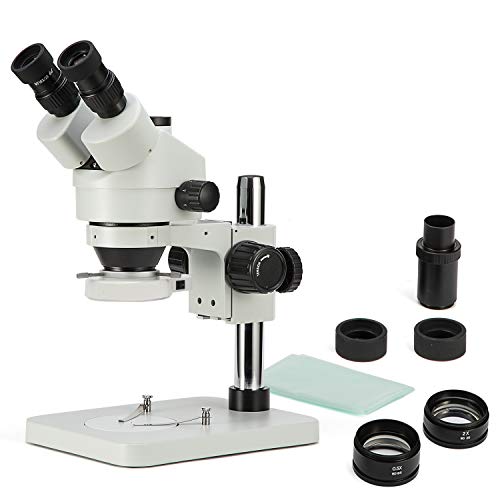
- 3.5X-90X optical zoom with WF10X eyepieces
- Trinocular port supports camera attachment
- 56-bulb LED ring light and stable metal stand
Best For: Users who want a conventional optical stereo microscope for inspection and documentation
Best Max-Workspace Digital Station
Andonstar AD249S-Max 3-Lens Microscope

- Oversized Max station adds much more soldering workspace
- 3-lens system with 10.1-inch display and HDMI output
- Includes helping hands, tool holder, mat, and SD card
Best For: Repair benches that need the largest possible built-in workspace
Best Heavy-Duty Boom Stand
Professional Trinocular Stereo Zoom Microscope

- 3.5X-90X optical range with auxiliary lenses included
- Double-arm boom stand and 18 lb steel base for stability
- Trinocular head plus 56S LED ring light for imaging
Best For: Large benches that need a stable optical microscope with lots of reach
Compact Bench View
5" LCD Digital Soldering Microscope for PCB Repair with C-Clamp

- 5-inch IPS screen for bench-side viewing
- Flexible arm and C-clamp free both hands
- PC mode works without extra software
Best For: Standalone PCB repair and soldering checks
Wide-View Pro Station
Kaisi TX350E Trinocular Stereo Microscope

- Trinocular design keeps viewing consistent
- WF10x23 eyepieces widen the field of view
- Includes LED ring light and exhaust fan
Best For: Dedicated electronics repair bench use
Multi-Lens HD All-Rounder
Andonstar AD249S-M 3 Lens 2160P Microscope

- Three lenses cover soldering and general viewing
- 2160P HDMI output supports larger screens
- Includes boom arm, SD card, and accessories
Best For: Mixed-use inspection and repair work
Editor’s Pick
Kaisi Professional Stereo Microscope for Soldering

- 7x-50x zoom stereo microscope for repair work
- WF10x23 eyepieces with wider field of view
- LED ring light, exhaust fan, and large work floor
Best For: Bench-focused electronics repair and soldering
Versatile Digital Pick
Andonstar AD246S-M 3-Lens HDMI Microscope

- 3-lens digital microscope for soldering and more
- 2160P recording with HDMI output
- Adjustable metal boom arm and included accessories
Best For: Soldering plus monitor viewing, recording, and general inspection
Best Display Model
Andonstar AD210 10.1-Inch Soldering Microscope

- 10.1-inch IPS display with wide viewing angle
- 1cm to 26cm working-distance range
- Upgraded stand with top, side, and bottom lighting
Best For: Users who want a large-screen microscope for soldering and mixed tasks
Top Pick for All-in-One Soldering – Andonstar AD249S-M Plus 3-Lens Digital Microscope
If you want a stereo soldering microscope-style setup for electronics repair, the Andonstar AD249S-M Plus is built around a 10.1-inch display, a 3-lens system, and a workstation layout that includes helping hands and a tool holder. It’s designed for bench work where you want both magnification and a cleaner, more organized soldering area.
Best For: Electronics repairers who want a microscope plus integrated soldering accessories in one station.
Pros:
- Three lenses cover soldering, general inspection, and high-magnification viewing.
- Includes helping hands, tool holder, anti-static mat, and extension base for bench workflow.
- HDMI output and 2160P capture make viewing and recording straightforward.
- Comes with 32GB SD card and 8-level adjustable LED lighting.
Cons:
- Its strongest fit is repair and inspection work, not traditional optical stereo use.
- Some advanced features depend on PC software and external display setup.
Overall, this is a practical choice if your priority is a soldering-focused microscope station rather than a barebones lab scope. The bundled accessories and flexible lens range make it especially useful for bench technicians who want one setup to handle multiple tasks.
Best Optical Stereo Zoom – SWIFT Trinocular Stereo Zoom Microscope
The SWIFT trinocular stereo zoom microscope is a more traditional optical option for buyers comparing stereo soldering microscopes. It offers a 3.5X-90X range with WF10X eyepieces, a 0.7X-4.5X zoom objective, and a 56-bulb LED ring light for bright, shadow-free viewing over a 4-inch working distance.
Best For: Users who want an optical stereo microscope for precise bench work, inspection, and documentation.
Pros:
- Wide 3.5X-90X magnification range with included 0.5X and 2.0X auxiliary objectives.
- Trinocular head supports camera attachment for recording and image capture.
- 45-degree angled head and 360-degree rotation help reduce strain during long sessions.
- 56-bulb LED ring light provides cool illumination for temperature-sensitive work.
Cons:
- It is a bench microscope, so it does not include a soldering station or repair accessories.
- The 4-inch working distance may feel limited for larger hands-on projects.
This model is a strong fit if you want a more conventional stereo zoom microscope rather than a digital display unit. It gives you the optical flexibility and accessory support needed for detailed inspection, while staying useful for camera-based documentation.
Best Max-Workspace Digital Station – Andonstar AD249S-Max 3-Lens Microscope
For buyers looking at stereo soldering microscopes with the biggest work area, the Andonstar AD249S-Max expands the platform with a 2024 oversized Max station and tool set. It keeps the same 3-lens microscope concept, 10.1-inch display, and HDMI/PC workflow, but adds a much larger soldering area for demanding bench projects.
Best For: Soldering and electronics repair work that needs extra room around the microscope base.
Pros:
- Oversized Max station increases soldering station area by 370%.
- Three lenses cover soldering, general inspection, and high-magnification viewing.
- Includes tool holder, helping hands, soldering mat, and 32GB SD card.
- Supports 2160P HDMI output and Windows PC measurement software.
Cons:
- It is a larger setup, so it will take more bench space than compact options.
- Its main advantage is workspace and workflow, not a traditional optical stereo design.
If your repair work feels cramped on standard microscope stands, this version is aimed at that problem. The larger station and bundled accessories make it a better fit for users who want a roomy, organized soldering bench with digital magnification.
Best Heavy-Duty Boom Stand – Professional Trinocular Stereo Zoom Microscope
This professional trinocular stereo zoom microscope is built for users who want a durable, flexible optical setup for inspection and bench work. It combines a 3.5X-90X magnification range, a heavy steel base, a double-arm boom stand, and a 56S LED ring light, making it a solid alternative in the stereo soldering microscopes category for larger or more demanding workspaces.
Best For: Users who need a sturdy boom-stand microscope with broad optical zoom and camera support.
Pros:
- 3.5X-90X zoom range with 0.5X and 2.0X auxiliary lenses included.
- Heavy-duty steel base and double-arm boom stand support stable positioning.
- Trinocular head allows attachment of a digital camera or HD touch screen.
- 56S LED ring light provides bright, shadow-free illumination with dimming.
Cons:
- It is a microscope-only solution, so soldering accessories are not included.
- The full-size stand and base will require substantial bench space.
This is a good fit when stability and working reach matter more than a compact footprint. The boom stand, optical range, and trinocular support make it well suited to precision viewing, documentation, and repetitive bench tasks.
Compact Bench View – 5" LCD Digital Soldering Microscope for PCB Repair with C-Clamp
If you want a practical stereo soldering microscope-style setup for PCB repair without relying on a computer, this 5-inch LCD model keeps the image right on the bench. The flexible arm, C-clamp, and built-in screen make it easier to inspect solder joints, trace damage, and work hands-free in tight spaces.
Best For: Techs and hobbyists who want a standalone inspection screen for soldering checks and electronics repair.
Pros:
- 5-inch IPS display helps reduce neck and eye strain during longer repair sessions
- C-clamp and flexible goose-neck stand keep both hands free while working
- Plug-and-play PC viewing uses built-in Camera app on Windows or Photo Booth on Mac
- LED lighting and up to 1000X digital magnification support detailed inspection
Cons:
- Not auto-focus; you must adjust the distance and focus wheel manually
- Micro SD card is required for recording and is not included
- Designed for micro-details rather than full-screen views of large objects
For users who value simplicity and a self-contained screen, this microscope is a straightforward bench companion. It is less about premium optical flexibility and more about quick, practical viewing for repair work.
Wide-View Pro Station – Kaisi TX350E Trinocular Stereo Microscope
For buyers comparing stereo soldering microscopes, the Kaisi TX350E is built like a serious workbench station. It combines trinocular viewing, a wide-field eyepiece setup, smooth zoom, and included accessories such as a soldering exhaust fan and LED ring light for cleaner, clearer repair work.
Best For: Users who want a dedicated stereo microscope setup for electronics repair, inspection, and longer bench sessions.
Pros:
- Trinocular design is upgraded to avoid losing the left eyepiece when using the camera
- WF10x23 eyepieces offer a wider field of view than conventional WF10x20 setups
- 0.7x-5x zoom objective provides continuous magnification from 7x to 50x
- Includes LED ring light and soldering exhaust fan to improve visibility and reduce smoke interference
Cons:
- Primary mirror working distance is 10 cm, so setup height needs to be managed carefully
- Large, corded bench footprint is less portable than compact digital microscopes
- Camera and PC use depend on external devices rather than being fully standalone
This is the strongest pick here for a traditional stereo bench workflow. If you want wider viewing, smoother zoom, and proper support hardware around the microscope, the TX350E feels purpose-built for electronics repair.
Multi-Lens HD All-Rounder – Andonstar AD249S-M 3 Lens 2160P Microscope
The Andonstar AD249S-M is a flexible digital choice for buyers who want stereo soldering microscopes that can also handle coins, slides, and general inspection. Its three interchangeable lenses, HDMI output, and included boom-arm stand make it a versatile pick for mixed-use workbenches.
Best For: People who want one microscope for soldering, electronics repair, and other close-up viewing tasks.
Pros:
- 3-lens system supports soldering, coin inspection, and biological slide viewing
- 2160P recording and HDMI output help with larger-screen viewing
- Upgraded metal boom arm is adjustable and suitable for high-temperature soldering environments
- Includes micro SD card, remote control, HDMI cable, slides, tweezers, and other accessories
Cons:
- Lens swaps require removing and installing screws
- Magnification ranges vary by lens and output mode, so setup can take some trial and error
- Professional measurement software must be downloaded for PC measurement features
If you want the broadest feature set in a single package, this Andonstar model stands out. It is less specialized than a pure stereo bench microscope, but it covers more use cases right out of the box.
Editor’s Pick – Kaisi Professional Stereo Microscope for Soldering
If you want stereo soldering microscopes built around hands-on electronics repair, the Kaisi TX is aimed at longer work sessions and clearer viewing. Its 7x-50x zoom range, WF10x23 eyepieces, trinocular head, and included LED ring light plus solder-fume fan make it a practical bench tool for soldering and rework.
Best For: Electronics repairers who want a trinocular stereo microscope with wider eyepieces, smoke handling, and a larger work area.
Pros:
- 0.7x-5x zoom objective for continuous magnification adjustment
- WF10x23 eyepieces provide a wider field of view than WF10x20 designs
- Includes LED ring light and soldering exhaust fan for clearer working conditions
- Large 14.9" x 10" work floor with silicone mat and small parts trays
Cons:
- Standard working distance needs correct setup for clear focus
- More bench-oriented than a compact general-use microscope
The Kaisi stands out if you want a more complete soldering station microscope rather than just an optical head. The trinocular design and accessory package make it especially useful when bench comfort and visibility matter during repair work.
Versatile Digital Pick – Andonstar AD246S-M 3-Lens HDMI Microscope
Among stereo soldering microscopes, the Andonstar AD246S-M is a strong digital option for people who want a microscope that also doubles as a viewing and teaching tool. The 3-lens design, 2160P recording, HDMI output, and adjustable boom arm make it well suited for soldering, inspection, and larger-screen viewing.
Best For: Users who want a flexible digital microscope for soldering, sharing on a monitor, and general-purpose inspection.
Pros:
- Three interchangeable lenses for soldering, general viewing, and slide observation
- 2160P video recording with HDMI output for larger-screen use
- Adjustable metal boom arm supports a larger work envelope
- Includes measurement software, remote control, and accessories for easy use
Cons:
- Digital viewing format is different from traditional eyepiece stereo microscopes
- Lens changes require removing and reinstalling screws
This model is best if you value flexibility more than a classic binocular viewing setup. It brings together soldering support, multimedia output, and a broad accessory bundle in one microscope kit.
Best Display Model – Andonstar AD210 10.1-Inch Soldering Microscope
If you prefer a screen-based setup in stereo soldering microscopes, the Andonstar AD210 focuses on easy viewing and workspace flexibility. Its 10.1-inch IPS display, 1cm to 26cm working-distance range, and reinforced stand are designed to make electronics repair and coin viewing more comfortable.
Best For: Buyers who want a large-screen digital microscope for soldering, coin inspection, and mixed-use bench work.
Pros:
- Large 10.1-inch IPS display with 178° viewing angle
- Wide 1cm to 26cm adjustable working distance
- Upgraded metal stand gives more space and height adjustment
- Includes top, side, and bottom LED lighting plus a slide kit
Cons:
- Digital screen format may not suit users who want eyepieces
- Designed for multiple uses, so it is not as specialized as a dedicated stereo bench scope
The AD210 is a good fit if you want a large, easy-to-read display and a flexible working distance for varied tasks. It is especially appealing for users who split time between soldering, coin work, and slide observation.
How We Picked These Stereo Soldering Microscopes
We focused on models that make real repair work easier: clear optics or display quality, usable magnification for board-level detail, comfortable working distance, and practical mounting or lighting setups. We also favored options that fit different budgets and bench sizes, since the best microscope for SMD rework is not always the best one for hobby inspection or teaching.
Quick Comparison: Digital Vs. Stereo
Digital models with HDMI or LCD screens are often the simplest choice if you want to reduce neck strain and share the view with others. Traditional stereo microscopes usually offer a more natural 3D working experience and can feel better for tasks that need depth judgment, such as solder bridging, component placement, and fine wire work.
If you do a lot of rework, a stereo setup is often the better long-term tool. If you mainly inspect boards, document defects, or want a screen-based workflow, a digital microscope may be the smarter fit.
Key Buying Factors for Stereo Soldering Microscopes
Working Distance
Look for enough clearance to fit soldering irons, tweezers, hot-air nozzles, and probe tips under the lens. Too little space makes even a high-magnification microscope difficult to use.
Magnification Range
Lower magnification helps with locating components and navigating larger boards, while higher magnification is useful for micro-soldering and pad inspection. A flexible zoom range is usually more practical than a single fixed level.
Optics and Depth Perception
For Stereo Soldering Microscopes, depth perception matters. It helps you judge height, alignment, and tip position more accurately than a flat digital view in many repair tasks.
Lighting and Stability
Even illumination reduces shadows around pads and leads. A stable stand or boom mount is just as important, because vibration and drift quickly become annoying during delicate work.
Camera and Display Features
For digital models, check screen size, latency, resolution, and recording options. A responsive image with low delay is more useful than raw pixel count alone.
Who Should Buy Which Stereo Soldering Microscopes?
If you repair phones, laptops, or small PCBs every day, a trinocular stereo microscope with strong working distance is usually the best all-around choice. If you want an easier learning curve and a display-based setup, a digital microscope may be the better entry point.
Hobbyists who mainly inspect, tinker, or document their work can prioritize convenience and screen size, while advanced users should put more weight on optics, stand quality, and ergonomic comfort. The right choice is the one that matches your desk space, your repair style, and how long you plan to work under magnification.