
The right eyepiece can transform a casual look at the Moon into a detailed view of craters, ridges, and shadowed lunar terrain. This roundup compares 10 options across magnifications, designs, and budgets.
Whether you want a flexible zoom, a comfortable planetary eyepiece, or an affordable high-power lens, the best choice depends on your telescope’s aperture, focal length, and tracking stability.
Best 10 Telescope Eyepieces for Moon Viewing Picks for 2026
Best Flexible Choice
Celestron 8-24mm Zoom Eyepiece

- Variable 8-24mm focal length
- Fully multi-coated optics
- Accepts 1.25-inch filters
Best For: Observers wanting adjustable lunar magnification
Best High-Power Detail
Celestron X-Cel LX 5mm Eyepiece
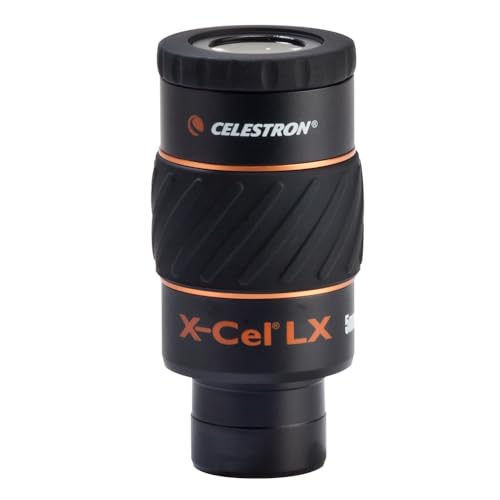
- Dedicated 5mm high power
- 60-degree field of view
- Six-element multi-coated optics
Best For: Detailed Moon and planet observations
Best Comfortable Wide View

- 19mm eye relief
- 48-degree field of view
- Full broadband multi-coating
Best For: Comfortable lower-power lunar viewing
Best Affordable Detail

- Dedicated 6mm high power
- Four-element Plossl design
- Accepts 1.25-inch filters
Best For: Budget-friendly detailed lunar viewing
High-Power Lunar Detail
SVBONY 4mm 62° Aspheric Eyepiece

- 4mm focal length for high magnification
- 62° field of view with fully coated optics
- Fits standard 1.25-inch telescope focusers
Best For: Close Moon and planetary observation
Comfortable Planetary Viewing
Celestron X-Cel LX 12mm Eyepiece

- 60° field of view for planetary viewing
- Six-element fully multi-coated lens system
- Adjustable eyeguard and filter-threaded 1.25-inch barrel
Best For: Comfortable Moon and planetary sessions
Versatile Plössl Performance
Astromania 6mm Plössl Eyepiece

- 6mm focal length for lunar and planetary detail
- 50° field with four-element multi-coated optics
- Fold-down eyeguard and filter-threaded 1.25-inch barrel
Best For: Lunar, planetary, and deep-sky viewing
Best Budget Lunar Detail

- Four-element Plössl design
- Eyeglass-friendly rubber eyecup
- Threaded 1.25-inch barrel accepts filters
Best For: Affordable dedicated lunar and planetary viewing
Best Complete Moon-Viewing Kit
Versatile Eyepiece and Filter Set

- Five Plössl eyepieces from 6mm to 32mm
- Includes 2x Barlow and Moon Filter
- Protective case has room to grow
Best For: New observers building a flexible accessory collection
Best High-Power Option

- Four-element Plössl optics
- Comfortable foldable rubber eyecup
- Threaded barrel accepts filters
Best For: High-power lunar and planetary sessions
Best Flexible Choice – Celestron 8-24mm Zoom Eyepiece
For telescope eyepieces for moon viewing, the Celestron 8-24mm Zoom is a practical way to adjust magnification without repeatedly changing eyepieces. Its variable focal length lets you move from a wider, lower-power view to a tighter, higher-power view while observing lunar details.
Best For: Observers who want one versatile eyepiece for experimenting with different magnifications.
Pros:
- Zooms smoothly across 8mm to 24mm focal lengths.
- Fully multi-coated optics are designed to improve brightness, color, and contrast.
- Fits standard 1.25-inch telescope holders and accepts 1.25-inch filters.
- Includes T-threads for astrophotography and a two-year U.S. warranty.
Cons:
- A variable zoom design may not replace every specialized fixed-focal-length eyepiece.
- It requires manual focusing and a compatible 1.25-inch holder.
This is the most adaptable option in the group. It suits beginners and observers who value convenience, though dedicated lunar viewers may prefer a fixed eyepiece for a specific magnification.
Best High-Power Detail – Celestron X-Cel LX 5mm Eyepiece
For telescope eyepieces for moon viewing, the Celestron X-Cel LX 5mm is aimed at high-power observing. Its six-element, fully multi-coated optical system and 60-degree field of view make it a focused choice for detailed lunar and planetary views when your telescope and conditions support strong magnification.
Best For: Experienced observers seeking a dedicated high-power eyepiece for the Moon and planets.
Pros:
- Short 5mm focal length is designed for high-power viewing.
- Provides a 60-degree field of view.
- Six-element optics are fully multi-coated.
- Pop-up rubber eyeguard and textured grip improve handling and viewing comfort.
Cons:
- Its high power is less versatile than a longer-focal-length or zoom eyepiece.
- Requires a telescope with a standard 1.25-inch eyepiece holder.
The X-Cel LX is a purpose-built choice for close lunar detail rather than an all-around eyepiece. Check your telescope’s focal length and local seeing conditions before choosing a 5mm model.
Best Comfortable Wide View – SVBONY SV131 32mm Plossl
Among telescope eyepieces for moon viewing, the SVBONY SV131 32mm Plossl favors a bright, comfortable, lower-power perspective. Its 48-degree field of view, 19mm eye relief, and full broadband multi-coating make it useful when you want an easy view of the Moon rather than maximum magnification.
Best For: Beginners and eyeglass wearers who prefer comfortable, lower-power observing.
Pros:
- 19mm eye relief supports longer, more comfortable observing sessions.
- 48-degree field of view provides a broad view.
- Full broadband multi-coating and blackened lens edges help support clear, bright images.
- Metal construction and standard filter threading add practical durability and flexibility.
Cons:
- The 32mm focal length is intended for lower power, so it is not the best choice for close-up lunar detail.
- Its 1.25-inch format requires a compatible telescope or adapter.
This Plossl is a sensible comfort-first option and can also serve for wide views of other dim celestial targets. Pair it with a shorter focal length eyepiece if you want to examine small lunar features more closely.
Best Affordable Detail – Celestron Omni 6mm Eyepiece
For telescope eyepieces for moon viewing, the Celestron Omni 6mm offers a straightforward high-power option for detailed lunar and planetary observation. Its four-element Plossl design, rubber eyecup, and filter-ready 1.25-inch barrel keep the feature set practical and affordable.
Best For: Budget-conscious observers who want a dedicated short-focal-length eyepiece.
Pros:
- 6mm focal length is suited to higher-power Moon and planet views.
- Four-element Plossl optical design offers a simple, established format.
- Rubber eyecup can improve comfort and contrast, including for eyeglass wearers.
- Blackened lens edges help reduce internal reflections, and the barrel accepts filters.
Cons:
- A fixed 6mm focal length is less flexible than a zoom eyepiece.
- High magnification can be demanding when atmospheric conditions are unsteady.
- It requires a compatible 1.25-inch telescope holder.
The Omni 6mm is a focused, no-frills choice for adding lunar detail at a modest price. It works best as part of a small eyepiece set rather than as the only eyepiece in a collection.
High-Power Lunar Detail – SVBONY 4mm 62° Aspheric Eyepiece
For shoppers comparing telescope eyepieces for moon viewing, this SVBONY 4mm model is designed for high-magnification observations. Its 62-degree field of view, fully coated optics, and standard 1.25-inch fit make it a practical choice for examining lunar features and planets more closely.
Best For: Detailed Moon and planetary viewing with a compatible 1.25-inch telescope.
Pros:
- 4mm focal length provides high magnification for closer lunar and planetary views.
- 62-degree aspheric design supports a broad viewing field with detail across the image.
- Fully coated optics are designed to improve contrast and light transmission.
- Lightweight 0.09-pound construction is easy to handle and store.
Cons:
- Only compatible with telescopes using a 1.25-inch focuser.
- High magnification may be less suitable for wide, low-power sweeping views.
This is a focused option for observers who want to prioritize close lunar and planetary detail. Confirm your telescope can use a 1.25-inch eyepiece and that its optics and viewing conditions support the 4mm focal length.
Comfortable Planetary Viewing – Celestron X-Cel LX 12mm Eyepiece
When choosing telescope eyepieces for moon viewing, the Celestron X-Cel LX 12mm combines a 60-degree field of view with a six-element fully multi-coated lens system. Its adjustable rubber eyeguard and grippy exterior add comfort and handling convenience during extended observations.
Best For: Comfortable lunar and planetary viewing with a 1.25-inch telescope.
Pros:
- Six-element fully multi-coated optics are optimized for planetary viewing.
- 60-degree field of view offers a useful balance of detail and viewing area.
- Pop-up rubber eyeguard can improve comfort and contrast.
- Threaded 1.25-inch barrel accepts standard telescope filters.
Cons:
- Requires a telescope with a 1.25-inch focuser.
- At 12mm, it offers less magnification than the included 4mm and 6mm alternatives.
The X-Cel LX is a sensible choice if viewing comfort and a moderately wide field matter as much as lunar detail. Celestron also includes a two-year US warranty and unlimited support from its US-based team.
Versatile Plössl Performance – Astromania 6mm Plössl Eyepiece
This Astromania 6mm Plössl is a versatile pick among telescope eyepieces for moon viewing, offering a 50-degree field of view and a four-element fully multi-coated optical design. Its standard 1.25-inch barrel, filter threading, and fold-down eyeguard suit both lunar observation and broader visual astronomy.
Best For: Moon, planetary, and medium-sized deep-sky viewing with a 1.25-inch telescope.
Pros:
- 6mm focal length provides a practical high-magnification option for lunar and planetary views.
- Four-element fully multi-coated optics are designed for sharp, bright, color-corrected images.
- 50-degree field of view gives a useful balance of detail and viewing area.
- Fold-down rubber eyeguard supports comfortable viewing, including for eyeglass wearers.
Cons:
- Compatible with telescopes that have a 1.25-inch focuser.
- Its 50-degree field is narrower than the 60- and 62-degree options in this roundup.
Choose this model if you want a conventional Plössl design with useful lunar magnification and flexible filter compatibility. The included dust caps and lightweight aluminum-alloy body also make it convenient for storage and travel.
Best Budget Lunar Detail – Crisp 9mm Moon Views
For shoppers comparing telescope eyepieces for moon viewing, the Celestron Omni 9mm offers a practical combination of four-element Plössl optics, contrast-focused construction, and accessible pricing. Its 1.25-inch threaded barrel can also accept filters.
Best For: Moon and planet observers who want a dedicated, affordable higher-power eyepiece.
Pros:
- Four-element Plössl optical design.
- Rubber eyecup can fold down for eyeglass wearers.
- Blackened lens edges and a matte aluminum barrel help reduce internal reflections.
- Includes a 2-year US warranty and unlimited US-based expert support.
Cons:
- Only one 9mm focal length is included.
- Requires a telescope with a compatible 1.25-inch focuser.
The Omni 9mm is a straightforward upgrade for viewers seeking a single eyepiece for lunar and planetary sessions without buying a larger accessory set.
Best Complete Moon-Viewing Kit – Versatile Eyepiece and Filter Set
If you want flexibility when choosing telescope eyepieces for moon viewing, this Celestron kit combines five 1.25-inch Plössl eyepieces with a 2x Barlow lens, a Moon Filter, planetary filters, and a protective case. The range of focal lengths supports low- through high-power observing.
Best For: Beginners and hobbyists who want a broad observing setup rather than a single eyepiece.
Pros:
- Includes 32mm, 17mm, 13mm, 8mm, and 6mm Plössl eyepieces.
- Each eyepiece has a four-element design and 52-degree field of view.
- The 2x Barlow doubles the magnification of the included eyepieces or other compatible 1.25-inch eyepieces.
- Includes a Moon Filter, planetary filters, and a foam-lined metal carrying case.
Cons:
- The full kit takes more storage space than a single eyepiece.
- Compatibility is centered on telescopes using 1.25-inch accessories.
This is the most versatile option in the group, especially for users building an accessory collection and wanting multiple ways to adjust magnification and filtering.
Best High-Power Option – 4mm Planetary Detail Eyepiece
For experienced observers choosing telescope eyepieces for moon viewing at high power, the Celestron Omni 4mm provides a compact, dedicated option with a four-element Plössl design. Its rubber eyecup supports comfortable viewing, while the threaded 1.25-inch barrel accommodates filters.
Best For: High-power lunar and planetary observing with a compatible 1.25-inch telescope.
Pros:
- Four-element Plössl optical design.
- Rubber eyecup can be folded down when wearing eyeglasses.
- Blackened lens edges and matte aluminum construction help limit internal reflections.
- Includes a 2-year US warranty and unlimited US-based expert support.
Cons:
- Its 4mm focal length is a specialized, high-power choice.
- It is sold as a single eyepiece rather than a complete viewing kit.
- Requires a compatible 1.25-inch focuser.
The Omni 4mm suits users specifically seeking a high-power eyepiece for lunar or planetary detail, while a broader focal-length range may be more practical for beginners.
How We Picked the Best Telescope Eyepieces for Moon Viewing
We compared these eyepieces by useful lunar magnification, optical design, apparent field of view, eye relief, barrel size, and overall versatility. We also considered whether each model suits beginners, experienced observers, or shoppers building a broader accessory collection.
For lunar observing, optical quality matters, but practical usability matters just as much. A very high-power eyepiece can reveal fine detail only when the atmosphere is steady and the telescope mount is stable.
Quick Comparison
| Type | Best For | Typical Strength |
|---|---|---|
| Zoom eyepiece | Flexible magnification | Convenience and easy framing |
| 4–6mm eyepiece | High-power lunar detail | Craters and mountain shadows |
| 9–12mm eyepiece | Balanced lunar views | Detail with easier focusing |
| 32mm eyepiece | Wide lunar framing | Finding and viewing the full Moon |
| Accessory kit | New telescope owners | Multiple tools in one purchase |
Key Buying Factors for Telescope Eyepieces for Moon Viewing
Magnification
Magnification equals your telescope’s focal length divided by the eyepiece focal length. Shorter focal lengths provide more power, but atmospheric turbulence and a telescope’s optical limits may make extreme magnification look blurry. A 9mm or 12mm eyepiece is often a practical starting point, while 4mm to 6mm models are better for steady nights and capable telescopes.
Eye Relief and Viewing Comfort
Longer eye relief is easier for extended sessions and essential for many eyeglass wearers. High-power eyepieces can have tighter viewing windows, so comfort and ease of eye placement should factor into your choice.
Field of View and Optics
A wider apparent field can make the Moon easier to track across the sky, especially with a manual mount. Fully multi-coated optics can improve light transmission and contrast, while a Plossl design often offers good value and sharpness.
Compatibility
Most options here use a standard 1.25-inch barrel, but confirm your focuser size before buying. Also check your telescope’s recommended maximum useful magnification and focal ratio.
Who Should Buy Which Telescope Eyepieces for Moon Viewing?
Choose a zoom eyepiece if you value convenience and want to adjust magnification without changing accessories. Choose a 9mm or 12mm model for a balanced first lunar eyepiece that is easier to focus and use regularly. Choose a 4mm, 5mm, or 6mm model if your telescope has enough aperture, your mount is steady, and you specifically want close views of lunar features.
Choose a 32mm eyepiece for wide views, locating targets, and enjoying the Moon’s full disk. Choose an accessory kit if you are new to astronomy and want several basic tools at once, provided the included pieces match your telescope and observing goals.