
The right eyepiece can make the difference between a bright but blurry planet and a crisp view of Jupiter’s bands, Saturn’s rings, or lunar craters. This roundup compares 10 options across several focal lengths, fields of view, and accessory bundles.
Whether you need a practical first upgrade, a dedicated high-power eyepiece, or a flexible zoom, use the guide below to match magnification and design to your telescope and observing conditions.
Best 10 Telescope Eyepieces for Planetary Viewing Picks for 2026
Best Overall

- 60° field of view with six-element optics
- Adjustable eyeguard and textured grip
- 2-year US warranty and support
Best For: Comfortable, versatile planetary observing
Best High-Magnification Value

- 4mm focal length for close planetary views
- 62° field of view with fully coated optics
- Lightweight standard 1.25-inch design
Best For: Budget-minded lunar and planetary observing
Best Budget Plössl

- Affordable 4-element Plössl design
- 6mm focal length for Moon and planets
- Foldable rubber eyecup and filter threads
Best For: Simple, budget-friendly planetary viewing
Best for High Detail

- 3.2mm focal length for close planetary views
- Five fully multi-coated elements
- 16mm eye relief with foldable eyecup
Best For: High-magnification planetary observation
Premium Planetary Pick
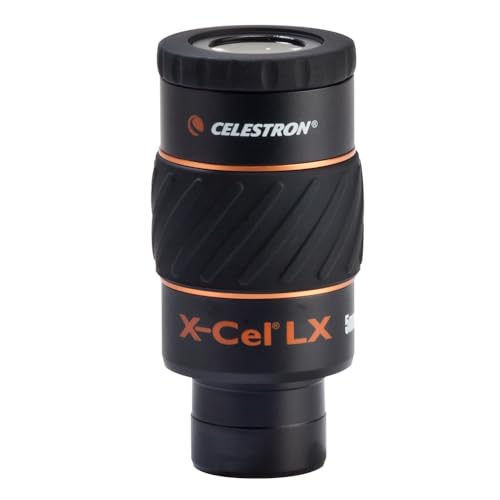
- 60° field of view with six-element optics
- Pop-up eyeguard and grippy exterior
- Threaded 1.25-inch barrel accepts filters
Best For: Comfortable high-power planetary viewing
Wide-View Value

- Wide 68° field aids tracking
- 17mm eye relief suits glasses wearers
- Fully multi-coated, blackened optical tube
Best For: Comfortable wide-field planetary observation
Budget High-Power Pick

- Affordable four-element Plossl design
- 4mm focal length for high power
- Eyecup and filter-threaded 1.25-inch barrel
Best For: Budget-focused high-power planetary viewing
Flexible Zoom Control
SVBONY SV135 7–21mm Zoom Eyepiece
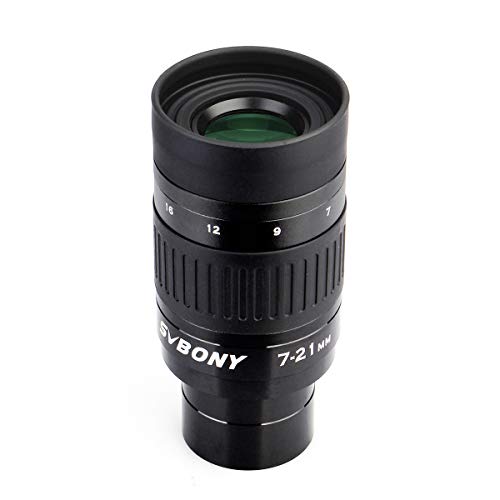
- Adjustable 7–21mm focal length
- Fully multi-coated six-element design
- 18–16.3mm eye relief
Best For: Versatile lunar, planetary, and daytime viewing
Dedicated Planetary Detail
Astromania 4.5mm Wide-Angle Eyepiece
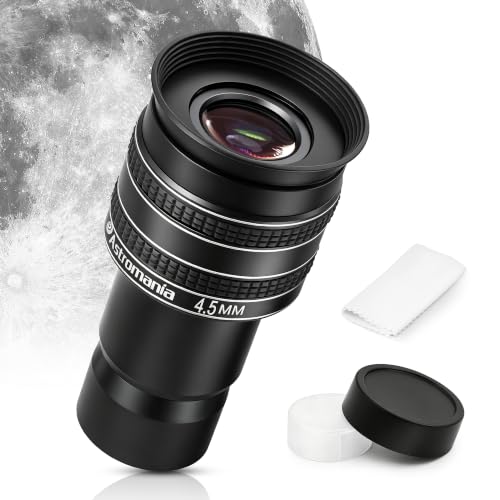
- Fixed 4.5mm planetary focal length
- 58° apparent field of view
- Fully multi-coated five-element optics
Best For: Bright planetary targets and focused high-power viewing
Complete Viewing Set
CelticBird 13-Piece Eyepiece and Filter Kit

- Five Plossl eyepieces from 6mm to 40mm
- 2X Barlow and seven filters included
- Foam-lined metal carrying case
Best For: Beginners building a versatile lunar and planetary kit
Best Overall – Celestron X-Cel LX 9mm
For shoppers comparing telescope eyepieces for planetary viewing, the Celestron X-Cel LX 9mm combines a 60° field of view with a six-element, fully multi-coated optical design. Its adjustable eyeguard, textured grip, and filter-ready 1.25-inch barrel make it a practical choice for extended observing sessions.
Best For: Planetary observers who want a comfortable, versatile eyepiece with broad viewing and dependable support.
Pros:
- 60° field of view supports immersive planetary viewing.
- Six-element, fully multi-coated optics are designed for contrast and detail.
- Pop-up eyeguard and no-slip rubber grip improve comfort and handling.
- Includes a 2-year US warranty and unlimited support from Celestron.
Cons:
- Its 9mm focal length may not provide the very high magnification some planetary targets require.
- Uses a 1.25-inch barrel, so compatibility depends on the telescope focuser.
The X-Cel LX is a well-rounded option when comfort, field of view, and build features matter as much as magnification. Its threaded barrel also leaves room to add compatible filters.
Best High-Magnification Value – SVBONY 4mm 62° Aspheric
The SVBONY 4mm is aimed at close-up lunar and planetary work, making it a noteworthy option among telescope eyepieces for planetary viewing. Its 62° field of view, fully coated optics, and standard 1.25-inch fit provide a lightweight way to pursue higher magnification.
Best For: Observers seeking an affordable, lightweight 4mm eyepiece for detailed views of the Moon and planets.
Pros:
- 4mm focal length offers high magnification for lunar and planetary details.
- 62° wide-angle view helps retain a broader viewing area.
- Fully coated optics support light transmission, contrast, and definition.
- Lightweight 1.44-ounce design with a standard 1.25-inch fit.
Cons:
- High magnification can be demanding on telescope setup and observing conditions.
- Only the 4mm eyepiece is included.
- The supplied warranty is limited to one year, with a 30-day no-reason return period.
This is a focused choice for users who specifically want more magnification without adding much weight. Its 1.25-inch compatibility and filter support add flexibility across lunar, planetary, and selected deep-sky targets.
Best Budget Plössl – Celestron Omni 6mm
The Celestron Omni 6mm offers a straightforward 4-element Plössl design for shoppers seeking telescope eyepieces for planetary viewing at an accessible price. Its rubber eyecup, blackened lens edges, and filter-threaded 1.25-inch barrel support comfortable, controlled observing.
Best For: Beginners and budget-conscious observers who want a simple 6mm planetary eyepiece with practical viewing features.
Pros:
- 4-element Plössl optical design offers an affordable entry point.
- 6mm focal length is suited to detailed Moon and planet views.
- Rubber eyecup can be folded down for eyeglass wearers.
- Blackened lens edges help prevent internal reflections, and the barrel accepts filters.
Cons:
- Its 1.25-inch barrel requires a compatible telescope focuser.
- The supplied notes do not specify a wide-angle field of view.
- A 6mm focal length may not suit every telescope or observing condition.
The Omni 6mm keeps the design uncomplicated while covering useful basics for planetary observation. It is a sensible pick when affordability and familiar Plössl optics take priority over a wider field.
Best for High Detail – Astromania 3.2mm 58°
With a 3.2mm focal length and 58° apparent field of view, the Astromania eyepiece is built for demanding close-up work. It stands out among telescope eyepieces for planetary viewing with five fully multi-coated elements, a foldable eyecup, and a standard 1.25-inch barrel.
Best For: Experienced or enthusiastic observers who want very high magnification for planetary observation and a comfortable, contrast-focused design.
Pros:
- 3.2mm focal length is designed for detailed planetary observation.
- Five fully multi-coated elements aim to maximize transmission and contrast.
- 58° field of view provides a useful balance of detail and sky coverage.
- Foldable eyecup, 16mm eye relief, and reflection-suppression treatments support comfortable viewing.
Cons:
- Very high magnification may be less forgiving of telescope and atmospheric limitations.
- Its 1.25-inch fit is not compatible with focusers of other sizes without suitable equipment.
The Astromania 3.2mm is the most specialized option here, prioritizing close planetary detail over broad versatility. Its adjustable eyecup and 16mm eye relief help make long sessions more manageable, including for eyeglass wearers.
Premium Planetary Pick – Celestron X-Cel LX 5mm
For shoppers comparing telescope eyepieces for planetary viewing, the Celestron X-Cel LX 5mm combines high-power magnification with a 60° field of view. Its six-element, fully multi-coated optical system and contrast-focused design are suited to detailed planetary observations.
Best For: Observers seeking a comfortable, feature-rich 5mm eyepiece for high-power planetary viewing.
Pros:
- 60° field of view helps with target acquisition and tracking.
- Six-element fully multi-coated lens system is optimized for planetary viewing.
- Pop-up eyeguard and treaded rubber grip improve viewing comfort and handling.
- 1.25-inch threaded barrel accepts filters.
Cons:
- Its 5mm focal length provides high magnification, which may not suit every telescope or observing condition.
- It is heavier than the Celestron Omni option listed here.
The X-Cel LX is a strong choice when comfort, field of view, and high-power planetary performance matter. A two-year US warranty and unlimited support add reassurance.
Wide-View Value – SVBONY 6mm 68° Eyepiece
The SVBONY 6mm is a practical option for those comparing telescope eyepieces for planetary viewing and wanting a wide 68° view. Its fully multi-coated optics, blackened interior, and 17mm eye relief support comfortable observation of lunar and planetary details.
Best For: Planetary observers who want a wide field, long eye relief, and broad 1.25-inch compatibility.
Pros:
- 68° field of view makes targets easier to acquire and track.
- 6mm focal length is designed for high magnification and planetary detail.
- Fully multi-coated optics and a blackened tube help reduce internal reflections.
- 17mm eye relief and a folding eyecup accommodate glasses wearers.
Cons:
- Its 6mm focal length may not provide the same magnification as a shorter eyepiece.
- The supplied notes do not specify a US-based support program.
With its wide field and long eye relief, this SVBONY model is especially practical for extended sessions and for users who wear glasses. The metal construction, dust covers, and filter-compatible threading add useful handling and storage features.
Budget High-Power Pick – Celestron Omni 4mm
For buyers seeking affordable telescope eyepieces for planetary viewing, the Celestron Omni 4mm offers high-power performance through a four-element Plossl optical design. Rubber eyecups, blackened lens edges, and a filter-threaded 1.25-inch barrel make it a straightforward planetary accessory.
Best For: Budget-conscious observers who want a compact 4mm eyepiece for high-power planetary detail.
Pros:
- 4mm focal length is suited to high-power planetary viewing.
- Four-element Plossl design delivers an affordable optical configuration.
- Rubber eyecup can be used up or folded down for eyeglass wearers.
- Blackened lens edges help prevent internal reflections, and the barrel accepts filters.
Cons:
- The narrower design details supplied do not include a stated field-of-view measurement.
- A 4mm eyepiece can be demanding of telescope and viewing conditions.
- It has fewer optical elements than the X-Cel LX.
The Omni 4mm is a sensible entry-level choice when high magnification and price matter most. Its comfortable eyecup, filter compatibility, and two-year US warranty strengthen its value.
Flexible Zoom Control – SVBONY SV135 7–21mm Zoom Eyepiece
For anyone comparing telescope eyepieces for planetary viewing, the SVBONY SV135 offers adjustable 7–21mm focal length in one 1.25-inch eyepiece. Its zoom range lets you move from a wider view to higher magnification without changing eyepieces, while the fully multi-coated, six-element optical design is intended to support contrast and edge-to-center sharpness.
Best For: Observers who want one versatile eyepiece for the Moon, planets, nebulae, clusters, and daytime landscapes.
Pros:
- 7–21mm zoom range provides multiple magnification options in one eyepiece.
- Fully multi-coated six-element, four-group optical design.
- 18–16.3mm eye relief and a rubber eye guard can make viewing more comfortable, including for eyeglass wearers.
- Standard 1.25-inch barrel fits telescopes accepting 1.25-inch eyepieces.
Cons:
- The apparent field of view varies from 40° to 57° across the zoom range.
- As a zoom eyepiece, it may not provide the same specialized fixed focal length as a dedicated planetary model.
The SV135 is a practical space-saving choice when flexibility matters more than carrying a set of fixed focal lengths. Its shortest 7mm setting is the most relevant for higher-power planetary observation, while the longer settings provide a broader starting view.
Dedicated Planetary Detail – Astromania 4.5mm Wide-Angle Eyepiece
The Astromania 4.5mm is a fixed focal-length option for shoppers seeking telescope eyepieces for planetary viewing at higher power. Its 58° apparent field of view, 16mm eye relief, and fully multi-coated five-element design are aimed at comfortable, high-contrast views of bright targets such as the Moon, Jupiter, Mars, and Saturn.
Best For: Planetary observers who want a dedicated 4.5mm eyepiece with a wide apparent field of view.
Pros:
- 4.5mm focal length is designed primarily for planetary observation.
- 58° apparent field of view offers a comparatively expansive view.
- Approximately 16mm eye relief and a convertible rubber eyecup support comfortable viewing.
- Five elements in three groups are fully multi-coated to support transmission and contrast.
Cons:
- Fixed 4.5mm focal length offers less flexibility than a zoom eyepiece or multi-eyepiece kit.
- High magnification can be demanding on telescope tracking and atmospheric conditions.
Choose this model when planetary viewing is the priority and your telescope can make effective use of a 4.5mm eyepiece. The rotated barrel, blackened lens edges, and internal stray-light treatment add practical details for focused observation.
Complete Viewing Set – CelticBird 13-Piece Eyepiece and Filter Kit
The CelticBird kit gives beginners and expanding observers a broad starting point when shopping for telescope eyepieces for planetary viewing. It combines five 1.25-inch Plossl eyepieces from 6mm to 40mm with a 2X Barlow lens, planetary color filters, a polarizing filter, and a Moon filter in a foam-lined metal case.
Best For: Beginners who want multiple magnifications, planetary filters, and storage in one 1.25-inch accessory kit.
Pros:
- Includes 6mm, 8mm, 12.5mm, 20mm, and 40mm Plossl eyepieces for varied viewing.
- 2X Barlow lens doubles the magnification of compatible 1.25-inch eyepieces.
- Five color filters, a polarizing filter, and a Moon filter are included for planetary and lunar observation.
- Foam-lined metal carrying case provides organized storage and room for additional small accessories.
Cons:
- Plossl eyepieces provide less specialized planetary design than a dedicated high-power planetary eyepiece.
- The full kit is bulkier to carry than a single eyepiece.
- The 2X Barlow increases magnification, but the resulting power may be limited by telescope and viewing conditions.
This is the most versatile choice of the three for building a complete observing setup. The 6mm eyepiece and Barlow can support higher-power experiments, while the longer focal lengths and filters cover broader lunar, deep-sky, and daytime uses.
How We Picked These Telescope Eyepieces for Planetary Viewing
We selected these models for useful focal-length coverage, broad compatibility with standard 1.25-inch focusers, and features that matter during lunar and planetary observation. The lineup includes fixed eyepieces from approximately 3.2mm to 9mm, a 7–21mm zoom, wide-angle designs, and a complete accessory kit with a Barlow lens.
Because high magnification is strongly affected by telescope aperture, focal length, alignment, and atmospheric steadiness, no single eyepiece is ideal for every observer. The best choice is the one that provides a practical magnification range without making the image dim, soft, or difficult to keep centered.
Quick Comparison
| Type | Best For | Typical Advantage |
|---|---|---|
| 3.2–4.5mm fixed eyepiece | Very high-power viewing | Detailed lunar and planetary observation when conditions are steady |
| 5–6mm fixed eyepiece | Balanced planetary use | Strong magnification with a more forgiving image |
| 7–9mm fixed eyepiece | Versatile observing | Useful on planets, the Moon, and smaller deep-sky targets |
| 7–21mm zoom | Flexible sessions | Quickly adjusts magnification without changing eyepieces |
| Accessory kit | New telescope owners | Multiple focal lengths, filters, Barlow, and storage in one package |
Key Buying Factors for Telescope Eyepieces for Planetary Viewing
Match Focal Length to Your Telescope
Magnification equals telescope focal length divided by eyepiece focal length. A shorter eyepiece produces more power, but extremely high magnification can exaggerate atmospheric turbulence and tracking errors. For many small and medium telescopes, 5mm to 9mm options are easier to use regularly than the shortest models.
Consider Eye Relief and Field of View
Eye relief affects comfort, particularly for eyeglass wearers. A wider apparent field can make a planet easier to follow in an undriven telescope, while a narrower field may still deliver excellent detail at a lower price. Check the manufacturer’s specifications rather than assuming that every wide-angle design offers the same viewing experience.
Check Compatibility and Optical Quality
Confirm that the eyepiece barrel matches your focuser, usually 1.25 inches for the products listed here. Fully coated or multicoated optics can improve light transmission and contrast, but clean lenses, accurate collimation, and a stable mount are equally important. A Barlow can add versatility, though it also increases the effective magnification and should be used selectively.
Who Should Buy Which Telescope Eyepieces for Planetary Viewing?
- New observers: Choose a mid-power 5mm–9mm eyepiece or an accessory kit if you need several focal lengths and basic filters.
- Planet-focused observers: Consider a 3.2mm–4.5mm model only if your telescope and local seeing conditions support very high magnification.
- Observers using undriven mounts: A wider apparent field can provide more time before the target drifts out of view.
- Travelers and casual users: A zoom eyepiece offers convenient magnification changes with less gear to carry.
- Eyeglass wearers: Prioritize published eye-relief specifications and a comfortable adjustable eye cup over maximum magnification alone.