
The right eyepiece can make a noticeable difference in what your telescope reveals. Focal length, apparent field of view, optical coatings, and barrel size all affect comfort and image quality.
We selected 10 telescope eyepieces and accessory kits for different observing goals, from high-power planetary views to relaxed wide-field and deep-sky sessions.
Best 10 Telescope Eyepieces Picks for 2026
Complete Viewing Kit
Celestron Eyepiece & Filter Accessory Kit

- Five 1.25-inch Plössl eyepieces
- 2x Barlow plus Moon and planetary filters
- Foam-lined case with room to expand
Best For: Beginners building a versatile telescope accessory collection
Flexible Zoom Viewing
SVBONY SV135 7–21mm Zoom Eyepiece
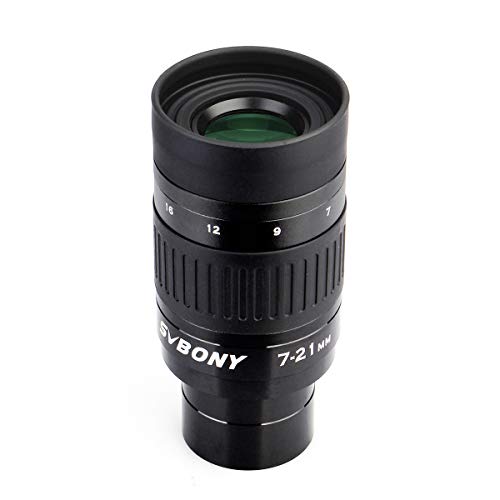
- Adjustable 7–21mm focal length
- 40–57-degree apparent field of view
- Comfortable eye relief and fully multi-coated optics
Best For: Observers wanting several focal lengths in one eyepiece
Beginner Accessory Upgrade
Celestron AstroMaster Eyepiece Kit

- 15mm Kellner and 6mm Plössl eyepieces
- 2x Barlow with T-threads
- Moon, red, and blue filters in a carrying case
Best For: New astronomers expanding a compatible 1.25-inch telescope
Wide-Angle Starter Set
SVBONY 4mm, 10mm & 23mm Eyepieces

- Three useful 1.25-inch focal lengths
- 62-degree wide-angle field of view
- Aspherical, fully multi-coated optics
Best For: Observers wanting a compact set for lunar, planetary, and deep-sky viewing
Best for Planetary Detail
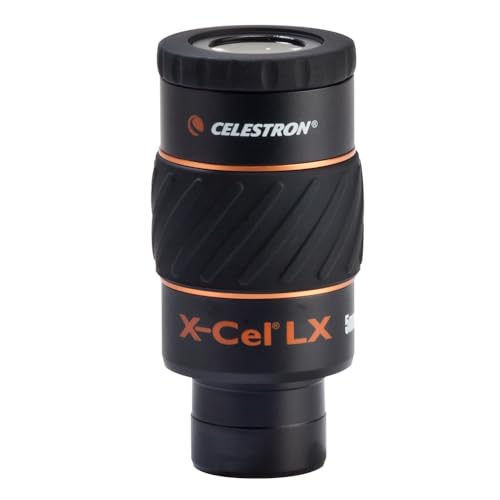
- 60° field of view
- Six-element, fully multi-coated optics
- Adjustable eyeguard and filter threads
Best For: High-power planetary viewing
Best Wide-Field Value
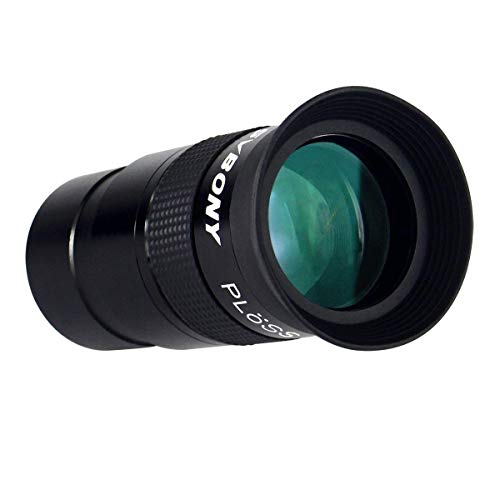
- 40° apparent field of view
- Four-element, fully multi-coated optics
- Fold-down eyeguard and filter threads
Best For: Low-power lunar and deep-sky viewing
Best Ultra-Wide View

- 82° ultra-wide field of view
- Fully multi-coated optics
- Retractable eyecup and filter threads
Best For: Immersive moon and deep-sky viewing
Wide-Angle Planetary Pick

- 68° field of view for easier tracking
- 6mm focal length for high magnification
- 17mm eye relief with fully multi-coated optics
Best For: Lunar and planetary viewing
Most Versatile Zoom
Celestron 8-24mm Zoom Eyepiece

- Smoothly zooms from 8mm to 24mm
- Replaces multiple fixed focal lengths
- Fully multi-coated and filter-compatible
Best For: Flexible all-purpose observing
Comfortable Low-Power Choice
Celestron X-Cel LX 25mm Eyepiece

- 25mm focal length for wide, low-power views
- 60° field with six-element coated optics
- Twist eyeguard and no-slip rubber grip
Best For: Comfortable broad-field observing
Complete Viewing Kit – Celestron Eyepiece & Filter Accessory Kit
For shoppers who want a broad selection of telescope eyepieces in one purchase, this Celestron kit combines five 1.25-inch Plössl eyepieces with a 2x Barlow lens, filters, and a protective case. It covers a useful range from 6mm through 32mm and is compatible with most telescopes that accept 1.25-inch accessories.
Best For: Beginners and observers building a versatile telescope accessory collection.
Pros:
- Includes five focal lengths: 6mm, 8mm, 13mm, 17mm, and 32mm.
- The 2x Barlow lens doubles the magnification of the included eyepieces.
- Includes a Moon filter, planetary filters, and a foam-lined metal case.
- Fully multi-coated, four-element Plössl designs offer a 52-degree field of view.
Cons:
- The kit may include more filters and focal lengths than casual observers need.
- All included eyepieces use the 1.25-inch format.
This is a strong all-in-one option for users who want to experiment with different magnifications and planetary filters without assembling a collection piece by piece. The included case also leaves room for future additions.
Flexible Zoom Viewing – SVBONY SV135 7–21mm Zoom Eyepiece
The SVBONY SV135 is a practical telescope eyepiece for observers who prefer adjustable magnification over carrying several fixed lenses. Its 7–21mm zoom range, fully multi-coated six-element optical design, and standard 1.25-inch barrel suit lunar, planetary, and general astronomical viewing.
Best For: Observers who want multiple focal lengths in one eyepiece.
Pros:
- Adjustable 7–21mm focal length provides flexible magnification.
- Offers a 40- to 57-degree apparent field of view.
- 18mm to 16.3mm eye relief can be comfortable for eyeglass wearers.
- Full-metal body, rubber eye guard, and fully multi-coated optics.
Cons:
- It provides one zoom eyepiece rather than a set of separate focal lengths.
- The 1.25-inch barrel limits compatibility to telescopes with a matching focuser.
Choose this model when convenience and quick magnification changes matter more than having a dedicated eyepiece for every focal length. Its compact range is particularly useful for moving between bright lunar and planetary targets.
Beginner Accessory Upgrade – Celestron AstroMaster Eyepiece Kit
This economical Celestron accessory kit adds two telescope eyepieces, a 2x Barlow, three filters, and a carrying case. It is designed for AstroMaster telescopes but also works with most compatible 1.25-inch telescope setups, making it a straightforward way to expand a beginner’s viewing options.
Best For: New astronomers who need essential eyepieces, filters, and basic accessories.
Pros:
- Includes 15mm Kellner and 6mm Plössl eyepieces.
- The 2x Barlow lens adds magnification and includes T-threads for optional DSLR attachment.
- Moon, red, and blue filters support lunar and planetary viewing.
- Foam-lined hard plastic case helps keep the accessories organized.
Cons:
- It offers fewer eyepiece focal lengths than larger accessory kits.
- A T-ring for DSLR attachment is required separately.
- The accessories use the 1.25-inch format.
This kit is a sensible entry-level choice when you want more than telescope eyepieces alone. The Barlow and filters broaden its usefulness, while the case and cleaning cloth provide practical extras for new users.
Wide-Angle Starter Set – SVBONY 4mm, 10mm & 23mm Eyepieces
This three-piece SVBONY set gives 1.25-inch telescope users 4mm, 10mm, and 23mm focal lengths for high-power detail and broader-sky viewing. The 62-degree field of view, fully multi-coated optics, and aspherical lens design make it a flexible choice for the Moon, planets, clusters, and nebulae.
Best For: Observers seeking a compact, wide-angle set for varied celestial targets.
Pros:
- Three focal lengths cover detailed and lower-power observation.
- 62-degree wide-angle view makes locating and framing objects easier.
- Aspherical, fully multi-coated optics are designed to reduce aberrations and improve light transmission.
- Standard 1.25-inch barrels include filter threads and internal light baffling.
Cons:
- Users must confirm their telescope’s focuser size and calculate suitable magnification.
- The 4mm eyepiece may provide very high power depending on the telescope’s focal length.
- This set does not include a Barlow lens or filters.
For shoppers who want a focused set rather than a large accessory bundle, these eyepieces offer useful coverage in a compact package. Verify compatibility and realistic magnification before ordering, especially if planning to use the 4mm lens.
Best for Planetary Detail – Celestron X-Cel LX 5mm
For high-power telescope eyepieces aimed at planetary viewing, the Celestron X-Cel LX 5mm combines a six-element, fully multi-coated lens system with a 60° field of view. Its adjustable eyeguard and textured grip make extended observing more comfortable and secure.
Best For: High-power views of planets and other bright, detailed targets.
Pros:
- 60° field of view with six-element, fully multi-coated optics
- Pop-up rubber eyeguard helps improve comfort and contrast
- Textured rubber grip is practical when wearing gloves
- 1.25-inch barrel accepts threaded filters
Cons:
- The 5mm focal length is specialized for high magnification
- May be less versatile than a medium- or low-power eyepiece
This is a focused choice for observers who want a dedicated planetary telescope eyepiece, especially when comfortable handling and filter compatibility matter. Celestron includes a 2-year US warranty and unlimited support.
Best Wide-Field Value – SVBONY 40mm Plossl
The SVBONY 40mm Plossl is a practical low-power option among telescope eyepieces, offering a 40° apparent field of view for broad lunar views, star clusters, nebulae, and other deep-sky targets. Its standard 1.25-inch barrel suits compatible telescopes and accessories.
Best For: Broad lunar observations, medium star clusters, and wide-ranging deep-sky viewing.
Pros:
- Four-element, fully multi-coated design with a 40° field of view
- Blackened interior helps reduce stray light and maintain contrast
- Fold-down soft rubber eyeguard accommodates eyeglass wearers
- Includes M28.5 x 0.6 filter threads and a storage case
Cons:
- Limited to a fixed 40mm focal length
- Requires a telescope with a compatible 1.25-inch focuser
With its comfortable eyeguard, durable metal construction, and filter compatibility, this SVBONY telescope eyepiece is well suited to relaxed, wide-field visual observing. It includes a one-year warranty and a 30-day no-reason return period.
Best Ultra-Wide View – Celestron Luminos 15mm
The Celestron Luminos 15mm stands out among telescope eyepieces with an ultra-wide 82° field of view. Its fully multi-coated optics, retractable eyecup, and rubberized grip make it a versatile choice for moon and deep-sky observations.
Best For: Immersive lunar and deep-sky views at a moderate focal length.
Pros:
- Very wide 82° field of view
- Fully multi-coated optics support clear visual observing
- Retractable eyecup adjusts for viewing comfort
- Filter-threaded aluminum barrel and rubber grip add practicality
Cons:
- Its 15mm focal length may not cover very low- or high-power needs
- The eyepiece weighs 12 ounces, which may matter for balance on smaller setups
The Luminos 15mm is a strong option when a wide, immersive view is more important than a compact design. Its parfocal design and retractable eyecup further support convenient telescope use, backed by Celestron’s 2-year US warranty.
Wide-Angle Planetary Pick – SVBONY 6mm 68° Eyepiece
For telescope eyepieces aimed at detailed lunar and planetary viewing, this SVBONY model combines a short 6mm focal length with a 68-degree field of view. Its wide angle can make target acquisition and tracking easier while providing high magnification for observing features such as lunar craters and planetary rings.
Best For: Observers who want high magnification and a wide field for lunar and planetary targets.
Pros:
- 68-degree wide-angle view helps with target acquisition and tracking.
- 6mm focal length supports high-magnification planetary observation.
- Fully multi-coated optics and a blackened interior are designed to improve brightness and reduce internal reflections.
- 17mm eye relief and a folding eyecup offer added comfort, including for many glasses wearers.
Cons:
- The fixed 6mm focal length is less flexible than a zoom eyepiece.
- It requires a telescope or accessory with a compatible 1.25-inch fit.
With its metal construction, grip ring, dust covers, and filter-compatible threading, this is a practical fixed-power option for users prioritizing planetary detail and comfortable outdoor use.
Most Versatile Zoom – Celestron 8-24mm Zoom Eyepiece
Among telescope eyepieces, the Celestron 8-24mm Zoom is a convenient choice when you want to vary magnification without repeatedly changing accessories. Its smooth zoom range covers focal lengths from 8mm to 24mm, letting you select a useful view for different subjects with one 1.25-inch eyepiece.
Best For: Stargazers who want one adaptable eyepiece instead of several fixed focal lengths.
Pros:
- 3:1 zoom range provides focal lengths from 8mm through 24mm.
- Works with telescopes and spotting scopes that accept standard 1.25-inch eyepieces.
- Fully multi-coated optics are designed to improve color, contrast, and brightness.
- Includes filter threads, a removable rubber eyecup, and T-threads for astrophotography.
Cons:
- Its 55-degree field of view is narrower than some wide-angle fixed eyepieces.
- A zoom design may be less specialized for users seeking one specific focal length.
The ability to adjust power smoothly makes this a strong general-purpose starting point, especially for observers who prefer a simpler kit and less time spent swapping eyepieces.
Comfortable Low-Power Choice – Celestron X-Cel LX 25mm Eyepiece
For telescope eyepieces intended for wide, low-power views, the Celestron X-Cel LX 25mm offers a 60-degree field of view and a six-element fully multi-coated lens system. Its ergonomic features are designed to make extended observing more comfortable while maintaining a secure grip.
Best For: Observers who want wide low-power views with comfortable handling and adjustable eye relief.
Pros:
- 25mm focal length is positioned for wide, low-power viewing.
- 60-degree field of view supports expansive views.
- Six-element fully multi-coated optics are optimized for planetary viewing.
- Twist-adjustable rubber eyeguard and textured grip improve comfort and handling.
Cons:
- The fixed 25mm focal length does not provide zoom flexibility.
- The supplied details do not specify compatibility beyond its 1.25-inch threaded barrel.
This model suits users who value a comfortable, no-slip eyepiece for broad views, with the added convenience of a 1.25-inch barrel threaded to accept filters.
How We Picked These Telescope Eyepieces
We focused on useful focal-length coverage, compatibility with common 1.25-inch telescope focusers, optical design, viewing comfort, and value. The selection includes individual eyepieces, zoom models, and kits so beginners can build a practical collection while experienced observers can fill specific magnification gaps.
Because telescope performance depends on aperture, focal length, seeing conditions, and the quality of the telescope itself, no single eyepiece is ideal for every observer. The best choice is the one that provides a useful magnification range without pushing the telescope beyond what the atmosphere and optics can support.
Quick Comparison
| Best For | What to Look For |
|---|---|
| Beginners | Accessory kits or a versatile zoom eyepiece |
| Planetary viewing | Short focal lengths, controlled eye relief, and good contrast |
| Wide-field observing | Longer focal lengths and a generous apparent field of view |
| Deep-sky targets | Moderate magnification, bright optics, and a wider field |
| Building a collection | Focal lengths that complement your existing eyepieces |
Key Buying Factors for Telescope Eyepieces
Focal Length and Magnification
Magnification is calculated by dividing the telescope’s focal length by the eyepiece’s focal length. Shorter eyepieces produce higher magnification for lunar and planetary details, while longer eyepieces create wider, brighter views that are often better for star fields and large deep-sky objects. A versatile collection typically includes low, medium, and high powers rather than several closely matched focal lengths.
Apparent Field of View
A wider apparent field can make objects easier to locate and provide a more immersive view. It is especially useful for extended targets and for manually tracking objects. However, field width can increase cost, and edge performance varies by telescope design.
Eye Relief and Viewing Comfort
Eye relief describes how far your eye can be from the lens while still seeing the full image. Longer eye relief is more comfortable for eyeglass wearers and extended observing. Short, high-power eyepieces may require more precise eye placement, so comfort should matter alongside magnification.
Barrel Size, Coatings, and Compatibility
Confirm that the barrel matches your telescope’s focuser or diagonal; the models in this selection primarily use the common 1.25-inch format. Fully multi-coated optics can improve light transmission and reduce reflections. Also check whether a kit includes filters or a Barlow lens and whether those accessories genuinely fill gaps in your setup.
Who Should Buy Which Telescope Eyepieces?
Beginners who want several magnification options should consider an accessory kit or zoom eyepiece, particularly when they are still learning which powers work best with their telescope. Observers focused on the Moon and planets should prioritize a quality short-focal-length eyepiece, while owners of compact or long-focal-length telescopes may prefer moderate high power rather than the shortest option available.
For wide views of star fields, open clusters, and large nebulae, choose a longer focal length with a broad field of view. Deep-sky observers should look for a balanced medium-power eyepiece that preserves brightness while offering enough scale to reveal structure. If you already own several eyepieces, compare focal lengths first and buy the option that adds a genuinely useful magnification instead of creating unnecessary overlap.