
Choosing among telescope guide cameras for beginners can be confusing, especially when product listings mix cameras, guide scopes, smart telescopes, and instructional guides. The right setup depends on your mount, telescope, software, and whether you want hands-on control or automated imaging.
This roundup brings together beginner-oriented options and learning resources so you can compare sensor features, connectivity, compatibility, and overall ease of use before building your astrophotography setup.
Best 10 Telescope Guide Cameras for Beginners Picks for 2026
Compact Guide Scope
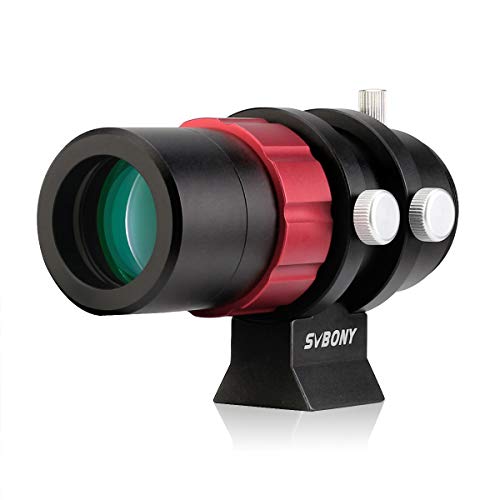
- 30mm f/4 optics with a wide field of view
- 45mm back focus for adjustment flexibility
- Works with compatible mainstream guide cameras
Best For: Beginners building a lightweight auto-guiding setup
High-Speed Guiding Camera
SVBONY SV305C Pro Telescope Camera

- IMX662 sensor with low readout noise
- ST4 interface for guiding software compatibility
- Up to 107 fps at 1920×1080
Best For: Computer-based guiding and planetary imaging
Learning Companion
Astrophotography for Beginners Guide

- Explains equipment choices and camera settings
- Covers tracking, alignment, stacking, and processing
- Includes troubleshooting advice for common issues
Best For: New astrophotographers planning their first setup
Entry-Level Planetary Camera
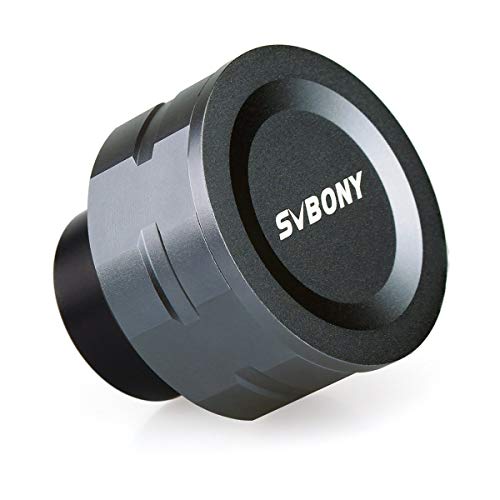
- 1.25-inch USB electronic telescope eyepiece
- 1080p capture at up to 30 fps
- Designed for lunar and planetary imaging
Best For: Beginners starting with simple computer-based imaging
Best for Easy Setup

- Supports telescopes up to 700mm focal length
- Works with several common guide-camera interfaces
- Scaled focuser and adjustable six-point guide ring
Best For: Beginners assembling a compact guided astrophotography setup
Astrophotography Fundamentals
The Beginner’s Guide to Astrophotography

- Explains gear, settings, focusing, and composition
- Works across smartphone, DSLR, and mirrorless photography
- Includes planning and post-processing guidance
Best For: Beginners learning astrophotography before buying accessories
Smart Telescope Learning Guide
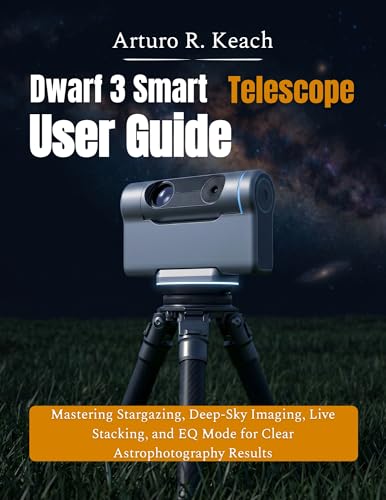
- Explains Dwarf 3 setup, app controls, and shooting modes
- Covers AZ/EQ operation and up to 60-second exposures
- Includes stacking, filters, checklists, and troubleshooting
Best For: Dwarf 3 beginners learning smart-telescope imaging
Best for S50 Pro Mastery
Practical Setup & Imaging Guide

- Step-by-step S50 Pro setup and app guidance
- Covers tracking, autofocus, stacking, and target planning
- Includes troubleshooting and astrophotography fundamentals
Best For: S50 Pro owners building confidence from setup through imaging
Best for Dwarf Mini Beginners

- Explains app controls, Sky Atlas, and GoTo targeting
- Covers focus, tracking, stacking, and image export
- Includes battery, storage, connection, and capture troubleshooting
Best For: First-time Dwarf Mini owners learning the complete workflow
Best for Advanced S50 Pro Workflows

- Covers setup through deep-sky astrophotography
- Includes EQ Mode, Live Stacking, mosaics, and processing
- Adds checklists, projects, settings, and troubleshooting
Best For: S50 Pro users who want a detailed guide that grows with their skills
Compact Guide Scope – SVBONY SV165 30mm Guide Scope
For beginners comparing telescope guide cameras for beginners, the SVBONY SV165 is a compact guide-scope option designed to pair with compatible auto-guiding cameras. Its 30mm aperture, f/4 optics, and wide field of view can make locating targets easier during an astronomy session.
Best For: Beginners who need a lightweight guide scope for compatible SVBONY, ZWO, QHY, or Orion guiding-camera setups.
Pros:
- 30mm f/4 optics provide a wide 2.86-degree field of view.
- 45mm back focus supports precise focus adjustments.
- Nylon-tipped thumbscrews help protect the optical tube.
- Includes 1.25-inch and M42 interface options for compatible cameras.
Cons:
- It is a guide scope rather than a camera, so a compatible guiding camera is required.
- Some camera combinations may need additional accessories for focusing.
- It cannot be used with a dielectric mirror star diagonal and focus is not supported in that configuration.
The SV165 is a practical starting point for a beginner guiding system when its interfaces and back-focus requirements match the rest of the setup. Confirm camera compatibility before buying.
High-Speed Guiding Camera – SVBONY SV305C Pro Telescope Camera
The SVBONY SV305C Pro stands out among telescope guide cameras for beginners who want a computer-connected camera with an ST4 guiding interface. Its IMX662 sensor, low readout noise, and fast USB 3.0 connection also support high-frame-rate planetary imaging.
Best For: Beginners who want one camera for computer-based guiding and fast planetary capture.
Pros:
- ST4 interface supports compatibility with popular guiding software such as PHD2 and ASCOM.
- 1920×1080 capture at up to 107 frames per second is suited to fast-moving planets.
- IMX662 sensor and 0.7e- readout noise are designed for clear, low-light imaging.
- 128MB DDR buffer helps support continuous capture.
Cons:
- Requires a computer; it does not support iPad connection.
- Manual focus and exposure controls may require more setup than a simple plug-and-play camera.
- Its 2MP resolution is aimed at guiding and planetary work rather than high-resolution deep-sky imaging.
The SV305C Pro offers useful room to grow for beginners, especially if planetary video and guiding are both priorities. Check the computer, software, and connection requirements before purchase.
Learning Companion – Astrophotography for Beginners Guide
Although it is not hardware, this book is a useful companion for anyone researching telescope guide cameras for beginners. It explains equipment choices, focusing, polar alignment, tracking, calibration, stacking, and troubleshooting in a step-by-step format for new astrophotographers.
Best For: Beginners who need practical guidance before choosing and using a camera, telescope, mount, or guiding workflow.
Pros:
- Covers camera, telescope, mount, tripod, filter, and accessory selection.
- Explains focusing, polar alignment, tracking, calibration frames, and image stacking.
- Includes guidance for the Moon, Milky Way, star trails, nebulae, galaxies, and other targets.
- Addresses common problems such as star trailing, light pollution, dew, vibration, and noise.
Cons:
- It is an instructional book, not a telescope camera or guide camera.
- The broad coverage may be less useful for readers seeking only a specific hardware recommendation.
This guide can help beginners make more informed equipment decisions and build a repeatable imaging workflow. It is best paired with product-specific manuals when setting up a particular camera or mount.
Entry-Level Planetary Camera – SVBONY SV105 Telescope Camera
The SVBONY SV105 is a straightforward option for beginners exploring telescope guide cameras for beginners and basic astronomical imaging. Its 1.25-inch USB design is intended for lunar, planetary, and terrestrial viewing, with computer-based live observation and video recording.
Best For: Beginners who want a simple electronic eyepiece for Moon, planet, and basic telescope imaging.
Pros:
- Plug-and-play design supports real-time viewing with compatible computer software.
- 1/2.8-inch IMX307 sensor records up to 30 frames per second at 1920×1080.
- Standard 1.25-inch format and M28.5×0.6 thread support telescope filters.
- Compatible with Windows, Linux, and macOS computers, with specified software requirements.
Cons:
- It is intended mainly for lunar, planetary, and terrestrial targets rather than deep-sky guiding.
- It requires a laptop or computer for viewing and capture.
- It is not compatible with Apple phones or tablets.
The SV105 is a sensible entry point for simple planetary video and live telescope viewing. Buyers should verify operating-system software and avoid assuming that phone or tablet connectivity is supported.
Best for Easy Setup – SV165 40mm Guide Scope
For beginners comparing telescope guide cameras for beginners, the SVBONY SV165 is a compact guide scope designed to pair with compatible guiding cameras. Its 40mm objective, 700mm recommended telescope limit, front focuser, and adjustable guide ring make it a practical starting point for guided astrophotography setups.
Best For: Beginners building a guiding setup for telescopes with focal lengths up to 700mm.
Pros:
- Compatible with SV305 Pro, Orion, ZWO, QHY, and other cameras using its 1.25-inch or M42 interfaces.
- Fully multi-coated achromatic optics are designed to provide clear views.
- Front focuser includes a scale and locking ring for repeatable focusing.
- Six-point guide ring allows adjustment of the scope’s alignment with the main telescope.
Cons:
- Recommended for telescope focal lengths within 700mm, limiting its use with longer systems.
- Manual focusing may require setup adjustments, including shortening the tube if a paired eyepiece cannot focus.
The SV165 is a focused accessory rather than a complete camera solution, so compatibility should be checked before purchase. For a lightweight, adjustable guide scope with broad camera-interface support, it offers useful beginner-friendly features.
Astrophotography Fundamentals – The Beginner’s Guide to Astrophotography
The Beginner's Guide to Astrophotography: How to Capture the Cosmos with Any Camera
Check Price On AmazonAnyone researching telescope guide cameras for beginners also needs a clear foundation in setup, focusing, exposure, and image processing. The Beginner’s Guide to Astrophotography explains the broader imaging workflow for smartphone, DSLR, and mirrorless users without assuming advanced physics knowledge.
Best For: New astrophotographers who want practical guidance before choosing or using imaging accessories.
Pros:
- Covers equipment, setup, camera technique, focusing, composition, and post-processing.
- Applies to smartphones, DSLRs, and mirrorless cameras.
- Includes planning advice covering apps, weather, locations, and timing.
- Discusses subjects ranging from the Moon and Milky Way to nebulae, galaxies, and comets.
Cons:
- It is a photography guide, not a telescope guide camera or hardware product.
- Readers seeking detailed guidance on a specific guide-camera model may need additional resources.
This book is best viewed as a companion for learning the imaging process rather than as a direct equipment recommendation. Its wide subject coverage and beginner-focused approach can help readers make more informed decisions about cameras and accessories.
Smart Telescope Learning Guide – Dwarf 3 User Guide
For beginners considering telescope guide cameras for beginners, the Dwarf 3 Smart Telescope User Guide offers a different route: learning an integrated smart-telescope system rather than assembling separate guiding hardware. It explains setup, app controls, shooting modes, EQ operation, live stacking, and troubleshooting in plain language.
Best For: New Dwarf 3 owners who want structured help with setup and deep-sky imaging workflows.
Pros:
- Covers first-time setup, tripod attachment, Wi-Fi and NFC pairing, and app navigation.
- Explains AZ Mode, EQ Mode, polar alignment, and exposures of up to 60 seconds.
- Describes Live Stacking, filters, FITS files, and Infinity Lab tools.
- Includes a first-night walkthrough, checklists, recommended settings, and troubleshooting.
Cons:
- It is an educational guide for the Dwarf 3, not a standalone guide camera or guide scope.
- Its instructions are specific to the Dwarf 3 and DWARFLAB app ecosystem.
This guide makes the most sense for users choosing an all-in-one smart telescope instead of a conventional guide-camera setup. The dedicated workflows and troubleshooting coverage may shorten the learning curve, but they do not replace the manufacturer’s official manual.
Best for S50 Pro Mastery – Practical Setup & Imaging Guide
For beginners comparing telescope guide cameras for beginners, this practical S50 Pro guide focuses on turning a smart telescope into a more confident astrophotography workflow. It covers setup, app controls, alignment, tracking, autofocus, target selection, and image capture for the Moon, galaxies, nebulae, and star clusters.
Best For: S50 Pro owners who want a broad, step-by-step introduction with troubleshooting and astrophotography fundamentals.
Pros:
- Covers the process from unboxing and first observation through more advanced imaging features.
- Explains exposure, stacking, signal, and noise in a beginner-friendly context.
- Includes guidance for connection, alignment, blurry-image, storage, and other common problems.
- Offers target-planning and maintenance advice for repeatable observing sessions.
Cons:
- It is specifically focused on the S50 Pro rather than general telescope systems.
- At 154 pages, it may be more extensive than needed for readers seeking only quick-start instructions.
This is a strong choice when you want one practical reference covering both basic operation and the reasoning behind better astronomical images.
Best for Dwarf Mini Beginners – Dwarf Mini User Guide
Among telescope guide cameras for beginners, this Dwarf Mini manual is a focused companion for learning the device, app, and capture workflow. It walks through setup, wireless connections, Sky Atlas, GoTo targeting, focus, tracking modes, live stacking, image export, and basic processing.
Best For: New Dwarf Mini users who want a calm, device-specific guide to setup, observing, capture, and troubleshooting.
Pros:
- Explains the DWARFLAB app, Sky Atlas, GoTo, autofocus, calibration, and plate solving.
- Covers both telephoto and wide-angle imaging systems.
- Includes practical guidance for storage, battery life, wireless transfers, and file formats.
- Addresses solar, lunar, deep-sky, Milky Way, mosaic, and scheduled shooting workflows.
Cons:
- It is an independent guide and is not officially endorsed by DWARFLAB or the manufacturer.
- The guide is dedicated to the Dwarf Mini, so it is not a general-purpose astronomy manual.
Choose this guide if your main goal is to understand the Dwarf Mini’s app-driven workflow without searching through separate explanations for each feature.
Best for Advanced S50 Pro Workflows – Complete User Guide
For readers seeking telescope guide cameras for beginners with room to grow, this 353-page S50 Pro guide combines first-time setup with deeper imaging workflows. It covers GoTo, autofocus, plate solving, Live Stacking, EQ Mode, polar alignment, Milky Way and mosaic imaging, processing, and troubleshooting.
Best For: S50 Pro users who want a detailed reference for progressing from basic operation to deep-sky and wide-field astrophotography.
Pros:
- Provides extensive coverage of setup, controls, tracking, focus, and celestial-object locating.
- Explains EQ Mode, polar alignment, Live Stacking, Milky Way imaging, and mosaics.
- Includes recommended beginner settings, practical exercises, checklists, and observing projects.
- Offers troubleshooting for Wi-Fi, tracking, focusing, alignment, and imaging issues.
Cons:
- Its 353-page length may feel overwhelming if you only need a quick-start guide.
- It is centered on the Seestar S50 Pro rather than multiple telescope brands.
This is the most comprehensive option of the three for S50 Pro owners who want a reference that supports both beginner learning and more ambitious imaging projects.
How We Picked These Telescope Guide Cameras for Beginners
We focused on products that can help newcomers learn guiding or begin astrophotography with less guesswork. The selection includes dedicated guide cameras, compact guide scopes, entry-level planetary cameras, smart telescopes, and practical guides. Because these products serve different roles, compare them by function rather than assuming every item is a direct substitute.
We prioritized accessible connections, beginner-friendly operation, commonly used telescope formats, useful imaging features, and clear learning value. A guide camera generally works with a separate guide scope and compatible guiding software, while a smart telescope combines optics, camera hardware, mount control, and an app in one system.
Quick Comparison
| Best For | Look For | Typical Choice |
|---|---|---|
| Learning traditional autoguiding | Guide scope, sensitive sensor, USB connection, software support | Dedicated guide camera plus mini guide scope |
| Moon and planetary imaging | Fast USB transfer, suitable sensor, capture software | Entry-level astronomy camera |
| Simple all-in-one imaging | Integrated mount, camera, app, and automated stacking | Smart telescope |
| Building foundational skills | Setup instructions, workflow explanations, troubleshooting | Beginner astrophotography guide |
Key Buying Factors for Telescope Guide Cameras for Beginners
Camera Compatibility
Check whether the camera works with your computer, operating system, capture application, and guiding software. USB 3.0 can improve transfer speeds, but the connection is only useful if your computer and cable support it. Also confirm the camera’s mounting thread, nosepiece, or adapter requirements.
Sensor and Guiding Performance
For guiding, sensitivity and reliable star detection usually matter more than a high megapixel count. Monochrome sensors can offer strong guiding performance, while color cameras may be more convenient for general imaging. Match the sensor size and resolution to your guide scope and field of view.
Guide Scope and Focal Length
A compact guide scope should provide a practical field of view and enough focal length for your mount and imaging telescope. A 30mm or 40mm model may suit lightweight beginner rigs, but verify mounting stability and the focal-length relationship between the guide and imaging systems.
Ease of Setup
Beginners benefit from plug-and-play drivers, straightforward focusing, secure mounting, and clear documentation. A camera that requires fewer adapters and has broad software support can save considerable frustration during early sessions.
Smart Telescope Versus Separate Components
Smart telescopes are often the simplest route to automated observing and live stacking. Separate cameras and guide scopes provide more control and upgrade flexibility, but they require more setup, balancing, focusing, and software knowledge.
Who Should Buy Which Telescope Guide Cameras for Beginners?
Choose a dedicated guide camera and guide scope if you already own a tracking equatorial mount and want to improve long-exposure accuracy. This route is best for learning traditional astrophotography and upgrading one component at a time.
Choose an entry-level telescope camera if your priority is lunar, planetary, or basic electronically assisted imaging rather than full autoguiding.
Choose a smart telescope if convenience, app control, and automated stacking matter more than customizing every part of the imaging system.
Choose an instructional guide if you are still deciding what equipment to buy. A clear workflow guide can help you understand polar alignment, focusing, tracking, exposure, stacking, and processing before you spend more on hardware.