
Successful deep-sky astrophotography depends on more than a capable mount. A suitable guide camera and guide scope can help your system detect guide stars and correct tracking errors for longer, sharper exposures.
This roundup compares 10 options ranging from compact CMOS cameras and mini guide scopes to complete bundles, so you can match image sensitivity, compatibility, focal length, and mounting needs to your setup.
Best 10 Telescope Guide Cameras for Deep Sky Imaging Picks for 2026
Premium Lightweight Guide Scope

- 50mm f/4.8 APO doublet with ED glass
- 242mm focal length and 1.25-inch helical focuser
- Includes finder stalk and Vixen-style mounting plate
Best For: Flexible astrophotography and visual observing setups
Beginner-Friendly Planetary Camera
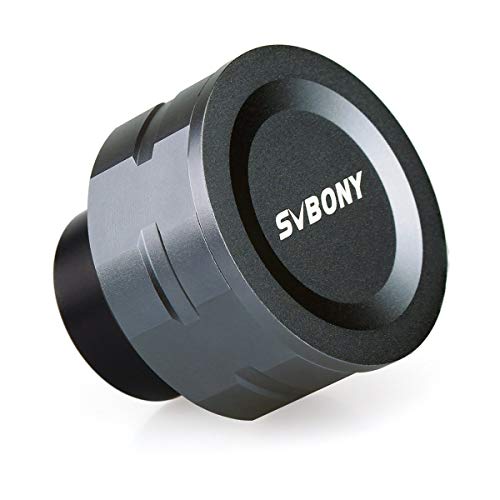
- 1.25-inch IMX307 color CMOS camera
- 1920×1080 video at up to 30 fps
- Plug-and-play support for common computer systems
Best For: Beginners recording the Moon and bright planets
Compact Deep-Sky Guiding Scope
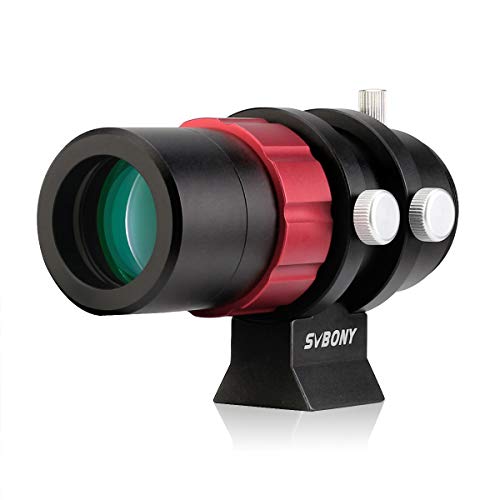
- 30mm f/4 optics with a 2.86-degree field
- 1.25-inch and M42 camera interfaces
- 45mm back focus for focusing flexibility
Best For: Compact autoguiding setups using compatible cameras
High-Resolution Autoguiding Camera

- 20MP AR2020 back-illuminated CMOS sensor
- Built-in autoguiding support for guidescope use
- USB-C, ROI capture, and iCap software included
Best For: Planetary imagers who also need autoguiding capability
Versatile Guide Scope
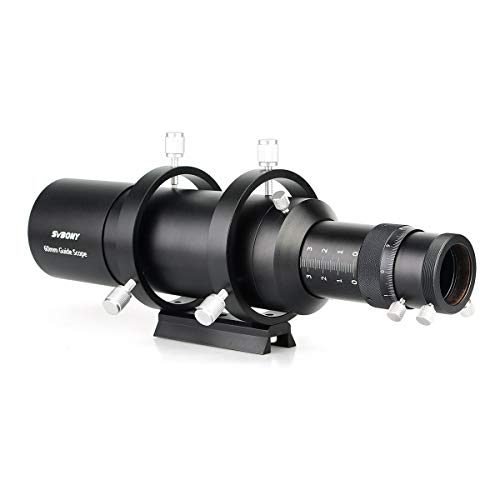
- 8mm helical focuser preserves field orientation
- Up to 35mm of extra back-travel
- Works with guide cameras or finder eyepieces
Best For: Astrophotographers seeking a flexible guide scope and finder in one
Compact Guide Camera
SVBONY SV905C 1.23MP Guide Camera

- 1.23MP color CMOS sensor with 3.75µm pixels
- USB 2.0 and ST4 guiding interfaces
- Fits 1.25-inch guide-scope setups
Best For: Compact autoguiding and planetary imaging setups
Balanced Guiding Setup
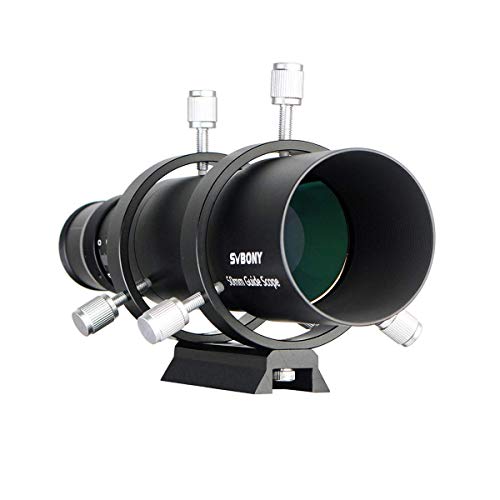
- 8mm lockable helical focuser
- Includes rings and dovetail mounting bar
- Wide 3.4-degree field of view
Best For: Astrophotographers wanting a complete, easy-to-mount 50mm guide scope
Lightweight Wide-Field Setup

- 482g telescope with fast f/2.8 aperture
- 105mm wide-field view for nebulae and star fields
- Includes 30mm guide scope and dovetail base
Best For: Portable backyard or balcony deep-sky imaging
Flexible Mini Guide Scope

- Designed for telescopes up to 700mm focal length
- 1.25-inch and M42 camera interfaces
- Scaled focuser and adjustable six-point guide ring
Best For: Custom guiding rigs using a separate guide camera
Complete Autoguiding Kit
SV905C Camera and SV165 Scope Kit

- Includes 1.23MP camera, guide scope, and dovetail base
- USB 2.0, ST4, and broad guiding-software support
- Designed for deep-sky, planetary, and faint-star tracking
Best For: Beginners wanting an all-in-one autoguiding package
Premium Lightweight Guide Scope – Sky-Watcher EvoGuide 50DX
The Sky-Watcher EvoGuide 50DX is a versatile option for anyone comparing telescope guide cameras for deep sky imaging and needs a capable optical guide scope. Its 50mm f/4.8 apochromatic doublet design, 242mm focal length, and included mounting hardware make it a practical foundation for an autoguiding setup.
Best For: Imagers who want a lightweight, adaptable guide scope that can also support visual observing or astrograph use with an optional adapter.
Pros:
- ED glass and apochromatic doublet optics are designed for contrast-rich views.
- Includes a finder stalk and Vixen-style mounting plate for flexible installation.
- Features a 1.25-inch helical focuser and built-in T-threads.
- Lightweight design is suitable for both astrophotography and visual observing.
Cons:
- An adapter is required to convert it into an astrograph.
- The guide camera is not included.
- Its larger 50mm format may be more scope than a compact setup needs.
With its sturdy mounting options and versatile optical design, the EvoGuide 50DX is a strong choice when you want more flexibility than a basic finder-style guide scope.
Beginner-Friendly Planetary Camera – SVBONY SV105 Telescope Camera
The SVBONY SV105 is an accessible entry point for shoppers browsing telescope guide cameras for deep sky imaging, although its supplied features are primarily aimed at lunar and planetary recording. The 1.25-inch USB camera offers plug-and-play operation, 1080p resolution at up to 30 frames per second, and broad computer compatibility.
Best For: Beginners who want an affordable electronic eyepiece for lunar, planetary, and terrestrial targets, with basic compatibility for guide scopes and telescope filters.
Pros:
- Plug-and-play design requires no driver for basic operation.
- IMX307 color CMOS sensor records up to 1920×1080 at 30 frames per second.
- Standard 1.25-inch format and M28.5×0.6 thread support telescope filters.
- Supports Windows, Linux, and macOS laptop workflows with compatible software.
Cons:
- Its stated strengths are lunar and planetary imaging rather than dedicated deep-sky guiding.
- USB 2.0 connectivity may limit transfer performance.
- Apple phones and tablets running iOS are not supported.
The SV105 makes sense as a low-cost starter camera for bright targets and experimentation, but deep-sky imagers should confirm that its software and guiding performance match their mount and workflow.
Compact Deep-Sky Guiding Scope – SVBONY SV165 Guide Scope
The SVBONY SV165 is a compact choice for telescope guide cameras for deep sky imaging, pairing a 30mm f/4 achromatic optical system with interfaces designed for mainstream autoguiding cameras. Its 45mm back focus and wide 2.86-degree field of view help simplify target acquisition and focusing.
Best For: Astrophotographers building a small autoguiding system around compatible 1.25-inch or M42 cameras from SVBONY, ZWO, QHY, Orion, and similar brands.
Pros:
- Designed to work with mainstream autoguiding cameras through 1.25-inch and M42 interfaces.
- 30mm f/4 optics provide a wide field of view for finding targets.
- 45mm back focus allows straightforward focus adjustment.
- Nylon-tipped thumbscrews help reduce the risk of scratching the tube.
Cons:
- Some camera combinations may require additional focusing accessories.
- It cannot be used with a dielectric mirror star diagonal while maintaining focus.
- As an achromatic mini scope, it is focused on guiding utility rather than premium visual correction.
For a compact deep-sky guiding setup, the SV165 offers useful compatibility and a broad field, provided your camera and mounting arrangement match its stated interfaces and back-focus requirements.
High-Resolution Autoguiding Camera – Celestron NexImage 20
The Celestron NexImage 20 combines high-resolution planetary imaging with built-in autoguiding support, making it a versatile option among telescope guide cameras for deep sky imaging. Its 20MP back-illuminated CMOS sensor, USB-C connection, ROI cropping, and included iCap software support both detailed Solar System capture and guiding through a guidescope.
Best For: Imagers who want one camera for lunar and planetary work plus autoguiding, especially users with a Windows PC and a telescope featuring a 1.25-inch eyepiece holder.
Pros:
- Built-in autoguiding support allows use with a guidescope for deep-sky tracking.
- 20MP AR2020 CMOS sensor captures up to 5240×3840 resolution.
- ROI mode can increase frame rate and reduce file sizes for planetary capture.
- USB-C connectivity and included iCap software simplify computer-based operation.
Cons:
- It is purpose-built primarily for Solar System imaging, so it may not replace a dedicated deep-sky imaging camera.
- Manual focus and exposure control require hands-on setup.
- Compatibility is centered on Windows PCs and 1.25-inch telescope connections.
The NexImage 20 is a particularly flexible pick for astrophotographers who value planetary resolution but also want a built-in route to autoguiding during deep-sky sessions.
Versatile Guide Scope – SVBONY SV106 60mm Guide Scope
For telescope guide cameras for deep sky imaging, the SVBONY SV106 provides a flexible 60mm guide-scope platform with precise helical focusing. Its threaded focuser and extra drawtube travel make it easier to position different autoguider cameras without rotating the field.
Best For: Astrophotographers who want a guide scope that can also serve as a straight-through finder.
Pros:
- Built-in 8mm helical focuser maintains camera orientation while focusing.
- Offers up to 35mm of additional drawtube back-travel.
- Supports threaded guide-camera attachment and 1.25-inch accessories.
- Can function as a finder scope with an optional 1.25-inch eyepiece.
Cons:
- The autoguider camera and eyepiece are not included.
- Its 790g weight may require attention to balance on smaller setups.
The SV106 is a strong choice when focusing flexibility and multi-use functionality matter. Its 60mm optics and broad 2.39-degree field of view provide a practical foundation for guiding and finder duties.
Compact Guide Camera – SVBONY SV905C 1.23MP Guide Camera
Among telescope guide cameras for deep sky imaging, the SVBONY SV905C is a compact 1.25-inch color camera designed for autoguiding and planetary work. Its sensitive CMOS sensor, small pixels, and ST4 interface support compatibility with several common guiding software platforms.
Best For: Users who need a small color guide camera for a 1.25-inch guide scope or off-axis guider.
Pros:
- 1.23MP, 1280×960 color CMOS sensor with 3.75-micron pixels.
- High peak QE and low read noise are suited to faint guide stars.
- Includes USB 2.0 output and an ST4 guide-star interface.
- Supports software including PHD2, MDL, NINA, and SKY-X.
Cons:
- It is not compatible with ASI AIR.
- USB 2.0 limits the interface speed compared with newer standards.
- CS and C-mount lens compatibility may require additional optics for some uses.
The SV905C is a focused, lightweight option for guiding setups that use 1.25-inch accessories. Its software support and ST4 port are useful, but ASI AIR users should choose another camera.
Balanced Guiding Setup – SVBONY SV106 50mm Guide Scope
For telescope guide cameras for deep sky imaging, the SVBONY SV106 50mm combines a compact guide scope with a helical focuser and included mounting hardware. It offers precise adjustment, camera threading, and a wide 3.4-degree field of view for locating guide stars.
Best For: Imaging setups that need a complete 50mm guide scope with rings and a dovetail mounting bar.
Pros:
- 8mm helical focus travel enables fine adjustments and can be locked in place.
- Provides up to 30mm of additional drawtube back-travel.
- Includes two guide-scope rings and a 3.5-inch dovetail mounting bar.
- Male T-threads support secure attachment of compatible guide cameras.
Cons:
- The guide camera is not included.
- Its 1.7-pound weight may be substantial for lightweight mounts.
- Manual focusing requires an initial setup adjustment.
This 50mm model is a practical middle ground for users who want a ready-to-mount guide scope rather than an optical tube alone. The included hardware and wide field simplify aiming, while the helical focuser helps achieve repeatable focus.
Lightweight Wide-Field Setup – SV535 APO Telescope Bundle
For shoppers comparing telescope guide cameras for deep sky imaging, this SVBONY bundle pairs a lightweight 105mm f/2.8 APO astrograph with a 30mm mini guide scope and universal dovetail base. Its wide field and fast aperture suit expansive targets, while the 1.25-inch and M42 interfaces support compatible SV305C Pro, Orion, ZWO, and QHY guiding cameras.
Best For: Backyard or balcony astrophotographers who want a compact, wide-field imaging setup and already own—or plan to add—a compatible guide camera.
Pros:
- Lightweight 482g telescope body for easier portable or small-space use.
- Fast f/2.8 aperture is designed to improve imaging efficiency and capture brighter deep-sky details.
- 105mm focal length provides expansive views of star fields and nebulae.
- Includes the SV165 30mm mini guide scope and universal dovetail base.
Cons:
- The bundle does not appear to include an autoguiding camera.
- Some cameras may require additional focusing accessories.
- It cannot be used with a dielectric mirror star diagonal because it will not focus.
This is a practical choice when wide framing and low weight matter more than a long focal length. Confirm your camera interface and focusing requirements before purchasing.
Flexible Mini Guide Scope – SV165 40mm Guide Scope
Among telescope guide cameras for deep sky imaging accessories, the SVBONY SV165 is a compact 40mm f/4 guide scope designed for telescopes with focal lengths up to 700mm. Its 1.25-inch and M42 interfaces accommodate compatible SV305 Pro, Orion, ZWO, and QHY guide cameras, while the front focuser and adjustable guide ring help with alignment.
Best For: Astrophotographers building a separate guiding system for a short- to medium-focal-length telescope and wanting adjustable focusing and mounting.
Pros:
- Suitable for telescope optical tube assemblies with focal lengths within 700mm.
- Fully multi-coated achromatic optics are designed for clear guide-star views.
- Front focuser includes a scale to make repeat focusing easier.
- Six-point guide ring allows adjustment of guide-scope coaxiality.
Cons:
- This is a guide scope only; a compatible guide camera is required.
- Manual focusing may require setup time.
- If an eyepiece cannot focus, the tube may need to be shortened by removing the red locking ring.
The SV165 makes sense for users who want a dedicated, adjustable guide scope rather than an all-in-one camera package. Check the main telescope’s focal length and camera threading before ordering.
Complete Autoguiding Kit – SV905C Camera and SV165 Scope Kit
For buyers seeking telescope guide cameras for deep sky imaging in one package, this kit combines the SV905C color autoguide camera, SV165 30mm f/4 guide scope, and aluminum dovetail base. The camera offers a 1280×960, 1.23MP CMOS sensor, USB 2.0 and ST4 connections, and compatibility with PHD2, MDL, NINA, and SKY-X guiding software.
Best For: Beginners and amateur astronomers who want a ready-made guiding package for long-exposure deep-sky work, planetary imaging, or faint-star tracking.
Pros:
- Includes the camera, 30mm guide scope, and universal dovetail base.
- 3.75μm pixels, 80% peak QE, and low read noise support faint-star tracking.
- USB 2.0 and ST4 interfaces provide flexible connection options.
- Supports PHD2, MDL, NINA, and SKY-X guiding software.
Cons:
- The SV905C is not compatible with the ASI AIR system.
- The 1.23MP color sensor is a focused guiding solution rather than a high-resolution imaging camera.
- At 630g for the set, it is less lightweight than a guide scope alone.
This is the most complete option of the three for users starting an autoguiding setup. Its software support and ST4 connection are useful, but ASI AIR users should choose a different compatible camera.
How We Picked the Best Telescope Guide Cameras for Deep Sky Imaging
We focused on the factors that matter most during real-world guiding: camera sensor performance, connection format, compatibility with common astronomy software, guide-scope focal length, focusing hardware, mounting convenience, and overall system value. The selection includes standalone cameras, dedicated guide scopes, and bundled kits for beginners who need a more complete setup.
Because these products vary widely, specifications should be considered as a system rather than in isolation. A camera with a modest sensor may still be suitable when paired with a short guide scope and a mount that supports a wide field of view.
Quick Comparison
- Standalone guide cameras: The SV905C and similar 1.25-inch models are compact choices when you already own a compatible guide scope.
- Dedicated guide scopes: The SV165 and SV106 models provide optical guidance hardware, with different aperture and focal-length options.
- Camera and scope bundles: Bundled products simplify matching the camera, guide scope, and dovetail mounting hardware.
- Color and planetary-oriented cameras: Cameras such as the SV105 and NexImage 20 may suit general-purpose observing or planetary work, but verify their guiding-software compatibility before buying.
Key Buying Factors for Telescope Guide Cameras for Deep-Sky Imaging
Sensor Sensitivity and Resolution
Guiding requires reliable star detection, not high-resolution finished images. A sensitive monochrome sensor is often preferred for guiding because it can make faint stars easier to identify, while color cameras may be more versatile for casual observing and planetary imaging. Check the sensor size and pixel scale against your guide scope and imaging telescope.
Guide Scope Focal Length and Aperture
A larger aperture can gather more light, while a longer focal length can improve guiding scale. However, an oversized guide scope adds weight and may increase balance problems. Short 30mm or 40mm models can work well with compact imaging rigs; larger 50mm or 60mm scopes may be more suitable for longer focal lengths or less forgiving mounts.
Focusing and Mounting
A secure mount and repeatable focus are essential. Helical focusers can make fine adjustments easier, while a rigid dovetail or properly spaced mounting rings help prevent flexure. Confirm that the included base fits your telescope, accessory rail, or guide-scope bracket.
Software and Connection Compatibility
Before purchasing, check USB requirements, operating-system support, driver availability, and compatibility with your preferred guiding application. Also verify whether the camera uses the connector and barrel size your setup requires.
Who Should Buy Which Telescope Guide Cameras for Deep Sky Imaging?
Beginners building a first guiding system should consider a camera-and-scope bundle with a dovetail base, since matched components reduce setup uncertainty. Portable astrophotographers should prioritize compact 30mm or 40mm guide scopes and lightweight cameras. Longer-focal-length imagers may benefit from a larger 50mm or 60mm guide scope, provided their mount can handle the added weight. Users who already own a guide scope can save space and money with a standalone 1.25-inch guide camera. Finally, planetary and general-purpose observers should choose a versatile color camera only after confirming that it can also meet their guiding software and sensitivity requirements.