
Portable astronomy setups reward simple, lightweight gear, but choosing the right camera can be difficult when sensor size, connection type, eyepiece fit, and guiding performance all vary.
This roundup compares 10 telescope cameras and guide-scope-compatible options for mobile observers who want dependable alignment, live views, planetary imaging, or entry-level astrophotography without unnecessary bulk.
Best 10 Telescope Guide Cameras for Portable Setups Picks for 2026
Compact Guide Camera
SV905C 1.23MP Autoguiding Camera

- 1.25-inch body for compact guide setups
- ST4 interface and broad software compatibility
- Color CMOS sensor with low read noise
Best For: Lightweight autoguiding and planetary imaging
Portable Telescope System

- 102mm refractor with 660mm focal length
- Computerized tracking and 40,000-plus object database
- SkyAlign supports quick field setup
Best For: Portable visual observing and beginner astronomy
Mini Guide Scope
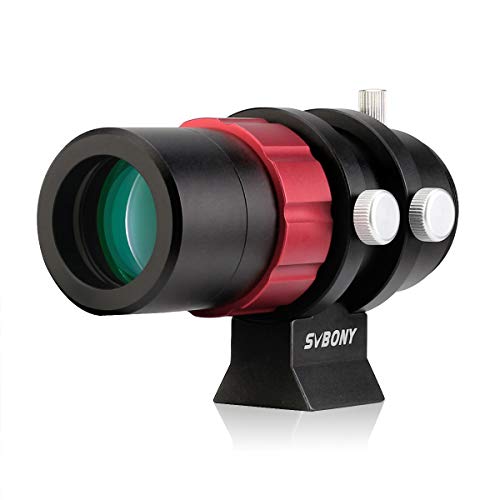
- 30mm aperture and 120mm focal length
- Wide F4 field helps locate targets quickly
- 1.25-inch and M42 camera interfaces
Best For: Compact deep-sky autoguiding systems
Compact Guide Scope

- Supports popular 1.25-inch and M42 guide cameras
- Front focuser has a scale and locking ring
- Designed for telescopes up to 700mm focal length
Best For: Portable guiding rigs with short- to medium-focal-length telescopes
Wireless Travel Camera
Andoer WiFi Electronic Eyepiece
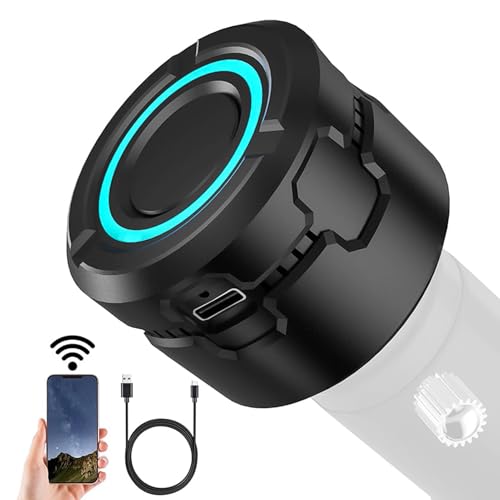
- Fits compatible 1.25-inch telescope focusers
- Streams views to a phone or tablet over WiFi
- Compact 5.3-ounce design with a 1600mAh battery
Best For: Portable viewing, recording, and beginner astrophotography
Guided Beginner Telescope
Celestron StarSense Explorer LT 114AZ
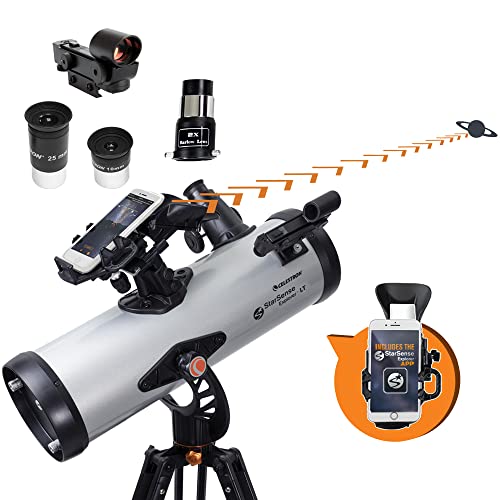
- Uses a smartphone app to locate celestial targets
- Includes a 114mm Newtonian reflector and accessories
- Manual altazimuth mount keeps setup straightforward
Best For: Beginners seeking smartphone-assisted portable observing
Beginner Planetary Pick
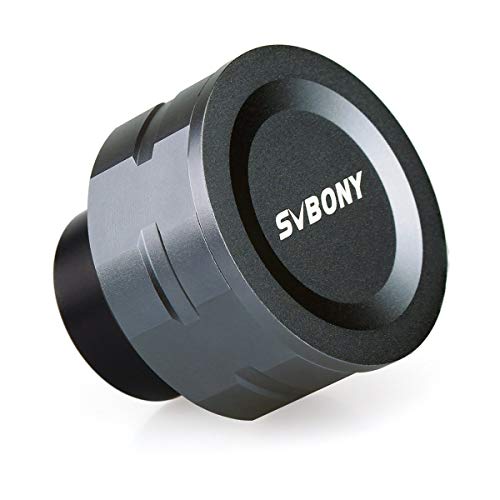
- 1/2.8-inch IMX307 color sensor
- Up to 30 fps at 1920×1080
- 1.25-inch plug-and-play USB design
Best For: Beginners imaging the Moon, planets, and terrestrial targets
Higher-Resolution Portable Option

- 7.05MP IMX415 color sensor
- 2K video at up to 30 fps
- 3264×2160 uncompressed mode
Best For: Portable lunar and planetary imaging with added resolution
Simple Real-Time Viewing
Denash 1.25-inch Telescope Camera

- Standard 1.25-inch telescope fit
- USB real-time laptop or PC viewing
- Designed for lunar and terrestrial targets
Best For: Casual portable viewing and basic planetary recording
Compact Guide Camera – SV905C 1.23MP Autoguiding Camera
For telescope guide cameras for portable setups, the SVBONY SV905C is a compact 1.25-inch option designed for autoguiding and planetary imaging. Its color CMOS sensor, small pixels, and ST4 interface suit lightweight guide-lens or off-axis-guider configurations.
Best For: Portable astrophotographers who need a small, software-compatible color guide camera.
Pros:
- Compact 1.25-inch form factor fits different focal-length guide lenses and OAG setups.
- 1.23MP 1280×960 sensor with 3.75-micron pixels, up to 80% peak QE, and low read noise.
- USB 2.0 and ST4 connectivity supports PHD2, MDL, NINA, SKY-X, and other guiding software.
Cons:
- Not compatible with ASI AIR.
- USB 2.0 is less convenient than newer high-speed interfaces for large transfers.
The SV905C emphasizes low weight and straightforward guiding connections, making it a practical match for portable rigs. Its CS interface and included CS-C adapter ring also add lens flexibility.
Portable Telescope System – Celestron NexStar 102SLT
The NexStar 102SLT is not a guide camera, but it is a compact computerized telescope that can serve as the portable observing platform in a camera-guiding setup. Its 102mm refractor, motorized tracking, and SkyAlign procedure are aimed at quick setup for camping trips and dark-sky excursions.
Best For: Beginners and families wanting a portable computerized telescope for visual observing and future accessory expansion.
Pros:
- Compact design is intended for transport and assembly away from home.
- Computerized mount includes a database of more than 40,000 celestial objects and tracking.
- 102mm refractor and 660mm focal length support views of the Moon, planets, and deep-sky objects.
Cons:
- At 16 pounds, it is substantially heavier than a standalone guide camera or mini guide scope.
- It is a telescope and mount rather than a dedicated guide camera.
- Requires 12 VDC power or eight AA batteries, which are not included.
For shoppers researching telescope guide cameras for portable setups, this model is best understood as the main optical system rather than the guiding accessory. SkyAlign and computerized tracking simplify field use, while the 1.25-inch diagonal provides a standard accessory path.
Mini Guide Scope – SV165 30mm F4 Finder
Among telescope guide cameras for portable setups, the SVBONY SV165 is the compact optical companion that pairs with a separate autoguiding camera. Its 30mm aperture, 120mm focal length, wide field of view, and 45mm back focus are designed to help locate and guide on targets without adding much bulk.
Best For: Portable deep-sky rigs using a compatible 1.25-inch or M42 autoguiding camera.
Pros:
- 30mm F4 optics provide a wide field of view for finding targets quickly.
- Supports mainstream 1.25-inch and M42 guide-camera interfaces, including SVBONY, Orion, ZWO, and QHY models.
- 45mm back focus and nylon-tipped thumbscrews support practical focusing and tube positioning.
Cons:
- A separate guide camera is required.
- Some camera models may need additional focusing accessories.
- It cannot be used with a dielectric mirror star diagonal and will not focus in that configuration.
The SV165 is a sensible way to reduce size and weight in a portable guiding package, especially when paired with a compatible camera. Verify the camera’s focus requirements and mounting hardware before buying.
Wireless Imaging Camera – 4K Universal Eyepiece Camera
This wireless eyepiece camera is geared toward convenient live viewing and recording rather than traditional autoguiding. For telescope guide cameras for portable setups, its built-in battery, WiFi control, screen, and universal locking groove make it appealing to observers who want a self-contained imaging accessory.
Best For: Beginners and outdoor observers who prioritize wireless viewing, recording, and sharing over dedicated autoguiding.
Pros:
- 8MP CMOS sensor supports 4K video and high-resolution image capture.
- Built-in 2000mAh battery, USB charging, and support for microSD cards up to 512GB suit field use.
- Universal groove fits eyepieces from 23mm to 60mm and supports WiFi app control within a stated 32-foot range.
Cons:
- The supplied notes do not identify an ST4 guiding interface or compatibility with guiding software.
- Manual focus may require more hands-on adjustment.
- Its universal eyepiece mount is less specialized than a dedicated autoguiding camera and guide-scope pairing.
The camera’s screen, app features, and battery make it convenient for portable electronic observation. However, shoppers seeking reliable mount guiding should confirm software and interface support before treating it as a guide-camera replacement.
Compact Guide Scope – SVBONY SV165 40mm Guide Scope
For portable setups using telescope guide cameras, the SVBONY SV165 is a compact 40mm guide scope designed for optical tubes with focal lengths up to 700mm. Its 1.25-inch and M42 interfaces support several popular guiding cameras, while the front focuser and included T2 extension tubes help with focusing.
Best For: Portable astrophotography rigs pairing a guide camera with a short- to medium-focal-length telescope.
Pros:
- Compatible with SV305 Pro, Orion, ZWO, QHY, and similar guide cameras.
- Fully multi-coated achromatic optics provide clear viewing.
- Front focuser includes a scale and locking ring for repeatable focus.
- Adjustable six-point guide ring helps align the guide scope with the main telescope.
Cons:
- Recommended for telescope focal lengths within 700mm.
- Manual focusing may require setup adjustments; if an eyepiece cannot focus, the tube may need to be shortened by removing the red locking ring.
At 450g and 16cm long, the SV165 adds relatively little bulk to a travel-oriented rig. Its broad camera compatibility and alignment hardware make it a practical dedicated guide scope, provided your main telescope falls within its recommended focal-length range.
Wireless Travel Camera – Andoer WiFi Electronic Eyepiece
The Andoer WiFi Electronic Eyepiece is a lightweight option for portable setups and telescope guide cameras when the goal is live viewing or simple recording rather than traditional autoguiding. Its 1.25-inch barrel fits compatible telescopes, and WiFi lets a phone or tablet display and capture the view.
Best For: Beginners and travelers who want a compact telescope camera for smartphone viewing, astrophotography, or bird watching.
Pros:
- Works with telescopes accepting a 1.25-inch eyepiece barrel.
- Connects directly to a smartphone or tablet over WiFi.
- Supports real-time viewing, image capture, and video recording.
- Built-in 1600mAh battery recharges through the included Type-C cable.
Cons:
- It is an electronic eyepiece camera, not specifically described as an autoguiding camera.
- Requires a compatible smartphone or tablet for wireless viewing and control.
At 5.3 ounces with a compact design, the Andoer is easy to carry in a backpack. It suits casual portable imaging and observation, but users building a dedicated tracking system should confirm that its intended camera functions meet their guiding requirements.
Guided Beginner Telescope – Celestron StarSense Explorer LT 114AZ
The Celestron StarSense Explorer LT 114AZ is a complete portable telescope rather than a standalone guide camera. For newcomers comparing telescope guide cameras for portable setups, its key advantage is smartphone-assisted navigation: the StarSense Explorer app uses the phone to help locate targets through the manual altazimuth mount.
Best For: Beginners who want a portable, smartphone-guided telescope for observing the Moon, planets, and brighter deep-sky objects.
Pros:
- StarSense technology uses sky recognition to help locate celestial targets.
- 114mm Newtonian reflector provides views of the Moon, planets, Orion Nebula, and Andromeda Galaxy.
- Includes 25mm and 10mm eyepieces, a 2x Barlow lens, mount, and tripod.
- Includes a two-year warranty and unlimited support from Celestron.
Cons:
- It is a complete manual telescope system, not a dedicated guide-camera or autoguiding package.
- The smartphone must be docked and used with the StarSense Explorer app for guided navigation.
- At 10.4 pounds with a 24-inch optical tube, it is less compact than a standalone camera or guide scope.
The LT 114AZ is best viewed as a portable observing platform with smartphone guidance, not as an accessory for an existing imaging rig. Its included mount and optics make it a convenient beginner package, while the manual altazimuth design keeps operation straightforward.
Beginner Planetary Pick – SVBONY SV105
For shoppers comparing telescope guide cameras for portable setups, the SVBONY SV105 is a straightforward 1.25-inch USB option for lunar, planetary, and terrestrial viewing. Its compact body, plug-and-play design, and laptop or PC connectivity make it approachable for first-time astrophotography.
Best For: Beginners who want to record the Moon, bright planets, and terrestrial targets with a portable telescope setup.
Pros:
- 1/2.8-inch IMX307 color sensor records up to 30 fps at 1920×1080.
- Plug-and-play USB operation with support for Windows, Linux, Android, and MacOS laptops.
- Standard 1.25-inch barrel with M28.5×0.6 threading for telescope filters.
- Dark-light compensation can improve clarity in low-light conditions.
Cons:
- Designed primarily for lunar, planetary, and terrestrial targets rather than deep-space imaging.
- Requires capture software such as SharpCap, AstroDMx Capture, or USB Camera depending on the operating system.
- Not compatible with Apple phones or tablets.
The SV105 keeps the setup simple and portable, especially for beginners focused on bright targets. Its 1080p output and broad computer compatibility make it a practical entry-level choice.
Higher-Resolution Portable Option – SVBONY SV205
The SVBONY SV205 stands out among telescope guide cameras for portable setups when higher-resolution capture is a priority. Its 7.05MP IMX415 color sensor supports 2K video and can also provide a higher-resolution uncompressed mode for lunar and planetary recording.
Best For: Portable observers who want more detailed lunar and planetary video from a 1.25-inch telescope connection.
Pros:
- 7.05MP IMX415 color sensor with 1.45µm pixels.
- Records up to 30 fps at 1920×1080 in MJPG mode.
- Supports 3264×2160 YUV uncompressed video at up to 15 fps.
- Includes a USB 3.0 cable, dust cover, and cleaning cloth.
Cons:
- Uses a 1.25-inch interface, so an adapter may be needed if the telescope does not match.
- Focused on lunar and planetary imaging rather than deep-space work.
- MacOS laptops require AstroDMx Capture, and Apple phones and tablets are not supported.
With its compact form and multiple video modes, the SV205 offers more resolution flexibility than a basic planetary camera. It is a good fit when portability matters but you still want room for detailed captures.
Simple Real-Time Viewing – Denash 1.25-inch Telescope Camera
For a basic entry point into telescope guide cameras for portable setups, this Denash electronic eyepiece emphasizes real-time USB viewing. It fits a standard 1.25-inch focuser or step-down adapter and sends the telescope view to a laptop or PC for sharing and recording.
Best For: Casual lunar, planetary, and bird-watching sessions where simple computer viewing is more important than advanced imaging.
Pros:
- Fits 1.25-inch telescope focusers or 1.25-inch step-down adapters.
- USB-powered real-time viewing and data transmission to a laptop or PC.
- Suitable for lunar, planetary, and terrestrial targets.
- Compact design is convenient for portable telescope use.
Cons:
- Not suitable for deep-space imaging.
- Manual focusing requires adjustment through the telescope setup.
- Supplied notes do not specify sensor resolution or frame rate.
This camera is best considered a simple electronic eyepiece rather than a feature-rich astrophotography system. Its standard fit and real-time computer viewing make it useful for quick, portable observing sessions.
How We Picked the Best Telescope Guide Cameras for Portable Setups
We focused on equipment that suits compact, travel-friendly telescope rigs, including dedicated guide cameras, electronic eyepieces, and small imaging cameras. We considered optical compatibility, sensor specifications, connection methods, portability, ease of setup, and the type of observing each product supports. Because a guide scope and a guide camera serve different roles, the comparison includes both complete guide-scope options and camera-only products that may pair with an existing scope.
Specifications such as resolution and video quality are useful, but they do not tell the whole story. Guiding benefits from sensitivity, reliable computer connectivity, suitable software support, and a field of view that makes it easy to find guide stars. For portable systems, low weight and minimal cabling also matter.
Quick Comparison
| Best For | Look For | Recommended Type |
|---|---|---|
| Basic guiding | Compact size, USB connectivity, sensitive sensor | Dedicated guide camera |
| Live viewing | Wireless operation or real-time video | Electronic eyepiece camera |
| Planetary imaging | Higher resolution and video recording | Color astronomy camera |
| Travel simplicity | Low weight and fewer accessories | Integrated guide scope and camera setup |
Key Buying Factors for Portable Telescope Guide Cameras
Compatibility and Mounting
Check whether the camera uses a 1.25-inch barrel, a 2-inch format, or a separate guide-scope mount. Confirm that your telescope, guide scope, diagonal, and focuser can accommodate the camera without creating balance or clearance problems.
Sensor and Guiding Performance
A larger megapixel count does not automatically make a camera better for guiding. Sensitivity, exposure control, frame rate, and software compatibility are often more important. Monochrome sensors can be especially useful for guide-star detection, while color models are convenient for casual viewing and planetary work.
Connection and Power
USB cameras generally provide a straightforward wired connection to a laptop or control device. Wireless models can reduce cable clutter but may introduce setup, range, or app-compatibility considerations. Verify operating-system and astronomy-software support before buying.
Weight and Field of View
Portable mounts have limited payload capacity. Keep the camera and guide scope as light as possible, and consider the focal length of the guide scope when judging the available field of view. A forgiving field makes star acquisition easier during outdoor setup.
Who Should Buy Which Telescope Guide Cameras for Portable Setups?
Choose a dedicated guide camera and compact guide scope if your priority is autoguiding long exposures on a portable equatorial mount. Select a simple electronic eyepiece if you mainly want remote or real-time viewing with minimal setup. Higher-resolution telescope cameras are better suited to planetary imaging, lunar detail, and general experimentation than to guiding alone.
For beginners, prioritize plug-and-play compatibility, manageable weight, and dependable software over headline resolution. Experienced users should compare sensor sensitivity, mounting options, exposure controls, and the camera’s compatibility with their preferred guiding platform. The best Telescope Guide Cameras for Portable Setups are the ones that match your mount, scope, software, and observing goals without adding more complexity than your travel kit can handle.