
Choosing the right guide camera for a refractor telescope can make the difference between inconsistent tracking and reliably sharp astrophotography. The best setup balances sensor sensitivity, optical compatibility, mounting, focusing, and software support.
Our roundup covers dedicated guide cameras, guide scopes, and complete refractor telescope options, including compact choices for portable rigs and larger systems for more demanding imaging.
Best 10 Telescope Guide Cameras for Refractor Telescopes Picks for 2026
Best Lightweight Guide Scope

- 50mm ED doublet with 242mm focal length
- Includes finder stalk and Vixen-style rail
- 1.25-inch helical focuser and optional astrograph use
Best For: Compact, adaptable refractor autoguiding setups
Best Compact Guide Camera

- 1.23MP color CMOS sensor at 1280x960
- ST4 and USB 2.0 connectivity
- 1.25-inch body for guide scopes and OAGs
Best For: Compact autoguiding and planetary imaging
Best Helical-Focus Guide Scope

- 60mm aperture with 240mm focal length
- Built-in worm-driven helical focuser
- Includes rings, dovetail, and T-threaded focuser collar
Best For: Flexible, precisely focused guide-scope setups
Compact Guide Scope
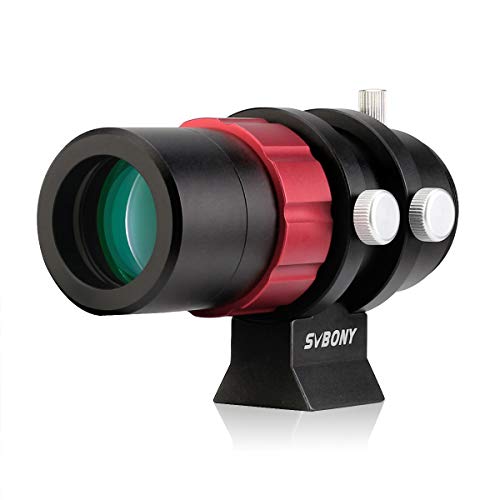
- 30mm f/4 optics with a wide 2.86-degree field
- 45mm back focus for manual adjustment
- 1.25-inch and M42 interfaces for compatible cameras
Best For: Compact refractor guiding setups with compatible cameras
Long-Focal-Length Guide Scope
Astromania 70mm Deluxe Finder Scope
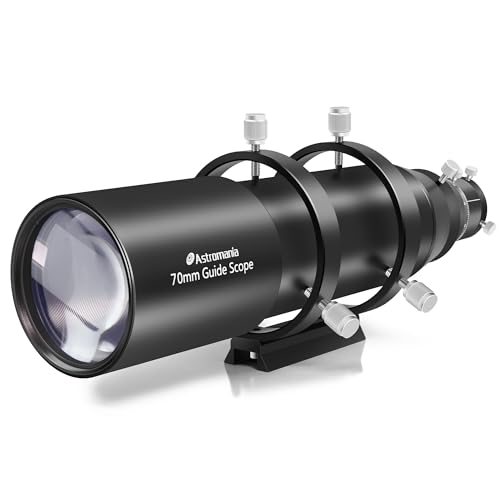
- 70mm aperture and 400mm focal length
- Helical worm focuser with compression ring
- Supports 1.25-inch eyepieces and guide cameras
Best For: Larger refractor rigs needing a bright, manually focused guide scope
Best App-Guided Upgrade

- 102mm refractor for brighter, sharper views
- StarSense smartphone sky recognition
- Dual-axis slow-motion manual controls
Best For: Beginners wanting guided navigation and more aperture
Best Lightweight Guide Scope – Sky-Watcher EvoGuide 50DX
For anyone comparing telescope guide cameras for refractor telescopes, the Sky-Watcher EvoGuide 50DX is a lightweight 50mm guide-scope platform with a 242mm focal length. Its ED doublet optics, included mounting options, and 1.25-inch helical focuser make it a practical foundation for autoguiding or visual finder use.
Best For: Astrophotographers who want a compact, adaptable guide scope for a refractor setup.
Pros:
- ED glass doublet is designed for contrast-rich views.
- Includes a finder stalk and Vixen-style mounting plate.
- Built-in T-threads support conversion to a fast astrograph with an optional adapter.
- Lightweight 50mm design is easy to mount.
Cons:
- The astrograph adapter is not included.
- A guide camera must be purchased separately.
The EvoGuide 50DX is a strong choice when low weight and flexible mounting matter. Its 242mm focal length and helical focuser provide a useful match for a range of guide-camera setups, while the included accessories simplify installation.
Best Compact Guide Camera – SVBONY SV905C Guide Camera
The SVBONY SV905C is a compact color guide camera to consider when choosing telescope guide cameras for refractor telescopes. It uses a 1.23-megapixel, 1280×960 CMOS sensor with 3.75-micron pixels, USB 2.0 output, and an ST4 guide port for compatible autoguiding software.
Best For: Users seeking a small color camera for autoguiding or planetary imaging.
Pros:
- 1/3-inch CMOS sensor offers 1280×960 resolution.
- Small 3.75-micron pixels and stated 80% peak QE support guide-star detection.
- Includes USB 2.0 and ST4 interfaces.
- 1.25-inch body fits different guide lenses and off-axis guiders.
Cons:
- Not compatible with ASI AIR.
- Requires downloading the latest driver software.
- CS interface and adapter flexibility may require additional lenses or accessories.
With its small 1.25-inch form factor and ST4 connectivity, the SV905C is easy to consider for compact refractor guide systems. Check software compatibility before buying, particularly if your imaging workflow depends on ASI AIR.
Best Helical-Focus Guide Scope – Astromania 60mm Finder Scope
The Astromania 60mm guide scope is a versatile option for telescope guide cameras for refractor telescopes, combining a 240mm focal length with a built-in helical focuser. It includes rings, a dovetail mounting bar, and male T-threads for direct attachment of compatible guide cameras.
Best For: Astrophotographers who value precise manual focusing and flexible mounting.
Pros:
- 60mm aperture and 240mm focal length suit guiding and finder use.
- Helical focuser provides fine adjustments and helps prevent camera rotation.
- Includes guide rings, dovetail bar, and Synta-style mounting plate.
- Male T-threads support direct connection to cameras with female T-threads.
Cons:
- Its included hardware can add weight to a refractor setup.
- Manual focusing requires user adjustment.
- The supplied notes do not specify a guide camera.
The Astromania stands out for its focusing and mounting flexibility. Its 45mm total focusing range, threaded focuser collar, and adjustable rings make it a practical choice for users building a stable, manually focused guiding package.
Best Imaging Refractor Platform – SVBONY SV503 70mm ED Refractor
The SVBONY SV503 is a 70mm ED refractor with a built-in field flattener, making it a broader imaging platform to pair with telescope guide cameras for refractor telescopes. Its 474mm focal length, 2-inch dual-speed focuser, and included mounting hardware are aimed at astrophotography as well as visual observing.
Best For: Users building an imaging refractor system that can accept a guide telescope or guide camera accessory.
Pros:
- Built-in field flattener is designed to reduce edge curvature without a separate flattener.
- 70mm ED optics and full broadband anti-reflection coating support clear views.
- Dual-speed focuser allows coarse and fine adjustments.
- Includes a dovetail plate, metal clamp, and 2-inch-to-1.25-inch adapter.
Cons:
- This is an imaging refractor, not a dedicated guide camera.
- Its 2.69 kg weight may require careful mount-capacity planning.
- A separate guide scope and camera may still be needed for autoguiding.
The SV503 makes the most sense as the primary refractor in a guided astrophotography rig rather than as the guide device itself. Its flat-field design and dual-speed focuser reduce accessory complexity, while the included mounting hardware helps establish a solid starting setup.
Compact Guide Scope – SVBONY SV165 30mm Guide Scope
For users comparing telescope guide cameras for refractor telescopes, the SVBONY SV165 is a compact manual-focus guide scope designed to pair with mainstream autoguiding cameras. Its 30mm aperture, 120mm focal length, wide field of view, and 45mm back focus are suited to locating guide stars and framing targets.
Best For: Compact refractor setups using compatible 1.25-inch or M42 autoguiding cameras, including select SV305C Pro, ZWO, QHY, and Orion models.
Pros:
- 30mm f/4 optics provide a wide 2.86-degree field of view for finding targets and guide stars.
- Fully multi-coated achromatic optics are designed to provide bright, clear images.
- Includes mounting rings with nylon-tipped thumbscrews to help protect the optical tube.
- 45mm back focus allows precise manual focus adjustment.
Cons:
- Manual focus may require additional focusing accessories for some camera models.
- It cannot be used with a dielectric mirror star diagonal and will not focus in that configuration.
- The scope is intended for compatible cameras and may require checking the interface before purchase.
The SV165 is a practical choice when low weight and a broad guide field matter more than a larger aperture. Confirm your camera connection and focusing requirements before adding it to a refractor rig.
All-in-One Digital Refractor – FASHIONARI 80mm Smart Telescope
Among telescope guide cameras for refractor telescopes, this product takes a different approach: it combines an 80mm refractor-style optical system with an integrated digital camera. The auto-focus design, dual screens, and photo and video modes make it a self-contained option for beginners rather than a conventional add-on guide scope.
Best For: Beginners who want an integrated digital refractor for viewing and recording rather than a separate autoguiding-camera and guide-scope setup.
Pros:
- 80mm objective and 300mm focal length are specified for bright, high-resolution viewing.
- Integrated camera supports claimed 4K photos and videos without a phone adapter.
- Auto-focus, dual displays, and adjustable diopter compensation simplify operation.
- 4500mAh battery is rated for up to six hours of continuous runtime.
Cons:
- It is not described as a conventional standalone guide scope or separate autoguiding camera.
- Its all-in-one design offers less modularity than a refractor paired with dedicated guiding accessories.
- The product notes contain inconsistent dimensional information, so buyers should verify the physical specifications.
This FASHIONARI model is better viewed as a portable digital observing and imaging system than as a traditional guide-camera accessory. Choose it if integrated operation is the priority and verify that it fits your intended astrophotography workflow.
Long-Focal-Length Guide Scope – Astromania 70mm Deluxe Finder Scope
For refractor owners evaluating telescope guide cameras for refractor telescopes, the Astromania 70mm guide scope offers a larger aperture and 400mm focal length than compact mini guide scopes. Its wide-field optics, 1.25-inch compatibility, and helical focuser support both visual finding and use with an autoguiding camera.
Best For: Astrophotographers who want a substantial guide-and-finder scope with manual focusing and a longer focal length.
Pros:
- 70mm optics and 400mm focal length provide a bright, wide-field view for locating guide stars.
- Built-in worm-driven helical focuser offers fine adjustment and helps prevent camera or eyepiece rotation.
- Accepts 1.25-inch eyepieces and is compatible with autoguiding cameras.
- Includes pipe clamps, a Synta-style mounting plate, and an adjustable dovetail bracket.
Cons:
- At approximately 2.5 pounds, it is considerably heavier than a compact mini guide scope.
- Manual focusing requires setup and adjustment rather than automatic focusing.
- The longer, larger optical tube may demand careful attention to mounting capacity and balance.
The Astromania is a strong fit when focal length, aperture, and focusing control are more important than minimizing payload. Its included mounting hardware can simplify installation, but balance the refractor setup around its listed weight.
Best App-Guided Upgrade – StarSense Explorer DX 102AZ
For shoppers comparing telescope guide cameras for refractor telescopes, the Celestron StarSense Explorer DX 102AZ takes a different approach: it uses a smartphone dock and sky-recognition app to guide manual pointing. Its 102mm refractor and dual-axis slow-motion controls make it a capable choice for beginners who want guided navigation without a motorized mount.
Best For: Beginners and families who want smartphone-guided navigation with stronger Moon, planet, and bright deep-sky performance.
Pros:
- StarSense app analyzes star patterns and provides on-screen directions to targets.
- Larger 102mm aperture with fully XLT-coated glass supports sharp, vivid views.
- Dual-axis slow-motion controls help with manual positioning and tracking.
- Includes 25mm and 10mm eyepieces, a phone dock, tripod, and StarPointer finderscope.
Cons:
- Manual operation requires users to adjust the mount themselves.
- At 14.2 pounds, it is less portable than smaller beginner refractors.
The DX 102AZ is a strong all-around pick when app-assisted locating matters as much as optical size. It offers more aperture than the smaller Celestron model while retaining a beginner-friendly setup and a two-year US warranty.
Best Lightweight Phone-Ready Pick – 70mm FMC Beginner Refractor
Among telescope guide cameras for refractor telescopes, this ToyerBee package emphasizes simple phone capture rather than app-based sky recognition. The 70mm fully multi-coated refractor includes a universal phone adapter, wireless camera remote, and lightweight tripod for casual Moon, planet, daytime, and travel use.
Best For: Kids, families, and beginners who want an affordable, portable telescope with basic smartphone photography accessories.
Pros:
- 70mm aperture and fully multi-coated optics are designed for day and night viewing.
- Includes a phone adapter and wireless remote for photos and videos with less shake.
- Two eyepieces and a 3X Barlow lens provide listed magnifications from 15X to 150X.
- Lightweight 3.5-pound design suits camping, road trips, and backyard use.
Cons:
- Its manual mount does not provide the smartphone sky-recognition guidance found on the Celestron models.
- The included accessories are aimed at entry-level use rather than advanced imaging.
This is a practical starter kit for buyers who prioritize portability and phone snapshots. The included finder, star chart, adapter, and remote make it easy to begin, though expectations should remain focused on casual viewing and simple captures.
Best Compact App-Guided Starter – StarSense Explorer LT 80AZ
For anyone researching telescope guide cameras for refractor telescopes, the Celestron StarSense Explorer LT 80AZ offers smartphone-assisted target finding in a lighter, smaller package. Its StarSense dock uses the phone’s camera and sky-recognition technology to direct users toward celestial objects, while the 80mm refractor is suited to Moon, planet, and bright deep-sky viewing.
Best For: First-time observers, children, and families who want guided celestial navigation in a relatively lightweight telescope.
Pros:
- StarSense app provides on-screen arrows and a location-based list of recommended targets.
- 80mm refractor offers clear views of the Moon, planets, Orion Nebula, and Andromeda Galaxy.
- Preassembled manual altazimuth mount and tripod simplify initial setup.
- Includes 25mm and 10mm eyepieces, a 2X Barlow lens, phone dock, and red-dot finderscope.
Cons:
- Manual mount requires hand adjustment and altitude slow-motion control.
- Its 80mm aperture gathers less light than the DX 102AZ.
The LT 80AZ is a sensible entry point for users who want the convenience of app-guided locating without moving to a larger, heavier telescope. It balances guided discovery, family-friendly operation, and included accessories at a compact scale.
How We Picked the Best Telescope Guide Cameras for Refractor Telescopes
We evaluated these Telescope Guide Cameras for Refractor Telescopes by looking at the parts that matter during real observing and imaging sessions: sensor performance, guide-scope optics, focal length, aperture, focusing control, mounting convenience, compatibility with common astrophotography software, and overall versatility. We also considered whether each option suits beginners, portable setups, or more advanced equatorial-mount systems.
Not every product listed is a standalone guide camera. Some are guide scopes, complete refractors, or beginner-friendly digital telescope systems that may be useful when building a broader imaging setup. Check the product specifications carefully before assuming a camera, mount, or adapter is included.
Quick Comparison
| Best For | What to Prioritize | Typical Advantage |
|---|---|---|
| Portable guiding | Small aperture and low weight | Easy balancing and fast setup |
| Beginner astrophotography | Simple focusing and software support | Shorter learning curve |
| Faint deep-sky targets | Sensitive monochrome or low-noise sensor | More usable guide stars |
| Flexible visual and imaging use | Longer focal length and quality optics | Better framing and multi-use capability |
Key Buying Factors for Telescope Guide Cameras for Refractor Telescopes
Sensor and Connection
Look for a camera with adequate sensitivity, low read noise, and a connection supported by your imaging computer or controller. Monochrome sensors are often favored for guiding because they maximize sensitivity, while color models can be more convenient for basic imaging and electronic observing. Confirm USB requirements and whether the camera works with your preferred guiding software.
Guide-Scope Focal Length and Aperture
A guide scope must provide enough image scale for your mount and main telescope. Short, wide-field models are lightweight and usually make star acquisition easy, but they may be less precise with long-focal-length imaging systems. A larger or longer guide scope can improve resolution, though it adds weight and may make balancing more difficult.
Focusing and Mounting
Helical focusers, secure thumbscrews, and rigid mounting rings can prevent flexure and make calibration easier. Avoid relying on a loose finder shoe for a heavy camera. The guide scope should be firmly attached to the telescope rather than mounted through a flexible or unstable accessory.
Compatibility and Back Focus
Check whether the camera uses a 1.25-inch nosepiece, C-mount, or another fitting, and verify that the guide scope can reach focus with that camera. Also confirm the mount has an available guide port or works through the computer connection used by your guiding application.
Who Should Buy Which Telescope Guide Cameras for Refractor Telescopes?
Choose a compact guide scope and camera if you want a lightweight travel rig, use a small refractor, or are learning autoguiding. These systems are generally easier to balance and quicker to focus.
Choose a larger guide scope if your main refractor has a longer focal length, your mount supports the extra weight, or you regularly image smaller deep-sky targets. Prioritize rigidity and focusing precision over maximum portability.
Choose a complete digital or beginner refractor system if simplicity matters more than building a modular astrophotography rig. These products can be convenient for visual observing and guided exploration, but they may offer less flexibility than a dedicated camera-and-scope combination.
Before buying, match the guide camera to your mount, main telescope, available software, and intended targets. A modest, well-balanced system with reliable focus often performs better than a larger setup that is difficult to mount or configure.