
Finding reliable telescope guide cameras under $100 can make entry-level astrophotography more accessible without committing to expensive dedicated equipment. This roundup covers compact cameras, wireless eyepieces, and compatible guide scopes for visual observing and basic tracking.
Before choosing, consider your telescope’s focuser size, connection method, sensor resolution, and whether you need a camera alone or a complete guide-scope setup.
Best 10 Telescope Guide Cameras Under 100 Picks for 2026
Beginner Planetary Camera
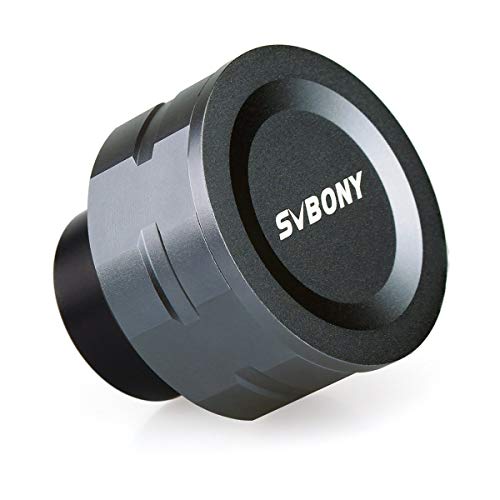
- 1080p video at up to 30 fps
- 1.25-inch USB color camera
- Beginner-friendly lunar and planetary imaging
Best For: Beginners recording the Moon and bright planets
Heavy-Duty Autoguiding Scope

- 60mm aperture with 240mm focal length
- Helical focuser helps prevent camera rotation
- Includes rings and Synta-style mounting bar
Best For: Astrophotographers assembling a complete guide-scope platform
High-Resolution Planetary Camera

- 7.05MP IMX415 color sensor
- 2K video at up to 30 fps
- 1.25-inch interface with USB 3.0 cable
Best For: Higher-resolution lunar and planetary video
Multi-Use Guide Scope
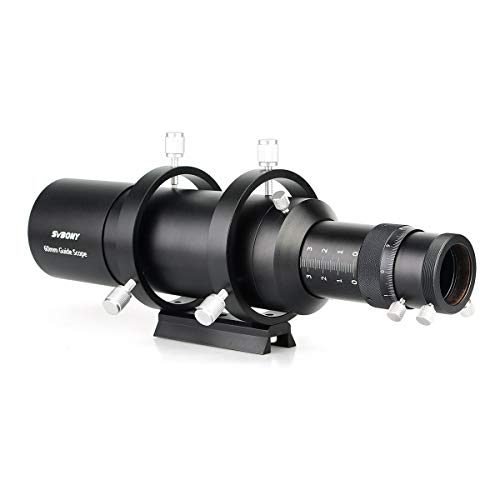
- 60mm aperture and 240mm focal length
- Non-rotating helical focuser
- Works with T-threaded cameras or 1.25-inch eyepieces
Best For: Users needing both autoguiding and finder-scope use
Best Wireless Eyepiece Camera
Koolpte 1080P WiFi Telescope Camera

- 1080p live viewing and 30-fps recording
- 10m WiFi with multi-device support
- 1.25-inch fit and USB-C charging
Best For: Beginners and families sharing telescope views on phones
Best Dedicated Guide Scope
SVBONY SV165 40mm Mini Guide Scope

- Supports telescope focal lengths up to 700mm
- Works with several 1.25-inch and M42 guide cameras
- Front focuser and adjustable six-point guide ring
Best For: Astrophotographers assembling a compact guiding system
Best Long-Battery Wireless Eyepiece
Andoer WiFi Electronic Telescope Camera
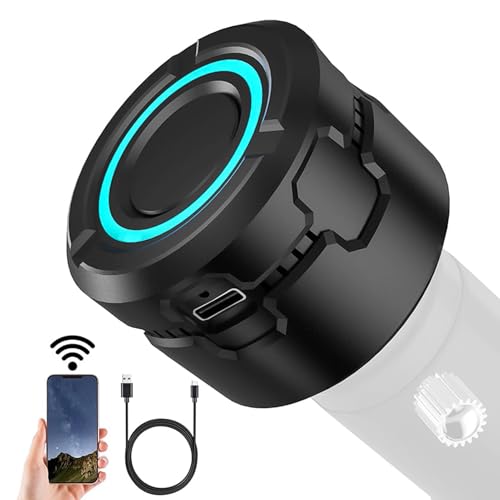
- Wireless viewing, photos, and video on mobile devices
- Built-in 1600mAh battery with Type-C charging
- Compact 5.3-ounce design for travel
Best For: Portable observing and casual astrophotography
Best Budget Guide Scope
SVBONY SV165 30mm Mini Guide Scope
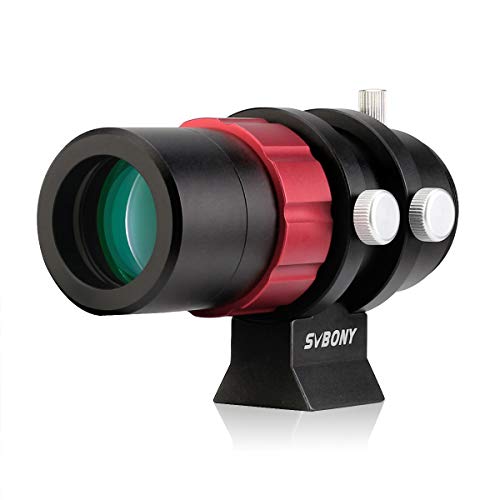
- 30mm aperture with 120mm focal length
- 45mm back focus for easier focusing
- Compatible with several mainstream guide cameras
Best For: Budget guiding setups that need a compact guide scope
Best Wireless Telescope Camera
SVBONY SC002 1080P Electronic Eyepiece

- Fits eyepieces from 37–56mm
- 1080p recording with 3x digital zoom
- Wi-Fi live view for Android and iOS devices
Best For: Wireless observing and casual telescope recording
Best Dedicated Autoguiding Camera
SVBONY SV905C 1.23MP Guide Camera

- 1280x960 color CMOS sensor
- USB 2.0 and ST4 guide interfaces
- 1.25-inch body for guide scopes or OAGs
Best For: Computer-assisted autoguiding and planetary imaging
Beginner Planetary Camera – SVBONY SV105
For shoppers comparing telescope guide cameras under 100, the SVBONY SV105 is a straightforward USB camera for starting with lunar and planetary imaging. Its 1.25-inch barrel connects directly to compatible telescopes, while plug-and-play operation makes computer-based viewing simple.
Best For: Beginners who want to record the Moon, bright planets, and terrestrial targets.
Pros:
- 1920×1080 video at up to 30 frames per second
- 1/2.8-inch IMX307 color CMOS sensor with low-light compensation
- Plug-and-play USB connection with Windows, Linux, Android, and macOS laptop compatibility
- 1.25-inch threaded barrel supports telescope filters
Cons:
- Designed primarily for lunar and planetary imaging rather than deep-sky work
- Requires separate capture software on supported computer systems
- Not compatible with Apple phones or tablets
The SV105 keeps the setup uncomplicated and offers useful video performance for bright targets. It is a sensible entry point if you want an affordable electronic eyepiece rather than a more specialized autoguiding camera.
Heavy-Duty Autoguiding Scope – Astromania 60mm Guide Scope
Among telescope guide cameras under 100, this Astromania model is a guide scope rather than a camera, so it is intended to pair with a compatible autoguider. Its 60mm optics, 240mm focal length, helical focuser, rings, and mounting bar create a more complete guiding setup.
Best For: Astrophotographers building a rigid guide-scope system for telescopes up to about 1500mm focal length.
Pros:
- 60mm aperture and 240mm focal length provide a wide 2.7-degree field
- Helical focuser enables precise adjustment without rotating the camera or eyepiece
- Includes guide rings, Teflon inlays, and a Synta-style dovetail mounting plate
- Male T-threads allow direct attachment of compatible guide cameras
Cons:
- Does not include an autoguider camera
- Manual focusing and mounting require initial setup and adjustment
- Its heavier metal construction may add weight to a portable rig
This is a practical choice when you need the optical and mechanical foundation for autoguiding. The included hardware and long focusing range make it more setup-ready than a bare guide tube, but you still need a compatible camera.
High-Resolution Planetary Camera – SVBONY SV205
The SVBONY SV205 is a strong option for shoppers comparing telescope guide cameras under 100 who prioritize higher-resolution lunar and planetary video. Its 7.05MP IMX415 color sensor supports 2K recording at up to 30 frames per second in MJPG mode and connects through a 1.25-inch telescope interface.
Best For: Users capturing detailed Moon, planet, and terrestrial video through a laptop or PC.
Pros:
- 7.05MP 1/2.8-inch IMX415 color CMOS sensor
- Up to 30 fps at 1920×1080 in MJPG mode
- Can record up to 3264×2160 at 15 fps using YUV format
- Includes a USB 3.0 cable, dust cover, cleaning cloth, and manual
Cons:
- Primarily suited to lunar and planetary imaging, not described as a deep-sky guider
- Requires suitable capture software and a compatible telescope interface
- Not compatible with Apple phones or tablets
Choose the SV205 when resolution and flexible video formats matter more than the simplest possible specification. It offers a capable 1.25-inch camera platform for bright targets and real-time computer viewing.
Multi-Use Guide Scope – SVBONY SV106 60mm Guide Scope
The SVBONY SV106 is a versatile guide scope for telescope guide cameras under 100, combining a 60mm aperture with a 240mm focal length and built-in helical focusing. It can hold a compatible autoguider through its T-threaded collar or serve as a straight-through finder with an optional 1.25-inch eyepiece.
Best For: Astrophotographers who want one scope for autoguiding and visual target finding.
Pros:
- 60mm aperture and 240mm focal length offer a broad field for guide stars
- 8mm helical focus travel preserves camera orientation during focusing
- Up to 35mm of additional drawtube travel helps accommodate different cameras
- Compatible with T-threaded guide cameras and optional 1.25-inch eyepieces
Cons:
- Guide camera and eyepiece are not included
- Manual operation requires careful focusing and alignment
- Its listed weight is about 790g, which may matter on lightweight mounts
The SV106 stands out for flexibility: use it as an autoguiding optic on imaging nights or as a finder when observing visually. Its non-rotating helical focuser and extra drawtube travel should make matching a guide camera less cumbersome.
Best Wireless Eyepiece Camera – Koolpte 1080P WiFi Telescope Camera
For shoppers comparing telescope guide cameras under 100, the Koolpte is a wireless digital eyepiece designed for straightforward phone-based viewing. Its 1.25-inch fit, 1080p recording, and app controls make it a practical option for sharing lunar, planetary, and star-cluster views without using the eyepiece directly.
Best For: Beginners and families who want live telescope viewing and recording on an iOS or Android device.
Pros:
- Streams 1920×1080 views and records 1080p video at 30 fps.
- Connects through a 10m WiFi hotspot and supports multiple devices.
- Includes a rechargeable 800mAh battery with USB-C charging.
- Fits 1.25-inch telescopes and offers focus, exposure, and image-orientation controls.
Cons:
- Its 90-minute stated battery life may limit extended sessions.
- Manual focus requires adjustment through the included focus control.
The Koolpte emphasizes convenience over advanced imaging flexibility. It is a sensible pick when wireless phone viewing and simple recording matter more than a dedicated, computer-based guiding setup.
Best Dedicated Guide Scope – SVBONY SV165 40mm Mini Guide Scope
Among telescope guide cameras under 100, the SVBONY SV165 is the optical support component to pair with a compatible guide camera, rather than a camera itself. Its 40mm aperture, front focuser, and adjustable guide ring are aimed at helping users establish a stable guiding view for astrophotography.
Best For: Astrophotographers building a compact guiding system for telescopes with focal lengths up to 700mm.
Pros:
- Designed for telescopes with focal lengths within 700mm.
- Compatible with SV305 Pro, Orion, ZWO, QHY, and other compatible guide cameras through 1.25-inch and M42 interfaces.
- Fully multi-coated achromatic optics support clearer viewing.
- Front focuser with scale, locking ring, and six-point guide ring aid repeatable alignment.
Cons:
- This is a guide scope, so a separate guide camera is required.
- Some eyepiece combinations may require removing the red locking ring and shortening the tube to reach focus.
The SV165 makes the most sense for users who already own, or plan to add, a compatible guide camera. Its adjustment and locking features are useful for repeatable setup, while the focal-length recommendation helps define its intended range.
Best Long-Battery Wireless Eyepiece – Andoer WiFi Electronic Telescope Camera
For those browsing telescope guide cameras under 100, the Andoer is a beginner-friendly electronic eyepiece for wireless observation rather than a dedicated autoguiding camera. It fits 1.25-inch telescopes and sends live views, photos, and video to a smartphone or tablet.
Best For: Portable observing, casual astrophotography, and users who want a rechargeable wireless eyepiece for travel.
Pros:
- Provides WiFi connection for real-time viewing, image capture, and video recording.
- Uses a built-in 1600mAh lithium battery with Type-C recharging.
- Compact and lightweight at 5.3 ounces, making it convenient to carry.
- Fits 1.25-inch telescope accessories and can also support bird-watching use.
Cons:
- The supplied notes do not specify actual recording resolution or runtime.
- It is an electronic eyepiece, not a complete guide-scope-and-camera system for autoguiding.
The Andoer is best evaluated as a portable wireless viewing camera. Its larger stated battery capacity and lightweight design may appeal to travelers, but buyers seeking precise astrophotography guiding should plan for separate guiding equipment.
Best Budget Guide Scope – SVBONY SV165 30mm Mini Guide Scope
For telescope guide cameras under 100, the SVBONY SV165 is a compact guide scope designed to pair with mainstream autoguiding cameras. Its 30mm aperture, 120mm focal length, and 45mm back focus provide a wide field for locating targets and making focus adjustments.
Best For: Astrophotographers who already own a compatible guide camera and need an affordable, lightweight guide scope.
Pros:
- Compatible with many SVBONY, Orion, ZWO, and QHY autoguiding cameras through its 1.25-inch and M42 interfaces.
- Fully multilayer-coated, double-glass achromatic optics are designed to provide clear images with reduced reflections.
- Mounting rings include nylon-tipped thumbscrews to help protect the optical tube.
- 45mm back focus and manual focus support precise setup.
Cons:
- This is a guide scope, not a camera, so an autoguiding camera is required.
- It cannot be used with a dielectric mirror star diagonal and some cameras may need extra focusing accessories.
- Images appear inverted when viewed through an eyepiece.
The SV165 is a practical low-cost foundation for a guiding setup, especially when paired with a compatible 1.25-inch camera. Check back-focus and adapter requirements before ordering.
Best Wireless Telescope Camera – SVBONY SC002 1080P Electronic Eyepiece
Among telescope guide cameras under 100, the SVBONY SC002 takes a more casual, wireless approach. It fits eyepieces measuring 37–56mm and sends a live view to Android, iOS, or HarmonyOS devices over its built-in 2.4GHz Wi-Fi connection.
Best For: Beginners and observers who want wireless telescope viewing, recording, and sharing rather than dedicated autoguiding.
Pros:
- 1080p video recording with 2-megapixel capture, H.264 encoding, and 25–30fps video.
- 3x digital zoom and live viewing within a stated 10-meter range.
- Supports photo, video, and preview modes through the companion app.
- Includes a 32GB TF card and a 1500mAh battery rated for more than three hours of continuous recording.
Cons:
- It is a wireless electronic eyepiece camera, not a dedicated PHD2/ST4 autoguiding camera.
- Compatibility depends on an eyepiece diameter between 37 and 56mm.
- Built-in Wi-Fi is intended for connection to the camera and requires the app for control.
The SC002 is best viewed as an easy digital observation and recording accessory. It suits outreach and casual imaging, but users seeking automated mount guiding should choose a dedicated guide camera instead.
Best Dedicated Autoguiding Camera – SVBONY SV905C 1.23MP Guide Camera
For telescope guide cameras under 100, the SVBONY SV905C is the most purpose-built option in this group. Its 1.23-megapixel color CMOS sensor, 3.75-micron pixels, USB 2.0 connection, and ST4 guide port are aimed at autoguiding and planetary imaging.
Best For: Beginners building a computer-assisted guiding setup with a 1.25-inch guide scope, OAG, or supported astronomy software.
Pros:
- 1280×960 1/3-inch CMOS sensor with stated 80% peak QE and low read noise for guide-star tracking.
- USB 2.0 output and an ST4 interface support common guiding workflows.
- 1.25-inch body fits different focal-length guide scopes and off-axis guiders.
- CS interface and included CS-C adapter ring add lens-mount flexibility.
Cons:
- It is not compatible with ASIair.
- Drivers need to be downloaded, and software compatibility should be confirmed before purchase.
- At 1.23 megapixels, it is primarily a guide or planetary camera rather than a wide-field imaging camera.
The SV905C is the clearest match for buyers specifically seeking a dedicated autoguiding camera. Its 1.25-inch format and ST4 port make it versatile, while the ASIair limitation is important to check in advance.
How We Picked the Best Telescope Guide Cameras Under 100
We focused on products that offer useful value for beginner astronomy setups, including camera resolution, sensor type, 1.25-inch compatibility, wireless or wired connectivity, focusing hardware, and intended use. The selection includes dedicated telescope cameras, electronic eyepieces, and guide scopes that can help with finding or tracking targets.
Because products in this price range vary widely, we separated basic imaging cameras from guide scopes and wireless viewing devices. A higher megapixel count does not automatically mean better guiding; software support, sensitivity, field of view, and ease of focus can matter more.
Quick Comparison
- Best for basic USB imaging: Choose a compact 1.25-inch camera with a CMOS sensor and direct computer connection.
- Best for wireless viewing: Wi-Fi eyepiece cameras can stream images to iOS or Android devices without a computer at the telescope.
- Best for guiding hardware: A dedicated mini guide scope provides the optics, while a separate guide camera may still be required.
- Best for sharper recorded video: Higher-resolution models can capture more detail but may require stronger processing hardware and better storage.
Key Buying Factors for Telescope Guide Cameras Under $100
Camera or Guide Scope?
Check what is included before ordering. A guide camera is an electronic sensor that connects to a telescope or guide scope. A guide scope is the small optical tube that supplies the camera with a view of the sky. Some listings use similar terminology, but they are not interchangeable.
Sensor and Resolution
CMOS sensors are common at this price. Lower-resolution cameras may be easier for basic guiding and produce smaller files, while models with more pixels can be useful for lunar, planetary, or daytime recording. Resolution alone should not determine your choice; sensitivity and software compatibility are equally important.
Fit, Focus, and Compatibility
Most products here use a 1.25-inch format, but confirm that your telescope has a suitable focuser or diagonal. Helical focusers can make guide-scope alignment easier. Also verify whether the camera needs a USB host, a phone app, a computer, or a specific operating system.
Wired Versus Wi-Fi
USB models generally offer a steadier connection and are better suited to computer-based capture or guiding software. Wi-Fi models are more convenient for casual observing and remote viewing, but wireless range, battery life, app quality, and video compression can affect the experience.
Who Should Buy Which Telescope Guide Cameras Under 100?
Beginners using a laptop or desktop should start with a straightforward USB telescope camera and confirm that their preferred astronomy software supports it. Casual observers and families may prefer a Wi-Fi electronic eyepiece for viewing on a phone or tablet. Astrophotographers building a low-cost tracking setup should choose a compatible mini guide scope and a camera with suitable driver support. Observers focused on the Moon and planets may benefit more from higher-resolution video than from a guide-oriented setup.
Finally, check current seller specifications before buying because included adapters, app support, operating-system compatibility, and package contents can vary between listings.