
Choosing among telescope guide cameras can make a noticeable difference in tracking accuracy, focusing, and the overall reliability of long-exposure astrophotography. The right match depends on your mount, guide scope, connection standard, and imaging goals.
This roundup compares dedicated guide cameras, planetary-capable models, guide scopes, and an off-axis guider so you can build a practical guiding setup without paying for features you will not use.
Best 10 Telescope Guide Cameras Picks for 2026
Compact Autoguiding Camera

- 1.23MP color CMOS sensor with low read noise
- 1.25-inch body with USB 2.0 and ST4
- Works with PHD2, NINA, MDL, and SKY-X
Best For: Compact autoguiding and planetary imaging
Off-Axis Precision Guide
Celestron Deluxe Off-Axis Guider

- 12.5mm multi-coated guiding prism
- 48mm clear aperture for full-frame cameras
- Helical focuser and included camera adapters
Best For: Long-exposure SCT and EdgeHD imaging
High-Speed Planetary Guide Camera

- 2MP IMX662 sensor with 0.7e- readout noise
- 1920×1080 capture at up to 107 FPS
- USB 3.0, ST4, HDR, ROI, and 128MB buffer
Best For: Fast planetary imaging and computer-based guiding
Wide-Field Guide Scope
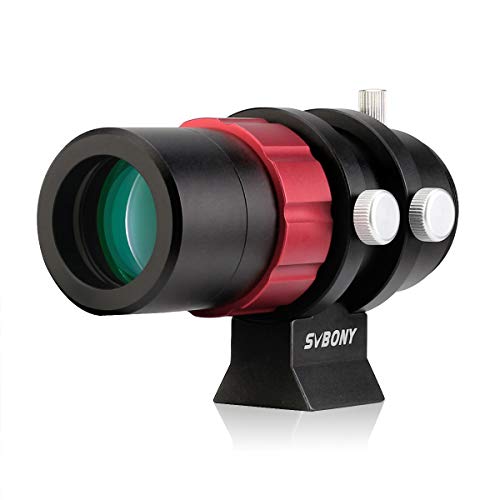
- 30mm aperture, 120mm focal length, f/4 optics
- 2.86° field of view with 45mm back focus
- 1.25-inch and M42 interfaces for guide cameras
Best For: Separate guide-scope setups with mainstream cameras
Best Color Entry-Level Camera

- IMX662 color sensor for lunar and planetary imaging
- ROI, BIN, and buffered capture features
- 1.25-inch interface with CS-C adapter support
Best For: Beginners doing planetary, lunar, or EAA imaging
Best Multi-Use Guide Scope
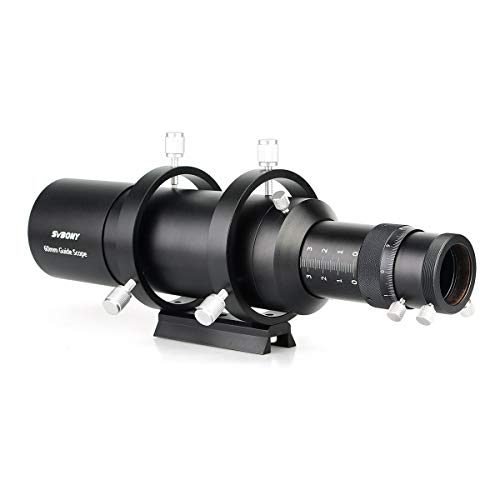
- 60mm guide scope with helical focusing
- Supports compatible guide cameras and eyepieces
- Can also serve as a straight-through finder
Best For: Guiding and finding targets with one optical accessory
Best High-Resolution Planetary Camera

- 7.05MP IMX415 color sensor
- Up to 30FPS at 1920×1080 in MJPG mode
- Compact 1.25-inch telescope connection
Best For: High-resolution lunar and planetary video capture
Complete Autoguiding Kit
SV905C Camera and SV165 Guide Scope

- Complete camera, guide scope, and dovetail package
- Low-noise 1.23MP color sensor for faint stars
- USB, ST4, PHD2, NINA, and SKY-X support
Best For: Beginners building a complete autoguiding setup
High-Resolution Planetary Choice

- 1.45μm pixels for detailed planetary imaging
- USB 3.0 recording up to 45.5 fps
- ST4, SharpCap, AstroDMx, and NINA support
Best For: High-resolution lunar and planetary video capture
Beginner-Friendly Entry Point
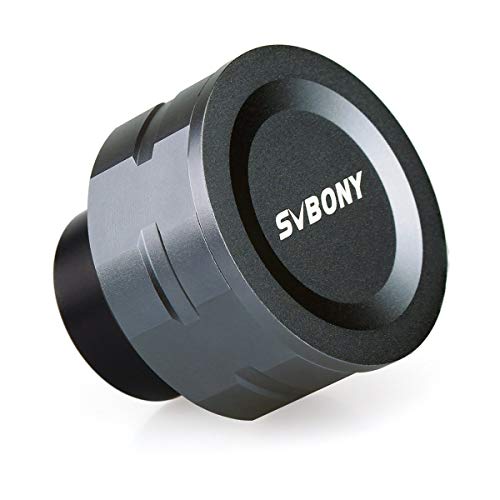
- Plug-and-play 1.25-inch electronic eyepiece
- 1080p color video at up to 30 fps
- Compatible with Windows, Linux, and macOS computers
Best For: First-time lunar and planetary imaging
Compact Autoguiding Camera – SV905C 1.23MP Guide Camera
For shoppers comparing telescope guide cameras, the SVBONY SV905C is a compact color option designed for autoguiding and planetary imaging. Its 1/3-inch, 1280×960 CMOS sensor combines 3.75-micron pixels, up to 80% peak QE, and low read noise to help capture faint guide stars.
Best For: Beginners and astrophotographers who want a small 1.25-inch guide camera with an ST4 connection and broad software compatibility.
Pros:
- Compact 1.25-inch body fits different focal-length guide lenses and off-axis guider setups.
- Supports PHD2, MDL, NINA, SKY-X, and other guiding software.
- Includes USB 2.0 output and an ST4 guide-star interface.
- CS interface and included CS-C adapter ring support compatible C-mount or CS lenses.
Cons:
- USB 2.0 is slower than newer USB 3.0 camera interfaces.
- Not compatible with ASI AIR.
The SV905C is a practical choice when compact size, simple compatibility, and sensitive guide-star capture matter more than high-speed data transfer.
Off-Axis Precision Guide – Celestron Deluxe Off-Axis Guider
Unlike standalone telescope guide cameras, the Celestron Deluxe Off-Axis Guider uses a 12.5mm prism to guide through the telescope’s optical path. This can improve guiding accuracy by avoiding the differential flexure associated with a separate guide scope, while its 48mm clear aperture is designed to support full-frame cameras.
Best For: Long-exposure astrophotographers using Schmidt-Cassegrain or EdgeHD telescopes with DSLR, Nightscape CCD, or other compatible imaging cameras.
Pros:
- Off-axis design guides through the main telescope without requiring a separate guide scope.
- 12.5mm multi-coated prism with aluminized backing provides strong reflectivity and illumination.
- Fixed-orientation helical focuser enables smooth, precise autoguider focusing.
- 48mm clear aperture supports full-frame cameras without vignetting.
Cons:
- Manual focusing and optical spacing require more setup than a simple guide-scope system.
- Its compatibility is especially oriented toward SCT, EdgeHD, DSLR, and specified threaded connections.
This is an optical guiding accessory rather than a camera itself, making it a strong foundation for a telescope guide camera when minimizing flexure is a priority.
High-Speed Planetary Guide Camera – SV305C Pro 2MP IMX662
The SVBONY SV305C Pro stands out among telescope guide cameras for its high-speed USB 3.0 connection and sensitive 2MP IMX662 sensor. It can record 1920×1080 video at up to 107 frames per second, while low readout noise, HDR, and a 128MB buffer support detailed planetary capture and guiding workflows.
Best For: Computer-based astrophotographers who prioritize fast planetary video, low-noise imaging, and an integrated ST4 guiding interface.
Pros:
- IMX662 sensor offers high sensitivity and low readout noise for low-light imaging.
- USB 3.0 supports fast transfers, with 1920×1080 capture at up to 107 FPS.
- ST4 interface works with software such as PHD2 and ASCOM.
- 128MB DDR buffer, HDR, ROI support, and heat dissipation add flexibility for extended sessions.
Cons:
- Requires a computer and does not support direct connection to an iPad.
- Its feature set is particularly oriented toward planetary imaging, which may be more than basic guiding requires.
Choose the SV305C Pro if planetary detail and rapid video capture are as important as guiding; its USB 3.0 performance gives it a clear speed advantage over USB 2.0 models.
Wide-Field Guide Scope – SVBONY SV165 30mm F4
The SVBONY SV165 is a 30mm f/4 mini guide scope for pairing with telescope guide cameras. Its 120mm focal length, 2.86-degree field of view, and 45mm back focus are designed to make target acquisition and camera focusing straightforward, while the 1.25-inch and M42 interfaces support many common guiding cameras.
Best For: Astrophotographers building a separate guide-scope setup with SV305C Pro, ZWO, QHY, Orion, or other compatible 1.25-inch or M42 guide cameras.
Pros:
- F/4 optics and a wide 2.86-degree field of view help locate guide stars quickly.
- Fully multi-coated double-glass achromatic optics are designed for clear images.
- 1.25-inch and M42 interfaces support many mainstream autoguiding cameras.
- 45mm back focus and nylon-tipped thumbscrews simplify adjustment while protecting the tube.
Cons:
- This is a guide scope, not a guide camera, so a compatible camera is required.
- Some camera models may need additional accessories to achieve focus.
- It cannot be used with a dielectric mirror star diagonal and will not focus in that configuration.
The SV165 is a useful companion for telescope guide cameras when you want a broad field and a dedicated, lightweight guide-scope arrangement rather than off-axis guiding.
Best Color Entry-Level Camera – SVBONY SV305C
The SVBONY SV305C is a practical starting point for anyone comparing telescope guide cameras for planetary, lunar, and electronically assisted astronomy (EAA). Its color IMX662 sensor, low read noise, and flexible capture features make it suited to straightforward computer-based imaging.
Best For: Beginners seeking a color camera for lunar and planetary imaging or EAA.
Pros:
- IMX662 color sensor with improved red and near-infrared sensitivity.
- ROI and BIN modes can help increase capture speed or sensitivity.
- Built-in image buffering helps reduce lost or damaged frames during transfer.
- Works with a 1.25-inch interface and includes CS-C adapter compatibility.
Cons:
- USB 2.0 connectivity may limit transfer speed compared with newer interfaces.
- Designed primarily for entry-level planetary, lunar, and EAA use rather than specialized deep-sky imaging.
The SV305C stands out for accessible controls and useful capture assistance, including preset planetary and long-exposure modes in SharpCap. It is a sensible option when color imaging and ease of use matter more than maximum resolution.
Best Multi-Use Guide Scope – SVBONY SV106 60mm
The SVBONY SV106 is a versatile optical accessory for telescope guide camera setups. Its 60mm-class guide scope design, helical focuser, and threaded attachment options make it useful for precise guiding as well as everyday telescope finding.
Best For: Astrophotographers who want one scope for guiding and straight-through target finding.
Pros:
- Helical focuser provides 8mm of precise focus travel while maintaining orientation.
- Telescoping drawtube adds up to 35mm of back-travel for different autoguiders.
- Male T-threads provide a secure connection for compatible guide cameras.
- Can double as a finder scope with an optional 1.25-inch eyepiece.
Cons:
- An eyepiece is optional when using it as a finder scope.
- Manual focusing requires adjustment during setup.
- Its 790g weight should be considered when balancing a compact mount.
Unlike a guide camera itself, the SV106 provides the optical platform that a compatible autoguider needs. The non-rotating helical focus design is especially useful when maintaining a selected guide-star field during focusing.
Best High-Resolution Planetary Camera – SVBONY SV205
The SVBONY SV205 is a compact color telescope camera for lunar, planetary, and terrestrial viewing. Its 7.05MP IMX415 sensor, USB 3.0 cable, and plug-and-play design make it a useful choice for shoppers comparing telescope guide cameras for live computer observation and video capture.
Best For: Users who want higher-resolution planetary video and real-time viewing on a computer.
Pros:
- 7.05MP IMX415 color sensor captures detailed lunar and planetary views.
- Records up to 30 frames per second at 1920×1080 in MJPG mode.
- Can use YUV uncompressed video at 3264×2160 and 15 frames per second.
- Compact 1.25-inch barrel connects directly to many telescopes.
Cons:
- It is intended mainly for lunar, planetary, and terrestrial targets rather than broad-purpose deep-sky imaging.
- Apple laptop users need Astroam Capture, and it is not compatible with Apple phones or tablets.
- Compatibility depends on having a suitable 1.25-inch telescope interface or adapter.
The SV205 prioritizes resolution and straightforward live capture over advanced astrophotography controls. Its included USB 3.0 cable and multiple video formats make it a strong fit for observing and recording bright targets through a laptop or PC.
Complete Autoguiding Kit – SV905C Camera and SV165 Guide Scope
For shoppers comparing telescope guide cameras, this SVBONY package stands out as a ready-to-use autoguiding setup. It combines the SV905C color camera, SV165 mini guide scope, and an aluminum dovetail base for tracking faint stars during longer deep-sky exposures.
Best For: Beginners and amateur astronomers who want a complete autoguiding solution for deep-sky, planetary, or faint-star tracking.
Pros:
- Includes the camera, 30mm F4 guide scope, and dovetail base in one package.
- The 1.23MP color sensor uses 3.75μm pixels, 80% peak QE, and low read noise for faint-star capture.
- Supports USB 2.0, ST4, PHD2, MDL, NINA, and SKY-X guiding workflows.
- CS, C-mount, OAG, and standard 1.25-inch adaptation options provide installation flexibility.
Cons:
- It is not compatible with the ASI AIR system.
- At approximately 630g, the complete kit adds more weight than a camera alone.
This is the most comprehensive option here for buyers who need both guiding optics and a camera. Its bundled mounting hardware simplifies setup, while the software and interface support is suited to a more involved astrophotography workflow.
High-Resolution Planetary Choice – SC715C IMX715 Camera
Among telescope guide cameras and astronomy imaging options, the SVBONY SC715C is aimed primarily at detailed planetary capture. Its small 1.45μm pixels, IMX715 sensor, USB 3.0 connection, and high frame rate make it better suited to recording sharp lunar and planetary video than to serving as a simple guide camera.
Best For: Planetary astrophotographers who want high-resolution color video and ST4 mount-guiding capability.
Pros:
- IMX715 sensor and 1.45μm pixels are designed for detailed planetary imaging.
- USB 3.0 transfers full-resolution footage at up to 45.5 frames per second.
- 512MB DDR3 cache helps maintain smooth, lossless frame recording.
- Works with SharpCap, AstroDMx Capture, NINA, and an ST4 autoguider connection.
Cons:
- Focusing must be performed with the telescope’s focuser because the camera has no built-in focus adjustment.
- It requires dedicated download software and is not compatible with smartphones.
- Its primary design is planetary imaging rather than standalone deep-sky guiding.
The SC715C is a strong fit when high-resolution planetary video is the priority and mount control through ST4 is useful. Buyers seeking a dedicated deep-sky guide-camera package may prefer the bundled SV905C system instead.
Beginner-Friendly Entry Point – SV105 IMX307 Telescope Camera
For beginners exploring telescope guide cameras and basic astrophotography, the SVBONY SV105 offers a straightforward electronic eyepiece design. Its 1.25-inch format, USB 2.0 connection, and plug-and-play operation make it practical for live viewing and recording the Moon, bright planets, and terrestrial targets.
Best For: Beginners who want an affordable, easy-to-use camera for lunar, planetary, and live telescope viewing.
Pros:
- Plug-and-play operation requires no driver, with software options for Windows, Linux, and macOS computers.
- The IMX307 color sensor records 1920×1080 video at up to 30 frames per second.
- Standard 1.25-inch barrel and M28.5×0.6 thread support telescope filters and direct attachment.
- Dark-light compensation is designed to improve clarity in low-light conditions.
Cons:
- It uses USB 2.0 rather than the faster USB 3.0 interface found on the SC715C.
- It is intended mainly for lunar, planetary, and terrestrial imaging rather than advanced deep-sky guiding.
- It is not compatible with Apple phones or tablets, although it supports Apple laptops using macOS.
The SV105 is a simple starting point for learning camera-based observing without adding a complicated guiding system. Its compact 1.25-inch format and broad computer compatibility make it accessible, but experienced deep-sky imagers may need a more specialized guide camera.
How We Picked These Telescope Guide Cameras
We selected products across the main equipment categories used for autoguiding and entry-level astrophotography: compact guide cameras, higher-resolution USB cameras, guide scopes, bundled guiding kits, and off-axis guiding hardware. We considered sensor performance, connection speed, optical compatibility, focusing options, mounting flexibility, and suitability for common astronomy software.
Because a camera and guide scope work as a system, this list includes both standalone cameras and supporting optics. A capable sensor cannot compensate for an unstable guide scope, poor focus, or an adapter that does not fit your telescope.
Quick Comparison
| Best For | What to Prioritize | Typical Choice |
|---|---|---|
| Basic autoguiding | Reliable USB connection and sensitive monochrome sensor | Compact guide camera with a 1.25-inch interface |
| Planetary and guiding use | Higher resolution, fast USB transfer, and compatible software | USB 3.0 color or planetary camera |
| Wide compatibility | Adjustable mounting and a stable guide scope | Guide scope with helical focusing |
| Long focal-length imaging | Minimal flexure and precise off-axis positioning | Off-axis guider system |
Key Buying Factors for Telescope Guide Cameras
Sensor Sensitivity and Pixel Size
Guiding software needs a clear star, not necessarily a high-resolution image. A sensitive sensor can make it easier to find guide stars, especially with a short guide scope or under light-polluted skies. Pixel size also affects sampling, so compare the camera with the focal length of your guide optics.
Monochrome Versus Color
Monochrome cameras generally use available light more efficiently for guiding and are a straightforward choice for dedicated tracking. Color models can be more versatile if you also want planetary or general-purpose imaging, but their guiding performance depends on the sensor and software combination.
Connection and Software Support
Check USB type, cable length, driver availability, and compatibility with your guiding platform before buying. USB 3.0 can help with high-frame-rate planetary work, while basic guiding usually does not require maximum bandwidth. Confirm support for the operating system and astronomy applications you plan to use.
Optical and Mechanical Fit
Verify whether the camera uses a 1.25-inch nosepiece, threaded connection, or another adapter. A guide scope should mount securely to avoid flexure, and a helical focuser can simplify precise adjustments. For long focal lengths, off-axis guiding can reduce differential flexure by using light from the main telescope itself.
Who Should Buy Which Telescope Guide Cameras?
Choose a compact dedicated guide camera if you want a simple, lightweight setup for a compatible guide scope. Select a higher-resolution USB camera if you also plan to capture planets or need faster video handling. A guide scope bundle is useful when you need the camera and mounting hardware together, while a larger guide scope suits users who want more framing and focusing flexibility.
For demanding long-exposure systems, an off-axis guider is often the more dependable route, particularly when flexure is limiting tracking quality. Before ordering, match the camera to your guide scope, confirm the adapter size, and make sure your mount and software support the complete configuration.