
Choosing among telescope guide scopes for beginners can feel harder than the specifications suggest. Aperture, focal length, focusing design, and mounting compatibility all affect how easily a guide scope works with your setup.
This roundup compares 10 practical options, from compact 30mm models to larger 70mm finders, so you can match guiding performance and usability to your telescope and imaging goals.
Best 10 Telescope Guide Scopes for Beginners Picks for 2026
Compact Imaging Guide
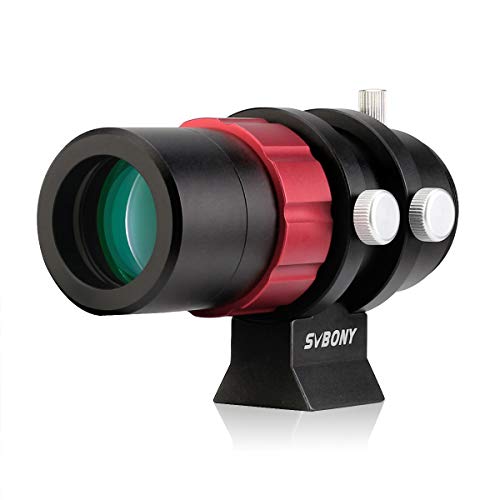
- 30mm f/4 optics offer a wide locating field
- 45mm back focus supports precise adjustment
- Check camera and adapter compatibility first
Best For: Lightweight autoguiding and deep-sky imaging setups
Comfortable Visual Finder
Alstar 9x50 Right-Angle Finder
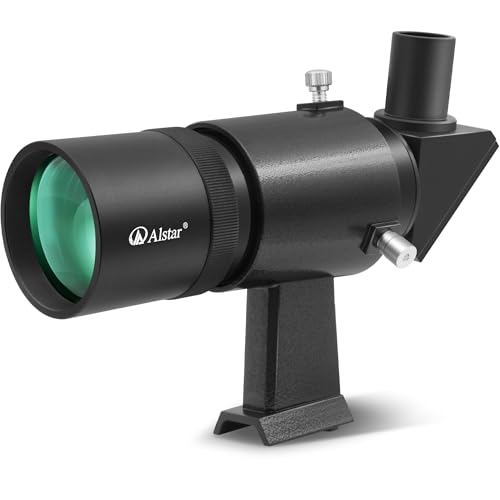
- 50mm objective reveals more reference stars
- 90-degree view improves viewing comfort
- Built-in crosshairs aid alignment
Best For: Visual star-hopping and deep-sky target locating
Flexible Guiding Upgrade
SV106 60mm Helical Guide Scope
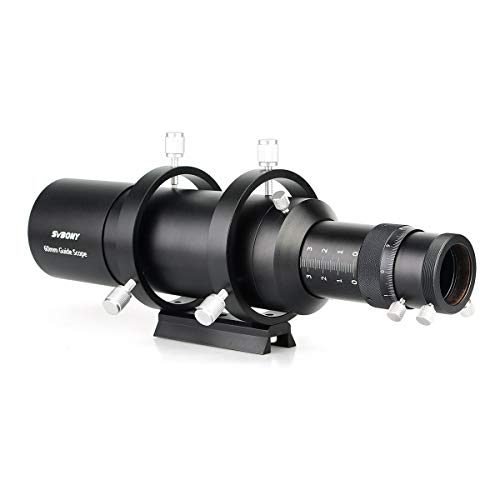
- 60mm aperture supports guide-star acquisition
- Helical focuser preserves camera orientation
- Can also work with a 1.25-inch eyepiece
Best For: Dual-purpose guiding and visual finder setups
Simple Alignment Finder
Astromania 6x30 Crosshair Finder

- Compact 30mm objective keeps the finder lightweight
- 6x view includes built-in crosshairs
- Three screws simplify alignment
Best For: Basic manual target finding and telescope alignment
Best Precision-Focus Pick
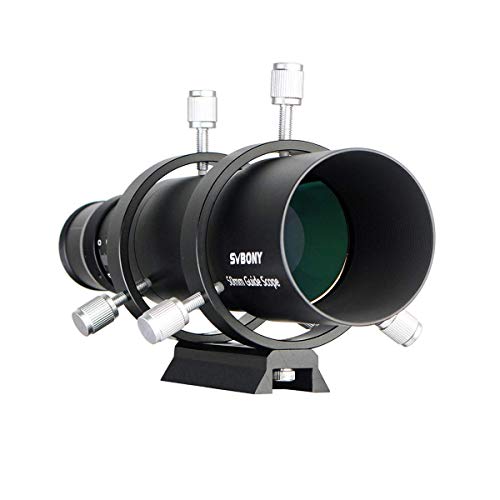
- 50mm fully multi-coated optics
- Precise 8mm helical focuser
- Rings and dovetail bar included
Best For: Beginners prioritizing focusing control and flexible mounting
Best Compact Option

- Compact 40mm guide scope
- Works with scopes up to 700mm focal length
- Scaled focuser and six-point ring
Best For: Shorter-focal-length beginner astrophotography setups
Best Versatile Finder

- 60mm multi-use guide scope
- 240mm focal length for scopes up to 1500mm
- Worm focuser with 45mm range
Best For: Visual finding and guiding with larger astrophotography telescopes
Compact Precision Pick
Alstar 50mm Helical Guide Scope

- 40mm focus range with 10mm micro-focus adjustment
- 50mm multi-coated optics for bright, wide-field views
- Includes clamps and Synta-style dovetail mounting plate
Best For: Beginners seeking a compact finder and guide scope combination
Long-Focal-Length Choice
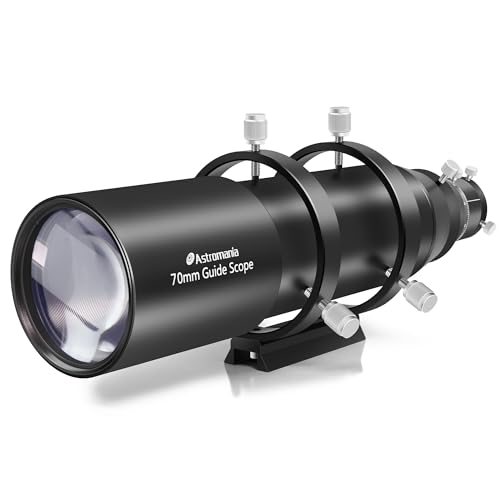
- 70mm aperture with a 400mm focal length
- Worm focuser supports fine adjustment and camera stability
- Includes clamps, mounting plate, and adjustable-aim weight
Best For: Beginners wanting a larger, longer-focal-length guide scope
Versatile Mid-Size Pick
Alstar 60mm Helical Guide Scope

- 60mm aperture and 240mm focal length
- 48mm focus range with 10mm micro-focus adjustment
- T-thread and 1.25-inch accessory compatibility
Best For: Beginners wanting a flexible guide scope for visual and photographic use
Compact Imaging Guide – SV165 30mm Mini Guide Scope
For beginners comparing telescope guide scopes for beginners, the SVBONY SV165 is a compact option designed for compatible autoguiding cameras. Its 30mm aperture, f/4 optics, and 45mm back focus provide a wide field that can help locate guide stars quickly.
Best For: Beginners building a lightweight deep-sky astrophotography setup with a compatible guide camera.
Pros:
- Compatible with mainstream autoguiding cameras, including selected SV305C Pro, ZWO, QHY, and Orion models.
- Fully multilayer-coated 30mm achromatic optics provide bright, clear images.
- Wide f/4 field of view and 45mm back focus support straightforward focusing and target acquisition.
- Nylon-tipped mounting screws help reduce the risk of scratching the optical tube.
Cons:
- It cannot be used with a dielectric mirror star diagonal and will not focus in that configuration.
- Some camera models may require additional accessories for focusing.
- It is intended for camera use, so compatibility should be checked before purchase.
The SV165 is a practical, compact guide scope when its camera interfaces match your equipment. Verify the required adapters and focus position before ordering.
Comfortable Visual Finder – Alstar 9×50 Right-Angle Finder
Although it is a visual finder rather than a camera guide scope, the Alstar 9×50 is worth considering in a guide to telescope guide scopes for beginners who need an easier way to locate targets. Its 50mm objective and 90-degree right-angle view are suited to visual star-hopping.
Best For: Beginners who want a bright, comfortable visual finder for locating deep-sky objects.
Pros:
- Large 50mm objective helps make additional stars and brighter deep-sky objects visible.
- 90-degree viewing angle is more comfortable when searching near the zenith.
- Achromatic, multicoated optics provide an upright, non-reversed image.
- Built-in crosshairs and two-screw alignment make aiming and adjustment practical.
Cons:
- This is a visual finderscope, not a dedicated autoguiding camera scope.
- At 1.1 pounds, it may add more weight than a small mini finder.
- Mount compatibility should be confirmed for the specific telescope.
The Alstar is a strong beginner-friendly choice for visual navigation, especially when comfort and a brighter finder view matter more than automated guiding.
Flexible Guiding Upgrade – SV106 60mm Helical Guide Scope
For beginners exploring telescope guide scopes for beginners, the SVBONY SV106 offers more flexibility than a basic fixed-focus finder. Its 60mm aperture, helical focuser, T-threads, and compatibility with 1.25-inch cameras make it suitable for guiding and occasional visual finding.
Best For: Beginners who want one scope for autoguiding and optional finder-scope use.
Pros:
- 60mm aperture provides a versatile platform for locating potential guide stars.
- Helical focuser offers 8mm of precise travel without rotating the attached device.
- Telescoping drawtube provides up to 35mm of additional back-travel.
- Can accept a 1.25-inch eyepiece for use as a straight-through finder scope.
Cons:
- At 790g, it is considerably heavier than a compact mini guide scope.
- Its manual focusing and accessory requirements may take more setup time.
- Compatibility is specified for particular autoguider cameras and female T-thread accessories.
The SV106 makes sense when you value adjustability and dual-use functionality. Its heavier all-metal design is best paired with a mount and guide-scope bracket that can handle the added weight.
Simple Alignment Finder – Astromania 6×30 Crosshair Finder
The Astromania 6×30 is a straightforward visual finder for beginners comparing telescope guide scopes for beginners. Its 30mm aperture, 6x magnification, fully multicoated optics, and crosshairs are intended to make manual target location quicker.
Best For: Beginners who need a small, simple finder for aligning and locating astronomical targets.
Pros:
- Compact 30mm aperture and 6x magnification provide a useful wide-field view.
- Built-in fine crosshairs help with accurate object location.
- Fully multicoated optics transmit more light than viewing with the naked eye alone.
- Three adjustment screws allow alignment with the main telescope.
Cons:
- It provides a straight-through, not-corrected image that may take practice to interpret.
- It is a visual finder rather than a dedicated autoguiding scope.
- The smaller 30mm objective shows less than larger 50mm finder scopes.
The Astromania is a sensible low-complexity choice for manual alignment. Choose it when compactness and crosshair-assisted locating are more important than camera-guiding features.
Best Precision-Focus Pick – SV106 50mm Guide Scope
For beginners comparing telescope guide scopes for beginners, the SVBONY SV106 stands out for its 50mm objective and smooth helical focuser. Its all-metal build, included rings, and dovetail bar create a practical starting point for guided astrophotography.
Best For: Beginners who want precise manual focusing and a versatile guide scope for astrophotography or finder use.
Pros:
- 8mm helical focus travel plus up to 30mm of drawtube back-travel.
- Male T-threads support direct attachment of compatible guide cameras.
- Includes two guide rings and a 3.5-inch dovetail mounting bar.
- Six metal thumbscrews help with precise aiming.
Cons:
- Manual focusing requires hands-on adjustment.
- At 1.7 pounds, it may add more weight than a compact mini guide scope.
The SV106 is a solid choice when focusing control matters more than minimal size. Its broad compatibility and included mounting hardware can simplify a beginner’s first guiding setup.
Best Compact Option – SV165 40mm Mini Guide Scope
The SVBONY SV165 is a compact choice for beginners exploring telescope guide scopes for beginners, especially with an optical tube focal length within 700mm. Its 40mm fully multi-coated optics, scaled front focuser, and adjustable six-point guide ring keep the setup approachable.
Best For: Beginners using shorter-focal-length telescopes who want a lightweight, compact guiding solution.
Pros:
- Designed for astronomical telescopes with focal lengths within 700mm.
- 1.25-inch and M42 interfaces support several guide-camera options.
- Two T2 extension tubes assist with focusing.
- Six-point fixation allows adjustment of guide-scope coaxiality.
Cons:
- Its recommended telescope focal-length range is more limited than larger guide scopes.
- A paired eyepiece may require removing the red locking ring and shortening the tube to focus.
The SV165 makes sense for a compact beginner rig, provided your main telescope falls within its stated focal-length range. The marked focuser can also make repeated focusing more consistent.
Best Versatile Finder – Astromania 60mm Guide Scope
For beginners seeking telescope guide scopes for beginners that can serve more than one role, the Astromania 60mm model combines a wide-field finder with an autoguiding scope. Its 240mm focal length is intended for astrophotography telescopes up to 1500mm, and the included rings and Synta-style plate simplify installation.
Best For: Beginners who want a larger guide scope for visual finding and guided astrophotography across a broader telescope setup.
Pros:
- 60mm fully multi-coated optics provide a wide field for locating guide stars.
- Built-in worm focuser offers 45mm total focusing range.
- Direct male T-thread connection supports compatible autoguider cameras.
- Teflon-lined rings help secure tubes while reducing scratches and pressure marks.
Cons:
- The larger 60mm design may add more bulk than a mini guide scope.
- Manual alignment and focusing take more setup time than a simple fixed finder.
The Astromania is the most flexible option here for users who want one instrument to help find objects visually and guide during astrophotography. Its longer focal length and focusing range suit a wider range of telescope configurations.
Compact Precision Pick – Alstar 50mm Helical Guide Scope
For beginners comparing telescope guide scopes for beginners, the Alstar 50mm offers a practical balance of portability, guiding capability, and easy focusing. Its 200mm focal length, fully multi-coated optics, and included Synta-style dovetail plate make it suitable for visual finding and entry-level astrophotography setups.
Best For: Beginners who want a compact guide scope that can also serve as a finder for telescopes up to 1500mm focal length.
Pros:
- Built-in helical focuser provides 40mm of total focus travel, including 10mm of micro-focusing.
- 50mm aperture and multi-coated lenses provide bright, wide-field views for locating objects and guide stars.
- Includes pipe clamps and a Synta-style dovetail mounting plate for straightforward installation.
- All-metal housing and a compression ring help support durable, secure use.
Cons:
- Its 50mm aperture is smaller than the 60mm and 70mm alternatives in this roundup.
- Manual focusing requires hands-on adjustment during setup.
The Alstar 50mm is a sensible starting point when portability and versatility matter more than maximum aperture. Its dual role as a finder and guide scope can help beginners build a useful astrophotography setup without carrying a larger optical tube.
Long-Focal-Length Choice – Astromania 70mm Guide Scope
Among telescope guide scopes for beginners, the Astromania 70mm stands out for its larger aperture and 400mm focal length. It is designed for both visual finding and photographic guiding, with a worm-style helical focuser and mounting hardware included for setup.
Best For: Beginners who want a larger guide scope with a long focal length and a wide selection of potential guide stars.
Pros:
- 70mm aperture and 400mm focal length provide bright optics and numerous potential guide stars in view.
- Worm focuser includes a brass compression ring and 10mm micro-focusing range.
- Accepts 1.25-inch eyepieces and autoguiding cameras for multi-use operation.
- Includes pipe clamps, a Synta-style mounting plate, and an adjustable-aim dovetail weight.
Cons:
- At 2.5 pounds, it is the heaviest option among these three products.
- The longer optical tube may be less convenient for highly portable setups.
- Focusing uses a combination of helical adjustment and a fixed, scaled drawtube.
The Astromania 70mm provides more aperture and focal length than the smaller models, which can be useful when you want a substantial visual finder and guide scope. Its added size and weight should be considered when matching it to your telescope and mount.
Versatile Mid-Size Pick – Alstar 60mm Helical Guide Scope
For beginners exploring telescope guide scopes for beginners, the Alstar 60mm offers a middle ground between compact handling and increased light-gathering aperture. Its 240mm focal length, fully coated optics, and support for 1.25-inch accessories make it suitable for both guide-camera use and visual observing.
Best For: Beginners who want a versatile 60mm guide scope with fine focusing and direct camera-attachment options.
Pros:
- 60mm aperture and 240mm focal length provide bright, wide-field views for finding objects and guide stars.
- Dual helical focuser offers 48mm of total travel, including 10mm of micro-focusing.
- T-thread compatibility supports direct camera attachment, while the compression ring protects accessories.
- Includes pipe clamps and a Synta-style dovetail mounting plate for broad telescope compatibility.
Cons:
- At 2 pounds, it is less lightweight than the 50mm model.
- Manual focusing requires setup adjustments rather than automated focusing.
The Alstar 60mm is a well-rounded choice for beginners who want more aperture than a compact 50mm model without moving to the heavier 70mm option. Its T-thread compatibility and dual finder-guide role give it room to remain useful as an imaging setup develops.
How We Picked These Telescope Guide Scopes for Beginners
We focused on the features that matter most when adding a guide scope to a beginner or intermediate astronomy setup: optical aperture, focal length, focuser design, image orientation, construction, and multi-use flexibility. The selection includes compact mini guide scopes for lighter rigs, traditional finder scopes for visual locating, and larger models designed to provide more light and focusing control.
Because compatibility is just as important as optical specifications, buyers should confirm the included mounting hardware, tube diameter, dovetail or bracket requirements, and whether the scope works with their guide camera before ordering.
Quick Comparison
| Type | Best For | Main Advantage |
|---|---|---|
| 30mm to 40mm mini guide scope | Compact imaging rigs | Low weight and simple installation |
| 50mm guide or finder scope | General-purpose guiding | Balanced light gathering and portability |
| 60mm guide scope | Flexible guiding and finding | More aperture with useful focusing control |
| 70mm guide scope | Demanding setups | Greater light gathering and adjustment range |
| Basic finder scope | Visual alignment | Simple, affordable target locating |
Key Buying Factors for Telescope Guide Scopes for Beginners
Aperture and Focal Length
Larger apertures generally collect more light, which can make it easier for a guide camera to detect suitable stars. However, extra size also adds weight and may require stronger mounting hardware. A compact 30mm or 40mm scope can be a sensible starting point for a portable setup, while 50mm to 70mm models offer more flexibility for larger telescopes.
Focusing Design
A fixed or basic helical focuser may be adequate for straightforward guiding. Double-helical or more adjustable focusers provide finer control and can be helpful when switching cameras or using the scope for visual finding. Check how much travel the focuser provides and whether it locks securely.
Mounting and Rigidity
Guiding accuracy depends on more than optics. Any movement between the guide scope and the main telescope can create differential flexure and tracking errors. Use a rigid bracket, tighten all adjustment screws evenly, and avoid relying on a loose finder shoe for a heavy guide scope.
Image Orientation and Intended Use
Straight-through finder scopes may show an inverted or non-corrected image, while right-angle upright-image designs are often more comfortable for visual observing. Decide whether the scope is primarily for an imaging camera, visual alignment, or both.
Who Should Buy Which Telescope Guide Scopes for Beginners?
Choose a compact SV165-style mini scope if you prioritize low weight, portability, and a simple guide-camera setup. A 50mm model is the most versatile choice for many beginners because it balances size, light gathering, and mounting demands. Consider a 60mm scope when you want more aperture and a helical focuser for multi-use operation. A 70mm deluxe model is better suited to larger, more demanding rigs where the additional size and adjustment range are worthwhile.
If your main goal is locating targets visually rather than guiding an astrophotography setup, a conventional 6×30 or 9×50 finder may be the more economical option. Before buying, match the scope’s mounting system and focuser or camera interface to your existing equipment.