
Accurate guiding can make the difference between sharp, detailed deep-sky exposures and images softened by trailing. The right guide scope helps your autoguiding camera track a suitable star without adding unnecessary weight or complexity to your imaging rig.
This roundup compares 10 telescope guide scopes for deep-sky imaging, ranging from compact 30mm and 40mm models to larger 60mm and 70mm finders, plus an off-axis guider for demanding long-exposure setups. Use the guide below to match aperture, focal length, focusing, mounting, and guiding method to your telescope and camera.
Best 10 Telescope Guide Scopes for Deep Sky Imaging Picks for 2026
Balanced APO Precision

- 50mm f/4.8 APO doublet with ED glass
- Includes finder stalk and Vixen-style mounting plate
- 242mm focal length with helical focuser
Best For: Flexible guiding, visual observing, and optional astrograph use
Maximum Guiding Accuracy

- Guides through the main telescope
- 12.5mm multi-coated prism with aluminized backing
- 48mm clear aperture for full-frame cameras
Best For: Long-exposure SCT and EdgeHD imaging systems
Versatile Helical Focus
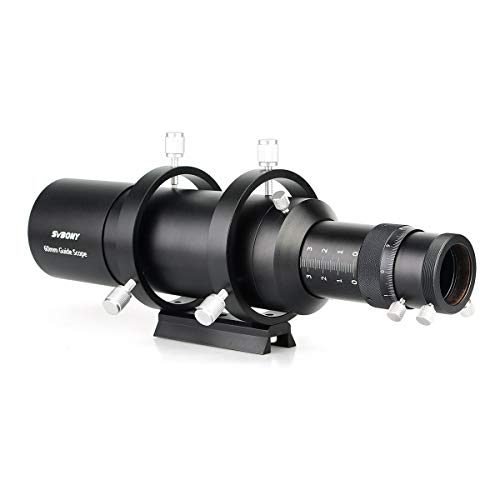
- Built-in helical focuser preserves orientation
- 8mm focus travel plus 35mm back-travel
- Can also function as a finder with an optional eyepiece
Best For: Multi-use guiding and finding on a manual-focus setup
Complete Mini Guiding Kit

- Includes camera, guide scope, and dovetail base
- 1.23MP color camera with USB 2.0 and ST4
- Supports PHD2, MDL, NINA, and SKY-X
Best For: Beginners wanting a complete compact autoguiding setup
Versatile 60mm Guide Scope
Astromania 60mm Helical Focuser

- 60mm aperture with 240mm focal length
- 2.7-degree field of view for guide-star finding
- Includes rings, dovetail bar, and T-thread attachment
Best For: Astrophotographers wanting a larger guide-and-finder scope
Compact Mini Guide Scope
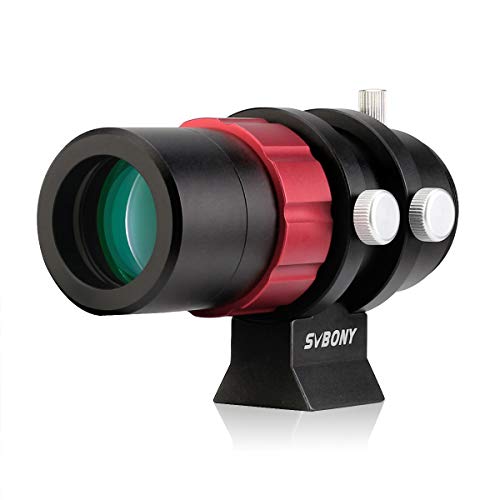
- 30mm f/4 optics with 120mm focal length
- 2.86-degree field of view and 45mm back focus
- Supports compatible 1.25-inch and M42 cameras
Best For: Lightweight imaging rigs and compatible autoguiding cameras
Precision 50mm Guide Scope
Alstar 50mm Double Helical Focuser

- 50mm aperture with approximately 200mm focal length
- 40mm focusing range with 10mm micro-focus
- Includes Synta-style plate and pipe clamps
Best For: Stable guide-and-finder setups needing precise manual focus
Compact Deep-Sky Starter

- Supports telescope focal lengths up to 700mm
- 1.25-inch and M42 camera interfaces
- Adjustable six-point guide ring
Best For: Compact deep-sky imaging setups with compatible guide cameras
Wide-Field Heavy-Duty Pick
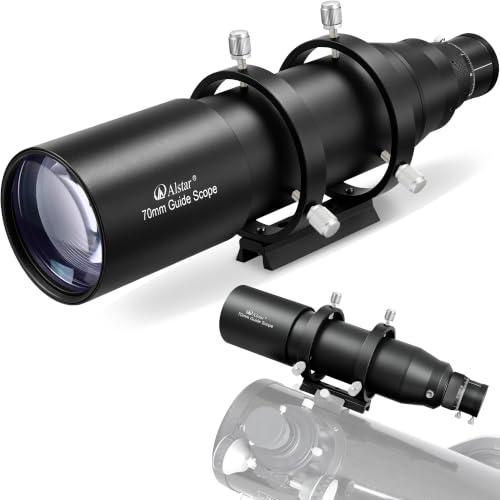
- 70mm aperture with 400mm focal length
- Dual focuser with 88mm total range
- Includes Synta-style mounting hardware
Best For: Bright wide-field guiding and finder use with heavier astrophotography rigs
Fine-Focus All-Rounder
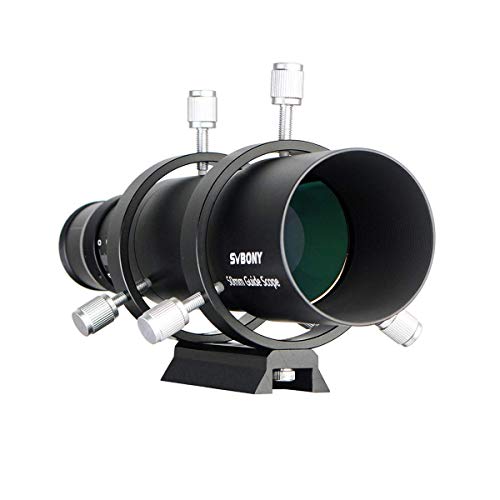
- 50mm objective with 190mm focal length
- 8mm helical focus plus 30mm drawtube travel
- Includes guide rings and dovetail mounting bar
Best For: Flexible deep-sky guiding with precise manual focus control
Balanced APO Precision – Sky-Watcher EvoGuide 50DX
For imagers comparing telescope guide scopes for deep sky imaging, the Sky-Watcher EvoGuide 50DX offers a lightweight 50mm apochromatic doublet design with a 242mm focal length. Its matched ED glass, helical focuser, finder stalk, and Vixen-style mounting plate make it a flexible option for guiding or visual use.
Best For: Astrophotographers who want a compact, adaptable guide scope with APO optics and multiple mounting options.
Pros:
- Matched ED glass supports contrast-rich views.
- Includes a Sky-Watcher-compatible finder stalk and Vixen-style rail.
- 1.25-inch helical focuser and 242mm focal length suit guide-camera use.
- Can become a low-focal-length astrograph with an optional adapter.
Cons:
- The astrograph adapter is optional and not included.
- At 2.7 pounds, it is not the lightest guide-scope option.
The EvoGuide 50DX is a well-rounded choice when optical quality and mounting flexibility matter. Its APO doublet design and included accessories make it particularly appealing for users who may alternate between guiding, finding, and visual observing.
Maximum Guiding Accuracy – Celestron Off-Axis Guider
For telescope guide scopes for deep sky imaging, the Celestron Off-Axis Guider takes a different approach: it guides through the imaging telescope rather than using a separate guide scope. Its large prism, 48mm clear aperture, and included camera adapters are designed for long-exposure astrophotography, especially with SCT and EdgeHD systems.
Best For: Long-exposure imagers using compatible Schmidt-Cassegrain or EdgeHD telescopes who prioritize precise off-axis guiding.
Pros:
- Off-axis guiding avoids the need for a separate guide scope.
- 12.5mm multi-coated prism provides strong illumination for the autoguider.
- 48mm clear aperture supports full-frame cameras without vignetting.
- Includes adapters for DSLR, Nightscape CCD, M42, and M48 connections.
Cons:
- It is an off-axis guider rather than a standalone guide scope.
- Its compatibility focus is on SCT and EdgeHD telescope systems.
- Manual focusing requires setup with the helical focuser.
This is the strongest fit for users seeking accurate guiding without differential flexure from a separate guide-scope arrangement. Confirm your camera connections and telescope spacing before buying.
Versatile Helical Focus – SVBONY SV106 Guide Scope
The SVBONY SV106 is a versatile choice among telescope guide scopes for deep sky imaging, combining a 60mm-class guide-scope format with a built-in helical focuser. Its orientation-preserving focus adjustment, T-threaded focuser collar, and optional finder-scope use make it suitable for both astrophotography and general telescope setup.
Best For: Beginners and multi-purpose users who want one compact scope for guiding, finding, and compatible accessory use.
Pros:
- Helical focusing maintains camera or eyepiece orientation.
- Provides 8mm of helical travel plus up to 35mm of drawtube back-travel.
- Male T-threads support compatible guide-camera attachment.
- Can serve as a straight-through finder with an optional 1.25-inch eyepiece.
Cons:
- A 1.25-inch eyepiece is optional rather than included.
- Compatibility depends on the guide camera or accessory having suitable connections.
- At 790g, it is heavier than a mini guide-scope setup.
The SV106 stands out for practical flexibility. Its focusing system is convenient for guide cameras, while the optional eyepiece capability lets the same unit serve as a finder when imaging is not planned.
Complete Mini Guiding Kit – SVBONY SV905C and SV165 Kit
For newcomers comparing telescope guide scopes for deep sky imaging, this SVBONY package supplies more than an optical tube: it includes the SV165 30mm guide scope, SV905C color guide camera, and an aluminum dovetail base. The camera offers 1280×960 resolution, USB 2.0 and ST4 interfaces, and compatibility with several guiding software platforms.
Best For: Beginners seeking a ready-to-assemble mini autoguiding package for deep-sky, planetary, or faint-star tracking.
Pros:
- Includes guide camera, mini guide scope, and dovetail base.
- SV905C camera uses a 1.23MP color CMOS sensor with 3.75μm pixels.
- Supports USB 2.0, ST4, PHD2, MDL, NINA, and SKY-X.
- SV165 offers an f/4 wide aperture, 45mm back focus, and multi-coated optics.
Cons:
- The SV905C is not compatible with the ASI AIR system.
- The 30mm SV165 is a compact mini guide scope rather than a larger-aperture model.
- Camera and scope connections still require careful focusing and installation.
This bundle is convenient for building a complete guiding setup without sourcing each component separately. Its main limitation is software compatibility, so ASI AIR users should choose another camera solution.
Versatile 60mm Guide Scope – Astromania 60mm Helical Focuser
For astrophotographers comparing telescope guide scopes for deep sky imaging, this Astromania model combines a 60mm aperture with a 240mm focal length and a helical focuser. Its wide 2.7-degree field of view can make guide-star acquisition easier, while the included rings and Synta-style mounting plate support straightforward installation.
Best For: Imagers who want a larger, multi-use guide scope for autoguiding and visual finder work.
Pros:
- 60mm fully multi-coated optics and 240mm focal length offer a broad view for locating guide stars.
- Built-in helical focuser provides fine focus adjustment and includes a brass compression ring.
- Includes heavy-duty rings, a dovetail mounting bar, and T-threaded camera attachment.
- Can function as both a guide scope and a visual finder.
Cons:
- The larger 60mm design may add more size and weight than a mini guide scope.
- Manual focusing requires setup and adjustment before imaging.
With its generous aperture, long focal length, and included mounting hardware, the Astromania is a flexible choice for users who prioritize a wide guide-star field and precise focusing over the smallest possible setup.
Compact Mini Guide Scope – SVBONY SV165 30mm
The SVBONY SV165 is a compact option for telescope guide scopes for deep sky imaging, using 30mm achromatic optics, an f/4 aperture, and a 120mm focal length. Its 2.86-degree field of view is designed to help locate targets and guide stars quickly, while 45mm of back focus supports compatible autoguiding cameras.
Best For: Lightweight imaging setups using compatible 1.25-inch or M42 autoguiding cameras.
Pros:
- Compact 30mm design weighs 342g and is suited to portable setups.
- Fully multilayer-coated optics and double-glass achromatic construction support bright, clear views.
- Compatible with SV305C Pro, ZWO, QHY, Orion, and other compatible guiding cameras.
- Nylon-tipped thumbscrews help reduce scratching when positioning the scope.
Cons:
- Some camera models may require additional accessories to reach focus.
- It cannot be used with a dielectric mirror star diagonal because it will not focus.
- The 30mm aperture provides less light-gathering capacity than larger guide scopes.
The SV165 emphasizes low weight and a broad field of view. It is a practical match for cameras with the listed interfaces, but buyers should verify camera compatibility and back-focus requirements before ordering.
Precision 50mm Guide Scope – Alstar 50mm Double Helical Focuser
The Alstar 50mm guide scope is aimed at users comparing telescope guide scopes for deep sky imaging who want a balance of aperture, portability, and focusing control. Its fully multi-coated optics, approximately 200mm focal length, and wide-field design are intended for telescopes up to 1500mm focal length, with included hardware for mounting it to many telescope setups.
Best For: Astrophotographers seeking a sturdy 50mm guide-and-finder scope with fine manual focusing.
Pros:
- 50mm aperture and approximately 200mm focal length provide a useful guide-star field.
- Double helical focuser offers 40mm total focus range, including 10mm of micro-focusing.
- All-metal housing and a locking mechanism support a stable setup.
- Includes a Synta-style dovetail plate and pipe clamps for telescope attachment.
Cons:
- The 1.3-pound weight may be significant for compact or weight-sensitive mounts.
- Manual focusing takes more setup time than a fixed-focus design.
- The listed field of view is 1.17 degrees, narrower than the mini SV165’s stated field.
The Alstar offers a middle ground between compact mini scopes and larger 60mm models. Its metal construction and extended helical focusing range make it especially suitable for users who value adjustment precision and dual visual-imaging use.
Compact Deep-Sky Starter – SVBONY SV165 40mm Guide Scope
For telescope guide scopes for deep sky imaging with setups up to 700mm focal length, the SVBONY SV165 is a compact option with a 40mm aperture, fully multi-coated achromatic optics, and camera-friendly 1.25-inch and M42 interfaces. Its front focuser and adjustable guide ring are useful when repeatable focusing and alignment matter.
Best For: Compact astrophotography setups using compatible SV305 Pro, Orion, ZWO, QHY, or similar autoguiding cameras.
Pros:
- Designed for telescopes with focal lengths within 700mm.
- Fully multi-coated achromatic glass supports clear guide-star views.
- Front focuser scale, locking ring, and two T2 extension tubes assist focusing.
- Six-point adjustable guide ring helps align the scope with the main telescope.
Cons:
- The compact 40mm design is intended for shorter-focal-length setups rather than every telescope.
- Some eyepiece combinations may require removing the red locking ring and shortening the tube to reach focus.
The SV165 is a practical, lightweight guide scope for users who want straightforward camera compatibility and adjustable alignment without adding a larger optical tube to their rig.
Wide-Field Heavy-Duty Pick – Alstar 70mm 400mm Guide Scope
Among telescope guide scopes for deep sky imaging, the Alstar 70mm model stands out for its larger aperture, 400mm focal length, and wide-field design. Fully multi-coated optics, a dual focusing system, and an all-metal housing make it suited to users who want one scope for both finding objects and guiding.
Best For: Astrophotographers seeking a bright, wide-field finder and guide scope for DSLR, CCD, or autoguiding-camera setups.
Pros:
- 70mm aperture and 400mm focal length provide bright, wide-field views.
- Built-in worm focuser and double helical micro-focuser offer 88mm of focusing range.
- Brass compression ring and dual thumb screws help secure eyepieces or cameras.
- Includes Synta-style mounting plates and pipe clamps for tool-free installation.
Cons:
- At 2.5 pounds, it is substantially heavier than compact mini guide scopes.
- Its 400mm focal length and larger housing may be more scope than a small imaging rig needs.
The Alstar is the most substantial option in this group, combining a large objective with flexible focusing and mounting hardware for users who value brightness, reach, and dual finder-guide functionality.
Fine-Focus All-Rounder – SVBONY SV106 50mm Guide Scope
The SVBONY SV106 is a balanced choice for telescope guide scopes for deep sky imaging, pairing a 50mm objective with a 190mm focal length and a smooth helical focuser. Its fine-focus controls, locking mechanism, guide rings, and threaded camera connection are designed for repeatable guiding adjustments.
Best For: Astrophotographers who want a versatile 50mm guide scope compatible with 1.25-inch cameras and ZWO 120 Mini-style guide cameras.
Pros:
- 50mm fully multi-coated objective provides a useful balance of size and light gathering.
- Helical focuser offers 8mm of precise adjustment with up to 30mm of additional drawtube travel.
- Knurled focus ring and thumbscrew allow fine adjustment and focus locking.
- Includes two guide rings, a dovetail bar, and male T-threads for compatible guide cameras.
Cons:
- The manual focuser requires hands-on adjustment rather than motorized focusing.
- Compatibility depends on the mounting base and camera thread or 1.25-inch interface used.
With its moderate 50mm aperture and detailed helical focusing system, the SV106 is a versatile middle-ground option for imagers who want more adjustment control than a basic finder-style guide scope.
How We Picked the Best Telescope Guide Scopes for Deep Sky Imaging
We selected options across the main guiding approaches used by amateur astrophotographers: compact mini guide scopes, conventional 50mm–70mm finder-style guides, and an off-axis guider. We considered aperture, focal length, optical design, focusing control, mounting convenience, compatibility with common guide cameras, and likely usefulness on different imaging telescopes.
Because guiding performance depends on the complete imaging system, no single model is best for every mount or focal length. A lightweight guide scope may be ideal for a portable refractor, while an off-axis guider can be more reliable on a long-focal-length telescope where differential flexure becomes a concern.
Quick Comparison
- Best for lightweight rigs: 30mm and 40mm mini guide scopes add minimal weight and are easy to mount.
- Best all-purpose range: 50mm guide scopes offer a practical balance of light gathering, focal length, and portability.
- Best for more demanding setups: 60mm and 70mm models can provide a larger field and brighter guide-star choices, but require sturdier mounting.
- Best for eliminating differential flexure: An off-axis guider uses light from the main telescope and avoids a separate guide-scope optical path.
Key Buying Factors for Telescope Guide Scopes for Deep-Sky Imaging
Aperture and Focal Length
Larger apertures generally collect more guide-star light, while focal length affects image scale and how precisely the guiding camera can measure movement. Match the guide scope to your main telescope, camera pixel size, and guiding software rather than choosing by aperture alone. Compact models work well with shorter imaging focal lengths; longer imaging systems may benefit from a longer guide scope or an off-axis design.
Focusing and Camera Compatibility
A helical or adjustable focuser makes it easier to achieve sharp stars and accommodate cameras with different backfocus requirements. Check the guide camera’s thread, barrel, adapter, and sensor size before buying. A secure, repeatable focus is more important than a feature-heavy focuser that introduces play.
Mounting and Flexure
Use a rigid dovetail or rings attached firmly to the main telescope. A guide scope mounted on a flexible finder shoe can shift during a long exposure, causing star elongation even when guiding software reports acceptable corrections. For heavier guide scopes, verify the mount’s payload capacity and balance.
Optical Layout
A small refractor is simple and versatile, while an off-axis guider saves weight and shares the main optical path. OAG setups can be harder to configure and may require a sensitive guide camera, but they are often the safer choice for long focal lengths and high-resolution imaging.
Who Should Buy Which Telescope Guide Scopes for Deep Sky Imaging?
Choose a 30mm or 40mm mini guide scope if you use a compact refractor, portable mount, or lightweight imaging camera and want a simple setup. Choose a 50mm model for a balanced general-purpose system that needs more guide-star flexibility without a major weight penalty.
Choose a 60mm or 70mm guide scope when your mount can handle the extra mass and you want a brighter, more capable finder-style guider for challenging targets. Choose an off-axis guider for long-focal-length instruments, rigid imaging trains, or situations where differential flexure has repeatedly limited image sharpness. Before ordering, confirm mounting hardware, camera adapters, available backfocus, and the guide scope’s physical clearance around your telescope.