
Long-exposure astrophotography depends on accurate tracking, and a dependable guide scope can help your guide camera detect and correct small mount errors before stars become elongated.
This roundup compares 10 compact guide scopes across several apertures, focal lengths, and focuser designs, so you can choose a model that fits your imaging telescope, guide camera, and mounting hardware.
Best 10 Telescope Guide Scopes for Long Exposures Picks for 2026
Compact Deep-Sky Starter
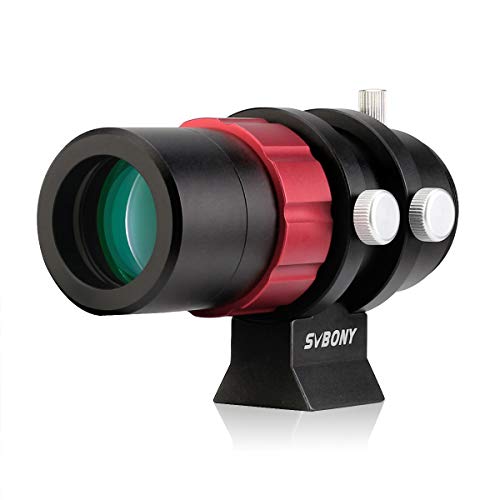
- 30mm f/4 achromatic optics
- 1.25-inch and M42 camera interfaces
- 45mm back focus with nylon-tipped rings
Best For: Compact compatible-camera guiding setups
Precision Focusing Pick
Astromania 60mm Helical Guide Scope

- 240mm focal length with 60mm aperture
- Built-in helical focuser
- Includes rings and Synta-style plate
Best For: Versatile guiding and visual finding
Balanced Mini-Guide Option

- 40mm fully multi-coated achromatic optics
- Scaled front focuser with locking ring
- Six-point adjustable guide ring
Best For: Guiding OTAs up to 700mm focal length
Longer-Focal-Length Choice
Astromania 70mm Deluxe Guide Scope
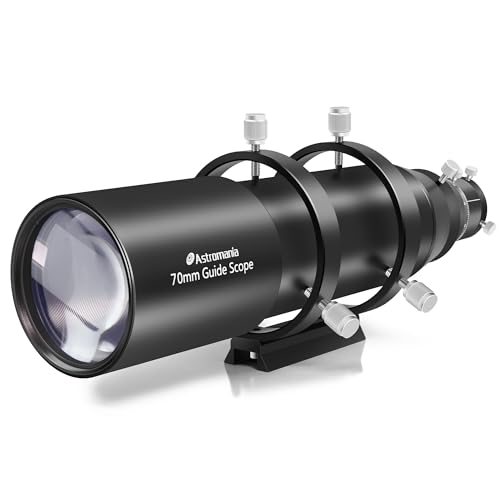
- 400mm focal length with 70mm aperture
- Dual-stage worm focuser
- Includes rings and Synta-style plate
Best For: Larger imaging rigs needing a multi-use guide scope
Compact Dual-Purpose Pick

- 30mm fully multi-coated achromatic optics
- 90-degree diagonal for visual use
- T2 support for compatible guide cameras
Best For: Portable setups needing a compact finder and guide scope
Large-Aperture Focusing Pick
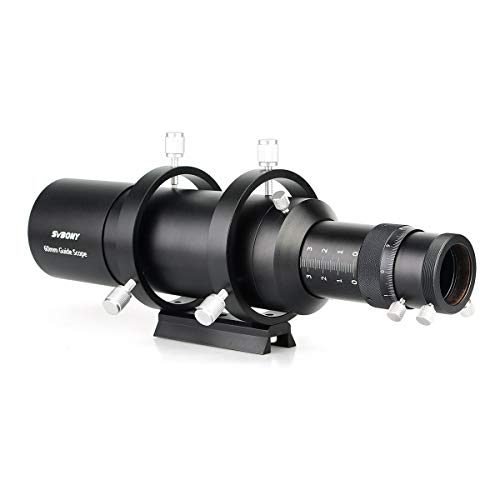
- 60mm aperture for guide-star visibility
- 8mm non-rotating helical focus travel
- Up to 35mm additional back travel
Best For: Astrophotographers needing aperture and precise camera focusing
Fine-Focus Metal Kit

- 50mm aperture with 200mm focal length
- 40mm focusing range with micro-focus
- Dovetail plate and pipe clamps included
Best For: Sturdy imaging setups needing precise manual focusing
Best Precision-Focus Pick
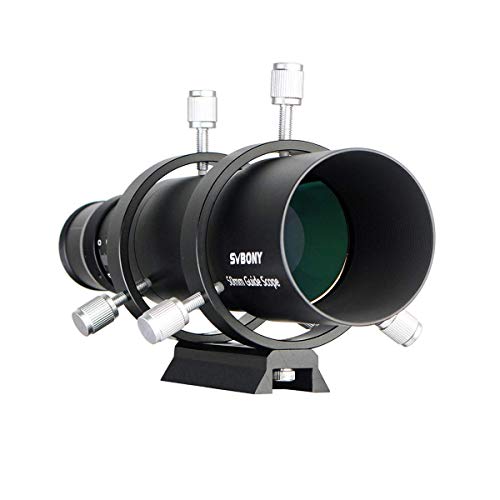
- 50mm fully multi-coated optics
- 8mm helical micro-focus travel
- Includes rings and dovetail bar
Best For: Astrophotographers wanting precise manual focus control
Best Large-Aperture Option

- 60mm fully multi-coated optical system
- 240mm focal length for wide-field guiding
- 48mm focusing range with micro-focus
Best For: Astrophotographers prioritizing brightness and flexible use
Best Versatile Finder-Guide

- 40mm total focusing range
- Works as finder or guide scope
- Includes rings and Synta-style plate
Best For: Users seeking a multipurpose visual and guiding scope
Compact Deep-Sky Starter – SV165 30mm Mini Guide Scope
For photographers building telescope guide scopes for long exposures, the SVBONY SV165 is a compact option with a 30mm achromatic objective, f/4 optics, and a 45mm back-focus distance. Its 1.25-inch and M42 interfaces support compatible guide cameras, though some camera combinations may need additional focusing accessories.
Best For: Compact deep-sky setups using compatible SV305C Pro, ZWO, QHY, Orion, or similar autoguiding cameras.
Pros:
- Wide-field f/4 optics help locate targets and guide stars quickly.
- Fully multi-coated, double-glass achromatic optics are designed for clear images.
- Mounting rings include nylon-tipped thumbscrews to help protect the tube.
- 45mm back focus allows precise manual focus adjustment.
Cons:
- It cannot be used with a dielectric mirror star diagonal.
- Some camera models may require extra accessories to reach focus.
- The image is inverted when used with an eyepiece.
The SV165 prioritizes low weight and a broad field of view, making it a practical guide scope for compatible cameras. Confirm the camera and focusing requirements before buying.
Precision Focusing Pick – Astromania 60mm Helical Guide Scope
The Astromania 60mm guide scope is a versatile choice for telescope guide scopes for long exposures, combining 240mm focal length optics with a built-in helical focuser. Its wide field, threaded camera connection, and included rings and dovetail plate support both visual finding and autoguiding.
Best For: Astrophotographers who want a sturdy, multi-use guide and finder scope for telescopes up to about 1500mm focal length.
Pros:
- 60mm fully multi-coated optics provide a wide field for locating guide stars.
- Helical focusing offers precise adjustment while helping prevent camera or eyepiece rotation.
- Male T-threads allow direct connection to compatible female-threaded guide cameras.
- Includes heavy-duty rings, Teflon inlays, and a Synta-style mounting plate.
Cons:
- The larger 60mm design adds more size and weight than a mini guide scope.
- Camera compatibility depends on having suitable female T-threads or adapters.
- Manual focusing requires setup and adjustment.
With its longer focal length and helical focuser, this model offers more adjustment control than a basic mini scope. It is a strong fit when versatility and stable focusing matter more than minimum size.
Balanced Mini-Guide Option – SV165 40mm Guide Scope
The SVBONY SV165 40mm is designed for telescope guide scopes for long exposures on optical tube assemblies with focal lengths up to 700mm. It combines fully multi-coated achromatic optics, a front focuser with scale, and a six-point adjustable guide ring for repeatable positioning and focusing.
Best For: Shorter-focal-length telescope setups using compatible SV305 Pro, ZWO, QHY, Orion, or similar guide cameras.
Pros:
- 40mm f/4 optics provide a clear, wide-field view.
- Front focuser scale makes it easier to repeat a known focus position.
- Locking ring helps keep focus from shifting during use.
- Six-point guide ring allows adjustment of guide-scope alignment.
Cons:
- It is recommended for telescope focal lengths within 700mm.
- Some eyepiece combinations may require tube-length adjustment to focus.
- Two T2 extension tubes may be needed for certain focusing setups.
This model offers a useful middle ground between a tiny finder-style guide scope and a larger 60mm unit. Its focus scale and adjustable ring are particularly helpful when repeating an established imaging setup.
Longer-Focal-Length Choice – Astromania 70mm Deluxe Guide Scope
For imagers comparing telescope guide scopes for long exposures, the Astromania 70mm Deluxe provides a 400mm focal length and wide-field optics designed to show numerous potential guide stars. Its dual-stage worm focuser supports fine adjustment while accepting 1.25-inch eyepieces and compatible autoguiding cameras.
Best For: Astrophotographers who want a larger, longer-focal-length guide scope that can also serve as a visual finder.
Pros:
- 400mm focal length and 70mm aperture provide bright, wide-field viewing.
- Dual-stage worm focuser includes fine helical adjustment and a brass compression ring.
- Focuser design helps prevent eyepiece or camera rotation.
- Includes matching pipe clamps and a Synta-style mounting plate.
Cons:
- At about 2.5 pounds, it is substantially heavier than compact mini guide scopes.
- Its larger form factor may require more careful balancing.
- Manual focusing takes more setup than a simple fixed-focus finder.
The 70mm Deluxe emphasizes aperture, focal length, and focusing control rather than portability. It is best suited to mounts and imaging rigs that can accommodate its added weight and length.
Compact Dual-Purpose Pick – Astromania 30mm Guide Scope
For telescope guide scopes for long exposures, the Astromania 30mm is a compact option that combines guiding support with convenient visual finding. Its 30mm, 140mm-focal-length optical design offers a wide field for quickly locating targets, while the T2 adapter supports compatible guide cameras and DSLRs.
Best For: Portable astrophotographers who want a lightweight finder and guide scope in one.
Pros:
- 30mm fully multi-coated achromatic optics are designed to provide bright, clear views with reduced glare.
- Includes a 1.25-inch 90-degree diagonal for comfortable visual observation.
- Helical focus ring, 45mm back focus, and F4 optics support quick target acquisition.
- Synta-style dovetail base is compatible with several common finder mounts.
Cons:
- The 30mm aperture provides less light-gathering capacity than larger guide scopes.
- Manual focusing requires adjustment at the scope.
- Camera compatibility depends on the appropriate T2 adapter and threads.
The Astromania is a practical choice when low weight and dual functionality matter more than maximum aperture. It is especially appealing for compact setups and wide-field guiding applications.
Large-Aperture Focusing Pick – SVBONY SV106 60mm Guide Scope
Among telescope guide scopes for long exposures, the SVBONY SV106 stands out for its larger aperture and adjustable helical focusing system. It is designed for precise guide-star focusing and can also work as a straight-through finder with an optional 1.25-inch eyepiece.
Best For: Astrophotographers who prioritize aperture, focus precision, and flexible finder use.
Pros:
- 60mm aperture offers a broad light-gathering design for locating potential guide stars.
- Helical focuser provides 8mm of precise travel without rotating the attached camera or eyepiece.
- Telescoping drawtube adds up to 35mm of back travel for different autoguider setups.
- Male T-threads and a compression ring support secure accessory attachment.
Cons:
- The listed 790g weight may be substantial for lightweight mounts.
- An eyepiece is optional rather than included for finder-scope use.
- Its larger size may be less convenient for highly portable rigs.
The SV106 offers the most aperture and focusing flexibility of these options. Its non-rotating helical focus and adjustable back travel are useful when matching the scope to different guide cameras.
Fine-Focus Metal Kit – Alstar 50mm Guidescope
The Alstar 50mm is a strong option for telescope guide scopes for long exposures when secure focusing and a durable all-metal build are priorities. Its 200mm focal length, fully multi-coated optics, and adjustable helical focuser are intended to support guide-star acquisition and visual finding on telescopes up to 1500mm in focal length.
Best For: Imaging setups that need a sturdy, adjustable guide scope with both camera and eyepiece support.
Pros:
- 50mm aperture and 200mm focal length provide a bright, wide-field guiding and finding view.
- Double helical focuser offers 40mm of total focus range, including 10mm of micro-focusing.
- Brass compression ring, dual thumbscrews, and locking hardware help secure accessories.
- Includes a Synta-style dovetail plate and pipe clamps for broad telescope compatibility.
Cons:
- At 1.3 pounds, it is heavier than the compact Astromania option.
- The listed 1.17-degree field of view is narrower than a short-focal-length mini guide scope.
- It uses manual focusing rather than motorized focus control.
The Alstar balances aperture, mechanical adjustment, and compatibility well. Choose it when a more substantial metal guide scope and fine focus control are preferable to the lightest possible setup.
Best Precision-Focus Pick – SVBONY SV106 50mm Guide Scope
For telescope guide scopes for long exposures, the SVBONY SV106 combines a 50mm objective with a helical focuser designed for precise, stable focus. Its included rings and dovetail bar make it a practical option for astrophotographers building a dedicated guiding setup.
Best For: Astrophotographers who want fine manual focus control and a versatile 50mm guide scope.
Pros:
- 8mm helical micro-focus travel plus up to 30mm of drawtube adjustment
- Male T-threads support secure attachment of compatible guide cameras
- Includes heavy-duty rings and a 3.5-inch dovetail mounting bar
- All-metal construction with fully multi-coated optics
Cons:
- Manual focusing requires setup and adjustment in the field
- Its 50mm aperture gathers less light than larger guide scopes
The SV106 is a well-equipped choice when repeatable focus and flexible mounting matter. Its 50mm optics suit many guiding applications, while the helical focuser helps make fine adjustments without rotating the attached camera.
Best Large-Aperture Option – Alstar 60mm Guide Scope
Among telescope guide scopes for long exposures, the Alstar 60mm model stands out for its larger aperture and 240mm focal length. It is designed to provide bright, wide-field views while working as either a guide scope or a finder.
Best For: Imagers who want a brighter 60mm guide scope with dual finder and autoguiding use.
Pros:
- 60mm aperture provides strong light-gathering capability
- 48mm total focusing range includes 10mm of micro-focus adjustment
- Zero-rotation helical focusing helps maintain guide-star orientation
- Includes Synta-style dovetail plate and matching pipe clamps
Cons:
- At about 2 pounds, it may add noticeable weight to a compact setup
- Its larger size may be less convenient for highly portable rigs
The Alstar is a compelling choice when aperture and focusing range take priority. Its 60mm optical system can make guide-star acquisition easier, while the included mounting hardware supports straightforward installation on compatible telescopes.
Best Versatile Finder-Guide – Astromania 50mm Guide Scope
The Astromania 50mm is a flexible choice among telescope guide scopes for long exposures, pairing a helical focuser with finder-scope functionality. Its mounting hardware, adjustable rings, and threaded camera connection make it suitable for both visual locating and autoguiding.
Best For: Users who want one compact scope for finding objects, locating guide stars, and guiding astrophotography setups.
Pros:
- Helical focuser offers 40mm of total focusing range
- Male T-threads allow direct connection to compatible guide cameras
- Includes rings with Teflon inlays and a Synta-style mounting plate
- Black anodized aluminum housing is sturdy and portable
Cons:
- Manual focusing requires hands-on adjustment
- The 50mm aperture offers less light gathering than the included 60mm alternative
The Astromania balances guiding capability with everyday finder-scope convenience. Its adjustable mounting system and non-rotating worm focuser make it a practical fit for users who want a multipurpose accessory without carrying separate finder and guide scopes.
How We Picked the Best Telescope Guide Scopes for Long Exposures
We selected these models for the features that matter most in autoguided deep-sky imaging: useful aperture and focal length, compatible guide-camera mounting, reliable focusing, practical weight, and versatility for finder or guiding duties. The list includes compact 30mm and 40mm scopes, larger 50mm to 70mm options, and models with single or double helical focusers.
For Telescope Guide Scopes for Long Exposures, optical quality is only part of the decision. A scope must also mount securely, reach focus with your camera, and remain stable when the telescope changes orientation.
Quick Comparison
| Guide scope size | Typical advantage | Best suited to |
|---|---|---|
| 30mm–40mm | Low weight and compact installation | Small refractors, portable rigs, and short focal lengths |
| 50mm–60mm | More light-gathering and guide-star flexibility | General-purpose deep-sky imaging |
| 70mm | Greater aperture and longer guiding reach | Larger imaging systems and demanding setups |
Key Buying Factors for Telescope Guide Scopes for Long Exposures
Focal Length and Guide-Camera Pairing
Choose a guide scope that gives your camera a practical image scale relative to the imaging telescope. Very short guide scopes can work well with modern sensitive cameras and short-focal-length imaging systems, while longer scopes may provide more precise star sampling for longer focal lengths. Check the guide-camera pixel size and your mount’s tracking behavior rather than choosing by aperture alone.
Focus Adjustment
A helical focuser makes fine focus easier and can be valuable when switching cameras or filters. Double helical designs may offer smoother control, but they can add cost and weight. Confirm that the focuser has enough travel to reach focus with your specific camera and any adapter.
Mounting Rigidity and Weight
Flexure is a major cause of elongated stars and cannot be corrected reliably by guiding software. Use a solid guide-scope shoe, minimize unsupported extensions, and avoid overloading a small mount. A lighter 30mm or 40mm model may outperform a larger scope if the mounting arrangement is more rigid.
Optics, Compatibility, and Usability
Look for fully multicoated optics, a standard camera connection, and a mounting interface compatible with your telescope. Finder-style features, diagonals, and multi-use designs can be convenient, but verify that every included component supports the intended guiding setup.
Who Should Buy Which Telescope Guide Scopes for Long Exposures?
Choose a 30mm or 40mm scope if portability, low weight, and a small refractor or camera lens are priorities. These models are especially practical for travel rigs and wide-field imaging.
Choose a 50mm or 60mm scope for the best general-purpose balance of guide-star availability, manageable size, and compatibility with many amateur deep-sky systems. A helical focuser is worthwhile when precise setup and repeatable focus matter.
Choose a 70mm scope when your imaging telescope has a longer focal length, your guide camera needs more light, or you regularly image under conditions where guide-star selection is difficult. Before buying, make sure your mount and guide-scope bracket can handle the additional size and weight.