
Finding a dependable guide scope does not require a large astronomy budget. The best telescope guide scopes under $100 can make alignment, target finding, and entry-level guiding easier without adding excessive weight to your setup.
This roundup compares compact mini guide scopes, right-angle finders, crosshair models, and larger 50mm–60mm options so you can match the scope to your telescope, camera, mount, and observing style.
Best 10 Telescope Guide Scopes Under 100 Picks for 2026
Compact Imaging Guide
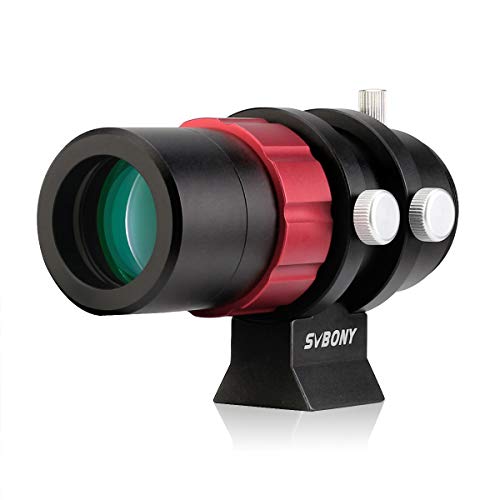
- 30mm f/4 optics with a wide field of view
- 45mm back focus for manual adjustment
- Compatible with several auto-guiding cameras
Best For: Compact astrophotography guiding setups
Simple Target Finder

- Adjustable red LED dot for aiming
- Right-side-up, non-magnifying view
- Includes base and CR2032 battery
Best For: Beginner visual observing
Precision Focusing Guide
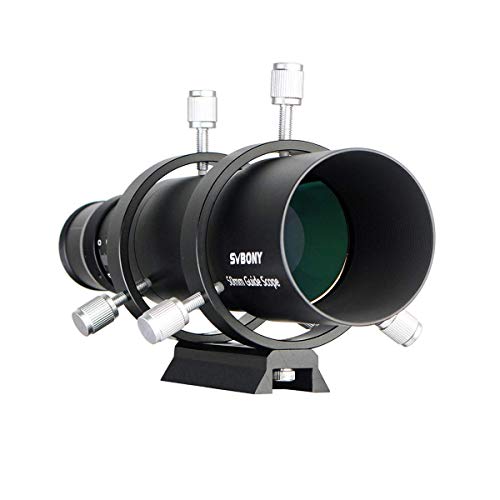
- 50mm objective for astrophotography guiding
- 8mm helical focus travel
- Includes rings and dovetail mounting bar
Best For: Astrophotographers needing fine focus control
Comfortable Visual Finder
Alstar 9x50 Right-Angle Finder
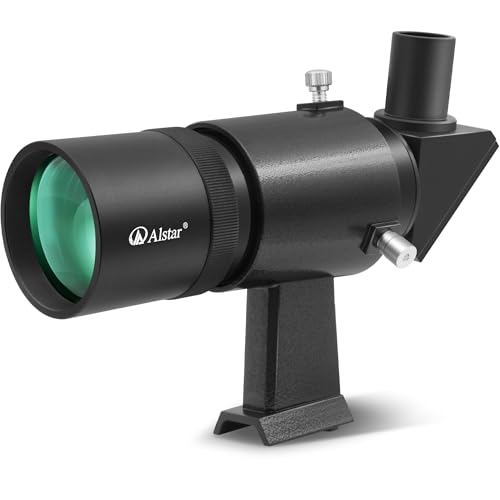
- 9x magnification with a 50mm objective
- 90-degree right-angle viewing
- Upright image with built-in crosshairs
Best For: Manual visual star-hopping
Precision Helical Guide Scope

- 60mm fully multi-coated objective
- Helical focuser with 45mm travel
- Includes rings and dovetail bar
Best For: Astrophotographers wanting a versatile, larger guide scope
Illuminated Crosshair Finder

- 8x50 optics with a 7.3° field
- Correct-image roof prism
- Illuminated glass crosshair
Best For: Visual observers seeking bright, easy target finding
Compact Dual-Purpose Guider

- 30mm F4 fully multi-coated optics
- Includes 90° diagonal and T2 adapter
- Compatible with common Synta-style bases
Best For: Portable setups needing both finding and guiding
Best Right-Angle Visual Finder

- 30mm aperture with fully multi-coated optics
- Comfortable 90-degree correct-image view
- 6x crosshair finder with included bracket
Best For: Visual observers seeking comfortable target alignment
Best Hybrid Guide Scope

- 60mm aperture with 240mm focal length
- 48mm helical focusing range with micro-focus
- T-thread and Synta-style mounting compatibility
Best For: Visual and astrophotography setups needing flexible focusing
Best Budget Alignment Finder

- Lightweight 5x24 finder for initial locating
- Three thumb screws enable XY alignment
- Includes bracket and protective dust caps
Best For: Beginners needing simple, low-weight visual alignment
Compact Imaging Guide – SVBONY SV165 30mm Guide Scope
For shoppers comparing telescope guide scopes under 100, the SVBONY SV165 is a compact option designed for compatible astronomy auto-guiding cameras. Its 30mm f/4 optics provide a wide field of view for locating guide stars, while the included mounting rings support flexible positioning.
Best For: Compact deep-sky astrophotography setups using compatible SV305C Pro, ZWO, QHY, Orion, or other supported auto-guiding cameras.
Pros:
- 30mm f/4 optics offer a wide 2.86-degree field of view.
- Fully multi-coated achromatic optics help produce bright, clear images.
- Includes nylon-tipped mounting-ring screws to help protect the tube.
- Offers 45mm of back focus for precise manual focusing.
Cons:
- It cannot be used with a dielectric mirror star diagonal.
- Some camera models may require additional focusing accessories.
- The image is inverted when used with an eyepiece.
The SV165 makes sense when low weight and a broad guide-star field are priorities. Confirm your camera and mounting requirements before buying, particularly if you need extra focusing accessories.
Simple Target Finder – Celestron StarPointer
Among telescope guide scopes under 100, the Celestron StarPointer is a straightforward red-dot finder rather than a magnifying guide scope. It projects an adjustable red LED dot, helping you aim quickly while keeping the sky right-side up.
Best For: Beginners who want simple, non-magnifying aiming for a telescope, astronomical binoculars, or spotting scope.
Pros:
- Right-side-up view matches the unaided-eye sky orientation.
- Adjustable red-dot brightness helps preserve night vision.
- Small footprint fits a wide range of telescopes and other viewing equipment.
- Includes the mounting base and CR2032 battery.
Cons:
- It is a 1x finder and does not magnify guide stars.
- It uses a battery, so the red dot depends on the included CR2032 cell.
The StarPointer is best viewed as an aiming aid, not an astrophotography auto-guiding scope. Its uncomplicated red-dot design is a practical choice for visual observers and beginners who value fast target acquisition.
Precision Focusing Guide – SVBONY SV106 50mm Guide Scope
For telescope guide scopes under 100, the SVBONY SV106 offers a larger 50mm objective and a helical focuser for astrophotography setups. Its fine-focus controls and included rings and dovetail bar are suited to users who need accurate guide-star framing and camera attachment.
Best For: Astrophotographers seeking a 50mm guide scope with fine manual focusing and flexible mounting options.
Pros:
- 50mm objective supports guide-star acquisition and a 3.4-degree field of view.
- 8mm helical focus travel enables precise adjustments.
- Telescoping drawtube provides up to 30mm of additional back travel.
- Includes two guide rings and a 3.5-inch dovetail mounting bar.
Cons:
- At 1.7 pounds, it is heavier than a compact mini guide scope.
- Manual focusing requires setup and adjustment.
- Camera compatibility should be checked, especially for threaded attachments.
The SV106 is a feature-rich choice for guiding systems where focusing control matters more than minimum weight. Its included mounting hardware adds convenience, but verify your mount and camera interfaces before ordering.
Comfortable Visual Finder – Alstar 9×50 Right-Angle Finder
For buyers browsing telescope guide scopes under 100, the Alstar 9×50 is a visual finder scope built for locating celestial objects rather than camera auto-guiding. Its 90-degree right-angle design, upright image, and crosshairs make searching more comfortable, especially near the zenith.
Best For: Visual observers who want a bright, magnified finder with comfortable right-angle viewing and broad telescope compatibility.
Pros:
- 9x magnification and a 50mm objective help reveal additional stars and brighter deep-sky objects.
- 90-degree right-angle viewing is comfortable when aiming high in the sky.
- Upright, non-reversed multi-coated image is intuitive to use.
- Includes built-in crosshairs and a bracket for alignment.
Cons:
- It is a visual finderscope, not an auto-guiding camera scope.
- At 1.1 pounds, it adds more weight than a simple red-dot finder.
- Compatibility depends on the telescope’s finder-scope base and bracket fit.
The Alstar is a strong fit for manual star-hopping and comfortable visual navigation. Choose it over a red-dot finder when magnification, crosshairs, and a brighter view are more important than minimal size or camera connectivity.
Precision Helical Guide Scope – Astromania 60mm
For telescope guide scopes under 100, this Astromania model stands out with a 60mm objective, 240mm focal length, and a built-in helical focuser. It is designed for both visual finding and autoguiding, with included rings and a Synta-style dovetail mounting bar for a more complete setup.
Best For: Astrophotographers who want a larger guide scope with precise manual focusing and broad telescope compatibility.
Pros:
- 60mm fully multi-coated optics and 240mm focal length are suited to astrophotography setups up to 1500mm focal length.
- Helical focuser provides fine adjustments, a 45mm total focusing range, and zero-flexure focusing performance.
- Includes heavy-duty rings, Teflon inlays, and a Synta-style mounting plate.
- Male T-threads support direct attachment of compatible guide cameras.
Cons:
- The larger 60mm design may add more weight than a mini guide scope.
- Manual setup requires careful ring adjustment and focusing.
This is a versatile choice when you need a sturdy guide scope that can also serve as a comfortable wide-field finder. Its included mounting hardware and threaded focuser make it especially practical for dedicated astrophotography rigs.
Illuminated Crosshair Finder – SVBONY SV208 8×50
Among telescope guide scopes under 100, the SVBONY SV208 is primarily a bright, easy-to-use finder scope. Its 50mm objective, 8x magnification, 7.3-degree field of view, and illuminated crosshair help you locate targets across the sky before switching to the main telescope.
Best For: Visual observers who need a bright, corrected-image finder with an illuminated reticle.
Pros:
- 50mm objective admits more light for a bright image and easier target acquisition.
- 7.3-degree field of view makes sweeping the sky and locating targets convenient.
- Correct-image roof prism provides upright, left-to-right-correct views.
- Dark-field LED illumination and a glass reticle support use in very dark conditions.
Cons:
- It is presented primarily as a finder scope rather than a dedicated autoguiding system.
- Battery-powered illumination adds another component to maintain.
- Manual reticle and focus adjustments require initial alignment.
The SV208 is a strong fit if your priority is quick, comfortable visual aiming rather than a specialized camera-guiding setup. Its large field and illuminated crosshair are particularly useful under dark skies.
Compact Dual-Purpose Guider – Astromania Mini 30mm
For a lightweight option among telescope guide scopes under 100, the Astromania Mini Guide Scope combines a 30mm F4 optical system with finder and guiding functions. It includes a 1.25-inch 90-degree diagonal for comfortable visual viewing and a T2 extension adapter for compatible guide cameras and DSLRs.
Best For: Beginners and portable astrophotographers who want one compact scope for finding targets and basic guiding.
Pros:
- 30mm fully multi-coated achromatic optics are designed to provide bright, clear views.
- F4 optics and an ultra-wide field support fast target acquisition.
- Includes a 90-degree diagonal for visual use and a T2 adapter for imaging accessories.
- Synta-style dovetail base is compatible with several common finder bases.
Cons:
- The 30mm aperture provides less light-gathering capacity than larger guide scopes.
- Manual three-step focusing requires adjustment before use.
- Compatibility with cameras depends on the appropriate T2 connection and accessories.
This mini scope favors convenience and portability over maximum aperture. Its dual-purpose design, right-angle viewing, and broad compatibility make it a practical entry point for compact guiding and visual finding.
Best Right-Angle Visual Finder – SVBONY SV182 6x30mm
For telescope guide scopes under 100, the SVBONY SV182 is a practical visual finder for locating targets before observing through the main telescope. Its 30mm aperture, 6x magnification, crosshair reticle, and right-angle correct-image design are aimed at comfortable, straightforward alignment.
Best For: Visual observers who want a comfortable right-angle finder with an erect image and included bracket.
Pros:
- 30mm aperture and fully multi-coated optics support a bright, clear view.
- 90-degree right-angle design reduces neck bending and twisting.
- 6x magnification and crosshair reticle make target alignment easier.
- Includes a mounting bracket and uses a 120mm focal length.
Cons:
- Designed for pure visual use rather than external high-magnification eyepieces.
- Fixed mounting may offer less flexibility than adjustable mounting systems.
The SV182 is a good fit when comfortable, corrected-image viewing matters more than advanced guiding-camera compatibility. Its modest aperture and simple manual focus keep it focused on visual finding and alignment.
Best Hybrid Guide Scope – Alstar 60mm Deluxe Finder
Among telescope guide scopes under 100, the Alstar 60mm Compact Deluxe Finder stands out for its larger optical system and astrophotography-oriented focusing hardware. It combines a 60mm aperture with a 240mm focal length, helical fine focus, T-thread compatibility, and a Synta-style mounting plate.
Best For: Observers who want one compact scope for visual finding and compatible guide-camera or eyepiece use.
Pros:
- 60mm fully multi-coated optical system gathers ample light for wide-field views.
- Dual helical focuser provides 48mm of focusing range, including 10mm micro-focus.
- T-thread compatibility supports direct camera attachment, including compatible guide cameras.
- Includes a dovetail mounting plate, pipe clamps, and adjustable dovetail weight.
Cons:
- Its 2-pound weight may be substantial for lightweight telescope setups.
- At 240mm focal length, it is less compact than basic low-power finders.
- Mounting compatibility depends on the telescope’s available Synta-style interface.
The Alstar offers the broadest role of these options, serving as both a finder and guide scope. Choose it when precise focusing and camera compatibility are priorities, and your mount can accommodate its larger, heavier build.
Best Budget Alignment Finder – SVBONY 5×24 Crosshair
For shoppers comparing telescope guide scopes under 100, the SVBONY 5×24 is a lightweight, simple alignment finder. Its low-power 5x magnification, crosshair reticle, three thumb screws, mounting bracket, and dust caps provide the core features needed to point a telescope toward an observing target.
Best For: Beginners and visual observers who need an affordable, lightweight finder for initial target location.
Pros:
- Lightweight 1.76-ounce design adds little to a telescope setup.
- 5×24 optics offer low-power assistance for initially locating objects.
- Three thumb screws allow precise XY alignment.
- Includes a two-hole mounting bracket and dust caps.
Cons:
- The bracket attaches with bolts or screws and does not slide into a dovetail base.
- 24mm aperture provides less light-gathering capability than larger finders.
- It is intended as a finder for alignment rather than a dedicated guide-camera scope.
The SVBONY 5×24 is the straightforward choice for basic visual alignment and minimal added weight. Its fixed two-hole bracket should be checked against your telescope before buying, especially if you expect dovetail mounting.
How We Picked the Best Telescope Guide Scopes Under 100
We focused on models that offer useful functionality for visual observing, alignment, or entry-level astrophotography while staying below the $100 price point. The selection includes compact 30mm guide scopes, traditional 5×24 and 6×30 finders, brighter 8×50 and 9×50 designs, and multi-use models with helical focusers.
Our comparisons emphasize practical specifications rather than price alone: aperture, magnification, focal ratio, focusing method, reticle or image orientation, mounting hardware, and likely compatibility with common telescope systems. Product listings and included accessories can vary, so verify the current package contents before ordering.
Quick Comparison
Compact guide scopes: The SVBONY SV165 and Astromania Mini Guide Scope are lightweight choices for setups where reduced mounting weight matters.
Larger-aperture options: The SVBONY SV106, Astromania 60mm, Alstar 9×50, and SVBONY SV208 gather more light and can provide a brighter view for locating objects.
Traditional finders: The Celestron StarPointer, SVBONY SV182, and SVBONY 5×24 favor straightforward target acquisition, with differences in optical and reticle design.
Key Buying Factors for Telescope Guide Scopes Under $100
Aperture and Magnification
A larger objective generally produces a brighter view, but it also adds size and weight. Lower magnification offers a wider field that is often easier for star-hopping, while higher magnification can help with finer positioning.
Focusing and Optical Design
Helical focusers provide more precise adjustment than basic fixed-focus arrangements and are especially useful when pairing a guide scope with a camera. Right-angle designs are more comfortable on telescopes that point high overhead, while upright or correct-image views can make navigation more intuitive.
Mounting and Compatibility
Check whether the scope includes a bracket, dovetail shoe, rings, or another mounting interface. Confirm that the attachment matches your telescope and that the total weight is suitable for the mount. Also check whether the guide scope has the correct adapter for your guide camera or eyepiece.
Reticles and Intended Use
Crosshair reticles can simplify manual centering, whereas illuminated or red-dot-style finders may be faster for broad target acquisition. A guide scope designed primarily for visual finding may not offer the focusing range or camera compatibility required for autoguiding.
Who Should Buy Which Telescope Guide Scopes Under 100?
Choose a compact 30mm model if you want minimal weight for a small refractor, portable mount, or entry-level guiding setup.
Choose a 50mm or 60mm scope if you prioritize a brighter view, need more light-gathering ability, or want a multi-use finder with more focusing flexibility.
Choose a right-angle finder for comfortable viewing on a long optical tube or when you frequently observe targets near the zenith.
Choose a crosshair model if manual alignment and precise target centering are more important than the convenience of a red-dot finder.
Before buying, match the scope’s optical design and mounting hardware to your actual setup. For astrophotography, prioritize secure mounting, adequate focus travel, and camera compatibility over aperture alone; for visual observing, field of view and viewing comfort may matter more.