
City lights do not rule out astronomy. The right telescope can still deliver rewarding views of the Moon, bright planets, double stars, and selected deep-sky targets from a balcony, backyard, or rooftop.
We selected 10 telescopes for city stargazing across smart, smartphone-guided, refractor, and reflector designs, with options for beginners who prioritize portability, ease of setup, or greater light-gathering power.
Best 10 Telescopes for City Stargazing Picks for 2026
Best Smart Telescope
App-Controlled Astrophotography
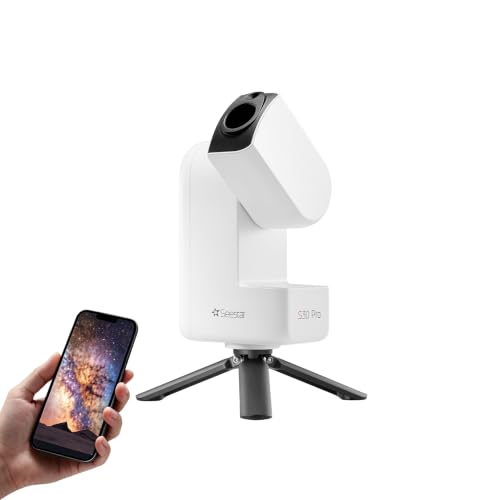
- Automatic GoTo targeting and tracking
- Built-in light-pollution filters
- Compact 3.6-pound design
Best For: Beginners capturing deep-sky images from urban skies
Best Guided Reflector
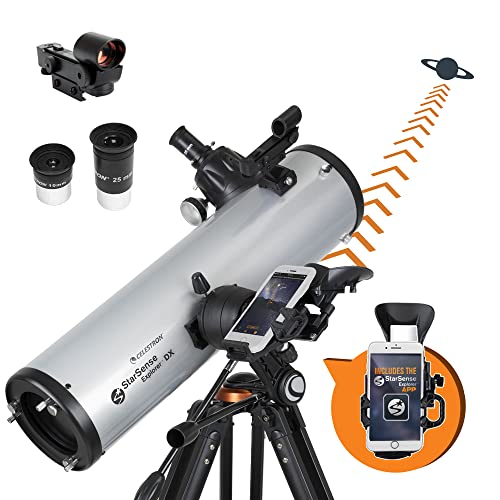
- 130mm Newtonian reflector
- StarSense smartphone guidance
- Manual slow-motion controls
Best For: Visual observing of planets and brighter deep-sky targets
Best Equatorial Reflector
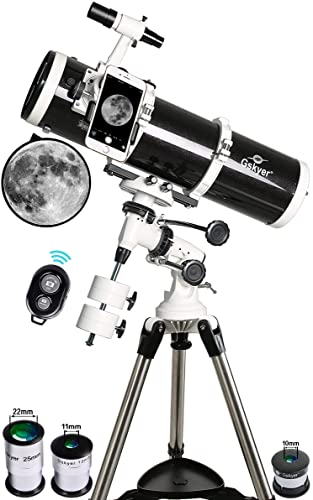
- 130mm reflector optics
- German equatorial mount
- Includes 3X Barlow lens and three eyepieces
Best For: Backyard observers learning manual tracking and alignment
Best Portable Refractor
Beginner-Friendly Travel Scope

- Lightweight 5.8-pound setup
- Includes backpack and phone adapter
- 30X and 66X viewing options
Best For: Families and beginners observing the Moon and bright planets
Best Guided Option
Celestron StarSense Explorer LT 114AZ
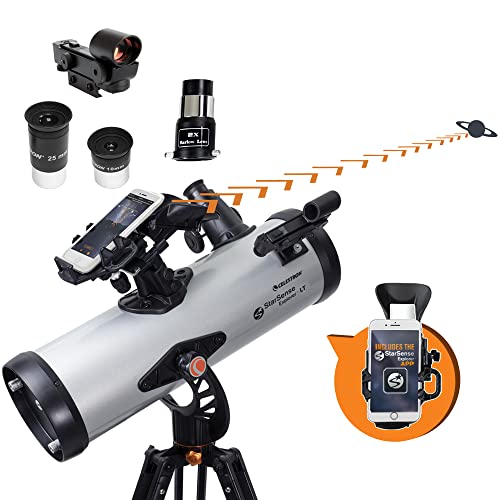
- Smartphone-guided target finding
- 114mm reflector for bright lunar and planetary views
- Includes 25mm, 10mm, and 2x Barlow lens
Best For: Beginners seeking guided city stargazing
Best Large-Aperture Value
MEEZAA 90mm Refractor Telescope

- 90mm aperture with fully multi-coated optics
- 32x–240x stated magnification range
- Includes phone adapter, tripod, and carry bag
Best For: Beginners wanting aperture and accessories
Best Travel Pick

- Lightweight 70mm refractor
- No-tool setup with included backpack
- Useful for nighttime and daytime viewing
Best For: Portable family and beginner observing
Large-Aperture City Explorer
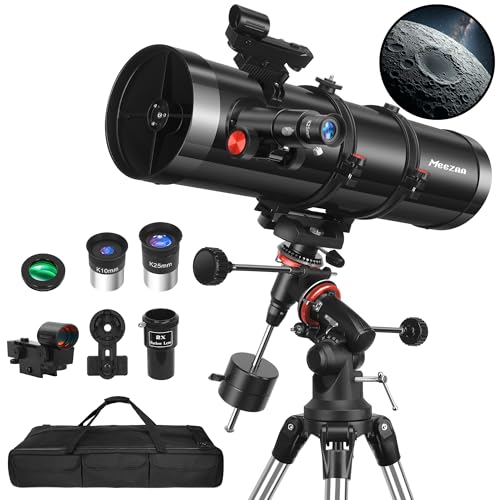
- 150mm aperture for bright lunar, planetary, and deep-sky views
- 26x–130x range with Barlow lens and Moon filter
- Equatorial mount, phone adapter, and carry bag included
Best For: Beginners wanting a capable, expandable telescope for backyard or city-edge observing
Trusted Beginner Pick

- 130mm coated Newtonian optics for lunar and deep-sky viewing
- Equatorial mount with smooth manual slow-motion controls
- Includes two eyepieces, StarPointer finder, software, and two-year warranty
Best For: First-time observers who value aperture, support, and a traditional equatorial setup
Portable City Stargazer

- Compact 70mm refractor with a wide 5.8-degree field of view
- Simple altazimuth mount and adjustable tripod
- Carry bag, phone adapter, wireless remote, and 3x Barlow included
Best For: Kids, casual beginners, and travelers prioritizing portability and easy setup
Best Smart Telescope – App-Controlled Astrophotography
For hands-off telescopes for city stargazing, the ZWO Seestar S30 Pro is built around automatic targeting, tracking, and app-based imaging. Its built-in light-pollution filters, compact 3.6-pound design, and one-tap capture modes make it especially practical for bright urban skies.
Best For: Beginners who want automated deep-sky and wide-field astrophotography from the city.
Pros:
- Automatic GoTo targeting and tracking simplify finding celestial objects.
- Built-in light-pollution filters help produce clearer urban-sky images.
- Compact, portable design supports travel, camping, and extended sessions.
- One-tap modes cover deep-sky objects, the Moon, Sun, Milky Way, and star trails.
Cons:
- Designed for deep-sky imaging rather than planetary observation.
- Requires a smartphone or tablet for app control.
- Deep-sky imaging requires keeping the device stationary for accurate tracking.
The S30 Pro is a strong city-stargazing choice if your priority is capturing processed images instead of manually viewing through an eyepiece. It offers the simplest workflow here, though traditional visual observers may prefer a conventional telescope.
Best Guided Reflector – Smartphone Sky Navigation
The Celestron StarSense Explorer DX 130AZ combines a substantial 130mm reflector with smartphone-guided navigation, making it a practical option among telescopes for city stargazing. Its app identifies targets and provides a curated list of objects visible from your location and time.
Best For: Beginners who want traditional visual observing with guided access to lunar, planetary, and brighter deep-sky targets.
Pros:
- StarSense technology uses your phone to help locate celestial objects.
- 130mm Newtonian reflector gathers light for views of the Moon, planets, nebulae, and galaxies.
- Dual-axis slow-motion controls help with manual positioning and tracking.
- Includes 25mm and 10mm eyepieces plus a two-year warranty.
Cons:
- At 18 pounds, it is less portable than the compact options in this roundup.
- Manual operation requires active alignment and tracking by the user.
- Smartphone guidance depends on having a compatible phone available.
This is a well-rounded choice for city observers who want to see objects directly through an eyepiece while using a phone as a navigation aid. Its 130mm aperture is appealing, but the larger setup is better suited to a backyard or balcony than frequent travel.
Best Equatorial Reflector – Large-Aperture Manual Viewing
The Gskyer EQ 130 offers a 130mm aperture and German equatorial mount for observers seeking a more traditional setup among telescopes for city stargazing. Its large reflector, included Barlow lens, and equatorial tracking design favor users who want to explore lunar, planetary, and brighter deep-sky objects manually.
Best For: Beginners and developing hobbyists who want a large-aperture reflector with equatorial tracking capability.
Pros:
- 130mm aperture and high-transmission optics support bright, detailed views.
- German equatorial mount can track celestial objects as they move across the sky.
- Includes three eyepieces, a 3X Barlow lens, finderscope, and adjustable tripod.
- Bluetooth camera remote supports phone photos and videos without a dedicated app.
Cons:
- At about 30 pounds, it is relatively heavy and less convenient to transport.
- Manual focusing and equatorial alignment require more learning than an automated system.
- High stated magnification depends on suitable observing conditions and accessories.
The EQ 130 makes sense for city users who have room for a semi-permanent observing setup and want more control than an app-driven telescope provides. Its aperture is useful under urban skies, but the weight and equatorial mount add setup complexity.
Best Portable Refractor – Beginner-Friendly Travel Scope
The Celticbird 80mm refractor is a straightforward, portable pick for casual telescopes for city stargazing. Its altazimuth mount, included backpack, phone adapter, and simple 30X or 66X eyepiece options make it approachable for beginners and families observing from a balcony, yard, or nearby dark-sky location.
Best For: Beginners and families who want an easy-to-carry telescope for the Moon and bright planets.
Pros:
- 80mm aperture and fully coated optics are designed for brighter views.
- Portable 5.8-pound setup includes a backpack and adjustable tripod.
- Simple altazimuth mount and no-tool assembly suit beginners and children.
- Includes 20mm and 9mm eyepieces, moon filter, finderscope, and phone adapter.
Cons:
- Its 80mm aperture is more limited than the 130mm reflectors in this roundup.
- Manual operation provides less automated guidance or tracking.
- Supplied magnifications top out at 66X, limiting close-up planetary viewing.
This is the most accessible conventional telescope here for casual city observing and short trips. It will not match the light-gathering capacity of the larger reflectors, but its low weight, included carrying bag, and uncomplicated controls make it easy to use regularly.
Best Guided Option – Celestron StarSense Explorer LT 114AZ
For city stargazing, the Celestron StarSense Explorer LT 114AZ combines a 114mm reflector with smartphone-guided navigation. The app identifies star patterns, suggests targets based on your location and time, and directs you toward planets, nebulae, galaxies, and star clusters.
Best For: Beginners who want guided help locating celestial objects from urban skies.
Pros:
- StarSense app uses sky recognition to help locate targets.
- 114mm reflector provides bright views of the Moon, Jupiter, Saturn, Orion Nebula, and Andromeda Galaxy.
- Includes 25mm and 10mm eyepieces, a 2x Barlow lens, mount, and preassembled tripod.
- Includes a two-year US warranty and unlimited US-based support.
Cons:
- Manual altazimuth mounting requires you to track objects by hand.
- It is less compact than the smaller travel-oriented option in this roundup.
This is the strongest choice here for city observers who value target-finding assistance and want enough aperture for both bright planetary and selected deep-sky viewing.
Best Large-Aperture Value – MEEZAA 90mm Refractor Telescope
The MEEZAA 90mm refractor is a practical pick among telescopes for city stargazing when you want a larger aperture and a broad magnification range. Its fully multi-coated optics, phone adapter, tripod, and carry bag make it suited to backyard observing and occasional trips to darker locations.
Best For: Beginners who want a 90mm refractor with useful accessories for visual observing and basic phone capture.
Pros:
- 90mm aperture and fully multi-coated lenses are designed to improve brightness and clarity.
- 10mm and 25mm eyepieces plus a 3x Barlow provide a stated 32x–240x range.
- Includes a stainless-steel tripod, phone adapter, carry bag, finder scope, and accessory tray.
- Paper instructions are designed for quick setup, with 90% of users reportedly assembling it in 10 minutes.
Cons:
- Manual altazimuth mounting and manual focus do not provide automated tracking.
- The included straight-through finder may require more careful alignment than a reflex finder.
With its 90mm objective and generous accessory bundle, this MEEZAA model offers a flexible starting point for city observers who prioritize aperture and portability over app-guided navigation.
Best Travel Pick – Celestron Travel Scope 70
The Celestron Travel Scope 70 is a lightweight, beginner-friendly option for city stargazing, especially if you want to move between a balcony, backyard, park, or darker-sky destination. Its 70mm refractor sets up without tools and packs into the included backpack.
Best For: Families and beginners who need a simple, portable telescope for lunar, planetary, and daytime viewing.
Pros:
- 70mm fully coated refractor is designed for clear views of the Moon, planets, and daytime scenery.
- No-tool setup and a full-height tripod make it quick to use.
- Includes 20mm and 10mm eyepieces for wide and closer views.
- Backpack, finderscope, Starry Night software, and other accessories are included.
Cons:
- Its 70mm aperture collects less light than the 90mm and 114mm models here.
- It has a manual mount and manual focus rather than guided or automated tracking.
This is the easiest model to carry and set up, making it a sensible choice for casual city observers who value convenience and day-to-night versatility over maximum light gathering.
Large-Aperture City Explorer – MEEZAA 150EQ Reflector
For city stargazing, the MEEZAA 150EQ combines a 150mm aperture with a 650mm focal length to gather plenty of light for views of the Moon, planets, and selected deep-sky objects. Its equatorial mount and included phone adapter make it a capable choice for beginners who want room to grow.
Best For: Beginners and families seeking a large-aperture telescope with manual tracking and travel-ready storage.
Pros:
- 150mm aperture offers strong light-gathering capability.
- 26x–130x magnification range with two eyepieces and a 2x Barlow lens.
- Equatorial mount includes slow-motion controls for following celestial targets.
- Includes a phone adapter, Moon filter, tripod, and carry bag.
Cons:
- The equatorial mount may require more learning than a simple altazimuth design.
- Manual focusing and tracking require hands-on adjustment.
- The larger reflector setup is less compact than a small travel telescope.
The MEEZAA 150EQ is a strong option when bright, detailed views matter more than ultimate portability. Its accessory bundle and slow-motion controls add practical value for urban observers learning the basics of manual astronomy.
Trusted Beginner Pick – Celestron AstroMaster 130EQ
The Celestron AstroMaster 130EQ is designed for beginners exploring telescopes for city stargazing, with 130mm Newtonian optics and a German equatorial mount. Its 650mm focal length supports views of the Moon and deep-sky objects, while slow-motion controls help with manual pointing.
Best For: First-time observers who want established-brand support, stable manual controls, and bright views from a backyard or urban location.
Pros:
- 130mm coated optics provide useful light-gathering ability.
- German equatorial mount includes right ascension and declination slow-motion controls.
- Quick, tool-free setup with an adjustable tripod.
- Includes 20mm and 10mm eyepieces, StarPointer finder, software, and a two-year warranty.
Cons:
- The 17-pound weight makes it less convenient to move than compact travel models.
- Manual equatorial operation has a learning curve for new users.
- The listed accessory set does not include a phone adapter.
The AstroMaster 130EQ balances substantial aperture with beginner-focused controls and brand support. It is a sensible choice for city observers who prioritize a conventional telescope setup and a broad manufacturer warranty over lightweight portability.
Portable City Stargazer – Gskyer 70mm Travel Refractor
Compact and straightforward, the Gskyer 70mm refractor is a convenient entry point for telescopes for city stargazing. Its 400mm focal length, 5.8-degree field of view, adjustable altazimuth tripod, and carry bag suit casual Moon and star viewing from balconies, yards, or travel locations.
Best For: Kids, beginners, and travelers who want an easy-to-carry telescope with smartphone accessories.
Pros:
- 70mm fully coated optics provide a simple introduction to lunar and stellar viewing.
- Altazimuth mount is straightforward for casual aiming.
- Includes two eyepieces, a 3x Barlow lens, and a 5×24 finder scope.
- Carry bag, smartphone adapter, and wireless camera remote support portability and basic image capture.
Cons:
- Its 70mm aperture gathers less light than the larger reflector models in this roundup.
- The aluminum tripod is designed for adjustability and portability rather than heavy-duty stability.
- Manual focusing and aiming remain hands-on.
The Gskyer is the most travel-friendly option here, with a wide field of view and an uncomplicated mount. Choose it when easy transport and beginner accessibility are more important than maximum light gathering or advanced tracking.
How We Picked These Telescopes for City Stargazing
We focused on practical performance in light-polluted environments rather than maximum advertised magnification. The selection covers several useful categories: app-controlled smart telescopes, smartphone-guided scopes, compact refractors, and larger Newtonian reflectors. We considered aperture, optical design, mount stability, portability, setup demands, included accessories, and how approachable each model is for a first-time observer.
City observers benefit most from equipment that is quick to deploy and easy to aim. A stable mount and clear finding system can matter more than a dramatic magnification claim, especially when targets are faint or viewing time is limited.
Quick Comparison
- Smartest option: The ZWO Seestar S30 Pro is designed around app control and astrophotography.
- Best guided approach: Celestron StarSense Explorer models use a smartphone to help locate celestial objects.
- Best for portability: The Celestron Travel Scope 70mm is compact and includes a backpack.
- Best for more light gathering: The 130mm and 150mm reflector models can reveal more than small travel scopes, but require more careful setup.
- Best low-maintenance design: Refractors generally avoid reflector mirror alignment and are convenient for casual lunar and planetary viewing.
Key Buying Factors for City Stargazing
Aperture and Light Pollution
Aperture determines how much light the telescope gathers and how much detail it can resolve. Larger apertures help with faint objects, but urban skyglow will still limit visibility. For many city users, a 70mm to 90mm refractor is an easy starting point, while 114mm to 150mm reflectors offer greater potential when storage and setup are not concerns.
Mount Stability and Aiming
A shaky tripod can make even good optics frustrating. Look for a mount that feels secure when focusing. Altazimuth mounts are usually simpler for beginners; equatorial mounts can be useful for tracking, but they have a steeper learning curve and need correct alignment.
Smartphone Guidance and Smart Features
App-guided telescopes can shorten the time spent searching for targets, which is valuable under bright skies. Smart telescopes are particularly appealing if you want automated object finding or image capture, while traditional optical telescopes provide a more direct, hands-on viewing experience.
Portability and Storage
Choose a telescope you will actually carry outside. Check the packed size, tripod weight, accessory storage, and whether a bag is included. A smaller scope that is used regularly can be more rewarding than a larger model left in storage.
Who Should Buy Which Telescopes for City Stargazing?
Choose a smart telescope if your priority is app control, convenient target acquisition, and astrophotography. Choose a StarSense Explorer model if you want traditional eyepiece viewing with smartphone-assisted navigation. Choose a compact refractor for low-maintenance lunar and planetary observation, family use, or frequent travel. Choose a 114mm to 130mm reflector if you want a balanced beginner telescope with more light-gathering ability. Choose a 150mm reflector when deeper-sky potential matters most and you are comfortable with a bulkier setup and additional alignment care.