
Finding a capable telescope on a modest budget is easier when you focus on the fundamentals: aperture, mount stability, optical design, and how simple the setup is to use. The best telescopes under $300 can reveal the Moon’s craters, Jupiter’s major moons, Saturn’s rings, and many bright deep-sky targets.
This roundup compares 10 beginner-friendly options, from compact travel refractors to smartphone-assisted and larger-aperture models. Use the buying guide below to match the telescope’s strengths with your observing goals, experience level, and storage needs.
Best 10 Telescopes Under 300 Picks for 2026
Portable Starter

- 70mm coated optics and 400mm focal length
- Includes 3x Barlow, finder scope, and two eyepieces
- Carry bag, phone adapter, and wireless remote included
Best For: Kids, beginners, and portable smartphone-assisted viewing
Equatorial Value
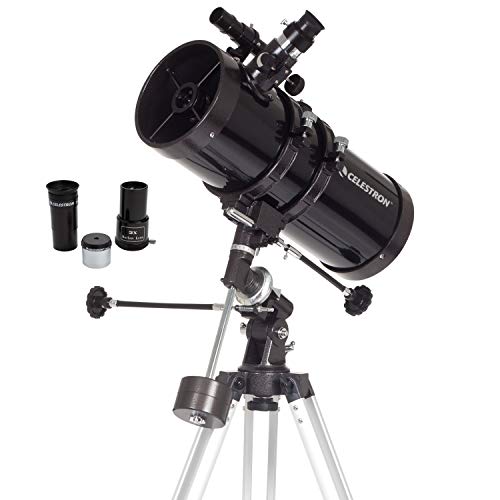
- Large 127mm Newtonian reflector
- German equatorial mount with slow-motion control
- Two eyepieces, 3x Barlow, software, and two-year warranty
Best For: Home astronomy and learners wanting more aperture
Easy-Setup Refractor

- 80mm aperture with fully multi-coated optics
- No-tool setup and portable carrying bag
- Eyepieces, 3x Barlow, phone adapter, and remote included
Best For: Beginners seeking a portable, convenient refractor
Smartphone-Guided Pick
Celestron StarSense Explorer LT 114AZ
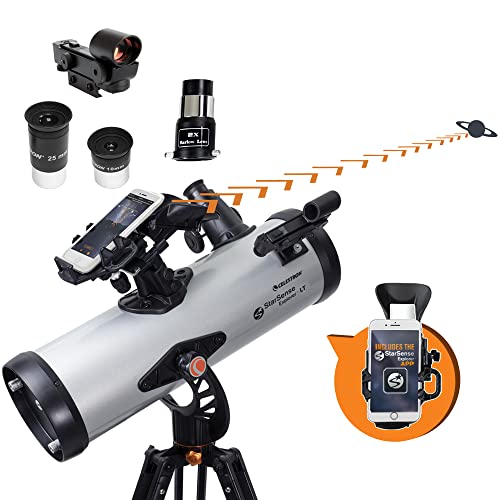
- StarSense app guides users to celestial targets
- 114mm Newtonian reflector for Moon and deep-sky views
- Manual altazimuth mount with slow-motion adjustment
Best For: Beginners who want smartphone-assisted object finding
Portable Stargazing Pick
Celticbird 80mm Refractor Telescope

- 80mm aperture with fully coated optics
- 30X and 66X eyepieces with moon filter
- Backpack, tripod, and phone adapter included
Best For: Beginners and families wanting portable Moon and planet viewing
Digital Convenience Pick
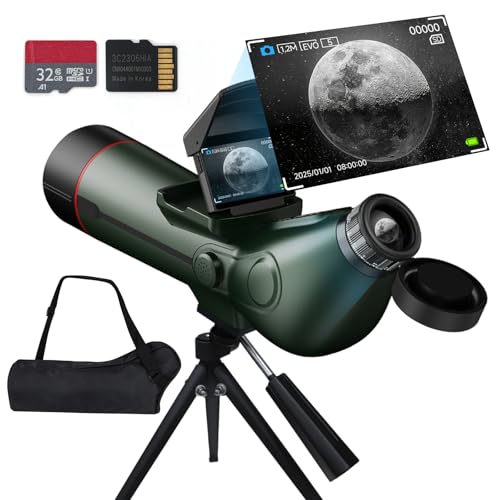
- 80mm objective lens with autofocus
- Built-in 4K photo and video camera
- Dual screens and up to six-hour battery life
Best For: Beginners wanting digital viewing and onboard recording
Large-Aperture Value Pick
HETEKAN 90mm Refractor Telescope

- 90mm aperture with fully multi-coated optics
- 36X-450X range using three eyepieces and Barlow lens
- Phone adapter, carry bag, and two-year warranty included
Best For: Beginners seeking a larger-aperture manual telescope
Best Portable Kit

- 90mm aperture with fully coated optics
- 22x–165x magnification
- Includes bag, phone adapter, and folding stool
Best For: Portable beginner stargazing and family use
Best Long-Focal-Length Pick

- 90mm aperture and 800mm focal length
- 32x–240x magnification
- Adjustable stainless-steel tripod and carry bag
Best For: Beginner astronomy and lunar viewing
Best for Moon Viewing

- 90mm aperture with 800mm focal length
- Includes moon filter and 5x24 finder scope
- 32x–240x magnification with phone adapter
Best For: Beginner lunar observation and family stargazing
Portable Starter – Gskyer 70mm Travel Telescope
If you want one of the more portable telescopes under 300, the Gskyer 70mm refractor is designed for beginner-friendly viewing and travel. Its 400mm focal length, coated optics, adjustable tripod, and included carry bag make it a practical option for exploring the Moon and brighter celestial objects.
Best For: Kids, beginners, and families who want a portable telescope with smartphone accessories.
Pros:
- 70mm aperture and fully coated optics support bright, clear views.
- Includes two eyepieces, a 3x Barlow lens, and a 5×24 finder scope.
- Phone adapter, wireless remote, adjustable tripod, and carry bag are included.
Cons:
- Manual focusing and an altazimuth mount may offer less tracking control than an equatorial design.
- The compact 400mm focal length is geared toward general beginner viewing rather than high-power observation.
Choose this model when portability and included extras matter most. It is a straightforward starter package for casual Moon viewing, introductory astronomy, and smartphone-assisted snapshots.
Equatorial Value – Celestron PowerSeeker 127EQ
The Celestron PowerSeeker 127EQ is a strong contender among telescopes under 300 for buyers who want a larger reflector and more controlled manual tracking. Its 127mm Newtonian design is suited to viewing the Moon, planets, stars, and selected deep-sky targets from home or a dark-sky site.
Best For: Adults and kids learning astronomy together who want a larger-aperture reflector with an equatorial mount.
Pros:
- 127mm aperture gathers substantial light for Moon, planetary, and deep-sky viewing.
- German equatorial mount includes slow-motion control for following objects.
- Comes with 20mm and 4mm eyepieces, a 3x Barlow lens, and astronomy software.
- Includes a two-year US warranty and support from Celestron.
Cons:
- The 13-pound setup is less convenient to carry than the smaller travel models in this roundup.
- Its manual mount and focus require more hands-on learning from beginners.
This is the better fit for shoppers prioritizing aperture and tracking control over the simplest setup. The reflector design offers a versatile introduction to both planetary and brighter deep-sky observing.
Easy-Setup Refractor – Koolpte 80mm AZ Telescope
For shoppers comparing telescopes under 300, the Koolpte 80mm model combines a relatively large aperture with a beginner-friendly, no-tool setup. Its 600mm focal length, fully multi-coated optics, adjustable tripod, and included carrying accessories suit casual observing at home or on trips.
Best For: Adults and beginners who want a portable refractor with straightforward setup and phone compatibility.
Pros:
- 80mm aperture and fully multi-coated optics are designed to improve brightness and clarity.
- Includes 25mm and 10mm eyepieces, a 3x Barlow lens, and a 5×24 finder scope.
- No-tool setup, adjustable tripod, carrying bag, phone adapter, and wireless remote add convenience.
- Offers stated magnifications of 24x and 60x before the Barlow lens is used.
Cons:
- The altazimuth mount provides simpler operation but less structured tracking than an equatorial mount.
- Phone photography features depend on manual alignment and focusing.
This model stands out for its balance of aperture, portability, and setup simplicity. It is a sensible choice when you want more light-gathering capacity than a smaller travel refractor without moving to a more complex mount.
Smartphone-Guided Pick – Celestron StarSense Explorer LT 114AZ
The Celestron StarSense Explorer LT 114AZ is a compelling option among telescopes under 300 for beginners who need help locating objects. Its smartphone-guided StarSense app identifies targets and provides on-screen directions, while the 114mm Newtonian reflector is designed for views of the Moon, planets, and brighter deep-sky objects.
Best For: First-time users who want smartphone-assisted navigation without an automated motorized mount.
Pros:
- StarSense technology uses sky recognition to help locate celestial targets.
- The app provides a curated list of recommended objects based on time and location.
- 114mm reflector with high-reflectivity coatings supports Moon, planetary, and deep-sky viewing.
- Manual altazimuth mount includes altitude slow-motion adjustment and a two-year US warranty.
Cons:
- The mount remains manual, so users must follow and adjust toward targets themselves.
- Using the guidance system requires a compatible smartphone and the StarSense Explorer app.
This is the most guidance-focused choice in the group. It makes the process of finding objects more approachable while retaining the hands-on experience of a manual telescope, making it particularly useful for astronomy newcomers.
Portable Stargazing Pick – Celticbird 80mm Refractor Telescope
For shoppers comparing telescopes under 300, the Celticbird 80mm refractor is a practical beginner-friendly option with a 600mm focal length, adjustable tripod, carrying backpack, and phone adapter. Its fully coated optics, two eyepieces, and included moon filter make it a versatile setup for basic lunar and planetary viewing.
Best For: Beginners, families, and adults who want a portable telescope for observing the Moon and planets.
Pros:
- 80mm aperture and fully coated optics are designed to provide brighter, clearer images.
- Includes 20mm and 9mm eyepieces for 30X and 66X magnification, plus a moon filter.
- Backpack, adjustable tripod, phone adapter, and 5×24 finderscope support portable, straightforward use.
Cons:
- Manual focus and an altazimuth mount may feel less convenient than automated systems.
- The included magnification range is more limited than some high-powered alternatives.
The Celticbird emphasizes ease of setup and portability rather than advanced automation. Its 80mm aperture and included accessories make it a sensible starter package for casual astronomy and family stargazing.
Digital Convenience Pick – FASHIONARI Smart Telescope
Among telescopes under 300, the FASHIONARI Smart Telescope stands out for shoppers who prefer built-in digital viewing and recording. It combines an 80mm objective lens with autofocus, dual screens, one-touch photo and video modes, and a rechargeable battery for observing the Moon, distant subjects, or wildlife.
Best For: Beginners and nature observers who prioritize digital controls, onboard recording, and portable viewing.
Pros:
- Built-in 4K astrophotography camera supports photo and video capture without an external device.
- Autofocus, dual screens, adjustable diopter, and a built-in sunshade are designed for convenient viewing.
- 4500mAh battery offers up to six hours of operation, with support for external storage up to 512GB.
Cons:
- The digital feature set may be more than needed for shoppers seeking a traditional eyepiece telescope.
- Supplied notes do not specify a conventional eyepiece magnification range beyond the listed 350X zoom rating.
This model is best viewed as a camera-equipped electronic scope rather than a simple manual refractor. Its strongest advantages are quick operation, built-in screens, and direct photo and video recording.
Large-Aperture Value Pick – HETEKAN 90mm Refractor Telescope
For buyers researching telescopes under 300, the HETEKAN 90mm refractor offers a large objective lens and a broad accessory package for lunar and planetary observation. Its 900mm focal length, three eyepieces, 3X Barlow lens, finder scope, phone adapter, and adjustable mount give beginners several ways to customize viewing.
Best For: Adults and beginners who want a larger-aperture manual telescope with flexible magnification.
Pros:
- 90mm aperture and fully multi-coated optics are designed for brighter, clearer views.
- Three eyepieces and a 3X Barlow lens provide the listed 36X-450X magnification range.
- Adjustable tripod, 5×24 finder scope, phone adapter, carry bag, and two-year warranty are included.
Cons:
- At 5.6 kg, it is substantially less lightweight than compact beginner setups.
- Manual focus and an altazimuth mount require hands-on object locating and tracking.
- The highest listed magnification may require favorable viewing conditions for useful results.
The HETEKAN is a strong choice when aperture and included accessories matter more than minimal weight. Its manual design keeps operation familiar for beginners, while the 90mm lens and multiple eyepieces offer room to explore.
Best Portable Kit – Dianfan 90mm Telescope
For shoppers comparing telescopes under 300, the Dianfan 90mm model stands out as a portable, beginner-friendly kit. Its 90mm aperture, 550mm focal length, fully coated optics, and included folding stool make it practical for backyard or travel stargazing.
Best For: Beginners and families who want a portable telescope with convenient outdoor accessories.
Pros:
- 90mm aperture and fully multi-coated optics are designed for brighter, clearer views.
- 22x–165x magnification range supports lunar observation.
- Includes a phone adapter, carrying bag, tripod, and folding stool.
- Designed for setup in about 15 minutes.
Cons:
- The included stool is intended for short-term use and users under 198 pounds.
- Manual focusing and an altazimuth mount require hands-on tracking.
The Dianfan is a well-rounded choice when portability and included comfort accessories matter as much as basic optical capability. Its shorter focal length also makes it easier to transport than larger astronomy setups.
Best Long-Focal-Length Pick – MEEZAA 90mm Telescope
Among telescopes under 300, the MEEZAA 90mm refractor offers a longer 800mm focal length for astronomy beginners who want a substantial setup. Fully multi-coated optics, a stainless-steel tripod, and a phone adapter make it suitable for backyard observing and outdoor trips.
Best For: Beginners seeking a longer-focal-length refractor with a complete carry-and-observe package.
Pros:
- 90mm aperture and fully multi-coated lenses are designed to improve brightness and clarity.
- 32x–240x magnification range provides flexibility for lunar viewing.
- Adjustable stainless-steel tripod ranges from 28 to 46 inches.
- Includes two eyepieces, a 3x Barlow lens, phone adapter, finder scope, and carry bag.
Cons:
- The 800mm optical tube is less compact than shorter-focal-length options.
- Manual focus and an altazimuth mount require user adjustment.
The MEEZAA balances a light-gathering 90mm aperture with an 800mm focal length and a generous accessory bundle. It is a sensible option for buyers prioritizing a traditional refractor setup over maximum compactness.
Best for Moon Viewing – HUGERSTAR 90mm Telescope
For buyers researching telescopes under 300, the HUGERSTAR 90mm refractor adds a moon filter to a beginner-oriented 800mm setup. Its fully multi-coated optics, 5×24 finder scope, adjustable tripod, and smartphone adapter support straightforward lunar and outdoor observation.
Best For: Families and beginners who want a moon-focused kit with simple setup and smartphone functionality.
Pros:
- 90mm aperture and 800mm focal length provide a substantial refractor configuration.
- 32x–240x magnification is supplied through two eyepieces and a 3x Barlow lens.
- Included moon filter is designed to reduce glare during lunar observation.
- Tripod adjusts from 28.7 to 46.4 inches and includes an accessory tray.
Cons:
- The 800mm optical tube may be less convenient to transport than shorter models.
- Manual focus and an altazimuth mount are not automated.
The HUGERSTAR is especially appealing if moon viewing is a priority because the included filter addresses glare directly. Its no-tool setup, finder scope, carrying bag, and phone adapter also keep the package accessible for new observers.
How We Picked the Best Telescopes Under 300
We focused on practical value for beginners, families, and casual astronomers rather than headline magnification claims. The comparison considers aperture, focal length, optical design, mount type, portability, included accessories, setup demands, and the availability of beginner-friendly guidance. We also looked for models suited to different use cases, including backyard observing, travel, lunar and planetary viewing, and smartphone-assisted stargazing.
Quick Comparison
Short-tube refractors are generally the easiest to transport and maintain, making them strong choices for children, families, and first-time users. Longer refractors can provide useful planetary views but need more room and a steadier mount. Newtonian reflectors often offer more light-gathering value for the price, although their open tube and collimation requirements can add maintenance. Smartphone-guided models may cost more or trade some optical simplicity for easier object locating.
Key Buying Factors for Telescopes Under 300
Aperture and Optical Design
Aperture determines how much light the telescope gathers and affects the amount of detail visible. For most beginners, an aperture around 70mm to 90mm is a practical starting point. Refractors are sealed and low-maintenance, while Newtonian reflectors can provide more aperture for the money.
Mount Stability
A shaky mount can make even good optics frustrating to use. Look for a tripod and adjustment controls that feel secure, especially when aiming at high magnification. Equatorial mounts can support tracking practice, but a simple alt-azimuth mount is usually faster for casual viewing.
Portability and Setup
Choose a compact model if you expect to travel, observe from a balcony, or pack away the telescope after every session. Larger tubes may collect more light but are less convenient to carry and store.
Magnification and Accessories
Ignore extreme maximum-magnification claims. Useful magnification depends on aperture, atmospheric conditions, and mount stability. Prioritize quality eyepieces, a usable finder, and a stable tripod over a long list of low-cost accessories.
Who Should Buy Which Telescopes Under 300?
Choose a compact refractor for children, families, and travelers who want quick setup and straightforward lunar or planetary viewing. A larger 80mm or 90mm refractor is a better fit for adults who want brighter views while still avoiding reflector maintenance. Pick a Newtonian reflector when light-gathering value and deeper-sky observing matter most, and consider a smartphone-guided model if locating objects is more important than keeping the setup completely manual.
Whichever model you choose, realistic expectations matter. These telescopes are designed for visual observing and introductory astrophotography at most, not professional imaging. A dark observing location, patient focusing, and allowing the optics to acclimate outdoors can improve results more than advertised magnification.