
The best telescope depends on more than aperture alone. Mount stability, optical design, portability, and ease of setup can determine whether you observe regularly or leave the scope in storage.
We compared 10 telescopes across beginner-friendly refractors, smartphone-guided models, portable travel scopes, and computerized systems to help you choose the right fit for your experience, targets, and budget.
Best 10 Telescopes Picks for 2026
Premium Go-To Power

- 8-inch Schmidt-Cassegrain optics
- 40,000-plus-object computerized GoTo database
- SkyAlign simplifies alignment
Best For: Hobbyists seeking powerful, automated deep-sky viewing
Travel-Friendly Starter

- Portable 70mm refractor design
- Includes carry bag and adjustable tripod
- Phone adapter and wireless remote included
Best For: Beginners, kids, and casual travel-friendly stargazing
Smartphone-Guided Discovery
Celestron StarSense Explorer LT 114AZ
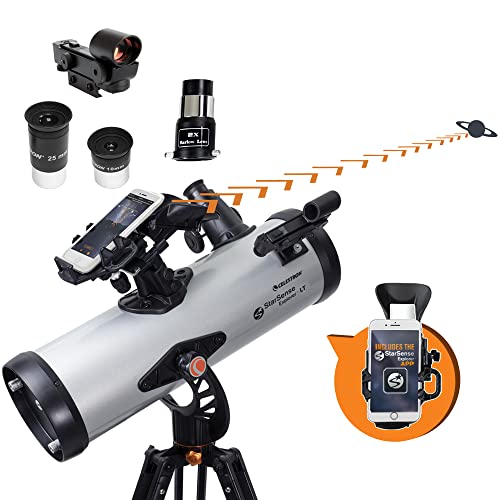
- Smartphone app guides target finding
- 114mm Newtonian reflector
- Manual mount with altitude slow motion
Best For: Beginners wanting guided navigation and hands-on control
Large-Aperture Beginner Value

- 90mm aperture with 800mm focal length
- Fully multi-coated optical lenses
- Includes tripod, phone adapter, and carry bag
Best For: Beginners seeking a well-equipped manual refractor
Best Portable Telescope

- Lightweight 70mm refractor with bright views
- Backpack and no-tool setup included
- Works for astronomy and daytime viewing
Best For: Beginners, families, and travel
Best Backyard Telescope

- 70mm fully coated optics for Moon and planet viewing
- Intuitive manual alt-azimuth controls
- Adjustable tripod and beginner accessories included
Best For: Families and backyard beginners
Best Kids' Telescope
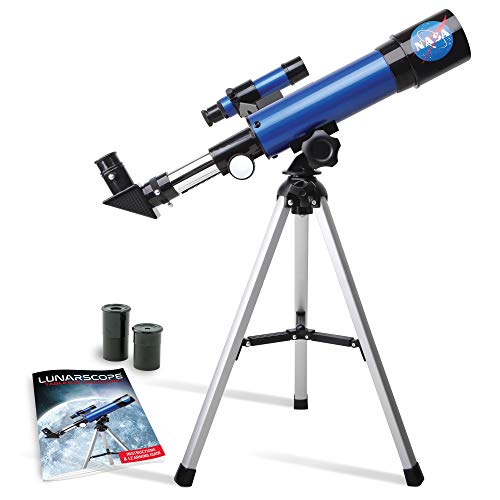
- Designed for children ages 8 and up
- Two eyepieces and finder scope included
- Tabletop tripod focuses on lunar viewing
Best For: Young beginners and educational gifting
Portable Beginner Pick
Celticbird 80mm Refractor Telescope

- 80mm aperture with 600mm focal length
- 30x/66x eyepieces plus moon filter
- Backpack, tripod, and phone adapter included
Best For: Adults, kids, and beginners seeking portable lunar and planetary viewing
Travel-Friendly Value
EACONN 80mm Portable Telescope

- 80mm multicoated optics and 600mm focal length
- 30x/66x eyepieces with finder scope
- Backpack, tripod, and phone adapter included
Best For: Families wanting portable astronomy and daytime viewing in one kit
Higher-Aperture Upgrade
Dianfan 90mm Refractor Telescope

- 90mm aperture with 800mm focal length
- 32x–240x range using eyepieces and 3x Barlow
- Stainless steel tripod and 45° zenith mirror
Best For: Beginners wanting brighter views and versatile astronomy or daytime use
Premium Go-To Power – Celestron NexStar 8SE
For serious stargazing, the Celestron NexStar 8SE is a powerful telescope that combines 8-inch Schmidt-Cassegrain optics with a computerized GoTo mount. It is designed for users ready to move beyond manual telescopes and explore planets, lunar details, and deep-sky objects with automated targeting.
Best For: Experienced beginners and hobbyists who want automated sky navigation, strong light-gathering performance, and room to expand.
Pros:
- 8-inch aperture provides detailed views of the Moon, planets, galaxies, and globular clusters.
- GoTo system includes a 40,000-plus-object database and automatic tracking.
- SkyAlign simplifies setup by using three bright stars or planets.
- Includes a 25mm eyepiece, tripod, star diagonal, and red-dot finderscope.
Cons:
- Power source options are not included except for the supplied battery.
- Its advanced computerized mount may be more than casual observers need.
The NexStar 8SE is a strong choice when optical reach and automated convenience matter most. Its 8-inch aperture makes it especially appealing for deep-sky viewing, while the accessory compatibility supports future upgrades.
Travel-Friendly Starter – Gskyer 70mm Refractor
The Gskyer 70mm refracting telescope is a practical entry point for beginners and families exploring telescopes. Its compact design, adjustable tripod, carry bag, smartphone adapter, and wireless remote make it convenient for backyard observing and travel.
Best For: Kids, beginners, and casual observers who want a portable telescope with simple smartphone photography accessories.
Pros:
- 70mm aperture and fully coated optics support views of the Moon and stars.
- Includes two eyepieces, a 3x Barlow lens, and a 5×24 finder scope.
- Adjustable aluminum tripod and carry bag support transport and storage.
- Smartphone adapter and wireless remote enable convenient image capture.
Cons:
- Manual altazimuth mounting requires users to locate and track objects themselves.
- Its 70mm aperture is better suited to beginner viewing than demanding deep-sky work.
This Gskyer telescope emphasizes portability and ease of getting started. The included accessories add value for families and travelers, while the manual mount keeps operation straightforward.
Smartphone-Guided Discovery – Celestron StarSense Explorer LT 114AZ
The Celestron StarSense Explorer LT 114AZ makes finding celestial targets easier by pairing a 114mm Newtonian reflector with a smartphone-guided app. The manual mount remains simple to operate, while StarSense provides on-screen directions to planets, nebulae, galaxies, and star clusters.
Best For: Beginners who want guided target-finding without committing to a fully computerized telescope mount.
Pros:
- StarSense technology uses smartphone sky recognition to help locate objects.
- 114mm reflector offers bright views of the Moon, planets, and selected deep-sky targets.
- App suggests the best targets based on time and location.
- Includes 25mm and 10mm eyepieces, a 2x Barlow lens, tripod, and finderscope.
Cons:
- The altazimuth mount is manual and requires user tracking.
- Using the guided features requires a compatible smartphone.
This model strikes a useful balance between hands-on observing and digital guidance. It is more approachable than a traditional manual telescope for locating objects, while its 114mm reflector provides useful beginner deep-sky capability.
Large-Aperture Beginner Value – MEEZAA 90mm Refractor
The MEEZAA 90mm refractor is a beginner-friendly telescope built around a relatively large aperture, fully multi-coated optics, and a long 800mm focal length. Its included eyepieces, Barlow lens, phone adapter, tripod, and carry bag create a complete setup for backyard astronomy and outdoor observing.
Best For: Adults and astronomy beginners who want a larger-aperture manual refractor with useful accessories included.
Pros:
- 90mm aperture is designed to gather more light for brighter, clearer views.
- 800mm focal length and included 3x Barlow lens support lunar observation across multiple magnifications.
- Fully multi-coated optics help improve image brightness and clarity.
- Includes a stainless steel tripod, phone adapter, carry bag, and two eyepieces.
Cons:
- Manual altazimuth mounting requires users to find and track targets themselves.
- The longer optical tube may be less convenient to transport than compact travel telescopes.
With its 90mm aperture and generous accessory package, the MEEZAA offers a capable starting point for adults learning astronomy. It is a sensible option for observers who value aperture and included equipment over computerized navigation.
Best Portable Telescope – Celestron Travel Scope 70mm
The Celestron Travel Scope 70mm is a practical choice if you want a lightweight telescope for casual astronomy and daytime viewing. Its 70mm refractor optics, quick setup, and included backpack make it especially convenient for beginners who want to take their telescope beyond the backyard.
Best For: Beginners, families, and travelers who want an easy-to-carry telescope for Moon, planet, and terrestrial viewing.
Pros:
- Lightweight 4.2-pound design includes a padded backpack.
- Fully coated 70mm optics are suited to bright views of the Moon, planets, and daytime scenery.
- No-tool setup, full-height tripod, two eyepieces, finderscope, and astronomy software are included.
- Backed by a two-year limited warranty and US-based support.
Cons:
- Manual focusing and an alt-azimuth mount require hands-on tracking.
- The compact travel design may be less stable than a heavier telescope setup.
Choose this model when portability and convenience matter more than advanced controls. The included storage and beginner-oriented accessories give it a strong all-around profile for first-time stargazing.
Best Backyard Telescope – Celestron AstroMaster 70AZ
The Celestron AstroMaster 70AZ is a straightforward telescope for beginners who plan to observe from home. Its 70mm fully coated refractor, adjustable tripod, and manual alt-azimuth controls are designed to make Moon, planet, star-cluster, and terrestrial viewing approachable for adults and kids.
Best For: Families and first-time users seeking a stable, full-height telescope for backyard and daytime observation.
Pros:
- Fully coated 70mm optics support clear views of the Moon, planets, and bright star clusters.
- Manual alt-azimuth mount with panhandle makes aiming intuitive.
- Adjustable tripod accommodates adults or kids, standing or seated.
- Includes 20mm and 10mm eyepieces, erect-image diagonal, red-dot finderscope, and astronomy software.
Cons:
- At 10.8 pounds, it is less travel-friendly than a compact portable telescope.
- Manual controls require users to track targets by hand.
This is a sensible pick for a dedicated backyard setup. Compared with more compact telescopes, its adjustable tripod and longer 900mm focal length emphasize comfortable, straightforward viewing rather than portability.
Best Kids' Telescope – NASA Lunar Telescope for Kids
The NASA Lunar Telescope is a kid-focused option for introducing children to astronomy. Designed for ages 8 and up, it includes low- and high-power eyepieces, a finder scope, and a tabletop tripod intended to help young observers locate and examine the Moon with parental guidance.
Best For: Children ages 8 and up who are beginning to explore the Moon and space science.
Pros:
- NASA branding and an educational learning guide add an engaging introductory element.
- Includes two eyepieces for locating the Moon and viewing it more closely.
- Tabletop tripod and smooth mounting system support easy scanning of the lunar surface.
- Compact beginner design is suited to parent-and-child use.
Cons:
- The tabletop tripod is less suitable for standing-height observation.
- Its 25mm objective is more specialized for introductory lunar viewing than broad observing.
- Manual focus and a straight-through finder scope require hands-on setup.
For a child’s first telescope, the educational presentation and simple lunar focus are appealing. It is best viewed as an introductory space toy and learning tool rather than a general-purpose telescope for experienced observers.
Portable Beginner Pick – Celticbird 80mm Refractor Telescope
The Celticbird is a practical choice for beginners looking for portable telescopes with a useful mix of aperture, simple controls, and included accessories. Its 80mm aperture, 600mm focal length, and 30x/66x eyepieces are suited to viewing the Moon and bright planets.
Best For: Adults, kids ages 8–12, and beginners who want a travel-ready telescope with smartphone support.
Pros:
- 80mm fully coated optics are designed to improve light transmission and image clarity.
- Includes 20mm and 9mm eyepieces, a 5×24 finderscope, and a moon filter.
- Backpack, adjustable tripod, and phone adapter make it convenient for travel and basic astrophotography.
- Manual assembly is designed to be beginner-friendly, with no tools required.
Cons:
- Its 30x and 66x eyepieces provide a narrower magnification range than some competing options.
- The altazimuth mount and manual focus are straightforward but lack motorized tracking.
- The included phone adapter is intended for basic smartphone photography rather than advanced imaging.
Choose this model if portability and ease of use matter more than maximum magnification. The included moon filter and backpack add practical value for casual family observing.
Travel-Friendly Value – EACONN 80mm Portable Telescope
The EACONN is one of the more travel-oriented telescopes in this roundup, combining an 80mm aperture with a backpack, adjustable tripod, and smartphone adapter. Its rough-adjustment gimbal can make it easier for beginners to point the telescope at the Moon, planets, landscapes, or distant wildlife.
Best For: Families and beginners who want one portable telescope for astronomy, travel, birdwatching, and landscape viewing.
Pros:
- True 80mm aperture and multicoated optics are designed to deliver brighter, clearer images.
- Two eyepieces provide 30x and 66x magnification for basic observing.
- Scale-equipped positioning gimbal helps with altitude and azimuth adjustments.
- Includes a backpack, adjustable tripod, finder scope, and customized phone adapter.
Cons:
- Its manual altazimuth design does not provide motorized tracking.
- The supplied magnification range is relatively limited for users seeking higher-power planetary views.
- Assembly and phone positioning still require manual setup despite the included instructions.
The EACONN stands out when portability and general-purpose viewing are priorities. Its accessories and positioning gimbal make it a sensible starter option for casual family use, though more advanced observers may want broader magnification options.
Higher-Aperture Upgrade – Dianfan 90mm Refractor Telescope
The Dianfan offers the largest aperture in this group, pairing a 90mm objective lens with an 800mm focal length. Among these telescopes, it is the strongest fit for beginners who want a wider stated magnification range, steadier support from a stainless steel tripod, and enough versatility for both astronomy and terrestrial viewing.
Best For: Beginners and families seeking brighter views, higher potential magnification, and a sturdy portable setup.
Pros:
- 90mm fully coated objective lens gathers more light for brighter, clearer views.
- Two eyepieces and a 3x Barlow lens provide a stated 32x–240x magnification range.
- Stainless steel tripod is designed to provide stable support.
- Includes a 45° zenith mirror, carry bag, and phone adapter for astronomy and daytime observation.
Cons:
- At 4.7 kg, it is heavier than the smaller 80mm options in this roundup.
- The 800mm optical tube and included tripod may be less convenient for quick grab-and-go use.
- Manual focus and an altazimuth mount still require hands-on target adjustment.
The Dianfan is the better choice when aperture and magnification flexibility take priority over minimum weight. Its upright-image viewing accessory also makes it more adaptable for birdwatching, wildlife, and cityscape observation.
How We Picked the Best Telescopes
We evaluated these Telescopes using the features that most affect real-world observing: aperture, optical design, mount type, portability, included accessories, setup difficulty, and suitability for lunar, planetary, and brighter deep-sky targets. We also considered whether each model is a practical choice for beginners, children, families, travelers, or more experienced observers.
A larger aperture can collect more light and reveal finer detail, but it may also increase size, weight, and setup time. A stable mount and usable finder are just as important as the optical tube, especially for first-time users.
Quick Comparison
| Best For | What to Look For |
|---|---|
| Beginners and families | Simple altazimuth mount, manageable size, and helpful accessories |
| Moon and planets | Good aperture, stable tripod, and suitable higher-power eyepieces |
| Travel | Compact optical tube, carrying case or backpack, and quick setup |
| Smartphone-guided observing | App-compatible phone dock or guided object-location system |
| Advanced observing | Larger aperture, precise tracking, and computerized alignment |
Key Buying Factors for Telescopes
Aperture and Optical Design
Aperture is the diameter of the main lens or mirror. Larger apertures generally provide brighter images and better resolution. Refractors are often straightforward and low-maintenance, while Newtonian reflectors can offer more aperture for the money but may require occasional alignment. Schmidt-Cassegrain designs provide a compact package with strong versatility.
Mount Stability and Tracking
Choose a sturdy mount that does not shake excessively when you focus or adjust the scope. Altazimuth mounts are usually easiest for beginners. Computerized mounts can locate and track objects, but they require batteries, alignment, and more setup.
Portability and Setup
Consider where you will use the telescope and how far you must carry it. A smaller travel model may be used more often than a larger scope that is difficult to transport. Check the tripod height, storage footprint, case quality, and total assembled weight.
Accessories and Realistic Expectations
Useful accessories include multiple eyepieces, a reliable finder, a phone adapter, and a carrying case. Be cautious of extreme magnification claims: atmospheric conditions and optical quality usually matter more than the highest number printed on the box.
Who Should Buy Which Telescopes?
Choose a compact refractor if you want simple setup, low maintenance, and easy viewing of the Moon and brighter planets. These are strong choices for children, casual observers, and travel.
Choose a smartphone-guided or computerized model if locating objects is your main concern. Guided systems can shorten the learning curve, while computerized scopes are particularly useful for users who want tracking during longer observing sessions.
Choose a larger-aperture refractor, reflector, or Schmidt-Cassegrain if you are prepared for a heavier setup and want greater detail or broader observing capability. Prioritize mount quality and long-term usability rather than magnification claims alone.