
Choosing the right drone for search missions is about more than flight time. You need dependable thermal imaging, stable control, and enough range to cover terrain fast.
In this roundup of the best thermal drones for search operations, we focus on practical features that matter in real SAR and inspection scenarios.
Best 10 Thermal Drones for Search Operations Picks for 2026
Enterprise Thermal Search

- 640x512 thermal sensor with 30 fps output
- 50MP visible camera plus D-RI ranges
- 38-minute flight and 15 km transmission
Best For: Search-and-rescue, public safety, and inspection crews
Lightweight Mission Camera

- 4K video, 8K photo, and AI night shot
- Up to 96 minutes of flight with Fly More Combo
- 10 km transmission in a sub-249 g frame
Best For: General observation and portable visual scouting
Enterprise Rescue Thermal
Autel EVO II Dual 640T Enterprise V3
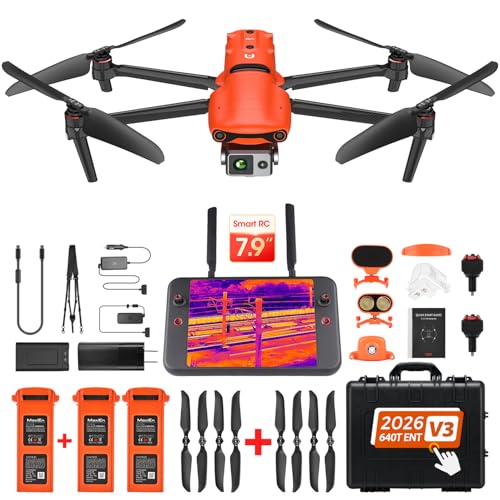
- 640x512 thermal imaging with multiple temp modes
- 15 km transmission and 42-minute flight time
- Supports modular accessories like spotlight and loudspeaker
Best For: Enterprise search-and-rescue and public safety missions
Compact Beginner GPS Drone

- 4K EIS camera with ShakeVanish stabilization
- 62 minutes total flight time with 2 batteries
- Under 249 g with auto return and foldable design
Best For: Beginner aerial video and portable scouting
Field Thermal Scout
Autel EVO Lite 640T Enterprise
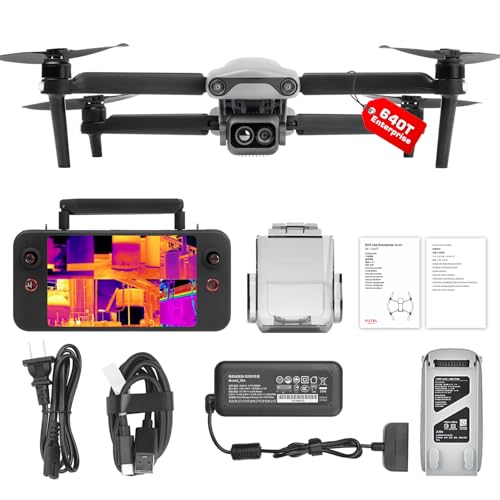
- 640x512 thermal sensor with 30Hz output
- AI target recognition and digital map projection
- 866g foldable frame with 40-minute flight time
Best For: Single-operator search and rescue with portable thermal imaging
Precision Mapping Thermal Platform
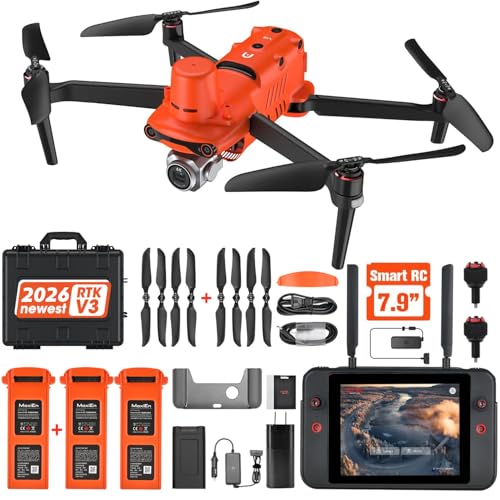
- Real-time centimeter-level RTK positioning
- Autonomous waypoint and repeatable mission support
- 38-minute flight time with 15 km transmission
Best For: Accurate search missions that also require mapping and documentation
Rugged Dual-Sensor Search Drone

- High-resolution thermal imaging for search and rescue
- 50MP photos, 4K video, and omnidirectional obstacle avoidance
- Includes 3 batteries for longer deployments
Best For: Rugged search and rescue missions needing thermal and visual detail
Flagship Search & Rescue Multisensor

- 640x512 thermal camera with 30Hz imaging
- 48MP wide/zoom cameras plus laser rangefinder
- 720° obstacle avoidance and anti-jamming support
Best For: Teams needing a rugged thermal drone for search operations and complex terrain
Search & Rescue Thermal Workhorse

- 640x512 thermal sensor with 13mm lens
- 50MP visible camera and 10 thermal palettes
- Up to 15 km transmission with Smart Controller V3
Best For: Search and rescue, public safety, and inspection teams needing a feature-rich thermal bundle
Portable Enterprise Thermal Pick
Autel EVO Lite 640T Enterprise

- 866g foldable design for easy transport
- 640x512 thermal sensor plus 48MP visible camera
- AI target recognition with 12 km transmission
Best For: Solo pilots and small teams needing a lightweight thermal drone for search operations
Enterprise Thermal Search – Autel EVO II Dual 640T V3
For thermal drones for search operations, the Autel Robotics EVO II Dual 640T V3 is built for teams that need both thermal detail and high-quality visible imaging in the field. Its 640×512 thermal sensor, 50MP 8K visible camera, D-RI ranges, and temperature tools make it a strong fit when you need to locate, classify, and document subjects in challenging conditions.
Best For: Search-and-rescue teams, public safety crews, and inspection work that needs thermal plus visible detail.
Pros:
- 640×512 thermal imaging at 30 fps with a 13mm lens and up to 16x digital zoom
- 10+ temperature measurement modes, thermal palettes, and a free infrared thermal analysis tool
- 50MP visible camera with 0.8″ CMOS sensor for detailed evidence capture
- 38-minute flight time and SkyLink 2.0 transmission up to 15 km
Cons:
- More advanced than a basic recreational drone
- Not the lightest option for casual carry
This model stands out when thermal search work depends on both target detection and usable visual documentation. It offers a balanced mix of range, imaging, and onboard analysis features for mission-oriented pilots.
Lightweight Mission Camera – Potensic ATOM 2
The Potensic ATOM 2 is not a thermal drone, but it can still fit general search operations where a compact camera platform is preferred for daylight or low-light observation. With a 4K camera, AI tracking, AI night shot, and 10 km transmission, it focuses on portable aerial imaging rather than thermal detection.
Best For: Buyers who want a lightweight camera drone for general observation, tracking, and night shooting.
Pros:
- 4K video and 8K photo capture with a 1/2″ Sony CMOS sensor
- AI Track, AI Stunning Night Shot, and QuickShots for easier filming
- 10 km transmission and up to 96 minutes of flight time with the Fly More Combo
- Under 249 g, so it stays compact and travel-friendly
Cons:
- No thermal imaging sensor for heat-based search work
- Best suited to visual scouting rather than rescue-specific detection
If your search workflow does not require thermal mapping, the ATOM 2 is a capable lightweight imaging drone. Its strength is in long runtime, smart tracking, and easy portability, not temperature-based target finding.
Enterprise Rescue Thermal – Autel EVO II Dual 640T Enterprise V3
For thermal drones for search operations, the Autel Robotics EVO II Dual 640T Enterprise V3 is aimed at professional teams that need thermal imaging, long transmission range, and mission-ready accessories. Its 640×512 thermal sensor, 50MP 8K visible camera, and modular add-ons make it a strong enterprise option for search and rescue, public safety, and related field work.
Best For: Enterprise teams that want a thermal drone with accessories for public safety, search and rescue, and inspection.
Pros:
- 640×512 thermal imaging with multiple temperature measurement modes
- 50MP visible camera and Moonlight Algorithm 2.0 for low-light clarity
- 15 km transmission, 42-minute flight time, and 7.9-inch smart controller
- Modular support for strobe, spotlight, loudspeaker, and RTK add-ons
Cons:
- Enterprise feature set may be more than casual users need
- RTK is not included in this bundle
This version is built for teams that want more than basic thermal video. The combination of range, modularity, and advanced imaging makes it better suited to serious operational use than simple recreational flying.
Compact Beginner GPS Drone – Potensic ATOM SE
The Potensic ATOM SE is a compact GPS camera drone, but it is not a thermal drone for search operations. It makes sense for users who want an affordable, easy-to-carry visual drone with solid flight time, stable video, and beginner-friendly safety features.
Best For: Beginners who need a lightweight GPS drone for general aerial video and basic scouting.
Pros:
- 4K EIS camera with a 1/2″ CMOS sensor and ShakeVanish stabilization
- 62 minutes total flight time with two included batteries
- 4 km FPV transmission and auto return for easier flying
- Under 249 g and foldable for portable use
Cons:
- No thermal imaging capability
- 4 km range is shorter than the enterprise thermal models in this roundup
The ATOM SE is a practical entry-level drone for general imaging, but it does not address thermal search needs. Choose it for portability and simple camera flying, not for heat-detection missions.
Field Thermal Scout – Autel EVO Lite 640T Enterprise
For teams evaluating thermal drones for search operations, the Autel EVO Lite 640T Enterprise stands out as a compact mission drone with a 640×512 thermal sensor, 48MP visible camera, and AI target recognition. Its foldable 866g design, 40-minute max flight time, and 12 km transmission make it a practical option when one operator needs fast deployment and reliable situational awareness.
Best For: Single-operator search and rescue teams that need portable thermal imaging with AI-assisted target identification.
Pros:
- 640×512 thermal camera at 30Hz with temperature measurement from -20°C to 550°C.
- AI target recognition can project identified targets onto a digital map and supports 100+ objects.
- Lightweight foldable body at 866g with up to 40 minutes of flight time.
- SkyLink 2.0 offers up to 12 km range for extended mission coverage.
Cons:
- Includes only one battery in the basic combo.
- Thermal lens is listed with a standard 9mm setup, so field-of-view flexibility may be limited.
- Higher-end mission features may be more than casual users need.
This is a strong fit when search operations prioritize portability, thermal detail, and quick target recognition over a larger enterprise payload. The combination of long flight time, digital mapping support, and compact carrying size makes it especially useful for rapid-response work.
Precision Mapping Thermal Platform – Autel EVO II Pro RTK V3
When comparing thermal drones for search operations, this EVO II Pro RTK V3 is built more like a precision mission platform than a pure thermal model. It pairs a Sony 1-inch 6K/30fps HDR camera with real-time centimeter-level RTK positioning, 15 km transmission, and 38 minutes of flight time, which makes it useful when search work also needs accurate geotagged data and repeatable flight paths.
Best For: Teams that need accurate positioning and autonomous route execution alongside search and documentation workflows.
Pros:
- RTK module delivers real-time centimeter-level positioning with base station and network support.
- Waypoint, rectangle, polygon, and oblique photography tasks support autonomous mission execution.
- 38-minute flight time and up to 15 km transmission help cover larger areas.
- Supports PPK, time synchronization, and FAA Remote ID compliance.
Cons:
- Supplied notes emphasize mapping and photogrammetry more than thermal imaging.
- Not the lightest option at 866g? No, this unit is not described as lightweight in the notes, so portability is less central than precision.
- Best results depend on compatible software and a capable Windows/NVIDIA workstation for Autel Mapper.
This model makes the most sense for operations where search coverage, coordinate accuracy, and repeatability matter as much as aerial observation. If your workflow includes mapping or documentation after a search, the RTK tooling is a clear advantage.
Rugged Dual-Sensor Search Drone – Autel EVO II V3 Dual 640T
The Autel EVO II V3 Dual 640T Rugged Thermal Drone Bundle is aimed at teams that want thermal drones for search operations with a rugged, full-featured setup. It combines a high-resolution thermal camera, 50MP imaging, 4K video, omnidirectional obstacle avoidance, 38 minutes of flight time, and up to 15 km transmission, making it a versatile choice for field use in complex environments.
Best For: Search and rescue teams that want a rugged dual-sensor drone with strong thermal and visual capture.
Pros:
- High-resolution thermal imaging supports inspections, search and rescue, and environmental monitoring.
- 50MP stills and 4K video provide detailed visual documentation.
- Omnidirectional obstacle avoidance helps in complex or confined environments.
- Includes 3 batteries for extended operational use.
Cons:
- At 22 pounds, the bundle is much heavier than compact field drones.
- Detailed thermal specs like resolution and temperature range are not listed in the supplied notes.
- The larger bundle may be more than some single-operator teams need.
This is a strong all-around option if your search missions call for both thermal capability and robust visual capture in one package. The tradeoff is size and weight, but the included batteries and obstacle avoidance make it appealing for longer, tougher deployments.
Flagship Search & Rescue Multisensor – Autel EVO Max 4T V2
For thermal drones for search operations, the EVO Max 4T V2 is built like a true all-weather mission tool: it combines a 640×512 thermal camera, 48MP wide and zoom imaging, and a laser rangefinder in one platform. Its 720° obstacle avoidance, GNSS-denied flight support, and anti-jamming controls make it a strong fit when you need dependable situational awareness in complex environments.
Best For: Teams that need a rugged, multi-sensor drone for search operations, mapping, and difficult terrain.
Pros:
- 640×512 thermal camera with 30Hz output and 16x digital zoom
- 48MP wide camera, 48MP 10x optical zoom camera, and laser rangefinder
- 720° omnidirectional obstacle avoidance with dual fisheye vision plus millimeter-wave radar
- A-Mesh 1.0 networking and anti-R.F.I./E.M.I./G.P.S spoofing support
Cons:
- More complex than a lightweight entry-level thermal drone
- Feature set is broader than many search-only users may need
- Mission-focused design may be more than occasional users require
This model stands out when your search workflow needs thermal detail, long-range targeting help, and strong obstacle sensing in the same airframe. It is best viewed as a premium operations platform rather than a simple camera drone.
Search & Rescue Thermal Workhorse – Autel EVO II Dual 640T V3
The EVO II Dual 640T V3 is a practical pick for thermal drones for search operations when you want proven imaging, long transmission, and a controller made for field use. Its 640×512 thermal sensor, 50MP visible camera, and 10 thermal color palettes give crews the tools to spot, compare, and document targets in demanding conditions.
Best For: Search and rescue teams, public safety crews, and inspection users who want a well-equipped thermal drone bundle.
Pros:
- 640×512 thermal sensor with 13mm lens and 16x digital zoom
- 50MP 0.8-inch RYYB visual camera with Moonlight Algorithm 2.0
- 10 thermal color palettes and multiple measurement modes
- SkyLink 2.0 transmission up to 15 km with Smart Controller V3
Cons:
- Less compact than the Lite-class option
- Bundle is oriented toward professional workflows, not casual flying
- Thermal and controller features may be more than basic buyers need
If your priority is dependable thermal imaging with strong transmission and analysis tools, this model is easy to justify. It offers a balanced mix of search-ready sensing, controller visibility, and reporting features.
Portable Enterprise Thermal Pick – Autel EVO Lite 640T Enterprise
For buyers comparing thermal drones for search operations, the EVO Lite 640T Enterprise leans into portability without giving up core mission tools. At 866g, it is easy to pack and deploy, while the 640×512 thermal sensor, 48MP visible camera, AI target recognition, and 12 km transmission make it suitable for single-operator emergency missions.
Best For: Solo pilots and small teams that want a lightweight enterprise thermal drone for public safety and rescue work.
Pros:
- 866g foldable design for easy transport and single-pilot deployment
- 640×512 thermal imaging with 16x digital zoom
- 48MP visible camera with AI target recognition and map projection
- 12 km transmission and up to 40 minutes max flight time
Cons:
- Shorter transmission range than the EVO II Dual 640T V3
- Less rugged-feeling on paper than the heavier flagship models
- Enterprise features may be more than simple hobby use requires
This is the most portable option in the group and a smart fit when quick deployment matters. It pairs thermal capability with AI-assisted recognition, making it well matched to compact public-safety and rescue kits.
How We Picked the Best Thermal Drones for Search Operations
We prioritized thermal resolution, visible camera quality, transmission range, flight endurance, obstacle awareness, and mission tools like zoom, mapping support, and Remote ID. For Thermal Drones for Search Operations, reliability and detection clarity matter more than raw speed or consumer-friendly extras.
Quick Comparison
Start by matching the drone to the mission. Compact models can be useful for rapid deployment and lower-risk scouting, while enterprise platforms are better for longer searches, wider-area coverage, and better thermal detail. If your team needs accurate location data or coordinated field work, advanced positioning and accessory support become especially important.
Key Buying Factors for Thermal Drones for Search Operations
Thermal Sensor Quality
Look for higher thermal resolution and usable temperature detection so heat signatures stand out at distance. A clearer thermal feed helps when searching for people under tree cover, in low light, or across uneven terrain.
Flight Time and Transmission
Longer flight time reduces battery swaps during critical missions. Stable long-range transmission is equally important, especially when working beyond visual line of sight or in cluttered environments where signal quality can drop.
Zoom, Mapping, and Positioning
Optical zoom, digital zoom, RTK, or other precision positioning tools can improve target identification and location accuracy. These features are especially helpful when teams need to confirm a subject before approaching.
Durability and Workflow
Search teams should also consider weather resistance, portability, Remote ID support, and how quickly the system can be deployed in the field. A powerful drone is less useful if it takes too long to get airborne.
Who Should Buy Which Thermal Drones for Search Operations?
Public safety teams and dedicated SAR crews should lean toward enterprise thermal platforms with stronger thermal imaging, zoom, and positioning tools. If you need a versatile option for mixed missions, midrange models can balance portability and performance. For occasional search support or training use, lighter drones may be enough, but they will usually trade away thermal capability and mission depth. The best choice depends on how often you fly, how far you need to search, and how much detail you need to identify and track a subject safely.