
Voice controlled humanoid robots are getting more capable, more interactive, and far more useful for both learning and play. From simple talking companions to AI-powered models with vision and personalized responses, today’s options cover a wide range of ages and budgets.
If you’re comparing the best choices for a child, classroom, or smart home companion, this roundup focuses on the features that actually matter: voice recognition, responsiveness, programming options, and overall value.
Best 10 Voice Controlled Humanoid Robots Picks for 2026
Desktop AI Companion
Humanoid AI Robot with 10 Languages
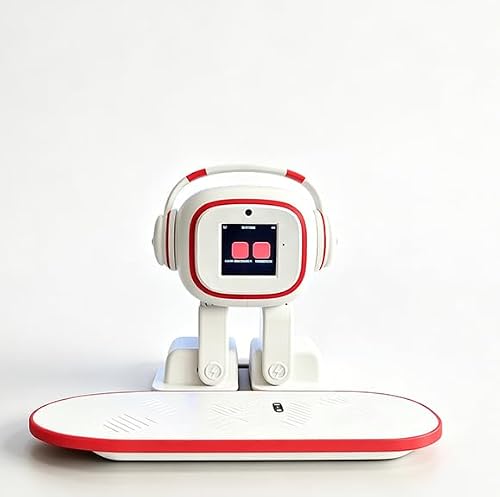
- 10-language conversation support
- 19 actions and dynamic expressions
- Custom knowledge base for personalization
Best For: Adults and tech fans who want a personalized desktop companion
Programmable Kids Robot
Holyton 5088 Smart Robot with Voice Control

- Voice, app, and remote control modes
- 200+ programmable actions for STEM play
- Grabbing arm and foam dart launcher
Best For: Kids ages 5-12 who like interactive, programmable robot toys
AI Education Platform
HIWONDER TonyPi Humanoid Robot Kit
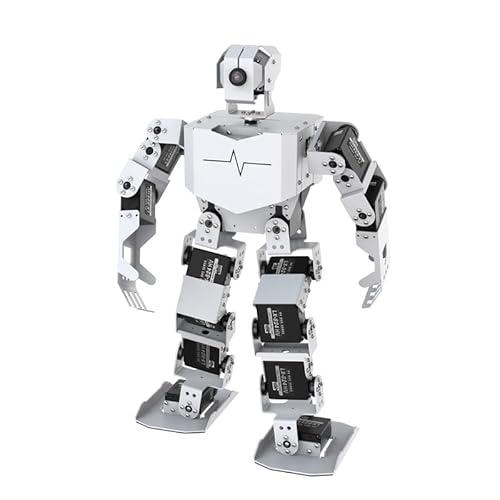
- ChatGPT multimodal AI interaction
- Raspberry Pi 5 and Python support
- Voice command and vision recognition
Best For: Adult learners and makers building an advanced AI robotics project
Voice-Command Playmate
VATOS Extra Large RC Robot with Voice Control

- Voice, remote, and gesture control
- Sings, dances, tells stories, and jokes
- Programmable with up to 30 commands
Best For: Kids who want an interactive robot with simple programmable play
Advanced AI STEM Builder

- 17DOF humanoid movement with self-stand capability
- Voice control plus vision features like tracking and face recognition
- Arduino, Python, and Scratch programming support
Best For: Advanced STEM learning and AI development
Interactive Kid Companion
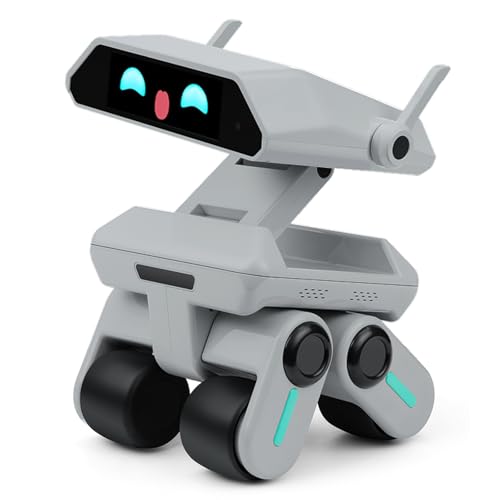
- Voice control with visual recognition and scene awareness
- Over 100 expressions, tones, and movements
- Parent app adds monitoring, alerts, and remote control
Best For: Kids and families seeking an educational companion robot
Lifelike Desktop Companion

- Voice cloning and interruptible dialogue for natural conversation
- Liquid silicone skin with dynamic facial expressions
- Compact desktop design with magnetic charging
Best For: Adults wanting a realistic AI companion robot
Blue Buddy

- Voice control and touch induction
- Sings, dances, and repeats
- Compact size for ages 3 to 8
Best For: Young kids who want a simple interactive robot toy
AI Pet Companion

- Voice commands with real-time replies
- Recognizes faces, gestures, and movement
- Auto-charging dock and home monitoring
Best For: Buyers who want a smart robot pet with advanced interaction
Astronaut Pal

- Voice and touch control with multiple motions
- Repeats speech and supports recording
- Compact size for tabletop or travel play
Best For: Kids who want a portable talking robot for play and language practice
Desktop AI Companion – Humanoid AI Robot with 10 Languages
If you want voice controlled humanoid robots for a desk or shelf, this model leans more toward companionship than performance. It combines a compact desktop size with expressive reactions, 19 actions, voice cloning, and conversation support in 10 languages. The custom knowledge base feature also makes it more useful if you want a robot that can be tailored to your own interests.
Best For: Adults, tech enthusiasts, and buyers who want a conversational desk companion with personality.
Pros:
- Supports 10 languages for multilingual conversation.
- Includes 19 actions and dynamic expressions for more engaging interaction.
- Custom knowledge base lets you upload your own data.
- Compact desktop size fits under a monitor.
Cons:
- Designed as a desk companion, not a full-size walking robot.
- Best suited to indoor tabletop use.
Overall, this is a strong pick if you value personality, conversation, and customization over physical robotics complexity. It stands out as a display-worthy companion for daily use.
Programmable Kids Robot – Holyton 5088 Smart Robot with Voice Control
This option in voice controlled humanoid robots is built for interactive kids’ play, with a large 15.7-inch frame, voice control, app control, and remote control. It adds talking responses, music, dancing, LED eyes, a grabbing arm, and a foam dart launcher, so it offers plenty of variety for active play. The 200+ programmable actions also give it a useful STEM angle without making the learning curve too steep.
Best For: Kids ages 5-12 who want a big, interactive robot with coding-style play.
Pros:
- Offers voice commands plus remote and app control.
- 200+ programmable actions support STEM-style learning.
- Includes grabbing and foam dart features for more play options.
- Large 15.7-inch size makes it visually impressive.
Cons:
- Focused on kid-friendly play rather than advanced robotics.
- Requires adult setup help for some features.
For families shopping for an interactive robot toy, this one balances fun, movement, and basic programming well. It is especially appealing if you want a robot that does more than just talk and drive around.
AI Education Platform – HIWONDER TonyPi Humanoid Robot Kit
For buyers exploring voice controlled humanoid robots as a learning platform, TonyPi is clearly aimed at education and development. It runs on Raspberry Pi 5, integrates ChatGPT-based multimodal interaction, and supports AI voice command recognition plus vision features like tracking and color recognition. With Python programming support and extensive learning resources, this is a serious kit for hands-on robotics work.
Best For: Adult learners, makers, and robotics students who want an advanced AI humanoid kit.
Pros:
- ChatGPT multimodal integration supports voice and vision interaction.
- Powered by Raspberry Pi 5 with open-source access.
- Supports AI voice commands, recognition, and visual tracking.
- Includes learning materials for robotics, deep learning, and motion control.
Cons:
- More of a development kit than a ready-to-play toy.
- Best suited to users comfortable with programming and technical setup.
This is the most technical option in the roundup, and it offers the deepest learning potential. If your goal is experimentation, coding, and AI robotics education, it is a compelling choice.
Voice-Command Playmate – VATOS Extra Large RC Robot with Voice Control
If you are comparing voice controlled humanoid robots for younger children, this VATOS model emphasizes easy interaction and broad play value. It adds voice control on top of remote and gesture sensing modes, and it can sing, dance, tell stories, tell jokes, and recite poetry. The programmable function with up to 30 recorded commands makes it more versatile than a basic movement toy.
Best For: Kids who want a large, rechargeable robot with voice interaction and simple programming.
Pros:
- Voice control works alongside remote and gesture sensing.
- Can sing, dance, tell stories, tell jokes, and recite poetry.
- Programmable with up to 30 commands for custom routines.
- Large 15.4-inch size and LED eyes add visual appeal.
Cons:
- Made for play features rather than advanced AI functions.
- Best suited to kid-focused use, not adult hobby robotics.
This robot is a good fit if you want a feature-packed toy that responds in multiple ways without needing a complicated setup. It offers a lot of entertainment value for its size and control options.
Advanced AI STEM Builder – Tonybot Ultimate Kit
If you’re comparing voice controlled humanoid robots for hands-on learning, Tonybot Ultimate Kit stands out for its mix of motion, vision, and programmable AI features. It combines an ESP32 platform, 17 servos, and multimodal AI tools so it can walk, dance, kick, self-stand, and respond to voice commands while supporting Arduino, Python, and Scratch.
Best For: Advanced STEM learners, educators, and makers who want a programmable humanoid robot with voice, vision, and AI experimentation.
Pros:
- 17DOF humanoid build with smooth movement, walking, dancing, kicking, and self-standing actions.
- Voice interaction plus ESP32-S3 vision features such as face recognition, target tracking, and visual line following.
- Supports Arduino, Python, and Scratch with open-source low-level code and step-by-step tutorials.
- Expandable with sensors like ultrasonic, IMU, buzzer, and optional add-on modules.
Cons:
- Geared more toward adult or advanced STEM use than casual play.
- Some AI features are part of the Ultimate Kit configuration only.
Tonybot is best viewed as a development platform rather than a simple toy. If you want a voice controlled humanoid robot that can grow with your coding skills and support serious AI projects, this kit offers one of the broadest feature sets in the group.
Interactive Kid Companion – Yonbo AI Robot for Kids
For families shopping voice controlled humanoid robots for younger users, Yonbo is built around interaction, learning, and emotional engagement. It combines voice control, visual recognition, long-term memory, and ChatGPT-powered responses to create a personalized companion robot that can sing, tell stories, and react to a child’s mood and surroundings.
Best For: Kids ages 4-12 and parents who want an interactive learning robot with personality and remote oversight.
Pros:
- Supports voice control, visual recognition, and scene-aware interaction for more immersive play.
- Offers over 100 facial expressions, tones, and movements to match emotions and activities.
- ChatGPT-powered features can help answer questions, tell stories, and support learning.
- Parent app allows personality settings, monitoring, alerts, and remote control.
Cons:
- Designed as a companion robot, not a full humanoid walking platform.
- Some customization and smart features may be more than younger kids need for simple play.
Yonbo is a strong pick if you want a voice controlled humanoid-style companion focused on conversation, emotional response, and educational play. It’s less about robotics tinkering and more about creating a safe, engaging interaction experience for children.
Lifelike Desktop Companion – MIAOMIAO Humanoid Robot
If you’re exploring voice controlled humanoid robots as a desktop companion rather than a toy, MIAOMIAO is designed for emotional interaction and role-based conversation. It includes remote control, voice cloning, interruptible dialogue, and dynamic facial expressions, with liquid silicone skin and a compact tabletop form factor aimed at adults.
Best For: Adults looking for a premium AI companion robot with lifelike styling and conversational interaction.
Pros:
- Emotion-sensing interaction with multiple roles, including caring sister and sweet girlfriend personalities.
- Liquid silicone skin and dynamic expressions create a more lifelike appearance.
- Interruptible dialogue and voice cloning support more natural conversation.
- Compact desktop design with magnetic charging and long-lasting battery support.
Cons:
- Small tabletop size means it is not built for physical mobility or walking tasks.
- Positioned as an adult companion, so it is not suited to kids or general STEM learning.
MIAOMIAO is best for buyers who care most about realism, personality switching, and conversational companionship. Among voice controlled humanoid robots, it leans heavily into emotional connection and desktop presence rather than education or engineering.
Blue Buddy – Contixo R1 Kids Robot Toy
If you want a simple voice controlled humanoid robot for younger kids, the Contixo R1 focuses on easy interaction rather than advanced features. It responds to voice control and touch induction, can sing and dance, and even lets children record their own voice for replay.
Best For: Toddlers and young kids ages 3 to 8 who want a compact, easy-to-use robot toy for basic voice and touch play.
Pros:
- Voice control and touch induction for hands-on interaction
- Records voices for replay, adding a personal play element
- Sings, dances, repeats, and walks for varied play
- Compact 3.9 x 3.7 x 5.1-inch size is easy to store and carry
Cons:
- Requires 3 AAA batteries, which are not included
- Designed for basic play rather than more advanced robotics
Overall, the R1 is a practical pick if you want a small, affordable-feeling robot toy that keeps the controls straightforward for young children. Its appeal comes from simple voice interaction, movement, and playful sound features.
AI Pet Companion – Loona Robot Pet Dog
Among voice controlled humanoid robots and robot companions, Loona stands out as a more advanced interactive pet-style option. It uses voice commands, gesture recognition, a camera, and real-time responses powered by Amazon Lex and ChatGPT, while also adding auto-charging and home monitoring features.
Best For: Families or tech-minded buyers who want a highly interactive robot companion with voice control, gesture tracking, and home-monitoring capability.
Pros:
- Voice command support with real-time conversational responses
- Recognizes faces and gestures using its camera and sensors
- Auto-charging dock helps it return and recharge on its own
- Includes home monitoring use through its camera and speaker
Cons:
- Needs a well-lit environment for better sensing performance
- Voice recognition works best with clear speech in quiet spaces
- Recharge setup works best when the dock area is unobstructed
Loona is the most feature-rich option here, but it also asks more from the environment and setup than a basic toy robot. If you want an interactive companion that can do more than just move and talk, it offers the broadest set of smart features in this group.
Astronaut Pal – KaeKid Voice Control Robot
The KaeKid astronaut-style model is a straightforward voice controlled humanoid robot for kids who want movement, talking, and recording features in a compact toy. It can go forward, back, left, right, spin 360 degrees, and switch between working, recording, and sleeping modes.
Best For: Kids ages 3 to 8 who want a small voice-controlled robot for tabletop play and language practice.
Pros:
- Voice control plus touch control for simple operation
- Moves in multiple directions and can spin 360 degrees
- Records short messages and repeats what kids say
- LED big eyes and singing/dancing add personality
Cons:
- Recording mode is limited to 8 seconds per clip
- The robot powers off after saying “goodbye” or “sleep”
This is a good fit if you want a small, portable robot toy that encourages speech and back-and-forth interaction. It keeps the feature set focused on easy play, making it approachable for younger children.
How We Picked the Best Voice Controlled Humanoid Robots
We focused on products that offer a meaningful voice interaction feature, not just basic sound effects. Priority went to robots with stronger conversation ability, reliable controls, educational value, and a clear fit for a specific user type. We also looked at build quality, age suitability, setup complexity, and whether the robot adds real functionality beyond novelty.
Quick Comparison: What Sets These Robots Apart
Some Voice Controlled Humanoid Robots are built mainly for entertainment, with singing, dancing, and simple command responses. Others lean into STEM and AI, offering programming, app control, gesture sensing, or large language model features. Desktop companions and premium humanoid models usually emphasize personality and interaction, while kid-focused robots tend to prioritize durability and ease of use.
Key Buying Factors for Voice Controlled Humanoid Robots
Voice Recognition Quality
Look for clear support for spoken commands, especially if the robot will be used by children or in noisy rooms. Better voice systems usually respond faster and more consistently, with fewer repeated prompts.
Age Fit and Learning Curve
A simple toy robot may be ideal for younger kids, while older children, teens, and hobbyists may benefit more from programmable or app-connected models. If the goal is STEM learning, check whether the robot supports coding blocks, Scratch, Python, or custom actions.
Interaction Depth
The strongest Voice Controlled Humanoid Robots do more than repeat phrases. Useful extras include gesture control, personalization, role switching, multilingual support, memory features, and visual recognition. These upgrades can make the experience feel much more natural.
Battery, Charging, and Portability
Consider how the robot is powered and how often it needs charging. Compact companions are easier to move between rooms, while larger robots may offer more features but require more space and more careful handling.
Educational Vs. Entertainment Value
Some robots are better for engagement and fun, while others are designed to teach programming, logic, and AI concepts. Choosing the right balance depends on whether you want a playmate, a classroom tool, or a technology-forward companion.
Who Should Buy Which Voice Controlled Humanoid Robots?
Buy a kid-friendly robot if your priority is simple voice interaction, sturdy construction, and straightforward fun. Choose a programmable humanoid if you want STEM learning or hands-on coding practice. If you’re looking for a more advanced companion, premium AI models with voice cloning, custom knowledge bases, and vision features are better suited for users who want deeper interaction and a more personalized experience.
In short, the best choice depends on how the robot will be used day to day. For casual play, keep it simple. For education or AI experimentation, invest in a model with stronger software and broader control options.