
The right eyepiece can make star clusters, nebulae, and sweeping lunar views feel dramatically more immersive. Wide-angle models provide a larger apparent field of view, helping you observe more sky while spending less time repositioning the telescope.
This roundup compares 10 wide-angle telescope eyepieces and sets across several focal lengths, field-of-view designs, barrel sizes, and price ranges. Use the guide below to match magnification, optical format, and observing priorities to your telescope.
Best 10 Wide Angle Telescope Eyepieces Picks for 2026
Best Value Wide-Angle Pick
SVBONY 23mm 62° Aspheric Eyepiece
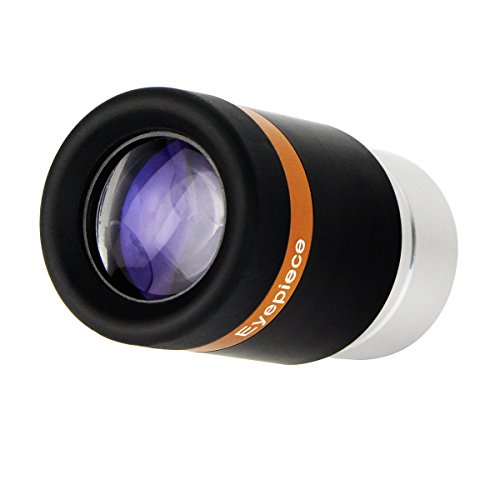
- 23mm focal length with a 62° field of view
- Fully coated optical glass
- Comfort-oriented large eyepiece diameter
Best For: Casual wide-field viewing and beginners
Best Edge-to-Edge Clarity

- 65° apparent field of view
- Ultra-flat-field design for crisp views
- 29mm eye relief for comfortable viewing
Best For: Wide deep-sky views and eyeglass wearers
Best Ultra-Wide Finder
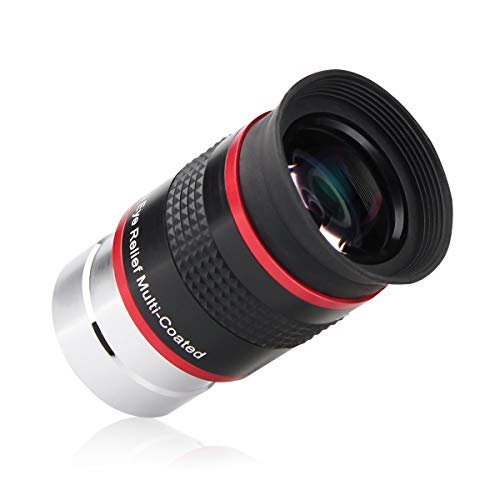
- Extra-wide 68° field of view
- 20mm low-magnification focal length
- Fully multi-coated optics with fold-down eyeguard
Best For: Finding objects, star fields, and large nebulae
Best Planetary-Viewing Design

- 25mm focal length with a 60° field
- Six-element fully multi-coated optics
- Adjustable eyeguard and filter-ready barrel
Best For: Comfortable low-power viewing with filter support
Best Multi-Focal-Length Set
SVBONY 68° Wide Angle Eyepiece Set
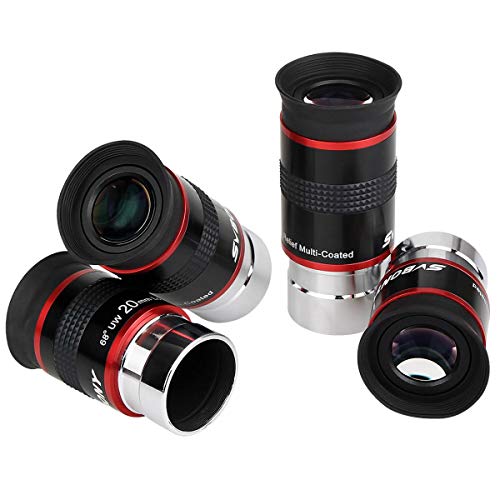
- Four focal lengths: 6mm, 9mm, 15mm, and 20mm
- Broad 68° apparent field of view
- Fully multi-coated 1.25-inch optics
Best For: Observers seeking a versatile eyepiece collection
Best Long-Focal-Length Option
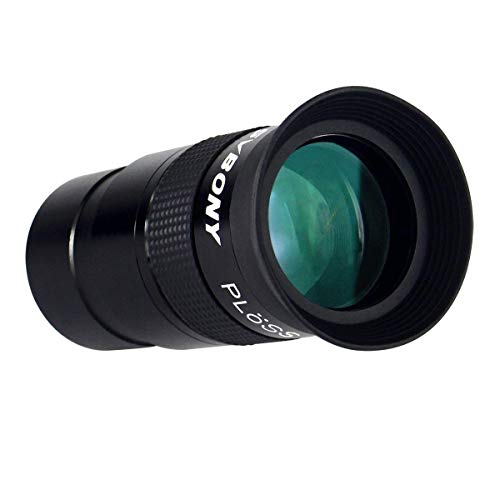
- 40mm focal length for broad, lower-magnification views
- 40° apparent field of view
- Fully multi-coated four-element design
Best For: Lunar, cluster, nebula, and deep-sky observation
Best Ultra-Wide 2-Inch Model
SVBONY SV154 26mm SWA Eyepiece
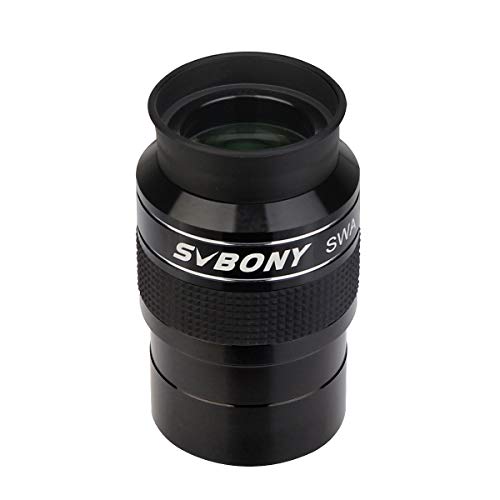
- Extra-wide 70° apparent field of view
- 26mm focal length for moderate magnification
- Five-element, fully multi-coated 2-inch design
Best For: Panoramic deep-sky viewing with compatible 2-inch equipment
Best Value Wide-Field Pick
Astromania Goldline 20mm 66° Eyepiece
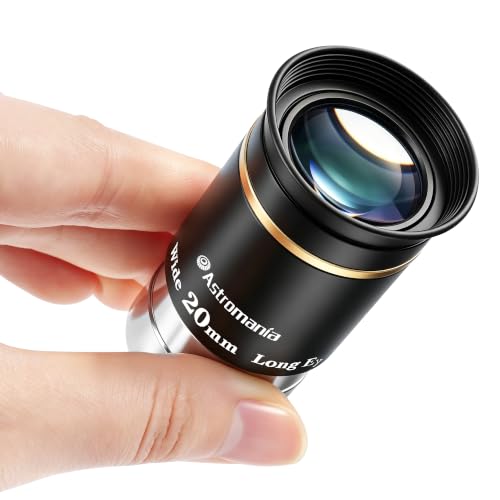
- 66° apparent field of view
- 18mm eye relief for comfortable viewing
- Multi-coated five-element optics
Best For: Beginners and hobbyists seeking versatile lunar, planetary, and deep-sky views
Best Multi-Piece Starter Set
SVBONY 4mm, 10mm & 23mm Eyepieces

- Three focal lengths in one set
- 62° wide-angle viewing
- Aspherical, fully multi-coated optics
Best For: Beginners building a flexible 1.25-inch eyepiece collection
Best for High-Power Planetary Views

- 6mm focal length for high magnification
- 68° field helps track objects
- 17mm eye relief with folding eyecup
Best For: Lunar and planetary observers seeking detailed high-power views
Best Value Wide-Angle Pick – SVBONY 23mm 62° Aspheric Eyepiece
For shoppers comparing wide angle telescope eyepieces, this SVBONY model offers a 23mm focal length, a 62° field of view, and a 1.25-inch barrel. Its aspheric design and fully coated optical glass are aimed at comfortable, bright viewing for scenery, nebulae, and other celestial targets.
Best For: Beginners and casual observers seeking a wide, low-power view with a comfortable large eyepiece.
Pros:
- 62° field of view provides a broad viewing experience.
- Fully coated glass supports light transmission and image contrast.
- 23mm large eyepiece diameter is designed for comfortable viewing.
- Metal housing has a machined, durable-feeling construction.
Cons:
- Limited to telescopes using a 1.25-inch, 31.75mm format.
- The notes do not specify edge sharpness or performance with particular telescope designs.
This is a practical wide-angle option when comfort and a broad field matter more than specialized high-power observing. Confirm your telescope’s 1.25-inch compatibility before buying.
Best Edge-to-Edge Clarity – Celestron Ultima Edge 24mm
The Celestron Ultima Edge is one of the more performance-focused wide angle telescope eyepieces in this group. Its 24mm focal length, 65° apparent field of view, and ultra-flat-field design are intended to provide crisp views from the center toward the edge when used with a 1.25-inch focuser.
Best For: Observers who prioritize wide deep-sky views, edge-to-edge crispness, and comfortable use with or without eyeglasses.
Pros:
- 65° apparent field of view shows more of the night sky.
- Ultra-flat-field design is intended to keep views crisp across the field.
- Eight-element, fully multi-coated lens design supports light transmission.
- 29mm eye relief and a fold-down rubber eyeguard add viewing comfort.
Cons:
- Designed for 1.25-inch focusers, so compatibility is limited to that format.
- The eight-element design may be more than needed for simple casual viewing.
Choose this model if maintaining a clean, broad field is a priority, particularly for deep-sky observing. Its generous eye relief also makes it a sensible option for eyeglass wearers.
Best Ultra-Wide Finder – SVBONY 20mm 68° Redline
This SVBONY Redline is a strong candidate among wide angle telescope eyepieces for locating objects and surveying star fields. The 20mm focal length provides relatively low magnification, while its 68° field of view is suited to larger targets such as nebulae and star clusters.
Best For: Observers who want an ultra-wide field for finding celestial objects and viewing expansive deep-sky targets.
Pros:
- 68° field of view makes locating objects and scanning star fields easier.
- 20mm focal length provides a low-magnification perspective.
- Fully multi-coated optics are designed to support contrast and resolution.
- Fold-down rubber eyeguard can help block stray light and accommodate eyeglasses.
Cons:
- Compatible with 1.25-inch telescope mounts only.
- Its low magnification is less suited to detailed high-power planetary viewing.
- The supplied notes do not identify edge performance across different telescopes.
For broad navigation and large deep-sky objects, the Redline’s 68° field is its main advantage. It is best viewed as a wide-field companion rather than an eyepiece for close-up planetary detail.
Best Planetary-Viewing Design – Celestron X-Cel LX 25mm
The Celestron X-Cel LX 25mm combines a wide 60° field of view with a low-power 25mm focal length. For buyers comparing wide angle telescope eyepieces, its six-element fully multi-coated lens system, adjustable rubber eyeguard, and filter-ready 1.25-inch barrel make it a versatile choice for comfortable viewing.
Best For: Telescope users wanting wide, low-power views with a comfortable grip, adjustable eyeguard, and planetary-viewing-oriented design.
Pros:
- 60° field of view provides a broad low-power perspective.
- Six-element fully multi-coated lens system supports light transmission.
- Pop-up rubber eyeguard can improve comfort and viewing contrast.
- Threaded 1.25-inch barrel accepts filters, and the rubber grip is designed for secure handling.
Cons:
- Limited to telescopes with a 1.25-inch eyepiece format.
- Its 60° field is narrower than the 65° and 68° options in this roundup.
- The supplied notes do not provide eye-relief specifications.
This is a balanced option for users who value handling and adjustable eye comfort alongside a wide field. Consider it when a 1.25-inch, filter-compatible eyepiece is more important than the widest possible view.
Best Multi-Focal-Length Set – SVBONY 68° Wide Angle Eyepiece Set
This SVBONY set is a flexible choice for anyone building a collection of wide angle telescope eyepieces. With 6mm, 9mm, 15mm, and 20mm focal lengths, it covers a useful range of magnifications while maintaining a broad 68° apparent field of view.
Best For: Observers who want several focal lengths for lunar, planetary, and general sky viewing.
Pros:
- Includes four focal lengths for versatile observing.
- 68° apparent field of view provides a broad viewing experience.
- Fully multi-coated optics, blackened interiors, and fold-down rubber eye guards support contrast and comfortable viewing.
Cons:
- Requires a telescope with a standard 1.25-inch eyepiece mount.
- A multi-piece set may be more than needed if you only want one focal length.
This is a practical starter or expansion set for observers who value variety. Its multiple focal lengths make it easier to choose an appropriate view for different targets without buying separate eyepieces one at a time.
Best Long-Focal-Length Option – SVBONY 40mm Plossl Eyepiece
The SVBONY 40mm Plossl is a straightforward wide angle telescope eyepiece for lower-magnification viewing. Its 40mm focal length and 40° apparent field of view suit broad lunar views, medium star clusters, cloudy nebulae, and other deep-sky targets.
Best For: Beginners and visual observers who want a single long-focal-length eyepiece for broad sky targets.
Pros:
- Four-element Plossl design offers a practical balance of clarity and field width.
- Fully multi-coated optics and a black interior help reduce stray light.
- Fold-down rubber eye guard and M28.5 x 0.6 filter thread add convenience.
Cons:
- The 40° field of view is narrower than the other wide-angle models in this roundup.
- It is a fixed 40mm focal length rather than a multi-focal-length set.
This eyepiece is a sensible choice when your priority is relaxed, wide-field observation rather than maximum apparent field width. The durable metal construction and included storage case also make it convenient for regular use.
Best Ultra-Wide 2-Inch Model – SVBONY SV154 26mm SWA Eyepiece
For especially expansive views, the SVBONY SV154 delivers a 70° field of view in a 26mm wide angle telescope eyepiece. Its 2-inch format, five-element design, and fully multi-coated optics are aimed at panoramic star fields, nebulae, clusters, and other large targets.
Best For: Observers with compatible 2-inch equipment who want panoramic deep-sky views and easier object locating.
Pros:
- 70° apparent field of view provides an especially wide perspective.
- 26mm focal length offers moderate magnification for varied targets.
- Five elements in three groups, FMC coatings, a filter thread, and a foldable rubber eye cup add useful features.
Cons:
- Requires a compatible 2-inch focuser, diagonal, or telescope accessory.
- Its 305g weight may be more noticeable on smaller setups.
- The supplied notes advise against use with reflector telescopes.
This is the strongest fit for experienced observers who have the necessary 2-inch hardware and want the widest field among these options. Confirm your telescope’s mount size and calculate magnification before ordering.
Best Value Wide-Field Pick – Astromania Goldline 20mm 66° Eyepiece
For shoppers comparing wide angle telescope eyepieces, the Astromania Goldline offers a generous 66° apparent field of view, comfortable eye relief, and a versatile 20mm focal length. Its 1.25-inch barrel fits standard telescope focusers and accepts common filters.
Best For: Beginners and hobbyists who want comfortable, expansive views of the Moon, star clusters, planets, and deep-sky objects.
Pros:
- 18mm eye relief and a fold-down eyecup accommodate eyeglass wearers.
- 66° field of view provides expansive, immersive views.
- Five-element, multi-coated optics support sharpness, contrast, and color correction.
- Metal construction, dust covers, and a standard filter thread add practical versatility.
Cons:
- Its 20mm focal length is not intended for the highest planetary magnification on its own.
- Requires a compatible 1.25-inch focuser or accessory setup.
This is a well-rounded wide-field option for general observing. Pairing it with a 2x Barlow can extend its usefulness for higher-magnification planetary viewing.
Best Multi-Piece Starter Set – SVBONY 4mm, 10mm & 23mm Eyepieces
This SVBONY set gives wide angle telescope eyepiece shoppers three focal lengths for covering different observing needs. The 62° field of view helps with target acquisition and surrounding context, while the included 4mm, 10mm, and 23mm lenses support lunar, planetary, and selected deep-sky viewing.
Best For: Beginners who want a flexible 1.25-inch eyepiece collection instead of buying individual focal lengths.
Pros:
- Three focal lengths provide a practical range of magnifications.
- 62° wide-angle views make objects easier to locate and frame.
- Aspherical, fully multi-coated optics are designed to reduce aberrations and improve transmission.
- Compatible with refractor, reflector, and catadioptric telescopes using a 1.25-inch focuser.
Cons:
- The set requires users to calculate suitable magnification for their telescope.
- Its 62° field is narrower than the 66° and 68° options in this roundup.
- Compatibility depends on having a 1.25-inch focuser.
As a starter bundle, this set offers useful focal-length coverage in one purchase. Confirm your telescope’s specifications and avoid magnification beyond the recommended limit.
Best for High-Power Planetary Views – SVBONY 6mm 68° Eyepiece
Among wide angle telescope eyepieces, this SVBONY model targets high-magnification observing with a 6mm focal length and a 68° field of view. The wide view can make it easier to acquire and track objects while examining lunar craters and planetary details.
Best For: Observers seeking a dedicated high-power eyepiece for the Moon, Saturn, and Jupiter.
Pros:
- 6mm focal length supports high-magnification planetary viewing.
- 68° field of view helps with target acquisition and tracking.
- 17mm eye relief and a folding eyecup improve comfort for eyeglass wearers.
- Fully multi-coated optics and a blackened tube help produce clearer, brighter images.
Cons:
- Its 6mm focal length is less versatile for broad, low-power deep-sky scanning.
- Requires a telescope or accessory with a compatible 1.25-inch interface.
- High magnification can be more demanding of the telescope and observing conditions.
This is the focused choice for detailed lunar and planetary work. Its broad apparent field and long eye relief add usability to a focal length designed primarily for higher power.
How We Picked the Best Wide Angle Telescope Eyepieces
We selected models that cover the most useful combinations of focal length, apparent field of view, barrel size, and price. The lineup includes compact high-power eyepieces for lunar and planetary observing, medium-power options for general-purpose use, and longer focal lengths for star fields and deep-sky targets.
We also included both individual eyepieces and sets, along with familiar designs such as Plossl, ultra-wide-angle, and super-wide-angle formats. Compatibility matters, so the selection represents common 1.25-inch barrels as well as a 2-inch option. Before buying, confirm your focuser size and whether your telescope can illuminate the eyepiece’s field without noticeable vignetting.
Quick Comparison
- Best for broad compatibility: 1.25-inch eyepieces in the 20mm-to-25mm range suit many beginner and intermediate telescopes.
- Best for immersive views: 68° to 70° designs show more sky and can make manual tracking easier.
- Best for high magnification: 4mm-to-9mm models are useful for the Moon, planets, and double stars when atmospheric conditions cooperate.
- Best for flexibility: Multi-eyepiece sets provide several magnification choices at once.
- Best for large focusers: A 2-inch, 70° eyepiece can deliver a spacious low-power view, provided the telescope supports that format.
Key Buying Factors for Wide-Angle Telescope Eyepieces
Focal Length and Magnification
Magnification equals the telescope’s focal length divided by the eyepiece focal length. Shorter focal lengths produce higher power, but they also demand steadier air, accurate focusing, and careful tracking. Longer focal lengths create brighter, wider views that are often better for open clusters, nebulae, and locating targets.
Apparent and True Field of View
Apparent field of view describes how wide the view feels through the eyepiece; true field is the actual portion of sky visible. A wider apparent field can improve comfort and make objects easier to keep in view, especially with a manually operated mount. Field size alone does not guarantee edge-to-edge sharpness, so optical performance and telescope compatibility remain important.
Barrel Size, Eye Relief, and Optical Fit
Most beginner telescopes use 1.25-inch accessories, while 2-inch eyepieces may support larger field stops and lower-power views. Check the focuser, diagonal, and any adapter before ordering. Eye relief is especially important for glasses wearers; a generous specification is generally more comfortable, although usable eye relief can vary by design.
Coatings and Build Quality
Fully multi-coated optics can improve light transmission and reduce reflections. A secure eyecup, clean internal baffling, and a firm barrel also matter in regular use. Weight should be checked as well, since a heavy wide-angle eyepiece can affect balance on a small telescope mount.
Who Should Buy Which Wide Angle Telescope Eyepieces?
Beginners should consider a versatile 20mm-to-25mm 1.25-inch model or a modest set that adds both medium and high magnification. Deep-sky observers may prefer a 23mm-to-40mm eyepiece with a broad field, assuming the telescope’s focal ratio and focuser support it. Planetary observers should choose a 6mm-to-10mm option, but only if their telescope and local seeing conditions can support the resulting power. Manual-mount users benefit most from a 62°-to-70° apparent field, which gives targets more time before they drift out of view. Finally, experienced observers upgrading a compatible telescope may value a 2-inch super-wide model for expansive, low-power vistas.