
eSUN PLA Basic Filament review for buyers who want a fast-printing PLA that stays simple to use.
This is a focused look at whether eSUN PLA Basic Filament is worth it for high-speed FDM setups and everyday part making.
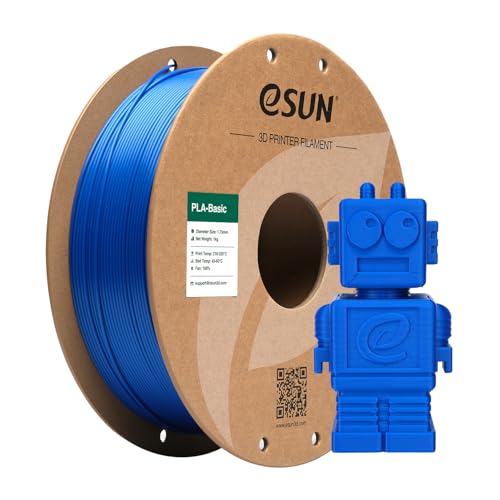
PLA Basic Filament Review Summary
eSUN PLA Basic Filament makes sense for makers who want a cost-conscious PLA that is positioned for speed rather than specialty effects.
The listing is clearly aimed at users running modern high-speed printers, but it also keeps the basic PLA value proposition intact: easy handling, broad compatibility, and predictable results for general-purpose prints.
If your main concern is whether this filament will keep up with a fast machine without turning every print into a tuning exercise, this product is aimed right at you.
It also fits buyers who want a standard 1 kg spool, low-odor PLA workflow, and packaging that protects the filament before first use.
Review Scorecard
| Category | Score | Why it scores this way |
|---|---|---|
| Speed-oriented use | 8/10 | Marketed specifically for fast printing and improved flow behavior. |
| Printer compatibility | 9/10 | The listing names a wide range of common FDM and high-speed printers. |
| Ease of use | 8/10 | Claims low odor, less stringing, and good first-print success. |
| Dimensional handling | 8/10 | Tight diameter tolerance and roundness are emphasized for steadier feeding. |
| Everyday reliability | 8/10 | The material is described as low warping, low shrinkage, and less prone to cracking. |
| Storage and shipping protection | 8/10 | Vacuum-sealed packaging with a desiccant bag helps preserve the spool. |
| Value for general users | 7/10 | Strong fit if you want a dependable PLA for fast output, less compelling if you need specialty properties. |
The short version: buy this if you want a normal-looking PLA that is optimized around speed, smooth feeding, and broad printer support.
Skip it if you need engineering-grade performance, special visual finishes, or a material with a very specific mechanical profile.
Key Features and Specifications of PLA Basic Filament
eSUN PLA Basic Filament is a 1.75 mm PLA spool in a 1 kg / 2.2 lb format.
The listing describes it as an improved version of ordinary PLA, with added material properties intended to support faster printing and better flow.
The compatibility list is unusually broad. eSUN names many popular FDM and high-speed printers, including Bambu Lab P1P, P1S, X1, X1C, A1, A1 mini, AnkerMake M5, Creality K1, K1 Max, Voron 2.4, FLSUN V400, Prusa, UltiMaker, MK3, Ender 3, Ender 7, MakerBot, Flashforge, and Raise3D.
That does not guarantee identical results on every machine, but it does show the filament is being positioned as a mainstream, flexible option rather than a niche formula.
The user-facing claims also focus on practical print behavior:
- Improved fluidity for fast printing
- Less stringing
- Low odor
- No warping
- Low shrinkage
- No deformation
- No cracking
- Good printing precision and molding effect
- Smooth feeding without clogging the nozzle or extruder
- Tangle-free winding with tight diameter tolerance
Packaging is another selling point.
The spool is vacuum sealed and includes a desiccant bag, which matters because filament that arrives dry and protected is easier to trust from the first print onward.
The material itself is described as PLA made with starch raw materials derived from renewable plant resources.
That is consistent with PLA’s usual buyer appeal: simple daily printing, easy post-processing relative to tougher materials, and broad adoption across hobby and practical use cases.
Pros and Cons of PLA Basic Filament
Pros
- Built around fast printing rather than only standard-speed hobby use
- Broad printer compatibility, including many popular high-speed machines
- Low-odor PLA behavior is attractive for indoor printing spaces
- Claims of reduced stringing and smoother feeding suggest easier setup
- Vacuum-sealed packaging with desiccant is a practical plus
- Tight diameter tolerance and good winding should help feeding consistency
Cons
- The listing is strongly focused on printing convenience, not advanced mechanical performance
- Buyers needing heat resistance, impact resistance, or engineering-grade properties should look elsewhere
- “Fast printing” is the main differentiator, so users chasing special aesthetics may not find much here
- The product page makes broad claims, but it does not provide detailed technical datasets in the supplied evidence
The overall profile is straightforward: this is a function-first PLA, not a feature-stacking specialty filament.
That is a strength if you want predictability.
It is a limitation if you need a material that solves a more demanding engineering problem.
Who Should Buy PLA Basic Filament?
Buy this if you already own or plan to use a high-speed FDM printer and want a PLA that is explicitly marketed for that use case.
It is also a sensible choice if you print a lot of general-purpose parts, prototypes, organizers, visual models, or non-critical household items and want the spool to behave consistently.
This filament should also appeal to users who value fewer setup headaches.
The listing’s emphasis on less stringing, smooth feeding, and low odor suggests a material meant for normal day-to-day work rather than constant experimentation.
You should probably skip it if:
- You need mechanical toughness above what standard PLA is known for
- You print parts exposed to higher temperatures
- You want specialty textures, glitter, silk, or other visual effects
- You need detailed technical documentation before choosing a filament
For most general users, the decision is not whether PLA Basic Filament is exotic enough.
The real question is whether a plain, fast-printing PLA is exactly what your workflow needs.
In a lot of home and workshop setups, that is the right answer.
Printing Behavior of PLA Basic Filament
Fast-Print Flow
The defining claim here is improved flow for fast printing.
That matters because high-speed machines can expose weak filament behavior quickly: inconsistent melt flow, extra stringing, or poor layer consistency can turn into visible defects. eSUN is clearly positioning this spool as one that keeps up better than ordinary PLA when output speed rises.
Feeding and Spool Handling
The listing’s promises about perfect roundness, tight diameter tolerance, and good winding are not flashy, but they are the details that affect real print sessions.
Filament that feeds smoothly and avoids overlap or tangles reduces interruptions, which is especially valuable if you leave prints running unattended.
Surface and Print Finish
eSUN says the filament produces good molding effect and printing precision.
Taken literally, that suggests a material aimed at clean everyday parts rather than dramatic cosmetic effects.
For buyers, that usually means you should expect a dependable base surface and stable dimensions more than a premium decorative finish.
Storage and First Use
The vacuum-sealed bag and desiccant indicate attention to shelf condition.
That is a small but useful advantage because PLA is easier to trust when it arrives protected from dust and moisture.
It does not make the filament special, but it does support a smoother first print and simpler storage routine.
Alternatives to PLA Basic Filament
If you want a standard PLA alternative, consider Bambu Lab PLA Basic, especially if you already run a Bambu printer ecosystem and want a similarly straightforward material.
For a broad, commonly stocked benchmark, eSUN PLA+ is worth comparing if you want to stay with the same brand but look at a more established general-purpose PLA line.
If you need a mainstream filament brand with wide availability, Polymaker PLA is a credible Amazon search alternative for buyers comparing easy-print PLA options.
If your real priority is speed-focused output, high speed PLA filament is the most useful broader search because it surfaces direct competitors made for the same workflow.
The right alternative depends on your printer and whether you want to stay within a familiar brand, compare standard PLA formulations, or narrow the search to speed-optimized spools.
Is PLA Basic Filament Worth It?
Yes, PLA Basic Filament is worth considering if your goal is dependable PLA for fast FDM printing.
The evidence points to a filament designed around practical buying priorities: broad compatibility, easier handling, low odor, clean feeding, and packaging that protects the spool before use.
It is not trying to be the most advanced filament on the market, and that is fine.
For many buyers, the best filament is the one that prints consistently, feeds cleanly, and matches the speed of the machine already on the bench.
If that is your goal, eSUN PLA Basic Filament is a sensible buy.