
Choosing a compound microscope is easier when you know what matters most: clear optics, stable mechanics, useful magnification, and lighting that matches your work.
This roundup highlights 10 strong options for students, hobbyists, and lab users, so you can compare features quickly and buy with confidence.
Best 10 Compound Microscopes Picks for 2026
Research-Grade Pick
SWIFT SW350B 40X-2500X Binocular Compound Microscope

- 40X-2500X range with 4 DIN achromatic objectives
- Binocular Siedentopf head with 30-degree tilt
- LED lighting, Abbe condenser, and mechanical stage
Best For: Students, clinicians, and hobbyists needing versatile slide viewing
Starter Kit Choice
PalliPartners 100X-2000X Compound Microscope Set

- 100X-2000X magnification for beginner biology viewing
- Includes slides, phone clip, and Bluetooth shutter
- Top and bottom LED lights for different specimen types
Best For: Beginners, students, and homeschool science kits
Digital Lab Upgrade
SWIFT SW350T Trinocular Compound Microscope with Camera

- Trinocular body with included 2.0MP USB camera
- Windows and Mac software with measurement tools
- 40X-2500X optics and a double-layer mechanical stage
Best For: Users who need digital imaging and lab-style specimen analysis
Budget-Friendly Classic
AmScope M150C 40X-1000X Cordless Compound Microscope

- 40X-1000X range for student science work
- All-metal framework with optical glass elements
- Cordless LED can run on batteries or outlet power
Best For: Students and homeschoolers who want a durable starter scope
Classroom-Friendly Power

- 40X-2500X magnification range
- Dual LED lighting for multiple sample types
- Includes phone holder and slide accessories
Best For: Students, homeschoolers, and families
Portable Lab Value
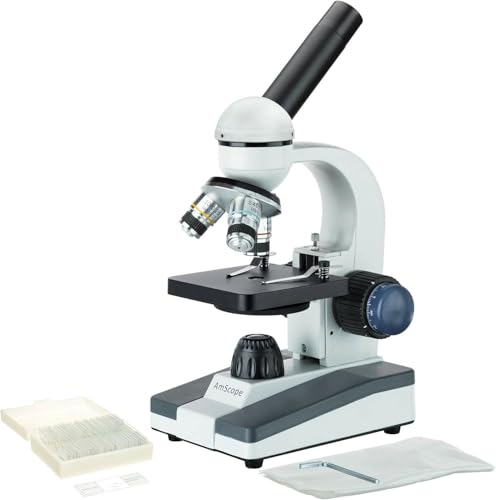
- 40X-1000X magnification range
- Includes 5MP USB camera and software
- Comes with 25 prepared slides
Best For: Budget-conscious students and labs
Research-Grade Control

- 40X-2500X magnification with wide-field eyepieces
- Siedentopf head and 30-degree tilt
- Trinocular design for camera attachments
Best For: Clinicians, students, and hobbyists
Lab-Grade All-Rounder
OMAX 40X-2000X Binocular Compound Microscope
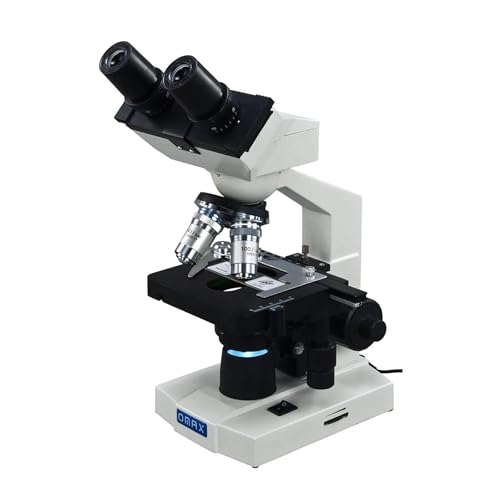
- 40X-2000X range with WF10X and WF20X eyepieces
- Double-layer X-Y mechanical stage with Abbe condenser
- Includes slides, cover slips, and lens cleaning paper
Best For: students and hobbyists wanting a feature-rich binocular microscope
Camera-Ready Explorer
PalliPartners 40x-2000x Trinocular Microscope

- Trinocular head supports camera attachment and viewing
- 5MP camera support for digital capture
- Top and bottom LED lights help with different specimen types
Best For: users who want viewing plus documentation in one microscope
Wide-View Student Pick
Herwicm 40X-2500X Binocular Compound Microscope

- 40X-2500X range with WF10x and WF25x eyepieces
- Top and bottom LED lighting for clearer viewing
- Two-layer stage with coarse and fine focus knobs
Best For: beginners and students wanting a comfortable wide-view microscope
Research-Grade Pick – SWIFT SW350B 40X-2500X Binocular Compound Microscope
If you want a compound microscope that can handle classroom work, lab use, and serious hobby viewing, the SWIFT SW350B is built around that role. Its 40X to 2500X range, binocular Siedentopf head, and adjustable Abbe condenser make it a practical choice for detailed slide inspection with an ergonomic setup.
Best For: Students, clinicians, and hobbyists who want a versatile binocular compound microscope with higher magnification options.
Pros:
- 40X-2500X magnification with 4 DIN achromatic objectives for a wide viewing range
- Siedentopf binocular head with 30-degree tilt helps reduce neck strain
- LED illumination and manually adjustable Abbe condenser support slide visibility
- Mechanical stage and secure slide holder improve specimen control
Cons:
- Higher-magnification use will be most useful on prepared slides
- Requires AC power, so it is less portable than battery-powered models
The SW350B stands out as a solid all-around compound microscope when you want more capability than an entry-level school scope. It is a strong fit for users who value build quality, shared viewing, and a broad magnification range.
Starter Kit Choice – PalliPartners 100X-2000X Compound Microscope Set
The PalliPartners compound microscope is geared toward buyers who want a ready-to-use setup without piecing together accessories separately. With 100X to 2000X magnification, dual LED illumination, and a bundled slide kit, it works well for home science, student projects, and first-time microscope users.
Best For: Students, teens, and beginners who want an all-in-one microscope kit with slides and phone accessories.
Pros:
- 100X-2000X range covers basic to intermediate biology viewing
- Includes 10 prepared slides, 18 blank slides, phone clip, and remote shutter
- Top and bottom LED lights help with opaque and translucent specimens
- Coaxial coarse and fine focus knobs support sharper adjustments
Cons:
- Best suited to entry-level and student use rather than advanced lab work
- Battery-powered design may be less convenient than a corded desktop model
This is a practical compound microscope for families and students who want a complete science kit in one box. The included accessories add value, especially if you want to document observations on a smartphone.
Digital Lab Upgrade – SWIFT SW350T Trinocular Compound Microscope with Camera
For users who want a compound microscope that can do both viewing and imaging, the SWIFT SW350T adds a trinocular port and USB camera to a research-style body. Its 40X-2500X optics, mechanical stage, and included software make it a strong fit for documenting slides and analyzing specimens on a computer.
Best For: Labs, students, and advanced hobbyists who need microscope viewing plus digital photo and video capture.
Pros:
- Included 2.0MP USB camera supports photo and video capture
- Trinocular design allows imaging while viewing through the eyepieces
- Software adds stitching, extended depth of field, and measurement tools
- 40X-2500X range with 4 achromatic objectives supports detailed work
Cons:
- More complex than a basic classroom microscope
- Heavier metal construction is less convenient for frequent moving
The SW350T is the most feature-rich option here for users who need a compound microscope that doubles as a documentation tool. It makes sense when image capture, measurement, and shared lab work matter as much as magnification.
Budget-Friendly Classic – AmScope M150C 40X-1000X Cordless Compound Microscope
The AmScope M150C is a straightforward compound microscope for learners who want solid basics in a durable metal body. With 40X to 1000X magnification, optical glass components, and cordless LED illumination, it covers standard student use without adding unnecessary complexity.
Best For: Elementary through high school students and home-school families looking for a simple, durable starter microscope.
Pros:
- 40X-1000X magnification is suitable for common learning activities
- All-metal framework adds sturdiness for regular student use
- Cordless LED illumination can run on batteries or an outlet
- Monocular head rotates 360 degrees for flexible viewing
Cons:
- Lower maximum magnification than higher-end research-style models
- Monocular design is less comfortable for shared viewing sessions
The M150C is a dependable entry point if you want a simple compound microscope with a durable build and easy setup. It is best when reliability and classroom-friendly basics matter more than advanced magnification or imaging features.
Classroom-Friendly Power – 40X-2500X Compound Microscope
This compound microscope is aimed at beginners who still want strong optics and flexible viewing. With 40X-2500X magnification, dual LED illumination, and a phone holder, it gives students and families a practical way to examine prepared slides and opaque samples at home or in a school lab.
Best For: Students, homeschoolers, and families who want a versatile starter microscope with strong magnification.
Pros:
- 40X-2500X magnification with WF25X/10X eyepieces and 4X/10X/100X objectives
- Dual incident and transmitted LED lighting for opaque and translucent specimens
- Coarse and fine focusing knobs for quicker setup and sharper detail
- Includes a phone holder and starter accessories like slides, tweezers, and droppers
Cons:
- High maximum magnification may take practice to use well
- Best results will depend on proper slide preparation and lighting adjustment
Overall, this is a strong all-around option for compound microscope buyers who want more than a toy-grade model. Its lighting, focusing controls, and included extras make it especially appealing for educational use.
Portable Lab Value – M150C-PS25 1000X Microscope
If you want a practical compound microscope without chasing premium features, the AmScope M150C-PS25 keeps things straightforward. It offers 40X-1000X magnification, LED illumination with a fly-eye lens, and a 5MP USB camera for image capture and analysis, making it a solid fit for education-focused use.
Best For: Budget-conscious students, labs, and users who want basic imaging and slide viewing in one package.
Pros:
- 40X-1000X magnification is well suited to general biological viewing
- LED illumination with a specialized fly-eye lens for bright, daylight-balanced light
- Includes a 5MP USB microscope camera and software for capture and analysis
- Comes with 25 prepared sample slides and a 5-year manufacturer warranty
Cons:
- Maximum magnification is lower than some higher-powered compound microscopes
- Camera integration may be more than some beginners need
For shoppers who want a dependable, education-ready microscope with useful extras, this AmScope model is easy to justify. It balances viewing performance, portability, and digital imaging in a practical package.
Research-Grade Control – SW380T Trinocular Microscope
The Swift SW380T is built for buyers who want a more advanced compound microscope with strong control and camera-ready flexibility. Its 40X-2500X magnification, Siedentopf head, ultra-precise focusing, and trinocular design make it well suited to more serious slide work and specimen imaging.
Best For: Clinicians, students, and hobbyists who want a trinocular microscope with advanced ergonomics and camera compatibility.
Pros:
- 40X-2500X magnification with 10X and 25X wide-field eyepieces
- Siedentopf head with a 30-degree tilt to reduce neck strain
- Ultra-precise coarse and fine focusing for detailed adjustments
- Trinocular head supports an additional eyepiece and camera attachments
Cons:
- Camera attachments are not included
- Larger and heavier than more basic student microscopes
This is the most feature-rich option in the group for users who care about ergonomics and imaging expansion. If you want a compound microscope that can grow with your workflow, the SW380T is the most flexible pick here.
Lab-Grade All-Rounder – OMAX 40X-2000X Binocular Compound Microscope
If you want a compound microscope that feels ready for serious home, classroom, or lab-style use, this OMAX model covers a wide magnification range from 40X to 2000X. The binocular head, mechanical stage, and adjustable LED illumination make it a practical choice for detailed slide work, while the included slides, cover slips, and lens paper add immediate value.
Best For: Students, hobbyists, and users who want a feature-rich binocular microscope with lab-style controls.
Pros:
- 40X-2000X magnification range with WF10X and WF20X eyepieces
- Binocular head with 45-degree inclination and 360-degree swivel for comfortable viewing
- Double-layer X-Y mechanical stage and Abbe condenser for more controlled specimen positioning
- Includes 100 blank slides, 100 cover slips, and lens cleaning paper
Cons:
- Single transmitted LED light may be less flexible than dual-illumination setups
- Heavier, full-metal construction is better suited to a dedicated workspace than frequent portability
This is a strong all-purpose option if you want the handling and features of a more traditional lab microscope without assembling extras separately. Its broad magnification range and mechanical stage make it especially useful for learning and routine specimen observation.
Camera-Ready Explorer – PalliPartners 40x-2000x Trinocular Microscope
This compound microscope is built for users who want room to observe and document specimens, thanks to its trinocular head and included 5MP camera support. With 40x to 2000x magnification, dual LED lighting, and a double-layer stage, it is designed to handle basic biological viewing with enough flexibility for home study, classroom use, or entry-level lab work.
Best For: Users who want a trinocular compound microscope with digital capture capability for viewing and documentation.
Pros:
- Trinocular design supports simultaneous viewing and camera attachment
- 5MP camera support for digital capture and sharing
- Dual top and bottom LED illumination for transparent and non-transparent specimens
- Coarse and fine focus knobs plus a double-layer stage for easier adjustment
Cons:
- Best suited to users who will actually use the camera function, since that is a key feature
- Focused on basic biological observation rather than advanced specialized applications
If documentation matters as much as observation, this is the most versatile pick in the group. The trinocular layout and dual lighting make it a sensible choice for users who want a compound microscope that can do more than just look through the eyepieces.
Wide-View Student Pick – Herwicm 40X-2500X Binocular Compound Microscope
For buyers comparing compound microscopes for general learning and beginner lab use, this Herwicm model stands out with a 40X to 2500X range and ultra-wide-angle binocular eyepieces. It also adds top and bottom LED lighting, a two-layer mechanical stage, and coaxial coarse/fine focusing to support clearer, more comfortable viewing during longer sessions.
Best For: Beginners, students, and hobbyists who want a comfortable binocular microscope with a broad zoom range.
Pros:
- 40X-2500X magnification range for flexible specimen observation
- WF10x and WF25x eyepieces with ultra-wide-angle binocular viewing
- Dual LED lighting from top and bottom for easier observation
- Two-layer mechanical stage and coarse/fine focus knobs for better control
Cons:
- Product notes contain conflicting magnification details, so buyers should verify the exact configuration
- Listed details do not mention included slides or accessories
This is a solid general-purpose compound microscope if you prioritize a comfortable binocular setup and broad viewing flexibility. The wide-angle eyepieces and dual lighting are the main draws for users who plan to spend time at the scope.
How We Picked These Compound Microscopes
We focused on practical features that affect real use, including optical quality, magnification range, stage stability, illumination, and whether the microscope is better suited to beginners, students, or more advanced users. We also considered portability, binocular versus trinocular viewing, and whether camera-ready models add value for documentation or teaching.
Quick Comparison
For schoolwork and home use, simpler monocular models can be the most affordable and easiest to set up. For frequent observation, binocular and trinocular Compound Microscopes usually offer better comfort and expandability. If you want to photograph slides or share images, a trinocular head is worth the upgrade. Higher magnification numbers are helpful only when paired with decent lenses, solid focus controls, and good lighting.
Key Buying Factors for Compound Microscopes
Magnification and Optics
Look beyond the maximum magnification on the box. Useful detail depends on the quality of the objectives and eyepieces, not just the top-end number. For most buyers, a balanced range is more valuable than extreme magnification that is difficult to use effectively.
Lighting and Contrast
LED lighting is common because it is bright, cool, and energy efficient. Adjustable illumination helps when viewing transparent specimens, while dual lighting can be helpful for different slide types and learning environments.
Stage, Focus, and Build
A mechanical stage makes slide positioning much easier, especially at higher powers. Coarse and fine focus controls should feel smooth and precise. Metal construction usually improves stability and long-term durability, which matters for classroom and lab settings.
Camera Support and Eyepieces
If you plan to record or teach with images, choose a trinocular microscope or a model designed for camera attachment. Wide-field eyepieces can make viewing more comfortable and can improve the overall experience for beginners.
Who Should Buy Which Compound Microscopes?
Students and first-time buyers usually do best with an affordable binocular or monocular model that includes basic accessories. Home school and hobby users may want a kit with slides, a mechanical stage, and easy lighting controls. Advanced users, teachers, and anyone who wants imaging support should look at trinocular Compound Microscopes with better stages and camera compatibility. If portability matters most, choose a lighter cordless or portable design instead of a heavier research-style model.
In short, match the microscope to your specimens, skill level, and workspace. The best choice is the one that delivers clear images, comfortable viewing, and the right features without paying for extras you will not use.