
Choosing among motorized astrophotography mounts means balancing tracking accuracy, payload capacity, portability, setup time, and your imaging goals. A compact star tracker can be ideal for a camera and wide-field lens, while a computerized equatorial mount is better suited to a telescope, autoguiding, and long-exposure deep-sky work.
This roundup compares 10 options across portable trackers, camera mounts, and full-size GoTo systems so you can match the mount to your equipment, observing location, and experience level.
Best 10 Motorized Astrophotography Mounts Picks for 2026
Portable Wi-Fi Tracker
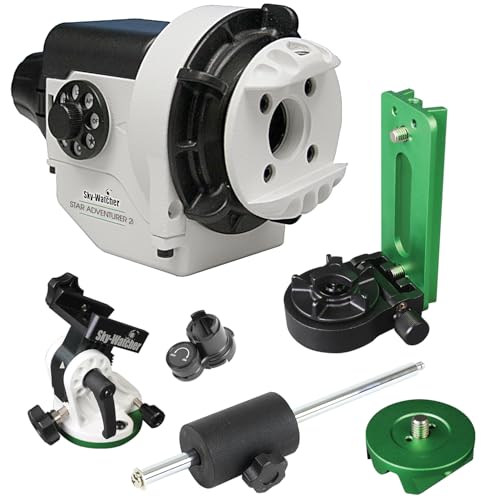
- Wi-Fi smartphone control
- Modular tripod-compatible design
- Equatorial base for alignment
Best For: Portable wide-field astrophotography
Multi-Processor Equatorial Mount

- Eight-CPU PMC-Eight system
- Tablet-based ExploreStars GoTo app
- Clutched dual-axis worm gears
Best For: App-controlled telescope astrophotography
Lightweight Camera Tracker
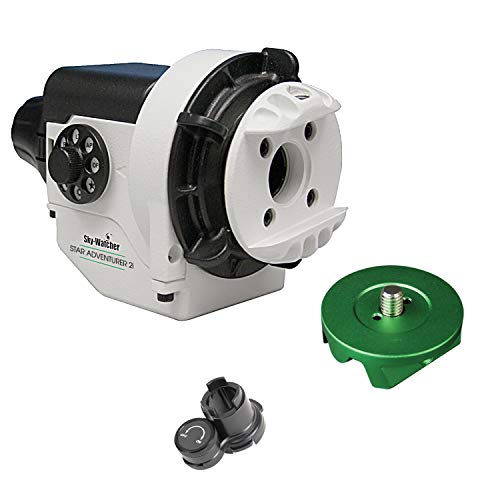
- 2.4-pound portable design
- 11-pound DSLR payload
- Built-in polar finderscope
Best For: Traveling DSLR astrophotographers
Complete Camera Mount Kit
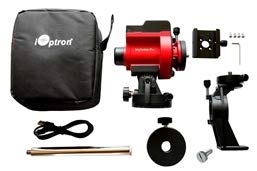
- Includes DEC and counterweight kit
- 144× sidereal RA slew
- Northern and southern hemisphere use
Best For: Portable camera tracking with flexible rates
Lightweight Backcountry Pick
SLIK ECH-630 Compact Star Tracker
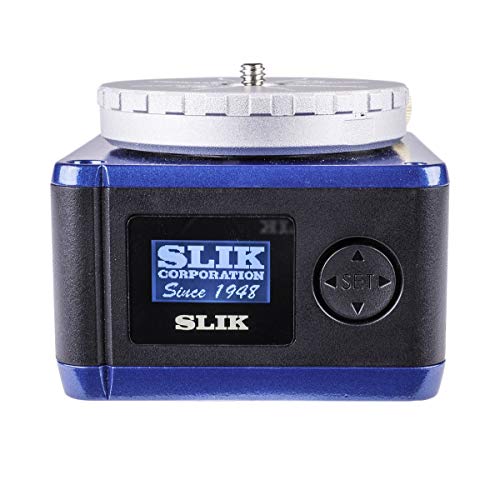
- Weighs about 22.4 ounces
- Supports celestial, lunar, and solar speeds
- Up to 20 hours on four AA batteries
Best For: Backpacking photographers needing a compact, long-running tracker
Versatile Tracking Choice
iOptron SkyTracker Pro Camera Mount

- 6.6-pound payload rating
- Includes a polar scope
- Offers four tracking-speed modes
Best For: Camera users wanting flexible tracking and moderate payload capacity
Smartphone-Controlled Favorite
Sky-Watcher Star Adventurer Mini

- Wi-Fi control through the SynScan app
- Weighs 1.5 pounds
- Supports up to 6.6 pounds
Best For: Portable nightscape, time-lapse, and panorama photography
Compact Precision Pick

- 13.5 kg payload capacity
- Lightweight 3.7 kg mount
- No counterweight required
Best For: Portable astrophotography setups
High-Capacity GoTo Workhorse

- 44-pound payload capacity
- Belt-driven, quiet slewing
- 42,000-plus object database
Best For: Heavy astrophotography equipment
Versatile Dual-Mode Mount

- EQ, Alt-Az, and dual-OTA modes
- 44-pound payload capacity
- Dual encoders preserve alignment
Best For: Flexible multi-configuration setups
Portable Wi-Fi Tracker – Star Adventurer 2i Pro Pack
The Sky-Watcher Star Adventurer 2i Pro Pack is a versatile choice among motorized astrophotography mounts for photographers who want a portable platform for wide-field nightscapes, eclipses, and selected telescopic uses. Its modular design works with existing photographic tripods, while built-in Wi-Fi enables smartphone control through the SAM Console app.
Best For: Portable wide-field astrophotography and time-lapse shooting with smartphone control.
Pros:
- Supports Milky Way, eclipse, and other astronomical-object photography.
- Includes Wi-Fi control through Sky-Watcher’s SAM Console app.
- Deluxe equatorial base helps position the tracker for polar alignment.
- Modular design supports photographic tripods and telescopic use.
Cons:
- At 7 pounds, it is heavier than the Star Adventurer Photo Kit.
- Its supplied notes do not specify a payload capacity.
The Pro Pack stands out for combining tripod flexibility, Wi-Fi operation, and an equatorial base in a portable tracking system. It is a practical fit for users who want more setup flexibility than a basic camera tracker.
Multi-Processor Equatorial Mount – iEXOS-100-2 PMC-Eight
The Explore Scientific iEXOS-100-2 PMC-Eight is a more system-oriented option among motorized astrophotography mounts, pairing an equatorial mount and tripod with Wi-Fi and Bluetooth compatibility. Its eight independent CPUs, clutched dual-axis worm gears, and tablet-based ExploreStars app are designed for responsive control and straightforward GoTo operation.
Best For: Telescope users who want app-controlled GoTo navigation and precise equatorial positioning.
Pros:
- PMC-Eight system uses eight independent CPUs for defined functions.
- ExploreStars app supports Apple, Android, and Windows tablets.
- Clutched RA and declination axes allow smooth repositioning and balancing.
- Polar alignment sight hole and altitude control simplify alignment.
Cons:
- The supplied notes do not list a payload capacity.
- It is a dedicated equatorial mount rather than a compact camera-only tracker.
Choose the iEXOS-100-2 when app-based GoTo functionality and telescope alignment matter more than minimal size. Its control architecture and adjustable axes give it a broader equipment-oriented role than simple portable trackers.
Lightweight Camera Tracker – Star Adventurer Photo Kit
The Sky-Watcher Star Adventurer Photo Kit is a lightweight pick among motorized astrophotography mounts for DSLR users and mobile nightscape photographers. It weighs 2.4 pounds, supports up to 11 pounds, includes a ball-head adapter and polar finderscope, and offers Wi-Fi smartphone control through the SAM Console app.
Best For: Backpackable DSLR nightscape, eclipse, and wide-field astrophotography.
Pros:
- Lightweight 2.4-pound design suits camera bags and backpacks.
- Supports most DSLR cameras with an 11-pound payload capacity.
- Built-in polar finderscope supports alignment with Polaris.
- AA battery compartment provides up to 72 hours of mobile power, with 5V mini-USB input.
Cons:
- The supplied notes describe it primarily as a wide-field camera tracker.
- A photographic ball-head is mounted using the included adapter, rather than supplied as an integrated head.
For photographers prioritizing low carry weight and quick field deployment, this Photo Kit is especially appealing. Its combination of payload support, alignment hardware, long battery operation, and tripod compatibility makes it a practical travel tracker.
Complete Camera Mount Kit – iOptron SkyGuider Pro
The iOptron SkyGuider Pro is a camera-focused option among motorized astrophotography mounts, supplied with a padded bag, declination and counterweight kit, and USB cable. It provides RA slewing up to 144 times sidereal speed and offers sidereal, half-speed, solar, and lunar tracking modes for northern and southern hemisphere use.
Best For: Camera astrophotographers who want a complete, portable mount package with multiple tracking speeds.
Pros:
- Includes padded bag, DEC and counterweight kit, and USB cable.
- Offers fast RA slew up to 144× sidereal speed.
- Supports sidereal, 1/2×, solar, and lunar tracking rates.
- Works in both northern and southern hemispheres.
Cons:
- The supplied notes do not specify a payload capacity.
- The listed package is designed for cameras, not described as a complete telescope mount.
The SkyGuider Pro is a sensible choice when included accessories and tracking-rate flexibility are priorities. Its compact dimensions and padded bag also make it well suited to photographers building a portable camera-tracking setup.
Lightweight Backcountry Pick – SLIK ECH-630 Compact Star Tracker
The SLIK ECH-630 is one of the more packable motorized astrophotography mounts, weighing about 22.4 ounces and running for up to 20 hours on four AA batteries. Its selectable celestial, lunar, and solar speeds also support time-lapse photography.
Best For: Backpacking photographers who want a compact tracker with simple LCD menu control and long battery life.
Pros:
- Lightweight design suits backcountry photography.
- Offers celestial, lunar, solar, and time-lapse speeds.
- Runs up to 20 hours on four AA batteries.
- Optional SMH-250 head can assist with polar alignment.
Cons:
- The optional micro-adjustment head is not included.
- The listed specifications contain conflicting weight-capacity figures, so verify the intended payload before purchase.
Choose the ECH-630 when portability and battery endurance matter most. Its straightforward controls and multiple tracking modes make it a practical option for lightweight camera setups.
Versatile Tracking Choice – iOptron SkyTracker Pro Camera Mount
The iOptron SkyTracker Pro is a motorized astrophotography mount rated for camera payloads up to 6.6 pounds. It includes a polar scope and offers sidereal, half-speed, solar, and lunar tracking, with micro-USB charging.
Best For: Photographers who want a dedicated camera mount with multiple tracking rates and a relatively substantial payload rating.
Pros:
- Supports payloads up to 6.6 pounds.
- Includes a polar scope for alignment.
- Provides sidereal, half-speed, solar, and lunar modes.
- Reaches 80% charge in five hours via micro USB.
Cons:
- The mount is not water resistant.
- A ball head is not identified among the supplied components.
- It weighs 3.3 pounds, making it less packable than lighter options.
The SkyTracker Pro is a sensible middle ground for users who need more payload capacity than an ultralight tracker provides. Its included polar scope and varied speed settings broaden its usefulness for camera-based night-sky work.
Smartphone-Controlled Favorite – Sky-Watcher Star Adventurer Mini
The Sky-Watcher Star Adventurer Mini combines motorized night-sky tracking with smartphone control through the SynScan app. At 1.5 pounds, it is designed for portable wide-field astrophotography, time-lapse work, panoramas, and eclipse photography.
Best For: DSLR and mirrorless photographers seeking a lightweight tracker with app control, a polar scope, and a 6.6-pound payload rating.
Pros:
- Wi-Fi-enabled smartphone control works through the SynScan app.
- Includes a polar scope and illuminator.
- Accepts a ball head through the included adapter.
- Runs up to 24 hours on AA batteries and supports 5V mini-USB power.
Cons:
- It is not water resistant.
- A ball head itself is not included, only the adapter.
- App control requires a compatible Android or iOS device.
The Star Adventurer Mini stands out for combining low weight, broad camera compatibility, and wireless control. It is especially appealing for travelers who want one platform for nightscapes, time-lapse sequences, and panoramas.
Compact Precision Pick – iOptron HAE29 with iPolar
The iOptron HAE29 is a lightweight option for astrophotographers who want capable motorized astrophotography mounts without carrying a heavy counterweight system. It supports up to 13.5 kg while the mount itself weighs 3.7 kg, and its included carrying case supports transport between locations.
Best For: Portable astrophotography setups that need a strong payload-to-mount-weight ratio and no counterweight.
Pros:
- 13.5 kg (29.7 lb) payload capacity
- Lightweight 3.7 kg (8.15 lb) mount weight
- No counterweight necessary
- Includes a carrying case and two-year manufacturer warranty
Cons:
- Tripod is optional
- Supplied notes identify the brand as Generic
Choose the HAE29 if portability and simplified setup matter more than having a tripod included. Confirm the separate tripod requirement when budgeting for a complete system.
High-Capacity GoTo Workhorse – Sky-Watcher EQ6-R Pro
The Sky-Watcher EQ6-R Pro is a substantial choice among motorized astrophotography mounts, combining a 44-pound payload capacity with computerized GoTo control. Its belt-driven stepper motors are designed for quiet slewing, while the illuminated polar finderscope helps with polar alignment.
Best For: Astrophotographers using heavier optical tubes who want computerized tracking and a large object database.
Pros:
- 44-pound payload capacity with all-metal construction
- Belt-driven motors provide quiet slewing
- SynScan controller includes a 42,000-plus object database
- Includes tripod, two 11-pound counterweights, and built-in handle
Cons:
- 44-pound mount weight makes transport less convenient
- Requires a 12V power source rated at 4 amps minimum
- Ships in two boxes
The EQ6-R Pro is suited to demanding, equipment-heavy setups rather than minimalist travel rigs. Its capacity, included tripod and counterweights, and computerized controls make it a comprehensive but bulky package.
Versatile Dual-Mode Mount – Sky-Watcher AZ-EQ6
The Sky-Watcher AZ-EQ6 stands out among motorized astrophotography mounts for its flexible operating modes. It supports German equatorial, Alt-Az, and dual-OTA use, while belt drive, permanent periodic error correction, and dual encoders add practical control and alignment flexibility.
Best For: Observers and astrophotographers who want one 44-pound-capacity mount for multiple configurations.
Pros:
- Supports German equatorial, Alt-Az, and dual-OTA modes
- 44-pound payload capacity
- Belt drive offers quiet slewing and low backlash
- Dual encoders allow manual movement without losing alignment
Cons:
- 44-pound weight makes it less portable
- Not water resistant
- Its larger 35-by-39-by-63-inch listed dimensions require substantial storage space
The AZ-EQ6 is the most flexible option here for users who alternate between visual observing and astrophotography or operate dual optical tubes. Its size and weight are the trade-offs for that versatility.
How We Picked These Motorized Astrophotography Mounts
We evaluated the selected mounts by considering tracking design, stated payload capacity, portability, alignment features, control options, power requirements, and intended use. The list spans compact camera trackers such as the Star Adventurer Mini and SLIK ECH-630, midrange systems such as the Star Adventurer 2i and SkyGuider Pro, and larger equatorial mounts including the iOptron HAE29, Sky-Watcher EQ6-R, and AZ-EQ6.
Specifications can vary by configuration, especially when a tripod, counterweight, polar scope, or GoTo controller is sold separately. Confirm the included accessories and current manufacturer limits before purchasing.
Quick Comparison
| Mount type | Best suited for | Main advantage | Primary trade-off |
|---|---|---|---|
| Compact star tracker | DSLRs, mirrorless cameras, and wide lenses | Low weight and easy transport | Limited payload and framing flexibility |
| Camera equatorial mount | Longer lenses and portable deep-sky imaging | Better tracking and upgrade potential | More alignment and balancing work |
| Computerized equatorial mount | Telescopes and extended exposures | GoTo control, capacity, and guiding support | Greater size, cost, and power needs |
Key Buying Factors for Motorized Astrophotography Mounts
Payload Capacity and Balance
Choose a mount with comfortable capacity beyond the combined weight of your camera, lens or telescope, guide scope, accessories, and mounting hardware. A mount operating near its limit can be more sensitive to wind, vibration, and imperfect balance.
Tracking and Alignment
Equatorial tracking is generally preferred for long-exposure astrophotography because it follows the apparent movement of the sky while minimizing field rotation. Polar scopes, electronic polar alignment, and accurate adjustment controls can make setup faster and more repeatable.
Portability and Power
For travel or backyard sessions, consider packed weight, tripod stability, battery life, and whether the mount accepts common external power sources. A lighter tracker is easier to use, but a heavier mount may provide better stability and future capacity.
Control and Compatibility
Wi-Fi, Bluetooth, hand controllers, smartphone apps, GoTo databases, and autoguiding ports can simplify operation. Check compatibility with your camera, telescope, guiding software, and preferred workflow before committing.
Who Should Buy Which Motorized Astrophotography Mounts?
Choose a compact tracker such as the Star Adventurer Mini or SLIK ECH-630 if you mainly shoot nightscapes, landscapes, time-lapses, or wide-field Milky Way images. The Star Adventurer Photo Kit, Star Adventurer 2i Pro Pack, and SkyTracker Pro are stronger choices for photographers who want portable tracking with a camera and longer lens.
The SkyGuider Pro and iEXOS-100-2 offer a useful middle ground for users who want more control or a path toward deeper-sky imaging without immediately buying a large observatory-style mount. Consider the HAE29 when portability and modern alignment features matter alongside telescope capability.
For heavier optical tubes, autoguiding, and more demanding deep-sky projects, the EQ6-R or AZ-EQ6 is the better fit. These mounts require more setup space and transport effort, but their capacity and computerized control can support a broader range of equipment.