
Travel astrophotography rewards a lightweight kit, but portability should not come at the expense of tracking accuracy or setup stability. The right mount can help you capture sharper stars, wider Milky Way scenes, and longer exposures without carrying a full observatory setup.
This roundup compares compact equatorial trackers, GoTo mounts, tripods, ball-head systems, and mounting accessories for different cameras, lenses, and travel styles.
Best 10 Astrophotography Mounts for Travel Picks for 2026
Best Full-GoTo Travel Mount

- Full GoTo mount with built-in WiFi
- Includes tripod, pier extension, and counterweight
- Illuminated polar scope and multiple tracking rates
Best For: Travelers wanting a complete GoTo tracking package
Best Lightweight Platform

- Weighs approximately 220 grams
- Folds to a compact travel size
- Provides 360° panning and 270° tilting
Best For: Minimalist setups needing a compact positioning platform
Best Portable Tracker
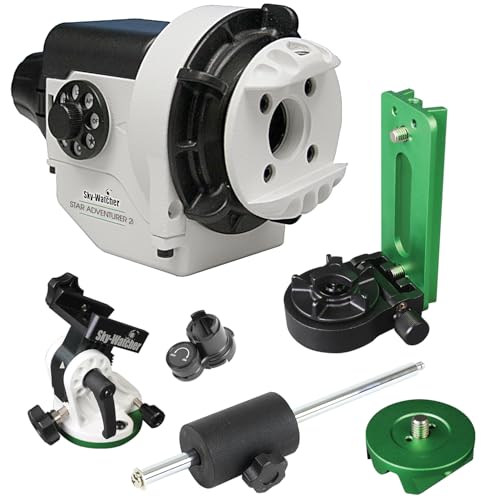
- Motorized tracker for wide-field astrophotography
- WiFi smartphone control via SAM Console
- Works with existing photographic tripods
Best For: Travelers shooting wide-field nightscapes and time-lapse
Best App-Controlled Equatorial Mount

- WiFi and Bluetooth-compatible GoTo system
- ExploreStars app supports major tablet platforms
- Quiet dual-axis drives with precise balancing
Best For: Travelers wanting tablet-controlled equatorial operation
Best Lightweight Tracker
SLIK ECH-630 Compact Star Tracker
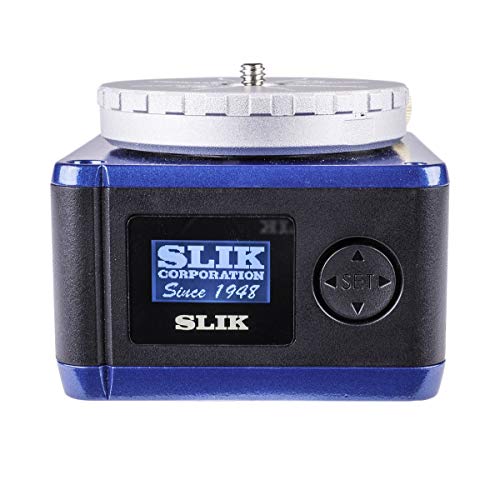
- Weighs 22.4 ounces for easier packing
- Offers celestial, lunar, and time-lapse speeds
- Runs up to 20 hours on four AA batteries
Best For: Backcountry and travel photographers
Best Finder-Scope Adapter

- Designed for Takahashi scopes
- Accepts Synta-style dovetail bars
- Weighs only 0.07 kg
Best For: Compact finder-scope setups with compatible interfaces
Best Dedicated Tripod
Sky-Watcher Star Adventurer Tripod

- Folds to 18 by 3 by 3 inches
- Supports several Star Adventurer and AZ mounts
- Reaches up to 54 inches high
Best For: Travelers with compatible Sky-Watcher mounts
Best Portable Starter

- Compact PETG and carbon-fiber shell
- App-free control with custom rotation speeds
- Power-bank compatible via USB-C
Best For: Travel photographers wanting a compact, versatile tracker
Best for Modular Rigs

- Multiple metric and imperial threaded holes
- 60-degree, 74mm dovetail design
- Supports top- or bottom-mounted installation
Best For: Travelers adapting guide scopes and astro accessories
Best Heavy-Duty Option
Star Tracker with Latitude Base

- CNC-machined metal latitude adjustment base
- Stated 15kg load capacity
- Custom speeds and hemisphere switching
Best For: Travel setups needing adjustable latitude and higher capacity
Best Full-GoTo Travel Mount – Star Adventurer GTi Mount Kit
For photographers comparing astrophotography mounts for travel, the Sky-Watcher Star Adventurer GTi Mount Kit combines a portable equatorial mount with GoTo control and a complete tripod setup. Its built-in WiFi, illuminated polar scope, counterweight, and pier extension make it a substantial but versatile travel-ready package.
Best For: Travelers who want a complete GoTo tracking mount with tripod and alignment features included.
Pros:
- Full GoTo functionality with built-in WiFi.
- Includes tripod, pier extension, counterweight bar, and 5-pound counterweight.
- Built-in illuminated polar scope supports polar alignment.
- Offers multiple tracking rates in a portable design.
Cons:
- At 26 pounds, it is heavier than more minimalist travel trackers.
- It is not water resistant.
The GTi is a strong choice when convenience and integrated features matter more than minimizing pack weight. Its complete kit format reduces the need to assemble a travel setup from separate accessories.
Best Lightweight Platform – MOVE SHOOT MOVE V Pan Tilt
The MOVE SHOOT MOVE V Pan Tilt is a compact accessory for photographers building lightweight astrophotography mounts for travel. It folds to a small size, weighs about 220 grams, and supports 360-degree panning plus 270-degree tilting for flexible positioning with compatible tripods, ball heads, or star trackers.
Best For: Minimalist travel setups that need a compact positioning platform for a star tracker or camera rig.
Pros:
- Lightweight design at approximately 0.17 kilograms.
- Folds to a compact 3.4 × 2.6 × 0.7-inch size.
- Supports 360-degree panning and 270-degree tilting.
- Rated to hold up to 4 kilograms.
Cons:
- It is a pan-and-tilt platform rather than a motorized tracking mount.
- Its usefulness depends on having a compatible tripod, ball head, or tracker.
This platform is best viewed as a space-saving component rather than a complete astrophotography mount. Its low weight and folding design make it practical for travelers refining an existing setup.
Best Portable Tracker – Star Adventurer 2i Pro Pack
The Sky-Watcher Star Adventurer 2i Pro Pack is a practical option for travelers seeking astrophotography mounts for travel without moving to a full-sized equatorial system. It is designed for wide-field nightscape photography, time-lapse work, and telescope use, while WiFi enables smartphone control through the SAM Console app.
Best For: Wide-field astrophotographers capturing the Milky Way, eclipses, and other night-sky scenes on a portable setup.
Pros:
- Portable motorized platform designed for nightscape tracking.
- Compatible with existing photographic tripods.
- WiFi supports smartphone control through the SAM Console app.
- Deluxe equatorial base helps position the tracker for polar alignment.
Cons:
- The supplied notes describe a tracker platform, not a complete tripod kit.
- Its stated focus is wide-field photography, time-lapse video, and telescopic use rather than a full GoTo mount.
At 7 pounds and measuring 13.9 by 9.6 by 6.3 inches, the 2i Pro Pack offers a useful balance for photographers who already own a suitable tripod and want motorized tracking in a relatively portable package.
Best App-Controlled Equatorial Mount – iEXOS-100-2 PMC-Eight
The Explore Scientific iEXOS-100-2 PMC-Eight is an app-controlled equatorial mount for travelers who want responsive GoTo operation and precise positioning. WiFi and Bluetooth compatibility, clutched dual-axis gears, and tablet support make it a feature-rich option among astrophotography mounts for travel.
Best For: Astrophotographers who prioritize app-based GoTo control, smooth repositioning, and dual-axis operation.
Pros:
- PMC-Eight system uses eight independent CPUs for responsive operation.
- ExploreStars app supports Apple, Android, and Windows tablets.
- Clutched dual-axis worm gears use quiet precision stepper motor belt drives.
- Polar alignment sight hole and adjustable altitude control aid alignment.
Cons:
- The supplied notes do not provide the mount’s weight or folded dimensions.
- A tablet is the listed compatible control device, which adds equipment to a travel kit.
- It uses a polar alignment sight hole rather than a polar scope.
This mount suits users who value connected control and precise equatorial movement. Because its travel size and weight are not specified in the supplied details, confirm portability requirements before choosing it for airline or backpack travel.
Best Lightweight Tracker – SLIK ECH-630 Compact Star Tracker
For photographers comparing astrophotography mounts for travel, the SLIK ECH-630 is a compact star-tracker head designed to keep weight and battery demands manageable. It weighs 22.4 ounces, offers multiple tracking speeds, and can run for up to 20 hours on four AA batteries.
Best For: Backcountry photographers and travelers who need a lightweight tracker for starscapes, lunar, solar, or time-lapse photography.
Pros:
- Lightweight design suited to backpacking and travel.
- Multiple speeds support celestial, lunar, and time-lapse photography.
- LCD menu provides straightforward control.
- Up to 20 hours of operation on four AA batteries.
Cons:
- A separate micro-adjustment head is optional for easier polar alignment.
- It is a tracker head rather than a complete tripod setup.
The ECH-630 is a practical travel pick when portability and long battery life matter more than an all-in-one kit. Plan to pair it with compatible support equipment, especially if you want the optional polar-alignment adjustment.
Best Finder-Scope Adapter – Flat Base Finder Scope Mount
For astrophotography mounts for travel, this compact finder-scope base can help create a flexible setup without adding much weight. It is designed for Takahashi scopes, accepts Synta-style dovetail bars, and can also attach to flat surfaces, plates, or brackets.
Best For: Travelers using Takahashi scopes or compatible finder scopes who need a small, adaptable mounting interface.
Pros:
- Dedicated fit for Takahashi telescope applications.
- Accepts Synta-style dovetail mounting bars.
- Flat base supports installation on handles, plates, and brackets.
- Includes two locking thumbscrews and multiple threaded mounting options.
Cons:
- It is a finder-scope mounting base, not a standalone astrophotography mount.
- Compatibility is centered on Takahashi and specified dovetail or threaded interfaces.
At just 0.07 kg, this mount is easy to include in a travel kit. Check your scope, dovetail bar, and screw spacing before buying, since the listed interfaces determine whether it will integrate cleanly.
Best Dedicated Tripod – Sky-Watcher Star Adventurer Tripod
When evaluating astrophotography mounts for travel, a compatible tripod is essential for creating a stable, portable base. This aluminum Sky-Watcher tripod folds to 18 by 3 by 3 inches and is compatible with the Star Adventurer family, AZ-GT series, and AZ5 mounts.
Best For: Travelers who already use a compatible Sky-Watcher tracker or mount and want a dedicated portable tripod.
Pros:
- Portable aluminum design with a compact folded size.
- Compatible with Star Adventurer Mini, Star Adventurer, and Star Adventurer GTi.
- Also supports AZ-GT series and AZ5 mounts.
- Three leg sections and a maximum height of 54 inches.
Cons:
- Compatibility is focused on listed Sky-Watcher mount systems.
- It is not water resistant.
- The product is a tripod accessory rather than a complete tracking mount.
This tripod makes the most sense when you already own a compatible Sky-Watcher mount. Its compact folded dimensions favor transport, while the adjustable height gives travelers more flexibility at the observing site.
Best Portable Starter – Ball-Head Gimbal Star Tracker
For photographers building a lightweight kit of astrophotography mounts for travel, this PETG-and-carbon-fiber equatorial tracker offers a compact, app-free setup. It supports stellar, lunar, and custom rotation speeds, switches between hemispheres, and can run from a power bank through USB-C.
Best For: Travelers who want a portable star tracker that can also serve as a gimbal head for time-lapse photography.
Pros:
- Compact 3.54-by-3.54-by-3.15-inch design with a PETG and carbon-fiber shell.
- Supports stellar speed, moon speed, custom rotation, and northern or southern hemisphere operation.
- Works without an app and can be powered by a power bank.
- Includes a 38mm quick-release base and standard 1/4-inch output screw.
Cons:
- No built-in battery; USB-A-to-USB-C power supply is required.
- A ball head is required for camera connection, and a 1/4-to-3/8-inch sleeve may be needed.
- The manufacturer warns against disassembling the threadlocked screws.
This is a practical travel option when low weight, simple operation, and flexible rotation modes matter more than an integrated battery. Plan for the required cable and camera-mount hardware before heading out.
Best for Modular Rigs – 220mm Dovetail Mount Plate
Among astrophotography mounts for travel, this 220mm aluminum dovetail plate is an accessory for adapting and organizing compatible telescope equipment rather than a tracking mount itself. Its multiple thread sizes and two-way installation make it useful when a portable setup needs flexible accessory mounting.
Best For: Astrophotographers adapting guide scopes, telescope tube rings, and auxiliary accessories to compatible equatorial-mount hardware.
Pros:
- Includes M4, M6, M8, 3/8-inch-16, and 1/4-inch-20 threaded holes.
- Uses a 60-degree dovetail standard with a 74mm width.
- Can mount above or below a clamp for different equipment configurations.
- Aluminum plate weighs 433g and measures 220 by 80 by 15mm.
Cons:
- It is a mounting plate, not a complete tracking or equatorial mount.
- The broad compatibility claims are aimed at larger equatorial instruments, so travelers should verify clamp fit before packing.
- The product listing includes several telescope-accessory specifications that may not apply to every setup.
This plate can simplify a modular travel rig when your existing clamp and dovetail system match its dimensions. Confirm the 60-degree rail and threaded-hole requirements before relying on it in the field.
Best Heavy-Duty Option – Star Tracker with Latitude Base
Equatorial Mount Star Tracker with Latitude Adjustment Base for Astrophotography
Check Price On AmazonFor photographers comparing astrophotography mounts for travel, this tracker adds an all-metal CNC-machined latitude adjustment base to the same compact PETG-and-carbon-fiber tracker design. It offers hemisphere switching, custom rotation speeds, app-free operation, and a stated 15kg load capacity for a more substantial field setup.
Best For: Travelers who need adjustable latitude positioning and higher stated load capacity for camera-based astrophotography equipment.
Pros:
- All-metal CNC-machined, anodized latitude adjustment base.
- Stated 15kg load capacity and 3/8-inch bottom thread on the latitude base.
- Supports stellar, moon, and custom rotation speeds plus northern and southern hemispheres.
- Can function as a gimbal head for time-lapse photography and runs from USB-C power.
Cons:
- No built-in battery; a suitable external power source is required.
- The 1/4-inch output screw requires a ball head for camera connection.
- A 1/4-to-3/8-inch screw sleeve may be needed, depending on the ball head.
The adjustable metal base makes this the more substantial choice of the two TeSeek trackers for field alignment and heavier equipment. Its compact dimensions remain travel-friendly, but pack the needed ball head, adapter, and USB-A-to-USB-C cable.
How We Picked the Best Astrophotography Mounts for Travel
We evaluated these options for the factors that matter most away from home: portability, setup speed, tracking capability, payload support, power requirements, compatibility, and included hardware. Complete kits can be more convenient for beginners, while standalone trackers and accessory plates may suit photographers who already own a sturdy tripod, ball head, or camera platform.
We also considered whether a mount supports equatorial tracking, GoTo control, wireless connectivity, or multiple operating speeds. These features can improve framing and automation, but they may add weight, setup time, or power demands.
Quick Comparison
| Type | Best for | Main advantage | Potential limitation |
|---|---|---|---|
| GoTo equatorial mount | Longer sessions and guided targets | Automated locating and tracking | Heavier and more complex |
| Compact star tracker | Wide-field camera photography | Low weight and simple transport | Limited payload and framing control |
| Tracker with latitude base | Fast polar alignment | More precise angle adjustment | May require separate tripod or head |
| Tripod or ball-head system | Flexible travel setups | Useful for cameras and accessories | Not always a tracking solution alone |
Key Buying Factors for Astrophotography Mounts for Travel
Weight, Packed Size, and Stability
Check the packed dimensions as well as the listed weight. A compact mount is only useful if your tripod remains stable in wind and on uneven ground. For flights or hiking, prioritize a tracker that fits your camera bag and does not require bulky counterweights.
Payload and Focal Length
Match the mount to the combined weight of your camera, lens, guidescope, ball head, and accessories. Wide-angle lenses are generally more forgiving, while heavier telephoto lenses demand better tracking and a larger safety margin below the stated payload.
Power and Controls
Battery-powered trackers can be convenient in remote locations, but verify battery type, expected runtime, and cold-weather performance. Wi-Fi, Bluetooth, or GoTo controls may simplify target selection, though manual controls can be faster for simple landscape compositions.
Polar Alignment and Compatibility
A latitude adjustment base, polar scope, or compatible finder can make alignment easier. Before buying, confirm thread sizes, dovetail standards, tripod compatibility, and whether the package includes the counterweight, extension bar, tripod, or mounting plate you need.
Who Should Buy Which Astrophotography Mounts for Travel?
Choose a complete GoTo kit if you want automated target finding, more control, and a system that can grow with your equipment. Choose a compact star tracker if low weight, quick setup, and wide-field landscapes are your priorities. Choose a tracker with a latitude base if accurate alignment matters but you already own a suitable tripod.
Photographers building a custom kit should look at the ball-head, dovetail, finder-base, and tripod accessories, but confirm every connection before ordering. For most travelers, the best Astrophotography Mounts for Travel balance tracking accuracy with the amount of gear you are realistically willing to carry.