
The best solar system models turn abstract geography and astronomy concepts into something students can see, move, and discuss. A well-chosen kit can demonstrate planetary order, rotation, orbits, scale, and the relationship between Earth, the Moon, and the Sun.
This roundup compares 10 classroom and home-learning options, from ready-to-use interactive models to creative build-it-yourself kits. Use the guide below to match the model’s features, complexity, and durability to your learners and teaching setting.
Best 10 Solar System Models for Geography Lessons Picks for 2026
Glow-and-Build Pick
National Geographic Solar System Model

- Paint and assemble all eight planets and the Sun
- Movable arms support adjustable planet positions
- Includes glow paint, decals, and a facts poster
Best For: Hands-on model building for ages 8 and up
Projection Learning Pick
GeoSafari Orbiting Solar System

- Rotating model shows planets orbiting the Sun
- Projects 32 space images, including NASA photos
- Includes four discs and a guide with fun facts
Best For: Interactive indoor learning for ages 5 and up
Gear-Driven STEM Pick
Smartivity DIY Solar System Kit

- Builds a rotating solar system model
- Explores planets, orbits, day, and night
- Uses eco-friendly, child-safe MDF materials
Best For: Construction-focused STEM learning for ages 8–14
Classroom Craft Pick
Wookidel 64-Piece Solar System Kit

- Includes foam pieces, paints, brushes, and project accessories
- Encourages students to color and build planets
- Suitable for school or family activities
Best For: Art-integrated solar system projects for ages 6–12
Hands-On Scale Builder
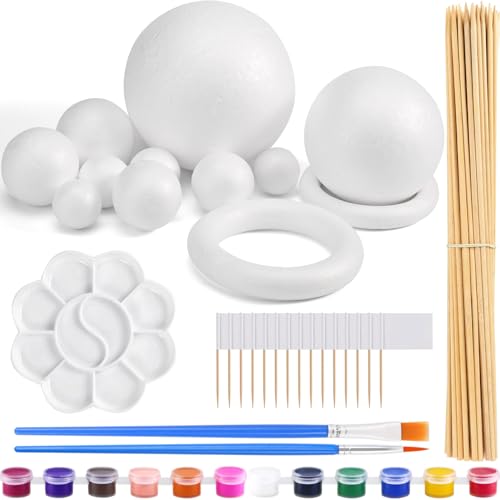
- Ten ball sizes support visual scale comparisons
- Includes paints, tools, sticks, rings, and flags
- Glue-free assembly for classroom projects
Best For: Elementary students building and labeling a tactile model
Glow-In-The-Dark Learning Project
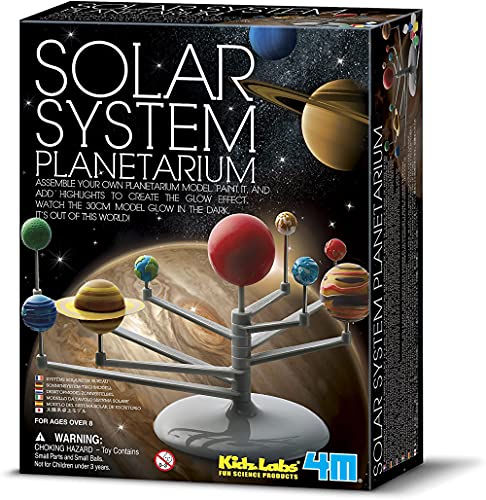
- Combines assembly, painting, and astronomy learning
- Includes wall chart and ten quiz sets
- No batteries required; Pluto is not included
Best For: Ages 8+ completing a project-based STEM lesson
Interactive Space Explorer
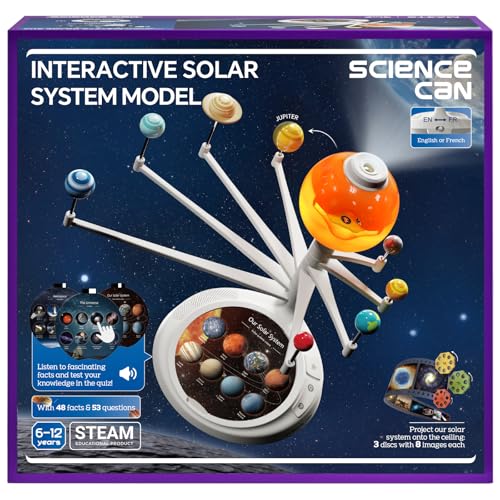
- Includes 48 facts and 53 interactive quiz questions
- Bilingual English/French learning options
- Projects 24 color space images; batteries not included
Best For: Ages 6–12 needing interactive STEM demonstrations
Hands-On Rotation Pick
Rotating Solar System Model Kit

- 50-piece kit includes planets, poster, paints, brushes, labels, and base
- Rotating display helps illustrate planetary arrangement and orbital movement
- Suitable for ages 8+ and school projects
Best For: Hands-on classroom projects and elementary science activities
Fact-Card Project Pick

- Includes wood model, puzzle, fact cards, paint, and brushes
- Designed for ages 8–12 and approximately one- to two-hour assembly
- Suitable for science fairs, classroom displays, and guided planet review
Best For: Structured planet projects with fact-card support
Earth–Sun–Moon Teaching Pick

- Demonstrates seasons, eclipses, moon phases, and orbital relationships
- Includes a seasonal plate with dates and traditional solar terms
- Tabletop model measuring approximately 38 × 20 × 28 cm
Best For: Earth-science lessons on seasons, eclipses, and lunar phases
Glow-and-Build Pick – National Geographic Solar System Model
For hands-on solar system models for geography lessons, this National Geographic kit combines planet painting, assembly, and a movable display. It includes all eight planets and the Sun, glow-in-the-dark paint, decals, and a fact poster, making it suitable for visual classroom or home learning.
Best For: Ages 8 and up, especially learners who benefit from building, painting, and rearranging a 3D model.
Pros:
- Includes paint, glow paint, brush, palette, decals, and a facts poster.
- Movable arms allow planets to be adjusted and rearranged.
- Supports construction, creativity, coordination, and problem-solving skills.
Cons:
- Recommended for ages 8 and up, so it may not suit younger learners.
- The glow-in-the-dark feature may be more useful for display than direct geography instruction.
This is a strong choice when you want an engaging build-and-display project with visual appeal and simple astronomy facts.
Projection Learning Pick – GeoSafari Orbiting Solar System
Among solar system models for geography lessons, the GeoSafari Orbiting Solar System stands out for combining a rotating model with projected space imagery. Eight planets move on orbiting arms, while 32 images cover planets, constellations, asteroids, and other space topics.
Best For: Ages 5 and up, classrooms or homes that want an interactive model plus projected visual content.
Pros:
- Shows eight planets moving around the Sun on orbiting arms.
- Includes 32 images across four projector discs, including NASA photos.
- Comes with a guide featuring space facts and supports hands-on exploration.
Cons:
- Requires three AA batteries, which are not included.
- The projector is intended for indoor use.
This option offers more multimedia engagement than a basic static kit, making it useful for demonstrations about planets, orbits, and constellations.
Gear-Driven STEM Pick – Smartivity DIY Solar System Kit
This Smartivity kit is one of the more construction-focused solar system models for geography lessons. Children assemble a gear-driven model that rotates, giving them a practical way to explore planetary movement, orbits, and the structure of the solar system.
Best For: Ages 8–14 and learners who enjoy building mechanical projects alongside basic astronomy concepts.
Pros:
- Uses a rotating, gear-driven design to demonstrate planetary movement.
- Combines construction, creativity, and STEM learning.
- Made from eco-friendly, child-safe MDF materials.
Cons:
- The supplied notes list the box as the included component, so additional project materials may not be specified.
- Its recommended age range may make it less suitable for younger students.
This model is a good fit when the learning goal includes understanding motion and mechanisms, not just identifying planets.
Classroom Craft Pick – Wookidel 64-Piece Solar System Kit
For budget-friendly solar system models for geography lessons, this 64-piece Wookidel kit provides foam components, paints, brushes, sticks, flags, and instructions for a school or home project. Students can color and assemble the planets while using the included guide to explore basic solar system details.
Best For: Ages 6–12, classroom craft activities, and family projects that combine art with introductory science learning.
Pros:
- Includes foam pieces, 12 colors, two brushes, a palette, sticks, flags, and instructions.
- Supports planet coloring and model-building activities.
- Designed to develop hand-eye coordination, focus, and artistic skills.
Cons:
- Foam construction may be less durable than a plastic or wooden model.
- Assembly and painting require hands-on preparation and supervision appropriate to the learner.
This is a practical choice for project-based lessons where students need to create their own visual model rather than use a ready-made display.
Hands-On Scale Builder – Painted Foam Solar System Kit
For learners who benefit from making and labeling their own display, this foam-ball kit is a practical choice among solar system models for geography lessons. The ten ball sizes help students compare planetary scale, while the included paints, sticks, rings, and flags support a hands-on classroom project.
Best For: Elementary students creating a tactile, labeled solar system model and practicing planetary size comparisons.
Pros:
- Includes ten differently sized foam balls for visual scale comparisons.
- Comes with 12 paint colors, brushes, palette, bamboo sticks, rings, and toothpick flags.
- No glue is required for assembly.
Cons:
- Students must paint and assemble the model before it is ready for instruction.
- Foam construction may be better suited to supervised classroom use.
This kit works well when the lesson goal includes creativity, labeling, and direct comparison of planetary sizes. It is less suitable if you need a ready-made or interactive model.
Glow-In-The-Dark Learning Project – 4M Solar System Planetarium
The 4M Solar System Planetarium combines model building with astronomy reference materials, making it a useful option among solar system models for geography lessons. Students assemble and paint the planets, then use the wall chart and quiz questions to reinforce key facts.
Best For: Learners ages 8 and up who can follow assembly instructions and benefit from a project-based STEM activity.
Pros:
- Includes planets, stencils, rods, string, and a glow paint pen.
- Fact-filled wall chart and ten sets of quiz questions extend the lesson.
- Assembly instructions are included and no batteries are required.
Cons:
- Pluto is not included.
- Students must assemble and paint the model.
- Recommended for ages 8 and up, limiting its fit for younger learners.
This is a strong project-based pick for older children who enjoy combining craft work with review questions. Choose another option if you need Pluto represented or want a model that requires no assembly.
Interactive Space Explorer – Talking Solar System Model
For classrooms seeking more than a static display, this talking model is one of the more interactive solar system models for geography lessons. It offers bilingual facts, quiz questions, illuminated solar-system features, and a projector that displays space images on walls or ceilings.
Best For: Children ages 6–12 using guided STEM activities, review quizzes, and visual space demonstrations.
Pros:
- Provides 48 facts through three knowledge cards and 53 quiz questions.
- Offers English and French language options.
- Projects 24 full-color space images from three included disks.
- No assembly is required.
Cons:
- Requires three AA batteries, which are not included.
- Its interactive features may require adult guidance during group lessons.
This model is a convenient choice when engagement, audio learning, and projection are priorities. It is especially useful for demonstrations and review, though it depends on batteries rather than a purely hands-on construction activity.
Hands-On Rotation Pick – Rotating Solar System Model Kit
For classrooms seeking solar system models for geography lessons with an interactive, project-based format, this kit combines assembly, painting, and a rotating display. Its foam components, poster, labels, and supplies support a hands-on introduction to planetary order and orbital movement.
Best For: Elementary learners, science projects, and geography lessons that benefit from a build-and-demonstrate activity.
Pros:
- Includes 50 pieces, including foam planets, poster materials, paints, brushes, labels, and display components.
- Rotating base provides a dynamic way to discuss the eight planets’ orbital arrangement.
- Offers painting and assembly activities that can reinforce creativity and science learning.
- Designed for children ages 8 and up, with an included instruction manual.
Cons:
- Foam construction may require careful handling during assembly and display.
- The project involves painting and construction, so it requires more preparation than a ready-made model.
This is a strong choice when you want students to create and operate the model rather than simply view it. The rotating base and included poster make it particularly useful for explaining planetary order and basic orbital concepts.
Fact-Card Project Pick – Nine Planets DIY Model
This DIY set is a practical option among solar system models for geography lessons when students need both a buildable display and quick-reference information. The wood model, puzzle, fact cards, paints, and brushes create a structured activity for learning about the nine planets named in the kit.
Best For: Ages 8–12, science fairs, classroom displays, and lessons pairing model-making with planet facts.
Pros:
- Combines a wood model, puzzle, and fact cards in one educational kit.
- Includes paint and brushes for customizing the major planets.
- Designed to be assembled in approximately one to two hours.
- Can be displayed in a bedroom, classroom, or science fair setting.
Cons:
- The kit focuses on a nine-planet model, which may not match lessons using the currently recognized eight-planet classification.
- Assembly and painting require dedicated project time.
- Its educational objective is listed broadly as science awareness, so teachers may need to supply additional geography prompts.
The included fact cards make this a useful choice for guided review, while the puzzle adds another learning activity beyond the display model. Consider it when a classroom needs a compact, craft-oriented science-fair project.
Earth–Sun–Moon Teaching Pick – Orbital Planetarium Model
For solar system models for geography lessons focused on Earth processes, this Sun–Earth–Moon orbital model offers movable demonstrations rather than a full multi-planet display. Its mechanisms are intended to show seasons, eclipses, moon phases, and the relationship between Earth’s and the Moon’s orbits.
Best For: Geography and Earth-science instruction covering seasons, solar and lunar eclipses, moon phases, and orbital relationships.
Pros:
- Demonstrates Earth’s orbit around the Sun and the Moon’s orbit around Earth.
- Supports lessons on seasons, solar eclipses, lunar eclipses, and moon phases.
- Includes a seasonal plate with season names, dates, and traditional Chinese-calendar solar terms.
- Measures approximately 38 × 20 × 28 cm for tabletop teaching and demonstration.
Cons:
- It models the Sun, Earth, and Moon rather than all eight planets.
- Assembly requires following several alignment, screw, gear, and lever steps.
- The included seasonal plate may be more specialized than needed for every curriculum.
This model is best viewed as an Earth-science teaching tool rather than a general planetary display. Its movable components make abstract seasonal and eclipse concepts easier to demonstrate directly during a lesson.
How We Picked These Solar System Models for Geography Lessons
We focused on models that support visual, hands-on learning rather than decorative display alone. The selection includes interactive talking and projecting designs, rotating orbital models, glow-in-the-dark planetariums, and craft kits that let students paint or assemble the planets.
We also considered age suitability, the amount of assembly required, included teaching materials, movement quality, storage needs, and whether the model works best for independent activities, demonstrations, or group projects. Because “solar system model” can describe very different products, the most important comparison is how accurately and clearly each kit communicates the concept you want to teach.
Quick Comparison
| Model type | Best for | What to look for |
|---|---|---|
| Interactive or talking | Guided lessons and independent exploration | Clear audio, controls, power requirements, and accurate content |
| Rotating orbital model | Demonstrating motion and relationships | Stable base, smooth movement, and visible planet placement |
| DIY craft kit | Project-based learning | Complete supplies, paint quality, instructions, and cleanup |
| Glow-in-the-dark planetarium | Visual reinforcement and room displays | Charging requirements, visibility, and included mounting materials |
Key Buying Factors for Solar System Models for Geography Lessons
Accuracy and Learning Purpose
Decide whether students need to learn planet order, relative position, orbital motion, the Earth-Moon-Sun relationship, or broader space vocabulary. A rotating model is more useful for motion demonstrations, while a painted foam-ball kit can support labeling, sequencing, and scale discussions.
Age, Complexity, and Supervision
Check the recommended age and the parts included. Kits with small spheres, toothpicks, bamboo sticks, gears, or paint may require adult supervision. Younger students often benefit from a ready-assembled or interactive model; older children may gain more from building and explaining their own model.
Durability and Classroom Practicality
For frequent lessons, prioritize a sturdy base, secure planet attachments, replaceable batteries where applicable, and components that store easily. Craft kits can be excellent for one-time projects but may be less convenient for repeated demonstrations.
Display and Interaction Features
Glow effects, projectors, audio, moving parts, and fact cards can improve engagement, but they should support—not replace—accurate instruction. Confirm that controls are simple enough for students and that the model remains visible from the intended teaching distance.
Who Should Buy Which Solar System Models for Geography Lessons?
Choose an interactive or talking model for learners who benefit from independent exploration and immediate feedback. A rotating-base or orbital model suits teachers who need to demonstrate movement at a desk or in a small group. DIY gear-driven and complete build kits are strong choices for STEM units where construction, problem-solving, and presentation are part of the lesson.
Foam-ball sets and larger multi-piece project kits work well for collaborative classroom assignments, especially when students must paint, label, and present the planets. A glow-in-the-dark planetarium is a good supplementary display for reinforcing recognition and sparking interest, while an Earth-Moon-Sun model is the more focused choice for lessons on eclipses, phases, and planetary relationships. Before buying, match the kit to your lesson objective, available class time, storage space, and supervision level.