
The best camera external recorders for studio filming help creators capture cleaner sound, sharper video, or both, depending on the production setup. This roundup spans dedicated audio recorders, 4K video devices, camcorders, and compact cameras suited to interviews, podcasts, tutorials, livestreams, and talking-head content.
Before choosing, consider whether you need dependable external audio, high-resolution video, long recording sessions, portability, or simple controls. The buying guide below explains the most important differences so you can match the recorder to your studio workflow and budget.
Best 10 Camera External Recorders for Studio Filming Picks for 2026
Best Audio-First Pick

- 32-bit/96kHz recording
- Two locking XLR/TRS inputs
- OLED waveform level display
Best For: Studio interviews, podcasts, and separate professional audio capture
Best Beginner All-in-One

- 4K/30fps video capture
- Wireless lavalier microphone included
- Flip touchscreen and two batteries
Best For: Beginner YouTube videos, interviews, and casual studio filming
Best Video-and-Audio Combo

- 4K video with 150° wide angle
- 120dB SPL X/Y microphones
- USB streaming support
Best For: Musicians, performances, streaming, and stationary studio setups
Dual-Lens Studio Starter

- Front 5K and rear 1080P recording
- Includes mic, tripod, batteries, and SD card
- HDMI, Wi-Fi, webcam, and external-mic support
Best For: Presenters and creators needing two viewpoints
Budget Webcam Recorder
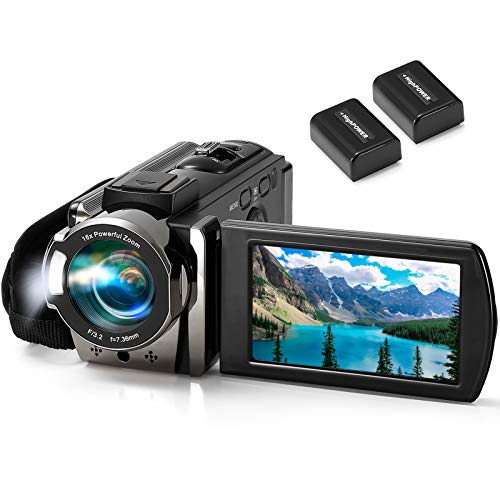
- 1080P recording at 15fps
- USB webcam mode and recording while charging
- Rotating LCD with pause and TV-output functions
Best For: Beginner creators and static video setups
Best Budget Webcam Camcorder
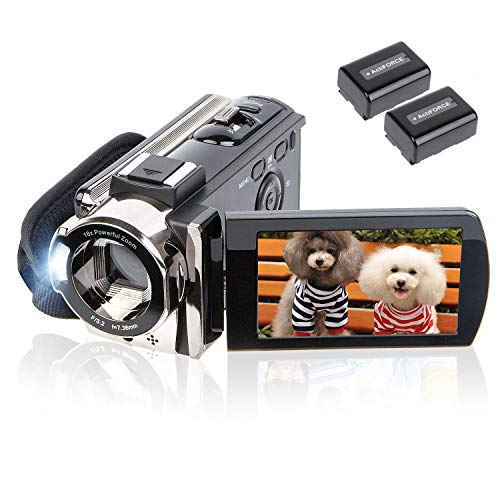
- 1080p/15fps and 720p/30fps video
- 270°-rotating 3-inch LCD screen
- USB webcam mode and recording while charging
Best For: Basic studio recording, webcam use, and extended takes
Best Audio-First Pick – Zoom H1 XLR
For studio filming setups where clear, flexible audio matters most, the Zoom H1 XLR is a practical choice among camera external recorders for studio filming. It offers two locking XLR/TRS inputs, 32-bit/96kHz recording, and an OLED waveform display for easier level monitoring.
Best For: Interviews, podcasts, filmmakers, musicians, and studio shoots needing separate professional audio recording.
Pros:
- Records in 32-bit float and up to 96kHz for detailed, clip-free audio.
- Two XLR/TRS combo inputs support microphones, instruments, and other sources.
- OLED waveform display helps you monitor recording levels at a glance.
- Supports SDXC cards up to 1TB and includes 3.5mm input and headphone output.
Cons:
- Requires two AA batteries.
- It is an audio recorder rather than a video camera.
The H1 XLR is best when your camera captures the picture but a dedicated recorder handles clean, adaptable sound. Its compact 6.4-ounce design and roughly 10-hour battery life suit extended sessions, though you will need to synchronize the separate audio with your video.
Best Beginner All-in-One – Rawiemy 4K Camcorder
If you want a simple camera-based option for camera external recorders for studio filming, this Rawiemy camcorder combines 4K video, built-in and external microphone support, and a wireless lavalier microphone. Its flip touchscreen and included accessories make it approachable for beginner creators.
Best For: Beginners, students, casual YouTube filming, interviews, meetings, and basic studio content.
Pros:
- Captures 4K video at 30fps and 48MP still images.
- Includes both an external microphone and wireless lavalier microphone.
- 270-degree flip touchscreen supports flexible framing and self-recording.
- Includes a 32GB SD card and two batteries, with recording while charging supported.
Cons:
- The supplied notes state that it is not intended for professional users.
- Battery runtime is listed at approximately 90–150 minutes per charge.
- USB connectivity is specified as USB 2.0.
This camcorder is a convenient starter package rather than a dedicated external recorder. It makes sense for straightforward studio videos where convenience, wireless voice capture, and an included memory card are more important than advanced production controls.
Best Video-and-Audio Combo – Zoom Q2n-4K
The Zoom Q2n-4K is a compact option for camera external recorders for studio filming when you want video and strong onboard sound in one device. It records 4K video, uses X/Y microphones rated to 120dB SPL, and offers multiple field-of-view settings for rehearsals, performances, and creator setups.
Best For: Musicians, streamers, rehearsals, concerts, live performances, and compact creator stations.
Pros:
- Records 4K video with a 150-degree wide-angle lens.
- X/Y microphones handle sound levels up to 120dB SPL.
- Five field-of-view settings and 12 HDR scene presets add framing and exposure flexibility.
- Supports USB streaming to platforms including YouTube, Twitch, and Facebook.
Cons:
- Image stabilization is not included.
- Fixed focus may be less flexible for changing subject distances.
- Requires two AA batteries when used away from USB power.
Choose the Q2n-4K when a small, tripod-ready device needs to capture both the performance and its sound. It is particularly suited to music and streaming, while the lack of stabilization makes a stationary setup preferable.
Best Wearable Studio Utility – BOBLOV W5 Body Camera
For mobile angles and hands-free footage, the BOBLOV W5 provides a compact alternative among camera external recorders for studio filming. It supports 4K at 60fps, 5K at 15fps, an external microphone, and a 270-degree rotating lens for quick changes between first-person and selfie views.
Best For: Behind-the-scenes footage, mobile vlogs, meetings, daily-use recording, and wearable or hands-free studio angles.
Pros:
- Offers 4K/60fps for smoother motion and 5K/15fps for added detail.
- External microphone support can improve voice capture over the built-in microphone.
- 270-degree rotating lens supports selfie and first-person perspectives.
- Includes 128GB microSD storage and clip and strap mounting options.
Cons:
- The 5K mode is limited to 15fps.
- Its 1.3-inch screen is small for detailed framing.
- It is not water resistant.
The W5 is most useful as a discreet secondary camera or wearable angle rather than a traditional primary studio recorder. Its stabilization, mounting options, large included storage, and external mic input make it practical for active, behind-the-scenes production.
Dual-Lens Studio Starter – 5K Dual-Lens Camcorder
For shoppers comparing camera external recorders for studio filming, this 5K camcorder offers a flexible setup for presenters, events, and live content. Its front and rear lenses can capture different perspectives, while HDMI output, an external-mic jack, webcam functionality, and included accessories support a ready-to-use studio workflow.
Best For: Studio presenters, event videographers, vloggers, and creators who want dual-angle recording in one compact kit.
Pros:
- Front lens records up to 5K video, while the rear lens records 1080P simultaneously.
- Includes a 32GB SD card, two rechargeable batteries, microphone, tripod, bag, and stabilizer.
- Supports HDMI connection, Wi-Fi transfer, webcam use, external microphone input, and IR night vision.
Cons:
- The fixed-focus lens does not support autofocus or manual focus; the recommended shooting distance is at least 0.6 m.
- FAT32 storage limits individual video files to 4GB, so long recordings are split into clips.
- The 16X zoom is digital rather than optical.
This is a feature-rich option for studio filming when convenience and multiple viewpoints matter. Its fixed-focus design and split-file limitation are worth considering, but the included kit and connectivity make it practical for new creators.
Portable Creator Pick – 5K Stabilized Vlogging Camera
Among camera external recorders for studio filming, this handheld 5K model stands out for compact operation and stabilization. It combines 5K recording with 4K/60fps support, a rotatable wide-angle lens, external lavalier audio, remote control, and app connectivity for flexible solo production.
Best For: Solo presenters, mobile studio setups, vloggers, and creators who need portable framing and hands-free control.
Pros:
- Records in 5K and supports 4K/60fps and 1080P/60fps settings.
- Electronic image stabilization, face detection, and a 270° rotatable 150° wide-angle lens help with handheld filming.
- Includes an external lavalier microphone and supports remote and Wi-Fi app control.
Cons:
- Resolution settings must be adjusted manually.
- The wide-angle lens and compact form may be better suited to presenter-focused shots than larger multi-camera studio scenes.
- The supplied notes do not specify HDMI output or continuous-power recording.
This camera is a strong fit when portability, stabilization, and quick solo control are more important than traditional studio connectivity. Its external microphone and app control add useful flexibility for desk, travel, and creator setups.
Budget Webcam Recorder – kimire Full HD Camcorder
For budget-minded buyers seeking camera external recorders for studio filming, the kimire 604S provides basic Full HD recording and webcam functionality. It connects to a computer through USB, supports recording while charging, and includes two batteries for longer sessions, making it suitable for straightforward presentations and video calls.
Best For: Entry-level studio filming, video conferencing, webcam use, and simple YouTube recording.
Pros:
- Supports 1080P video at 15fps and can operate as a webcam through the PC CAM mode.
- Recording-while-charging support and two NP-FV5 batteries help with extended sessions.
- Offers a 270° rotating 3-inch LCD, pause recording, digital zoom, USB transfer, and TV output.
Cons:
- Full HD recording is limited to 15fps, which is less suitable for fluid motion.
- The camera uses manual focus and digital stabilization rather than advanced autofocus or optical stabilization.
- An SD card and tripod are not included, and webcam use requires downloading AMCAP software.
This is a practical low-cost choice for static studio shots, calls, and beginner content. Buyers seeking higher frame rates, advanced focus, or more modern studio connections should consider a more capable model.
Best Motorized Tracking Pick – 5K Rotating-Lens Vlogging Camera
For creators comparing camera external recorders for studio filming, this compact 5K camera stands out for hands-free framing and flexible connectivity. Its motorized 270° lens, face tracking, USB-C connectivity, Wi-Fi preview, and webcam mode make it adaptable for solo presentations, tutorials, and streaming-style setups.
Best For: Solo creators who need automated subject framing, flexible angles, and high-resolution recording.
Pros:
- Motorized 270° lens can follow a detected face and switch between viewing angles.
- Records 5K at 20fps or 4K at 60fps for detailed or smoother footage.
- Includes a USB-C external lavalier microphone for clearer speech.
- Supports Wi-Fi preview, USB-C webcam use, recording while charging, and a 64GB memory card.
Cons:
- 5K recording is limited to 20fps.
- Digital image stabilization is used rather than optical stabilization.
- It is not water resistant.
The rotating lens and face tracking are especially useful when you are filming alone and cannot adjust the camera manually. For studio work, the included lavalier and webcam capability add practical value, while the 1/4-inch socket supports compatible tripods and mounts.
Best Budget Webcam Camcorder – Full HD 1080p Video Camera
When evaluating camera external recorders for studio filming on a budget, this kicteck camcorder covers the basics with Full HD recording, a rotating LCD, webcam functionality, and recording while charging. It is suited to straightforward desk-based recording, video calls, and longer takes where simplicity matters.
Best For: Budget-conscious users who want a basic camcorder for webcam use and general recording.
Pros:
- Supports 1080p recording at 15fps and 720p at 30fps.
- 270°-rotating 3-inch LCD helps with framing from different positions.
- PC webcam mode is available through USB, with AMCAP software required.
- Can record while charging for extended sessions.
Cons:
- Does not support an external microphone.
- 1080p video is limited to 15fps.
- SD card, tripod, and LED light are not included.
This model is a practical entry-level option for fixed studio shots and webcam applications, particularly if you already have lighting and do not need an external audio input. Its pause function can also help combine footage into a single file before editing.
Best Long-Battery Pocket Option – 1080p Rotatable-Lens Camera
For portable camera external recorders for studio filming and daily content, this Kaysunlink pocket camera emphasizes convenience. It records 1080p video at 30fps, offers a manually rotatable lens, Wi-Fi app connectivity, one-button recording, and approximately five hours of continuous use.
Best For: Mobile creators who prioritize compact size, long battery life, and simple operation.
Pros:
- Records 1080p video at 30fps for smooth everyday footage.
- Compact design and approximately five hours of battery life support portable use.
- 270° horizontal and 130° vertical lens rotation enables varied shooting angles.
- Includes a 64GB memory card and Wi-Fi app access for previewing and downloads.
Cons:
- The lens rotation is manual rather than motorized.
- The 1.33-inch touchscreen is smaller than the displays on many camcorders.
- It is not water resistant.
Its long runtime and small form factor make it convenient for creators moving between a studio, travel locations, and everyday shoots. The camera is less suited to automated tracking, but its rotating lens and one-button recording keep setup quick and uncomplicated.
How We Picked the Best Camera External Recorders for Studio Filming
We selected these 10 products by comparing their intended studio uses, recording formats, microphone support, monitoring and control features, portability, and overall practicality for creators. The list includes dedicated audio equipment such as the Zoom H1 XLR, video-focused options such as the Zoom Q2n-4K, and affordable camcorders and vlogging cameras with features including wireless microphones, rotating lenses, Wi-Fi, stabilization, touchscreens, and night vision.
Specifications can vary by seller and configuration, so confirm the listing details for resolution, frame rate, storage requirements, included accessories, battery capacity, and input compatibility before ordering.
Quick Comparison
| Best For | Look For | Featured Options |
|---|---|---|
| Clean studio audio | XLR inputs, gain control, headphone monitoring | Zoom H1 XLR |
| Musician or creator video | 4K capture, compact design, simple operation | Zoom Q2n-4K |
| Wireless talking-head content | Included lavalier microphone and external mic input | 4K vlogging camcorder |
| Flexible handheld shooting | Rotating lens, stabilization, touchscreen, Wi-Fi | 5K and 1080p vlogging cameras |
| Long or specialized recording | Large battery, night vision, clip or strap mounting | BOBLOV, 5K camcorders, Kaysunlink |
Key Buying Factors for Camera External Recorders for Studio Filming
Audio Inputs and Monitoring
For interviews, podcasts, lessons, and voiceovers, audio quality is often more important than extra video resolution. Choose a model with an external microphone input, and favor XLR connectivity when using professional microphones or longer cable runs. A headphone output lets you catch clipping, hum, room noise, or a poorly connected microphone before finishing a take.
Resolution, Frame Rate, and Lens Control
4K provides more cropping flexibility and can produce a sharper final image, while 1080p may be sufficient for livestreams and standard web video. Check the actual frame-rate options rather than relying only on a “5K” label. A rotating or wide-angle lens can help with solo filming, but verify that distortion and autofocus behavior suit your room.
Power, Storage, and Studio Connections
Long sessions require replaceable batteries, USB power, or a dependable external power solution. Confirm supported memory cards and maximum file sizes before recording. HDMI or USB connectivity may simplify monitoring or streaming, but compatibility with your computer, capture device, and operating system matters.
Ease of Use and Mounting
Touchscreens, face tracking, stabilization, and one-button controls reduce setup time. For a fixed studio, tripod mounting and consistent power may matter more than pocket size. If you move between rooms or locations, prioritize light weight, a secure grip, and included clips, straps, or microphones.
Who Should Buy Which Camera External Recorders for Studio Filming?
Choose the Zoom H1 XLR if your priority is dedicated, controllable audio for a camera, podcast, or music setup. The Zoom Q2n-4K is a better fit for musicians and streamers who want a compact device that combines video and sound.
Pick a 4K camcorder or vlogging camera with an included wireless lavalier mic for solo presenters, tutorials, and interviews where fast setup matters. Models with rotating lenses or face tracking suit creators who film themselves, while stabilization and wide-angle views help handheld or walking shots.
For budget-conscious buyers, the 1080p kimire, kicteck, or Kaysunlink options can cover basic studio video, provided their frame-rate, audio, and storage limitations meet your needs. Select the BOBLOV or night-vision-equipped 5K camcorder when mounting flexibility, unusual angles, or low-light recording is more important than refined professional controls.