
If you debug Arduino, ARM, FPGA, or serial buses, the right analyzer can save hours. The best logic analyzers with protocol decoding make it easier to capture signals, decode traffic, and spot timing issues fast.
Below, we focus on practical choices for hobbyists, makers, and engineers who want the right mix of channel count, sampling speed, memory, and software support.
Best 10 Logic Analyzers with Protocol Decoding Picks for 2026
Budget Pick
Compact 24MHz 8-Channel USB Logic Analyzer

- 8 channels with up to 24MHz sampling
- Works with Saleae software and PulseView
- Auto-decodes UART, I2C, and SPI
Best For: Arduino, ARM, FPGA, and general protocol debugging
Learning Resource
Logic Analyzers in Practice Reference Book
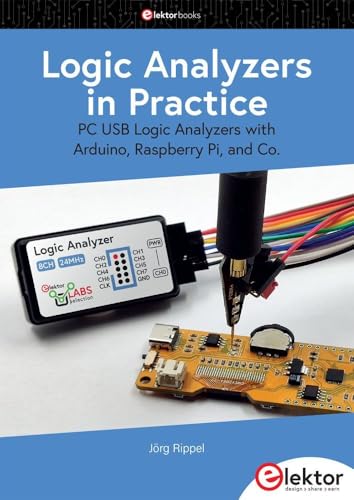
- Explains logic analyzer practice in a real-world context
- Helpful before buying capture hardware
- Paperback reference, not a tool
Best For: Readers learning how logic analyzers are used
Starter Option
8-Channel 24MHz USB Logic Analyzer Kit

- 8 channels with 24MHz sampling
- Useful for UART, IIC, and SPI debugging
- Includes EMI ferrite ring USB cable
Best For: Basic embedded bus debugging on a starter budget
High-Performance Pick
LA1010 16-Channel 100MHz Logic Analyzer

- 16 channels with 100MHz sampling per channel
- Decodes 30+ protocols including CAN and UART
- Works with Windows, macOS, and Linux
Best For: Advanced embedded debugging and multi-protocol analysis
Portable 8-Channel Starter Choice
Saleae Logic 8 compact 8-channel analyzer

- 8 digital/analog inputs
- Decodes SPI, I2C, and 23+ analyzers
- Up to 100 MS/s digital sampling
Best For: Portable mixed-signal debugging and common protocol decoding
High-Depth Protocol Decoder Pick
DL16 16-channel analyzer with 120+ protocol support

- 16 channels, 250MHz max sample rate
- Supports 120+ protocols with custom decoding
- 1G storage depth and stream mode
Best For: Deep captures and broad protocol decoding across major desktop OSes
High-Speed Professional Pick
Saleae Logic Pro 16 fast 16-channel analyzer

- 16 digital/analog inputs
- Up to 500 MS/s digital sampling
- Decodes SPI, I2C, and 23+ analyzers
Best For: Fast mixed-signal capture and advanced protocol decoding
Flagship High-Speed Option
DL16 Plus 16-Channel Protocol Decoder

- 16 channels, up to 500MHz sample rate
- Supports 120+ protocols with custom decoding
- RLE compression and stream mode for longer captures
Best For: Users who want broad protocol support and high capture flexibility
Budget-Friendly Starter Pick
8-Channel 24MHz USB Protocol Analyzer

- 8 channels, up to 24MHz sampling
- Decodes UART, I2C, and SPI in PulseView
- Supports 5V, 3.3V, 2.5V, and 2.0V logic levels
Best For: Hobbyists who need decoding for common digital buses
Performance-Oriented Midrange Choice
DSLogic Plus 16-Channel Analyzer

- 16 channels with up to 400MHz buffer sampling
- 16G sample depth in stream mode
- DSView supports nearly 100 protocol decoders
Best For: Users who want faster captures and broad software support
Budget Pick – Compact 24MHz 8-Channel USB Logic Analyzer
If you want a budget-friendly logic analyzer with protocol decoding for everyday embedded debugging, this 8-channel USB model covers the basics well. It supports Saleae Logic Analyzer software and PulseView, and its 24MHz sampling plus automatic UART, I2C, and SPI decoding make it a practical pick for quick signal checks on common hobby and DIY projects.
Best For: Arduino, ARM, FPGA, and general UART/SPI/I2C debugging on a tight budget.
Pros:
- 8 digital channels with up to 24MHz sampling
- Compatible with Saleae Logic Analyzer software and PulseView
- Automatic decoding for UART, I2C, SPI, and other standard protocols
- Includes USB cable and Dupont leads for setup convenience
Cons:
- Lower channel count than higher-end analyzers
- Best suited to general applications rather than heavier-duty capture needs
Overall, this is a straightforward entry-level option for users who need protocol decoding without extra complexity. It’s a solid match for quick embedded troubleshooting where compatibility and ease of use matter more than advanced features.
Learning Resource – Logic Analyzers in Practice Reference Book
For buyers comparing logic analyzers with protocol decoding, this book is a useful companion rather than a capture device. It’s a practical reference for learning how logic analysis is used in real workflows, making it helpful when you want to understand the tools and the debugging process before choosing hardware.
Best For: Readers who want a printed reference on logic analyzer workflows and practical usage.
Pros:
- Focused on real-world logic analyzer practice
- Useful as a learning resource alongside hardware purchases
- Compact, easy-to-handle paperback format
Cons:
- Not a hardware logic analyzer
- No protocol decoding features or software included
This is best viewed as background material for engineers, students, or hobbyists who want more context around digital signal debugging. If you need actual protocol capture, you’ll still need a separate analyzer.
Starter Option – 8-Channel 24MHz USB Logic Analyzer Kit
This USB logic analyzer is aimed at basic digital signal work where protocol decoding matters more than advanced channel count. It offers 8 channels, 24MHz sampling, and support for UART, IIC, and SPI debugging, plus compatibility with typical digital analysis workflows.
Best For: Hobbyists and embedded developers who need a simple 8-channel analyzer for UART, IIC, and SPI.
Pros:
- 8 channels with up to 24MHz sampling
- Supports UART, IIC, and SPI debug use cases
- Compatible input range up to 5.25V
- Includes EMI ferrite ring USB cable
Cons:
- Still limited to 8 channels
- More of a basic tool than a high-end analyzer
As a practical starter analyzer, it checks the boxes for common embedded bus debugging without adding unnecessary cost or complexity. The ferrite ring cable is a nice touch if you want a cleaner USB setup for bench work.
High-Performance Pick – LA1010 16-Channel 100MHz Logic Analyzer
If you need more headroom in a logic analyzer with protocol decoding, the LA1010 stands out with 16 input channels and a 100MHz sampling rate per channel. It’s built for digital system testing and communication protocol debugging, and its included KingstVIS software can decode more than 30 standards including I2C, SPI, UART, and CAN.
Best For: Embedded developers and testers who want a 16-channel, high-speed analyzer with broad protocol support.
Pros:
- 16 input channels with 100MHz sampling per channel
- Decodes 30+ protocols, including I2C, SPI, UART, and CAN
- Supports Windows, macOS, and Linux
- Portable design with included PC software
Cons:
- Higher-end feature set may be more than casual users need
- USB 2.0 interface may not appeal to buyers seeking newer hardware
This is the strongest option here for users who need faster capture, more channels, and wider decoding support. If your work involves multiple buses or more demanding signal monitoring, the LA1010 is the most capable pick in this group.
Portable 8-Channel Starter Choice – Saleae Logic 8 compact 8-channel analyzer
If you want logic analyzers with protocol decoding in a compact, easy-to-use package, the Saleae Logic 8 is built for straightforward digital and analog capture. It supports SPI, I2C, and 23+ additional analyzers, while keeping setup simple across Mac, Windows, and Linux.
Best For: Makers and engineers who want a portable 8-channel analyzer for common bus decoding and mixed-signal work.
Pros:
- 8 digital/analog inputs for flexible testing
- Decodes SPI, I2C, and 23+ more analyzers
- Up to 100 MS/s digital sample rate
- Cross-platform support for Mac, Windows, and Linux
Cons:
- 8 channels may be limiting for larger debugging jobs
- Uses USB 2.0 rather than newer USB 3.0 connectivity
Overall, this is a practical compact option if you value portability and broad protocol support over maximum channel count. Its mixed digital/analog capability makes it a versatile bench tool for everyday debugging.
High-Depth Protocol Decoder Pick – DL16 16-channel analyzer with 120+ protocol support
Among logic analyzers with protocol decoding, the DL16 stands out for its 16 channels, high hardware storage depth, and support for more than 120 protocols. It also adds RLE hardware data compression, stream mode, and customizable protocol decoding, making it a feature-rich choice for more demanding digital analysis.
Best For: Users who need broad protocol coverage, deeper capture options, and flexible decoding on Windows, Ubuntu, or Mac.
Pros:
- 16 channels with up to 250MHz max sample rate
- Supports more than 120 protocols and customizable decoding
- 1G hardware storage depth plus stream mode support
- Windows, Ubuntu, and Mac compatibility
Cons:
- USB 2.0 interface may not suit users expecting newer connectivity
- Software-focused workflow may take more setup than simpler analyzers
This model is a strong fit when protocol breadth and capture depth matter more than minimalism. The combination of 16 channels, 1G storage, and decoding flexibility makes it well suited to serious embedded debugging.
High-Speed Professional Pick – Saleae Logic Pro 16 fast 16-channel analyzer
If you need logic analyzers with protocol decoding and higher capture speed, the Saleae Logic Pro 16 is the most capable option here. It offers 16 digital/analog inputs, support for SPI, I2C, and 23+ analyzers, and sampling rates that go up to 500 MS/s digitally and 50 MS/s for analog capture.
Best For: Engineers and advanced hobbyists who want fast, portable mixed-signal debugging with broad decoder support.
Pros:
- 16 digital/analog inputs for broader testing
- Up to 500 MS/s digital sample rate
- Decodes SPI, I2C, and 23+ more analyzers
- USB 3.0 support and cross-platform compatibility
Cons:
- Higher-speed hardware may be more than casual users need
- Larger form factor than the smaller 8-channel model
This is the pick to consider when speed and capture headroom are priorities. Its mix of fast sampling, analog support, and broad protocol decoding makes it a strong professional-grade tool.
Flagship High-Speed Option – DL16 Plus 16-Channel Protocol Decoder
If you need logic analyzers with protocol decoding for deeper digital debugging, the DL16 Plus stands out with 16 channels, a 500MHz max sample rate, and support for more than 120 protocols. It also offers RLE hardware data compression, stream mode for longer captures, and an open protocol decoding library if you need to customize support for a project.
Best For: Users who want a feature-rich logic analyzer with high channel count, broad protocol support, and flexible capture modes.
Pros:
- 16 channels with up to 500MHz max sample rate
- Supports more than 120 protocols and an open decoding library
- RLE compression plus stream mode for longer sampling
- Works with Windows, Ubuntu, and Mac
Cons:
- More advanced feature set may be more than simple UART/I2C/SPI use cases need
- Detailed protocol and trigger options may take more setup time to learn
Overall, this is the most capable option in the group for users who want broad protocol coverage and strong capture flexibility. The metal CNC shell and included software tools add to its appeal for regular lab or bench use.
Budget-Friendly Starter Pick – 8-Channel 24MHz USB Protocol Analyzer
For buyers looking at logic analyzers with protocol decoding on a simpler budget, this 8-channel USB protocol analyzer focuses on the basics well. It supports common decoders like UART, I2C, and SPI through Sigrok PulseView, and its selectable sample rates make it easier to match capture speed to the job.
Best For: Hobbyists and makers who mainly need dependable decoding for common digital buses.
Pros:
- 8 channels with up to 24MHz sampling
- Works with Sigrok PulseView and common decoders like UART, I2C, and SPI
- Supports 5V, 3.3V, 2.5V, and 2.0V logic levels
- Includes timing and signal-integrity features like a ferrite-ring USB cable
Cons:
- Lower channel count and sample rate than higher-end analyzers
- Not recommended for 1.8V systems
This is a practical entry-level choice if you want protocol decoding without paying for extra speed or advanced features you may not use. It should fit many everyday microcontroller and digital troubleshooting tasks well.
Performance-Oriented Midrange Choice – DSLogic Plus 16-Channel Analyzer
If you want logic analyzers with protocol decoding and better capture headroom, the DSLogic Plus combines 16 channels with up to 400MHz sampling in buffer mode and 16G sample depth in stream mode. DSView software adds nearly a hundred protocol decoders and supports Windows, macOS, and Linux, making it a strong fit for mixed lab environments.
Best For: Users who want a faster, software-rich analyzer for longer captures and wide protocol coverage.
Pros:
- 16 channels with up to 400MHz buffer-mode sampling
- Stream mode supports up to 16G sample depth
- DSView includes nearly a hundred protocol decoders
- Compatible with Windows, macOS, and Linux
Cons:
- Best performance depends on choosing the right stream or buffer mode
- Higher-end features may be unnecessary for very basic debugging
For users who value both speed and software flexibility, this model lands in a sweet spot between entry-level analyzers and more specialized tools. The aluminum case, shielded fly wires, and adjustable threshold settings round out a well-equipped package.
How We Picked the Best Logic Analyzers with Protocol Decoding
We prioritized models that balance capture performance, decoding support, software usability, and real-world value. For Logic Analyzers with Protocol Decoding, the most important basics are enough channels for your bus, a sample rate that comfortably exceeds the signal speed, and software that reliably decodes common protocols such as UART, I2C, and SPI.
We also looked at platform support, portability, memory depth, and whether the device is suited to quick bench troubleshooting or deeper embedded development work.
Quick Comparison: What Matters Most
As a fast rule, lower-cost 8-channel units are usually best for simple serial debugging and light embedded work. Midrange 16-channel models are better when you need more visibility across multiple signals at once. Higher-end devices tend to offer stronger decoding workflows, better software, and more headroom for faster buses and longer captures.
If you work mostly with microcontrollers, an entry-level analyzer may be enough. If you regularly debug complex digital systems, the added speed, memory, and channel count of premium options can be worth it.
Key Buying Factors for Logic Analyzers with Protocol Decoding
Channel Count
Choose enough channels for the buses you actually use. Eight channels can handle many beginner and intermediate tasks, but 16 channels is safer when you want to observe a clock, data lines, chip selects, and extra control signals at the same time.
Sample Rate and Bandwidth
Your sample rate should be well above the fastest signal edge or bus frequency you expect to inspect. More headroom reduces the chance of missed transitions and makes decoding more dependable.
Memory Depth
Deeper memory helps when you need to capture long bursts, intermittent faults, or startup behavior. It matters more than many buyers realize, especially for timing bugs that happen only once in a while.
Software and Decoding Support
The best Logic Analyzers with Protocol Decoding are only as useful as their software. Look for stable apps, clear waveform views, easy trigger setup, and dependable decoding for the protocols you use most.
Compatibility and Workflow
Make sure the device works with your operating system and fits your workflow. Some buyers want simple plug-and-play use, while others prefer advanced analysis tools and cross-platform support.
Who Should Buy Which Logic Analyzers with Protocol Decoding?
Buy an entry-level 8-channel analyzer if you mainly need low-cost UART, I2C, or SPI troubleshooting. Choose a 16-channel model if you work on multi-signal embedded designs, need more capture room, or want to debug several buses at once. Pick a premium analyzer if you value deeper memory, faster sampling, and smoother software for frequent professional use.
If you are just getting started, simplicity may matter more than raw performance. If debugging is part of your daily workflow, invest in the model that gives you the most reliable decoding and the least friction.