
Finding an engaging astronomy model for a compact bedroom, classroom corner, or playroom does not mean sacrificing educational value. The best solar system models for small rooms combine manageable footprints with hands-on discovery, clear planet details, and storage-friendly designs.
This roundup compares 10 options across hanging mobiles, ceiling displays, projectors, tabletop kits, inflatable planets, and build-your-own models. Whether you want quiet decor, an interactive lesson, or a creative STEM project, the right choice depends on available space, age range, display style, and how much assembly you prefer.
Best 10 Solar System Models for Small Rooms Picks for 2026
Best Space-Saving Glow Decor
3D Glow Solar System Ceiling Kit

- Nine glow-in-the-dark planets
- 200-plus adhesive stars included
- No batteries required
Best For: Compact bedroom ceiling decor for ages 5+
Best Flexible Hanging Display
Inflatable Solar System Planets
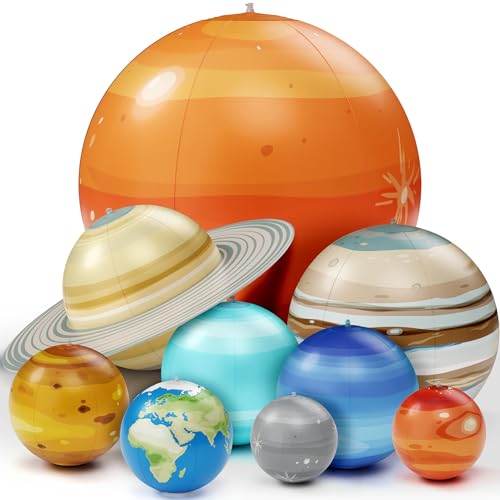
- Sun plus all eight planets
- Hanging strings included
- Deflates for storage
Best For: Reusable room, classroom, or party displays
Best Interactive Projector Model
GeoSafari Orbiting Solar System

- Eight moving orbiting planets
- 32 astronomy images included
- Projects onto the ceiling
Best For: Hands-on STEM learning in an indoor room
Best DIY Learning Kit
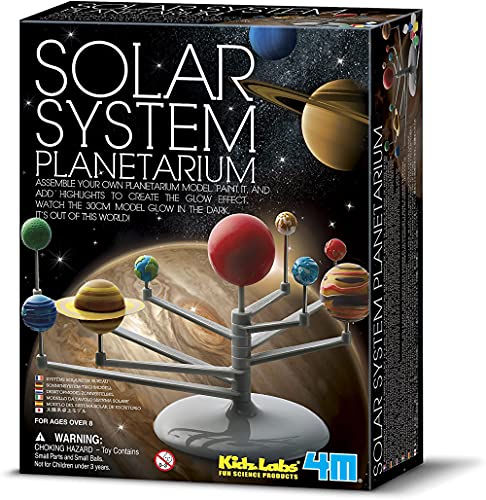
- Assemble and paint the planets
- Glow paint pen included
- No batteries required
Best For: Ages 8+ who enjoy creative STEM projects
Best Hanging Display

- Hanging design saves tabletop space
- Includes 10 solar system pieces
- Educational decor for ages 6 and up
Best For: Vertical space-themed decor and learning
Best Glow-in-the-Dark Kit

- Compact 7.09 x 2.36 x 12.01-inch size
- Includes glow paint and project supplies
- Movable arms support custom arrangements
Best For: Ages 8+ and space-themed bedrooms
Best DIY Project
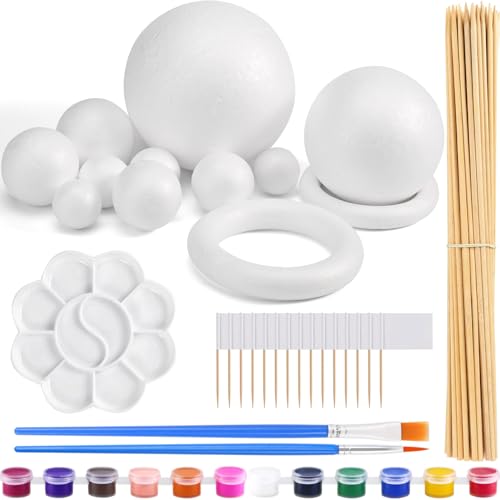
- Ten sizes show relative planetary scale
- Includes paints and assembly supplies
- Customizable school-project display
Best For: Hands-on science projects and DIY decor
Hands-On Starter Kit

- 64-piece craft kit with foam planets and painting supplies
- Supports creative, hands-on astronomy learning
- Compact project format for desks and small spaces
Best For: Children ages 6–12 completing a creative solar system project
Build-and-Rotate Pick
Smartivity Gear-Driven Planet Model

- Rotating design demonstrates planetary movement
- Combines construction with introductory STEM learning
- Compact 12.91-by-11.61-inch model footprint
Best For: Ages 8–14 who enjoy mechanical building and astronomy
Space-Saving Interactive Choice

- Projects eight planets and 24 space images
- Includes English and Spanish talking planet facts
- Doubles as a night light or flashlight
Best For: Children who want interactive astronomy in a compact bedroom setup
Best Space-Saving Glow Decor – 3D Glow Solar System Ceiling Kit
For solar system models for small rooms, this ceiling kit adds planetary decor without taking up floor or desk space. It includes nine glow-in-the-dark planets, more than 200 adhesive stars, and a solar system guide, with no batteries required.
Best For: Children ages 5 and up who want a compact, room-friendly space display or calming night-light effect.
Pros:
- Uses ceiling space rather than valuable floor or tabletop area
- Includes nine planets, 200-plus adhesive stars, and a learning guide
- Glow-in-the-dark design can serve as nighttime room decor
Cons:
- Adhesive ceiling installation may not suit every surface
- Offers decorative glow rather than moving or interactive planets
This is one of the easiest options for a small bedroom because the display stays overhead and the compact kit needs no batteries. Choose it when low-clutter decor matters more than hands-on assembly.
Best Flexible Hanging Display – Inflatable Solar System Planets
These inflatable planets work well as solar system models for small rooms when you need a display that can be rearranged or stored away. The set includes the sun, all eight planets, hanging strings, and galaxy learning cards.
Best For: Kids ages 5 to 8, classrooms, parties, or bedrooms where reusable hanging decor and hands-on learning are priorities.
Pros:
- Includes the sun and all eight planets
- Built-in loops and strings support ceiling hanging
- Deflates for compact storage and repeated use
- Learning cards add planet facts to play
Cons:
- Jumbo inflatables may occupy substantial visual space even in a small room
- Requires inflation and available hanging space
The ability to hang, rearrange, and deflate the planets makes this more flexible than a permanent model. It is a strong choice for multipurpose rooms, though its large scale should be considered before buying.
Best Interactive Projector Model – GeoSafari Orbiting Solar System
For solar system models for small rooms that combine a physical display with ceiling visuals, the GeoSafari Orbiting Solar System offers rotating planets and a built-in projector. It includes eight orbiting planets, 32 images across four discs, and a guide.
Best For: Children ages 5 and up who want hands-on orbit demonstrations and projected astronomy images in an indoor room.
Pros:
- Eight planets move on orbiting arms around the sun
- Projects 32 images, including NASA photos
- Combines physical model play with constellation and space exploration
Cons:
- Requires three AA batteries, which are not included
- The approximately 11-by-10-by-8-inch unit needs desk or shelf space
- Heavier than simpler decorative kits at about 1.61 kg
This model delivers the most interactive learning experience in the group, but it is not the smallest tabletop option. Measure the intended surface and plan for battery use before choosing it for a compact room.
Best DIY Learning Kit – 4M Solar System Planetarium
This 4M kit is a practical pick among solar system models for small rooms because children build a hanging planetarium rather than using a large preassembled display. The kit includes planets, paint, rods, string, stencils, a wall chart, and quiz questions.
Best For: Kids ages 8 and up who enjoy assembling, painting, and learning from a customizable astronomy project.
Pros:
- Combines assembly, painting, and solar system study
- Includes a glow paint pen for dark-room effects
- Comes with a fact-filled wall chart and 10 quiz sets
- No batteries required
Cons:
- Requires hands-on assembly and painting before display
- Recommended for ages 8 and up
- Includes eight planets and does not include Pluto
Choose this set when the activity itself is part of the appeal. Its hanging design can keep a small room’s surfaces clear, while the build process offers more personalization than a ready-to-use model.
Best Hanging Display – 3D Solar System Mobile
For shoppers seeking solar system models for small rooms, the Hollowfly 3D mobile offers a space-themed display that uses vertical hanging space rather than a tabletop. Its 10-piece set includes the Sun, Moon, and eight planets, with a 23.62-inch size suited to a classroom, nursery, or living area.
Best For: Hanging astronomy decor and educational display in rooms with limited surface space.
Pros:
- Uses overhead space for a room-friendly display.
- Includes 10 distinct pieces, including the Moon and Sun.
- Supports astronomy learning for ages 6 and up.
- Designed for assembly and gift giving.
Cons:
- It excludes Pluto.
- Assembly is required.
- A hanging display may not suit rooms where ceiling or wall mounting is impractical.
This is a strong choice when visual impact and space efficiency matter more than a compact desktop footprint. Its moving 3D design adds decorative appeal while providing a basic way to explore the solar system.
Best Glow-in-the-Dark Kit – Moving Solar System Model
Among solar system models for small rooms, this National Geographic kit combines a compact 7.09 x 2.36 x 12.01-inch display with hands-on construction. Children can paint the eight planets and Sun, add glow accents, and adjust the movable arms for a customizable bedroom display.
Best For: Kids ages 8 and up who want a build-and-display project for a space-themed bedroom.
Pros:
- Glows in the dark with included accent paint.
- Includes paints, brush, palette, decals, and a facts poster.
- Movable arms allow display adjustments.
- Develops construction, creative, and problem-solving skills.
Cons:
- Children must assemble and paint the model.
- Recommended for ages 8 and up, so it may not suit younger children.
- Its compact dimensions may provide less visual scale than a larger hanging model.
This kit balances a manageable footprint with interactive features that make it more than passive decor. Choose it if glow effects, customization, and an included activity matter for a small bedroom display.
Best DIY Project – 48-Piece Foam Ball Kit
For solar system models for small rooms that can be customized to fit available space, this 48-piece foam ball kit offers a hands-on alternative to a finished display. It includes differently sized spheres, paint, brushes, bamboo sticks, rings, and flags for creating a labeled solar system project.
Best For: School science projects and DIY displays where children can choose the arrangement and finished size.
Pros:
- Includes 10 ball sizes to illustrate relative planetary scale.
- Provides 12 paint colors, brushes, palette, sticks, and flags.
- Requires no glue for assembly.
- Useful for handmade decor and science activities.
Cons:
- It is a craft kit rather than a ready-to-display model.
- Painting and assembly require time and adult guidance may be helpful for younger children.
- The supplied notes list a broad recommended age range of 0–8 years.
This kit is the most flexible option for a small room because the finished arrangement can be adapted to the available wall, shelf, or project space. It is best suited to buyers who value the learning activity as much as the final display.
Hands-On Starter Kit – Foam Solar System Project Set
For shoppers comparing solar system models for small rooms, this compact foam project kit offers a hands-on alternative to a large display. Kids paint and assemble the planets themselves, making it suitable for a desk, craft table, or school project without requiring a permanent setup.
Best For: Children ages 6–12 who enjoy creative school projects and learning through building.
Pros:
- Includes foam balls, paints, brushes, sticks, flags, stars, and instructions for a ready-to-start project.
- Foam surfaces are designed to be easy to color.
- Encourages hand-eye coordination, focus, artistic skills, and basic astronomy learning.
Cons:
- Requires painting and assembly before it becomes a finished model.
- The foam construction may be less suitable for rough handling than a solid display model.
This is a practical pick when storage space is limited and you want an activity rather than a purely decorative model. Its included supplies help reduce the need for extra craft materials.
Build-and-Rotate Pick – Smartivity Gear-Driven Planet Model
This gear-driven model is a strong option among solar system models for small rooms because it combines a compact footprint with an interactive rotating design. Rather than taking up space as a large display, it gives older children a construction project they can operate and explore.
Best For: Kids ages 8–14 who prefer building mechanisms and learning through STEM play.
Pros:
- Creates a rotating solar system model that demonstrates planetary movement and orbits.
- Combines construction, creativity, and introductory astronomy concepts.
- Uses eco-friendly, child-safe materials and comes in gift-ready packaging.
Cons:
- Recommended for ages 8 and up, so it is not designed for younger children.
- Assembly is part of the experience and may take more involvement than a ready-made model.
Choose this kit when you want an engaging model that can be built and operated without committing much room to a permanent astronomy display. Its MDF construction and interactive gears make it especially appealing to young builders.
Space-Saving Interactive Choice – Talking Planetarium Projector
For small rooms, this talking planetarium model adds more than a tabletop display: it projects planets and space images onto a wall or ceiling. The built-in night-light function, bilingual learning mode, and compact upright design make it useful when floor and shelf space are limited.
Best For: Children ages 5 and up who enjoy interactive astronomy, projection, and bedtime-friendly features.
Pros:
- Projects the eight planets and 24 space images onto walls or ceilings.
- Offers English and Spanish astronomy facts through the talking planet feature.
- Works as a night light or flashlight and assembles with a snap-and-lock pole.
Cons:
- Requires three AA batteries, which are not included.
- Projection clarity depends on adjusting the top knob and having a suitable surface.
- Its plastic construction may feel less like a traditional display model.
This is the most versatile choice for a child’s bedroom or other compact area because the wall and ceiling projection expands the experience without needing a large physical setup. It also adds practical bedtime lighting and bilingual learning.
How We Picked the Best Solar System Models for Small Rooms
We evaluated these models for compact-space practicality, educational usefulness, age suitability, display flexibility, and the amount of hands-on interaction they provide. We also considered whether each design works best on a ceiling, wall, tabletop, or open floor, since a model’s footprint matters as much as its visual appeal in a small room.
The selection includes glow-in-the-dark displays, hanging mobiles, projection-based learning, inflatable planets, gear-driven mechanisms, talking features, and DIY painting kits. This range makes it easier to match a model to a child’s interests and the room’s available storage.
Quick Comparison
| Model type | Best for | Space profile |
|---|---|---|
| Ceiling or hanging display | Decor and visual learning | Uses overhead space |
| Projector or interactive model | Guided lessons and demonstrations | Compact when stored |
| Inflatable planets | Large-scale play and presentations | Deflates for storage |
| DIY foam or planetarium kit | Crafts and STEM activities | Flexible, but needs work space |
| Tabletop mechanical model | Hands-on demonstrations | Needs a stable surface |
Key Buying Factors for Solar System Models for Small Rooms
Footprint and Storage
Measure the intended display area before buying. Ceiling kits and mobiles preserve desk space, while tabletop models need a dedicated surface. Inflatable planets can look impressive but require floor space during use; their main advantage is compact storage after deflation.
Age and Learning Style
Check the recommended age, especially for kits containing small parts, sticks, or paint. Younger children may benefit from large inflatable planets, glow displays, or talking models. Older children may prefer mechanical, projector, or build-and-paint designs that explain planetary order and motion through active participation.
Display, Lighting, and Durability
Glow features are useful in bedrooms but generally require exposure to light before they shine. Consider whether the room has suitable ceiling attachment points and whether the finished model can withstand handling. For frequent demonstrations, choose sturdy components and an accessible setup rather than a delicate decorative display.
Assembly and Supervision
DIY models can provide stronger STEM engagement, but they take time and may require adult help with painting, cutting, adhesives, or small connectors. If you want immediate use, a preassembled mobile, projector, or interactive model is usually more convenient.
Who Should Buy Which Solar System Models for Small Rooms?
Choose a ceiling or hanging model if floor and desk space are limited and you want astronomy-themed decor. A glow-in-the-dark kit is a strong fit for a child’s bedroom, while a projector or talking model suits guided learning and repeated demonstrations. Pick an inflatable set for presentations, imaginative play, or families that need easy post-use storage.
For creative children and group activities, foam-ball, planetarium, or other DIY kits offer the most customization. A gear-driven model is better for learners who want to see planetary motion in action. Before ordering, prioritize the room’s usable surfaces, the child’s age, and whether your main goal is decoration, independent play, or structured science learning.